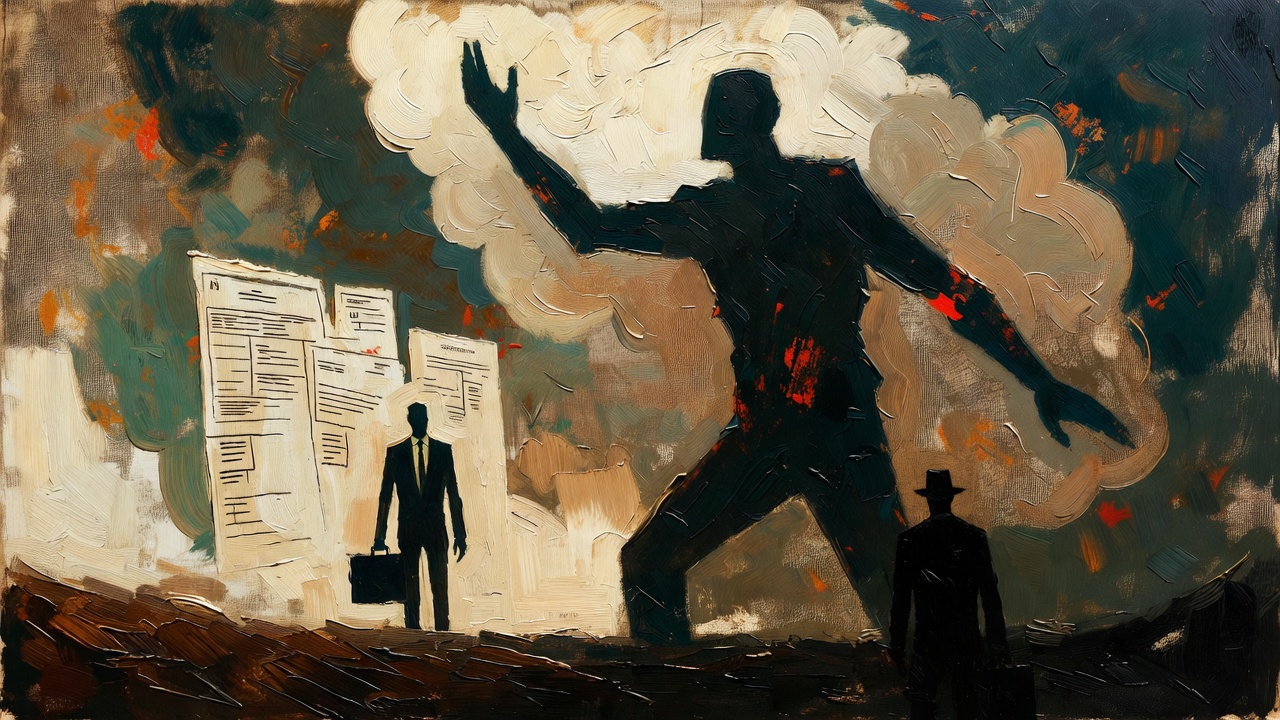
Banca Rotta — The Origins of Insolvency Law
Banca rotta—the broken bench. According to legend, Italian bankers in Renaissance Florence who could not pay their debts were compelled to destroy their counting tables in public view. Whether myth or fact, the etymology of “bankruptcy” has fixed in our minds an image of insolvency as catastrophe, disgrace, terminus.
Modern insolvency law in Poland tells a different story. Not of punishment, but of order. Not of ending, but of beginning again.
Two Faces of Insolvency — From Athens to Warsaw
In ancient Athens, a debtor who could not satisfy his creditors became a slave—he himself, his wife, his children. Only the reforms of Solon abolished debt bondage, making Athens an exception in the ancient world.
For centuries, the law oscillated between two poles: punishment for the debtor versus protection from creditors. The English Statute of Bankrupts of 1542 treated the bankrupt as a criminal. Only the nineteenth century introduced the concept of the fresh start—the possibility of discharge and return to economic life.
Polish Insolvency Law — The Modern Framework
Insolvency law in Poland—following a profound reform in 2016—stands decidedly in the tradition of second chances. The objective of bankruptcy in Poland is not the annihilation of debtors, but rather:
- Satisfaction of creditors to the greatest extent possible
- Preservation of the enterprise, where economically justified
- Enabling the honest debtor to start anew
This philosophy permeates the Polish Bankruptcy Law (Prawo upadłościowe) and the Restructuring Law (Prawo restrukturyzacyjne) enacted in 2015.
Business Bankruptcy in Poland: Liquidation or Restructuring?
When an enterprise loses the capacity to meet its obligations, Polish insolvency law offers two fundamental paths:
Bankruptcy Proceedings (Postępowanie upadłościowe)
When the company cannot be saved. The debtor’s assets pass to a trustee (syndyk), who liquidates them and distributes the proceeds among creditors in strict order of priority:
- Costs of bankruptcy proceedings
- Employee claims
- Social security (ZUS) and tax authorities
- Unsecured creditors—typically with a modest recovery rate
Bankruptcy in Poland ends the enterprise’s existence. But it ends it in an orderly fashion—with protection for employee rights, transparent asset distribution, and closure of obligations.
Restructuring Proceedings
When the company has a chance to survive. Polish insolvency law (since 2016) offers four procedures of varying formality:
Proceedings for approval of an arrangement (postępowanie o zatwierdzenie układu) — The simplest path, almost extrajudicial. The debtor independently collects creditor votes; the court merely approves the arrangement.
Accelerated arrangement proceedings (przyspieszone postępowanie układowe) — A fast-track court procedure for debtors whose disputed claims do not exceed 15% of total claims.
Arrangement proceedings (postępowanie układowe) — Full court procedure with the possibility of establishing disputed claims.
Remedial proceedings (postępowanie sanacyjne) — The most invasive intervention, permitting withdrawal from unfavourable contracts, workforce reductions, and asset sales under court protection.
The Strategic Choice
The choice between bankruptcy and restructuring is a strategic decision. Restructuring too early may be unnecessary. Too late—impossible.
The line between “temporary difficulties” and “insolvency” can be as fine as a razor’s edge. Polish bankruptcy law defines insolvency precisely: loss of capacity to meet due monetary obligations (Article 11(1)) or liabilities exceeding assets for more than 24 months (Article 11(2)).
Management Liability: The 30-Day Rule
Insolvency law in Poland imposes on management an obligation to file for bankruptcy within thirty days of the onset of insolvency. This deadline is absolute—and unforgiving.
Consequences of Delay
A board member who exceeds the deadline faces:
Personal civil liability — For the company’s debts to creditors under Article 299 of the Commercial Companies Code. Liability is joint and several, covering the full amount of unsatisfied claims.
Criminal sanctions — Failure to file for bankruptcy in Poland within the statutory period is a criminal offence carrying up to one year’s imprisonment (Article 586 of the Commercial Companies Code).
Prohibition from business activity — The court may impose a ban on conducting business and serving on company boards for up to ten years.
This is among the most severe sanctions in Polish commercial law. And among the most frequently enforced.
The Knowledge Paradox
The paradox is that management often learns of insolvency too late—by the time the accountants concede that the situation is dire, the thirty-day clock is already running, and sometimes has already expired.
Defence against Article 299 liability requires demonstrating that:
- The bankruptcy petition was filed in time, or
- The failure to file occurred without the board member’s fault, or
- The creditor suffered no damage despite the failure to file
Each ground requires careful documentation—preferably before, not after, the fact.
Consumer Bankruptcy in Poland: A Second Chance
Since 2020, Polish insolvency law has dramatically liberalized consumer bankruptcy. Any natural person—even one who caused their own insolvency through negligence or recklessness—may apply for debt discharge.
The Procedure
Bankruptcy petition — Filed with the district court having jurisdiction over the debtor’s residence. The filing fee is PLN 30.
Bankruptcy declaration — The court examines the grounds and declares consumer bankruptcy or refuses the petition.
Asset liquidation — The trustee liquidates the debtor’s assets (with exceptions: items necessary for living, portion of salary).
Repayment plan — The court establishes what portion of obligations the debtor will repay over 12 to 36 months.
Debt discharge — Upon completion of the repayment plan, the court discharges unpaid obligations. Completely and definitively.
A Revolution in Debt Relief
This is a revolution whose consequences remain underappreciated. A person trapped in a spiral of debt—loans, guarantees, failed investments—can legally begin again. The fresh start has ceased to be an American myth.
Consumer bankruptcy in Poland typically takes from several months to three years. At its conclusion—if the debtor coöperates with the trustee and fulfills the repayment plan—they regain a clean slate.
Limitations
But note: consumer bankruptcy is not a free lunch:
- The debtor loses assets (with statutory exceptions)
- Data enters the National Debt Register (Krajowy Rejestr Zadłużonych)—publicly accessible
- Certain obligations are not subject to discharge: alimony, compensation for criminal acts, fines
Creditors in Polish Bankruptcy Proceedings
Insolvency law is often presented from the debtor’s perspective. But for the creditor—the supplier awaiting payment, the bank with an unpaid loan, the counterparty to an unperformed contract—a partner’s bankruptcy in Poland is a catastrophe.
Creditor Strategy
A good creditor’s lawyer knows that:
Filing a proof of claim within the deadline is the absolute priority. Lateness means losing one’s place in the queue for distribution of the bankruptcy estate. The deadline is 30 days from publication of the bankruptcy notice in the National Debt Register.
Security interests dramatically improve position. Mortgages, registered pledges, transfer of title as security—secured creditors are satisfied from the collateral, not from the general estate.
Fraudulent transfer actions can recover assets removed before bankruptcy. Transactions made to creditors’ detriment can be declared ineffective—even those from several years prior.
Management liability can serve as an alternative source of recovery. When the bankruptcy estate is insufficient and management delayed the bankruptcy filing—they are personally liable.
A Negative-Sum Game
Bankruptcy proceedings in Poland are a negative-sum game—creditors divide less than they are owed. The winner is the one who knows the rules of Polish insolvency law and acts swiftly.
Insolvency in Poland: Our Services
For Debtors
Financial situation analysis — Assessment of insolvency grounds and selection of the optimal path: bankruptcy or restructuring.
Petition preparation — Bankruptcy and restructuring petitions, complete and compliant with formal requirements.
Creditor negotiations — Preparation of arrangement proposals, mediation, pursuit of out-of-court solutions.
Court representation — Handling the case at all stages of insolvency proceedings in Poland.
Management defence — Against personal liability under Article 299 and criminal liability.
Consumer bankruptcy — Comprehensive service from petition to discharge.
For Creditors
Filing claims — Proper and timely filings, pursuing claims in bankruptcy proceedings.
Challenging debtor transactions — Fraudulent transfer actions, ineffectiveness of transactions made to creditors’ detriment.
Pursuing management claims — Article 299 actions, enforcement against board members’ personal assets.
Creditors’ committee representation — Active participation in supervision of bankruptcy proceedings in Poland.
Arrangement negotiations — Protecting creditor interests in restructuring proceedings.
Bankruptcy in Poland for Foreign Creditors and Investors
International parties encounter specific considerations under Polish insolvency law:
EU Insolvency Regulation — Bankruptcy proceedings opened in Poland are automatically recognized across the EU. Main proceedings occur where the debtor has its centre of main interests (COMI).
Proof of claim requirements — Claims must be filed in Polish or with certified translation. Foreign creditors have the same rights as Polish creditors but must observe Polish procedural requirements.
Cross-border coordination — When a debtor has assets or operations in multiple jurisdictions, insolvency in Poland may interact with parallel proceedings abroad. Coordination between insolvency practitioners is governed by the EU Regulation and Polish implementing provisions.
Recognition of foreign proceedings — Foreign bankruptcy proceedings can be recognized in Poland under the EU Regulation (for EU proceedings) or bilateral treaties and Polish private international law (for non-EU proceedings).
Understanding these frameworks is essential for foreign creditors seeking recovery from Polish debtors—or foreign investors assessing exposure to Polish counterparty risk.
Failure as Institution
Nassim Taleb has written that systems resilient to crisis require a mechanism for controlled failure—the capacity for individual collapse without systemic disintegration. Insolvency law is such a mechanism.
It permits companies to die—but in an orderly fashion, with protection for employees, with the chance to salvage valuable assets.
It permits individuals to go bankrupt—but without lifelong debt bondage, with the prospect of a new beginning.
When to Seek Advice
Insolvency law in Poland is not pleasant law. No one plans for bankruptcy. But when it arrives—and sometimes it arrives despite the best of efforts—knowledge of the rules determines whether the story ends in catastrophe or merely a difficult chapter before the next.
Warning signs that consultation is needed:
- Mounting payment delays
- Loss of a key customer or revenue source
- Credit facility termination
- Bailiff seizures on accounts
- Inability to meet current employee or tax obligations
The earlier the consultation, the more options remain. Bankruptcy filed in time protects management. Bankruptcy filed too late exposes them to liability.
Facing insolvency or restructuring decisions in Poland? Contact us to analyse your situation and identify available paths—before the 30-day deadline forecloses your options.