

Universal Service Subsidies in Polish Telecommunications Law
Introduction
A telecommunications company obligated to contribute to subsidies payable to other market participants possesses a cognizable legal interest sufficient to challenge decisions of the President of the Office of Electronic Communications (Prezes Urzędu Komunikacji Elektronicznej, UKE) granting such subsidies. This proposition, established by the Supreme Administrative Court’s ruling of September 24, 2019 (case no. II GSK 808/19), represents a significant departure from settled jurisprudence.
The decision constitutes a precedent of considerable importance. Prior to this ruling, administrative courts had consistently denied companies bearing contribution obligations any right to scrutinize the criteria and procedures by which the President of UKE awards universal service subsidies—effectively excluding from judicial review those who ultimately bear the financial burden of such awards.
The Statutory Framework for Universal Service Subsidies
Pursuant to the Telecommunications Law Act of July 16, 2004 (Prawo telekomunikacyjne), the President of UKE may, through competitive tender, designate a provider of specified telecommunications services. Selection criteria prioritize the lowest projected net cost of service provision. The designated undertaking (przedsiębiorca wyznaczony), where its mandated services prove unprofitable, may apply for a subsidy to cover the net cost (Article 95(1)).
Critically, however, the state does not bear this financial burden alone.
Article 97 of the Telecommunications Law provides: “Telecommunications undertakings whose revenues from telecommunications activities in the calendar year for which the subsidy is due exceeded PLN 4 million shall be obligated to participate in covering the subsidy.”
The determination of which undertakings must contribute, and in what proportion, falls to the President of UKE in separate proceedings (Article 98). Such decisions carry immediate enforceability, and subsidy amounts are subject to administrative enforcement of monetary obligations.
Factual Background: Challenge to a Subsidy Award
By decision of August 2018, the President of UKE awarded C. S.A.—the designated universal service provider—a subsidy of PLN 18,430,152 toward the costs of providing directory information and subscriber directory services for 2009.
On September 10, 2018, A. S.A.—a telecommunications undertaking obligated under Article 97 to contribute to such subsidies by virtue of exceeding the PLN 4 million revenue threshold—filed a complaint challenging this decision.
The complainant asserted a legal interest in reviewing the regulatory authority’s decision, arguing that the award directly affected its legal position by determining whether, and on what terms, it would be obligated to contribute to the subsidy.
The Authority’s Position and the Regional Court’s Dismissal
In response, the President of UKE moved for dismissal, contending that the subsidy award decision did not concern the complainant’s legal interest. A. S.A. had been neither a party to the administrative proceedings nor had it applied for admission as such.
The Regional Administrative Court in Warsaw (Wojewódzki Sąd Administracyjny), by order of March 1, 2019 (case no. VI SA/Wa 1940/18), granted the authority’s motion and dismissed the complaint. The court accepted the authority’s position:
“There exists no provision of substantive law pursuant to which the complainant could, in the concrete legal and factual circumstances at issue rather than in some hypothetical scenario, demand that the President of UKE determine its rights and obligations. Nor does any legal provision establish that the complainant’s interest is direct. In particular, Article 97 of the Telecommunications Law, upon which the complainant relies, does not constitute such a provision. The challenged decision concerns the implementation of rights and obligations imposed upon the designated universal service operator, which the complainant is not.”
The Supreme Administrative Court’s Precedent-Setting Ruling
A. S.A. filed a cassation appeal with the Supreme Administrative Court, which, by order of September 24, 2019, accepted the complainant’s position—contrary to the theretofore settled jurisprudential line.
The Court’s Analytical Framework
The NSA agreed with the appellant that Article 4(1) of Directive 2002/21/EC of the European Parliament and of the Council (the Framework Directive) permits an interpretation of Articles 97 and 98 of the Telecommunications Law under which the undertakings specified therein may derive a legal interest in challenging administrative decisions concerning universal service subsidies.
The court emphasized the interconnection between the two proceedings:
“Pursuant to Article 97 of the Telecommunications Law, telecommunications undertakings whose revenues (…) exceeded PLN 4 million are obligated to participate in covering the subsidy. Under Article 98(1), the President of UKE, promptly upon determining the subsidy due, initiates proceedings to identify telecommunications undertakings obligated to cover the subsidy and determine their respective contribution shares. (…) A decision issued pursuant to Articles 95-96 therefore results in the imposition—under Articles 97-98 of said statute—of obligations upon the entities specified in those provisions. It must be concluded that upon issuance of the aforementioned decision, the legal interest of those entities is actualized.“
Reflex Rights and Constitutional Access to Courts
The NSA invoked the doctrine of reflex rights (prawo refleksowe)—the specific legal nexus between an entity possessing a positive public subjective right and a third party possessing a negative public right. This connection is both substantive (the grant of entitlements to one party produces consequences for the rights of another) and procedural (necessitating judicial protection for the entity holding the reflex right).
The court further observed that this broader conception of legal interest finds support in:
- The constitutionally guaranteed right of access to courts (Article 45 of the Polish Constitution)
- Article 4(1) of the Framework Directive, which requires Member States to ensure effective appellate mechanisms for undertakings “affected by” regulatory decisions
Departure from Established Precedent
The prior jurisprudential consensus had held otherwise. The NSA expressly declined to follow the reasoning articulated in, inter alia:
- NSA order of July 3, 2018 (II GSK 1132/18)
- NSA order of April 18, 2018 (II GSK 704/18)
- WSA Warsaw judgments of January 12, 2018 (VI SA/Wa 2361/17, VI SA/Wa 2362/17), October 15, 2010 (VI SA/Wa 1503/10), February 22, 2017 (VI SA/Wa 124/17), and February 3, 2012 (VI SA/Wa 2165/11)
Practical Implications: Transparency in Mandatory Contributions
This decision carries fundamental significance for telecommunications undertakings obligated to fund universal service subsidies.
The NSA’s ruling potentially affords contributing companies—entities required to subsidize the “unprofitability” of designated providers precisely because their own operations have achieved the profitability threshold—the right to:
- Access case files at an early procedural stage
- Scrutinize the net cost calculations submitted by designated undertakings
- Defend their interests prior to the imposition of contribution obligations
In essence, these companies may now ascertain the basis for their mandatory contributions: whether the underlying unprofitability resulted from intentional or unintentional conduct, from circumstances within or beyond the designated provider’s control.
Conclusion
The Supreme Administrative Court’s decision in II GSK 808/19 represents a significant evolution in Polish administrative law’s treatment of third-party standing in regulatory proceedings. By recognizing that contribution-obligated undertakings possess actualized legal interests upon the issuance of subsidy awards—interests cognizable under both domestic constitutional principles and EU regulatory directives—the court has opened a previously closed avenue of judicial review.
The practical consequence is considerable: entities bearing mandatory financial obligations may no longer be excluded from examining the factual and legal predicates of those obligations. The principle that one should have standing to challenge determinations that directly affect one’s legal position—a principle seemingly self-evident—had, until this ruling, been systematically denied in Polish telecommunications regulatory practice.
Legal Framework:
- Telecommunications Law Act of July 16, 2004 (Prawo telekomunikacyjne), Articles 95-98
- Directive 2002/21/EC of the European Parliament and of the Council of March 7, 2002 on a common regulatory framework for electronic communications networks and services (Framework Directive), Article 4(1)
- Law on Proceedings Before Administrative Courts of August 30, 2002 (Prawo o postępowaniu przed sądami administracyjnymi), Article 50(1)
Accounting Services
The books show the tax office how the company has settled its taxes for years, so order in them is cheaper than corrections. We keep the accounts together with ongoing tax advice.
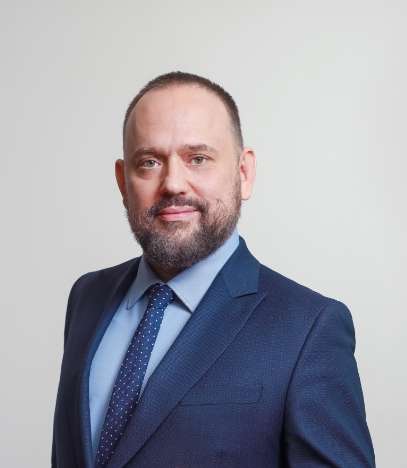
Robert Nogacki is a Polish attorney at law (radca prawny), the founder and managing partner of Kancelaria Prawna Skarbiec (Skarbiec Law Firm), which has operated continuously since 2006.
The law is equal for everyone, but the parties rarely are: on one side stands an organization with time, money, and lawyers, on the other a person with one business, one nest egg, and one life.
Clients rarely come to him with a legal problem. They come with a problem that also has a legal side: an audit that began with a single invoice, money entrusted to someone who has disappeared, a company that has to be passed on before it is too late. Most such matters are decided long before the first letter is written, in decisions made without asking and in deadlines nobody remembered. So he begins by asking how the client got here, not what the client should have done.
He advises entrepreneurs and families from more than a dozen countries, including those whose accounts the tax office has just seized and who do not know what to do tomorrow morning. He defends them in tax audits, customs and fiscal inspections, disputes with the tax authorities, and criminal tax proceedings. He represents victims of investment fraud and Ponzi schemes. He helps families set up family foundations and plan succession, so that a life’s work outlasts a single generation.
Not every case can be won. Every case can be run so that the client knows where they stand. Since 2006 he has represented the victims in the WGI case (Warszawska Grupa Inwestycyjna, the Warsaw Investment Group), one of the longest criminal cases in the history of the Polish financial market, because some things must not be left half finished, even when they take two decades. In the case of the collapsed cryptocurrency exchange Zonda (Zondacrypto, operated by BB Trade Estonia OÜ), he represents several hundred victims in the criminal investigation conducted by Poland’s National Prosecutor’s Office and in the Estonian bankruptcy proceedings.
Kancelaria Prawna Skarbiec is listed in the rankings of Poland’s largest tax advisory firms published by Dziennik Gazeta Prawna and Rzeczpospolita, and it is a four-time recipient (2015 to 2018) of the European Medal awarded by the Business Centre Club and the European Economic and Social Committee. Robert Nogacki publishes regularly, in the press and on the firm’s website, for people who have a problem rather than a law degree, because a legal opinion the client cannot understand protects only the lawyer.
He believes that the best legal advice is the kind that means the client never has to appear in court.