Drake, an Offshore Casino, and the Spotify Bots
On the last day of 2025, while the rest of the world busied itself with champagne flutes and countdowns, a legal bombshell detonated in the United States District Court for the Eastern District of Virginia. Two women from the state filed a class-action lawsuit that reads less like a standard consumer complaint than like the treatment for a prestige limited series: illegal cryptocurrency gambling, celebrity endorsements worth a hundred million dollars a year, an unregulated money-transfer system that functions rather like a laundromat for cash, and—in a twist that even the most imaginative Hollywood writers might hesitate to pitch—an alleged scheme to inflate Spotify streams using armies of automated bots.
The defendants make for an improbable ensemble. There is Sweepsteaks Ltd., a Cyprus-registered company that operates the platform Stake.us. There is Aubrey Drake Graham, the Canadian rapper known to the world simply as Drake. There is Adin Ross, an internet streamer with a gift for controversy. And there is George Nguyen, an Australian who operates under the online alias “Grand Wizard.” Together, according to the plaintiffs, they constitute a criminal enterprise under the federal RICO statute—the same legal instrument that, for decades, was the government’s preferred cudgel against the Mafia.
A crucial caveat at the outset: everything described in this article concerning the alleged connections between illegal gambling operations, money transfers, and Spotify botting constitutes allegations in a lawsuit, not findings of a court. No court has ruled that Drake, Ross, or Nguyen committed any crimes. The defendants have not been convicted or even formally charged in criminal proceedings—this is a civil case in which the burden of proof rests with the plaintiffs. But this case is not merely another lawsuit against an online gambling platform. It represents something more significant: the culmination of a global confrontation between an industry that spent years constructing an empire on semantic sleight of hand and the regulators and courts who are increasingly signaling that the era of forbearance is drawing to a close.
How to Build a Casino That Isn’t Officially a Casino
To understand why the Virginia lawsuit may prove consequential, one must first grasp the mechanism that allowed a Cypriot corporation to build a gambling empire worth billions of dollars while maintaining, with a straight face, that it operates no gambling whatsoever. It is a story about exploiting legal loopholes to create a product that looks like a casino, functions like a casino, and earns like a casino—but insists, in its own telling, that it is nothing of the sort.
Stake.us presents itself on its homepage as a platform offering “the ultimate social, safe and free gaming experience.” Its terms of service state that the site “does not offer real money gambling” and that “no purchase or payment is necessary to participate or play.” This sounds like an ideal form of risk-free entertainment—something akin to a free mobile app featuring logic puzzles.
The reality, as the plaintiffs argue, is rather different. The platform offers two types of virtual currency: Gold Coins and Stake Cash. The former genuinely have no monetary value and serve, at least theoretically, purely for entertainment. The problem lies with Stake Cash, which can be redeemed for cryptocurrency or digital gift cards at a rate of one to one against the U.S. dollar. And every purchase of “worthless” Gold Coins is automatically bundled with Stake Cash.
The mechanism is simple but perversely ingenious: a player spends twenty dollars to purchase two hundred thousand Gold Coins and receives, as a “bonus,” twenty dollars and five cents in Stake Cash. Should the player decide to try roulette, blackjack, or one of the nearly two thousand slot machines available on the platform and win, she can withdraw her winnings as cryptocurrency. Should she lose and wish to continue playing, she must purchase more “worthless” Gold Coins, which will again be sold bundled with Stake Cash. In practice, this is a classic casino with real-money wagering, merely camouflaged beneath a layer of semantic tricks.
The entire construction rests on a single legal premise: the traditional definition of gambling requires the coexistence of three elements—prize, chance, and consideration. Sweepstakes casinos attempt to eliminate the “consideration” element by offering a free path to participation. Theoretically, one can play without spending money, using free tokens received upon registration. This is the classic “no purchase necessary” formula familiar from American promotional contests, which for decades served as a magic incantation exempting activities from gambling regulations.
A Ruling That Shook the Industry: Captain Renault in the World of Digital Gambling
This seemingly clever legal construction began to crumble on March 28, 2018, when the United States Court of Appeals for the Ninth Circuit issued a landmark ruling in Kater v. Churchill Downs. The case concerned Big Fish Casino, a virtual casino operating on a mechanism nearly identical to that of Stake.us.
Cheryl Kater began playing Big Fish Casino in 2013, eventually purchasing and losing more than a thousand dollars in virtual chips. As with Stake.us, Big Fish Casino’s terms of service stated that virtual chips “have no monetary value and cannot be exchanged for cash or any other tangible value.” The district court accepted this argument at face value and dismissed the lawsuit.
The Court of Appeals, however, reversed entirely. Judge Milan D. Smith, Jr., writing for the panel, did not conceal his disdain for the defendant corporation’s hypocrisy: “Churchill Downs, the game’s owner and operator, has made millions of dollars off of Big Fish Casino. However, despite collecting millions in revenue, Churchill Downs, like Captain Renault in Casablanca, purports to be shocked—shocked!—to find that Big Fish Casino could constitute illegal gambling. We are not.”
The allusion to the famous scene in “Casablanca,” in which the corrupt police prefect announces his “shocking” discovery that gambling is taking place in Rick’s establishment—moments after pocketing his own winnings—perfectly captures the hypocrisy of the entire sweepstakes-casino industry.
The crux of the decision was the definition of “thing of value” under the law. Under Washington State law, a “thing of value” includes, among other things, “any form of credit or promise… involving extension of a service, entertainment or a privilege of playing at a game or scheme without charge.” The court stated unequivocally: virtual chips allow a user to play casino games. They are a form of credit that permits the user to place another wager or spin a slot machine. Without them, the user cannot continue playing. Ergo, they have value—and value that can be precisely expressed in dollars.
Significantly for the Stake.us case, the court also found that the existence of a “black market” on which users sell chips to one another for real money—and on which the platform collects a transaction fee—further confirms the real economic value of the virtual currency. Big Fish Casino, like Stake.us, contained a mechanism for transferring chips between users, enabling what amounted to cashing out winnings.
The case concluded with a settlement of a hundred and fifty-five million dollars—the largest in the history of sweepstakes casinos.
A Legal Loophole That Is Beginning to Close
The Kater decision was not an isolated warning signal. Since 2018, we have witnessed a systematic hardening of regulators’ and courts’ positions toward the sweepstakes model worldwide. What the industry presented as innovative legal engineering is increasingly being labeled a “regulatory gray area” or, more bluntly, “a legal fiction on borrowed time.”
The New York Times, in an extensive report published in March 2025, described sweepstakes casinos plainly as “online casinos that can operate as long as they pretend they’re not.” An academic analysis published in Gaming Law Review concluded that the sweepstakes model is “vulnerable to recharacterization when authorities focus on economic reality rather than formalistic definitions.”
KPMG, in an industry report, identified a fundamental problem: sweepstakes casinos “replace” regulated gambling without paying gaming taxes and while offering significantly weaker consumer protections. No K.Y.C. (Know Your Customer) requirements, no anti-money-laundering mechanisms, no responsible-gaming programs—everything that constitutes the standard at licensed casinos often simply does not exist in the sweepstakes world.
And it is precisely this lack of oversight over money flows that becomes the central element of the Virginia lawsuit.
Seven Lawsuits and One Fundamental Question
The Virginia lawsuit is already the seventh class-action proceeding that Stake.us faces: California since February, Illinois since April, Alabama and Massachusetts since May, South Carolina and Minnesota since August, and Missouri since October 2025. In Utah alone, fifteen lawsuits were filed in a single week in November 2025 against virtually every major sweepstakes-casino operator.
Utah has become a magnet for law firms nationwide for a simple reason: the state prohibits gambling in any form whatsoever, including charitable raffles, and state law allows losing players to recover double damages plus attorneys’ fees.
In August 2025, the Los Angeles City Attorney filed a lawsuit described by the firm Susman Godfrey as “landmark”—not only against Stake.us but also against game suppliers: Evolution, Pragmatic Play, and Hacksaw Gaming. The charge? “Aiding and abetting” illegal activity. This strategy of extending liability across the entire supply chain could prove revolutionary for the industry.
But the Virginia lawsuit stands apart: it is the only one predicated on the federal RICO statute, and the only one linking allegations of illegal gambling with an entirely different category of offense—manipulation of the music market. This connection is not coincidental. It flows from a logic in which an illegal casino becomes not merely a source of profit but also a tool for concealing other illicit money flows.
The Celebrity as Co-Conspirator?
The relationship between the Canadian rapper and the Stake platform dates to at least 2022. As the platform’s own press materials note, Drake “has been a long-time member of the Stake community” before a formal business partnership was established. The artist has publicly acknowledged that he receives approximately one hundred million dollars annually from Stake for promotional activities—a sum placing him among the highest-paid gambling-brand ambassadors in history.
According to Wikipedia, Stake gained notoriety in 2022 through advertising deals with streamers such as Trainwreckstv, xQc, and Drake himself, who received credits to gamble during Twitch broadcasts. The ensuing wave of criticism led Twitch to ban gambling streams on platforms not licensed in the United States in September 2022. The response from Stake’s co-founders—Ed Craven and Bijan Tehrani—was to launch a competing streaming platform called Kick, which offered streamers higher revenue shares and significantly looser content guidelines concerning gambling.
But the Virginia lawsuit does not cast Drake as a passive celebrity lending his face to a product in exchange for a fee—unlike Ryan Seacrest in a parallel lawsuit concerning Chumba Casino. Instead, Drake is accused of active participation in a criminal enterprise.
The key evidence consists of public livestreams during which Drake and Adin Ross played gambling games on Stake, wagering enormous sums. According to the complaint, the money they played with was, in fact, secretly provided by the platform itself. Viewers watched a carefully choreographed performance designed to convince them that playing on Stake could yield spectacular winnings, while in reality the “players” were risking someone else’s money.
But this is only the tip of the iceberg. The real problem begins where the illegal casino meets a money-transfer system operating beyond any regulatory oversight.
The Tipping System: An Unregistered Money Transmitter at the Heart of the Empire
The “Tipping” feature on Stake allows users to send Stake Cash to one another without limits on amount and without any requirement to disclose the identities of the parties to the transaction. The complaint describes it as “an unlimited and wholly unregulated money transmitter that appears to exist outside the oversight of any financial regulator.”
The platform’s architecture, the plaintiffs argue, “masks counterparties and camouflages withdrawals as generic transactions, stymying scrutiny and obstructing tracing of illicit proceeds.” In practice, this means someone can deposit dollars on the platform (by purchasing Gold Coins bundled with Stake Cash), send Stake Cash to another user as a “tip,” and that user can withdraw the funds in cryptocurrency. The entire operation appears from the outside as a series of unrelated gambling transactions rather than a money transfer.
It is precisely this mechanism, according to the complaint, that was systematically exploited by Drake, Ross, and Nguyen for purposes extending far beyond gambling.
One livestream produced a publicly documented “tip” of a hundred thousand dollars from Drake to Adin Ross. On another occasion, it was ten thousand dollars. In December 2024, Drake distributed large sums in collaboration with Ross as part of a “Drizzmas Giveaway.” And just days before the lawsuit was filed, Drake gave Ross a car worth two hundred and twenty thousand dollars.
These transactions, the plaintiffs contend, were not spontaneous gestures of friendship between wealthy celebrities. They were components of a coördinated value-transfer system in which the gambling platform served as a conduit for funds to purposes that had nothing to do with gambling.
The Missing Link: Why an Illegal Casino Needs Spotify Bots
Here we arrive at the most surprising—and arguably most speculative—element of the entire lawsuit. The plaintiffs allege that tips and other transfers on Stake.us flowed “directly or indirectly, from Defendant Drake to, through, or with the knowledge and assistance of Defendant Ross, and on from there to Defendant Nguyen.”
Who is George Nguyen? An Australian operating under the online alias “Grand Wizard,” who, according to the complaint, served as “a facilitator and operational broker—alternately converting Stake-based cryptocurrency to cash, or receiving cash from Stake-transferred cryptocurrency proceeds.” From there, Nguyen “interfaced with bot vendors, supervised coördinated amplification strategies, and integrated paid ‘clipping’ campaigns.”
The court document quotes a public statement by Adin Ross during a broadcast: “I’m friends with Grand Wizard… that’s my dog,” while simultaneously tagging Drake’s account. According to the plaintiffs, “public posts, chat logs, leaked communications and other records document Nguyen’s direct handling of funds through multiple payment platforms.”
The logic of the allegation runs as follows: Drake received a hundred million dollars annually from Stake. A portion of those funds flowed via the Tipping system to Ross and from him to Nguyen. Nguyen converted cryptocurrency to cash and directed it to bot operators and streaming farms. The bots generated artificial plays of Drake’s music on Spotify and other platforms. Drake gained chart positions, increased royalties, and—most important—the image of the most popular artist, which justified further enormous advertising contracts, including the one with Stake.
In other words: according to the lawsuit’s theory, an illegal casino was financing streaming fraud, which in turn was building an image that justified enormous payouts from the illegal casino. A closed loop in which each element reinforced the others.
But does this theory have evidentiary support? At this stage of the proceedings—we do not know. The complaint invokes “leaked communications” and “chat logs” but does not attach them. Ross’s public statement about friendship with “Grand Wizard” confirms only acquaintance, not complicity in a crime. The theory is logically coherent and—if true—would explain a mechanism that would be very difficult to detect using traditional financial-monitoring methods. But logical coherence is not the same as proof.
How Spotify Bots Work—and Why It’s a Crime
The accusation of artificially inflating streams may seem abstract, but in September 2024 federal prosecutors in New York demonstrated that streaming fraud is a real crime with real consequences.
Michael Smith was charged with wire fraud, conspiracy, and money laundering for creating hundreds of thousands of artificial songs generated by A.I.—with titles like “Callous Post” and “Zygophyllum”—and operating a network of more than a thousand bot accounts distributed across fifty-two cloud services. At peak activity, he was generating 661,440 fraudulent streams per day, earning approximately $1.2 million annually. Between 2017 and 2024, he allegedly stole ten million dollars in royalties. He faces up to twenty years in prison on each of three counts.
Prosecutors disclosed e-mails in which Smith instructed co-conspirators: “In order to not raise any issues with the powers that be we need a TON of content with small amounts of Streams.” It was the first criminal conviction in history for streaming fraud.
The mechanism is straightforward: streaming platforms like Spotify pay royalties proportionally to the number of plays. The more streams, the more money for the artist. But streams affect not only direct revenue—they also determine chart positions, presence in algorithmically generated playlists, and overall perceptions of an artist’s popularity. An artist with a billion streams is “hot” and can command better advertising contracts, higher concert fees, and greater media attention.
The Virginia complaint alleges that Drake and his co-conspirators “deployed automated bots and streaming farms to artificially inflate play counts of his music across major platforms, such as Spotify. These inauthentic streams, injected via interstate digital pathways, were calibrated to mislead royalty and recommendation engines; manufacture popularity; distort playlists and charts; and divert both value and audience attention” from honest artists.
In November 2025, a separate class-action lawsuit was filed against Spotify, accusing the platform of allowing billions of fraudulent plays of Drake’s music. The plaintiff was RBX (Eric Dwayne Collins, Snoop Dogg’s cousin), who alleged that Spotify was negligent in detecting fraud. Among the evidence cited: more than two hundred and fifty thousand streams of a single track geolocated from Turkey to the United Kingdom within just four days—a pattern suggesting the use of V.P.N.s to mask the true origin of bot-generated traffic. Crucially, Drake was not named as a defendant in that suit; he was cited merely as an example of the platform’s broader fraud-detection failures, not accused of orchestrating the fraud. The Virginia lawsuit goes much further, accusing Drake of actively financing these operations—but that accusation still requires proof.
Why a Casino? The Logic of Concealing Money Flows
The central question is this: Why would Drake, an artist earning tens of millions of dollars a year, need an illegal casino to finance bots? The answer—according to the lawsuit’s theory—lies in the nature of modern financial surveillance.
If Drake had simply wired a million dollars to the account of a company offering botting services, the transaction would have been easy to detect and prove. Banks report suspicious transactions. Credit cards leave trails. Transfers between corporate accounts are documented.
The Tipping system on Stake.us offers something entirely different. Drake “plays” on the platform with money provided by the platform itself as part of a promotional contract. He then sends a “tip” to Ross—which appears to be a natural interaction between players during a livestream. Ross sends a portion of the funds to Nguyen. Nguyen withdraws cryptocurrency and converts it to cash or other cryptocurrencies outside the platform. The cash reaches bot operators in various countries.
From an outside observer’s perspective, all that is visible is: a promotional contract between Stake and Drake (legal), gambling streams with tips between users (ostensibly ordinary platform activity), and cryptocurrency withdrawals by various users (a standard platform feature). Connecting these elements into a single chain of transfers requires detailed analysis that traditional monitoring systems are incapable of performing—precisely because Stake.us operates outside the regulated financial system.
As the complaint states: “These Tips, and many others like them, cycled among Defendants Drake, Ross, and Nguyen—underwriting botting and paid engagement campaigns.”
It must be emphasized, however: this is the plaintiffs’ theory, not an established fact. The logic is compelling—if someone wanted to conceal money flows financing illegal operations, a platform like Stake.us with its Tipping system would be ideal for that purpose. But the mere existence of such a possibility does not mean it was utilized. The burden of proof rests with the plaintiffs.
Clipping Campaigns: A Second Front of Manipulation
Nguyen is publicly associated with a service called Clipping, which organized paid “clipping” campaigns on platforms including X (formerly Twitter), Discord, and Kick. “Clipping” involves cutting short fragments from longer video material and disseminating them across social media to generate engagement and drive traffic to the original content.
Crucially, Kick—the platform on which these campaigns took place—is a streaming service “financially underwritten by the founders of Stake,” as the complaint notes. In other words: the same capital that stands behind the illegal casino finances the platform on which amplification campaigns are conducted to support artists promoting that casino.
According to the complaint, the money flowing through the Tipping system financed not only Spotify bots but also coördinated social-media campaigns designed to “manufacture popularity” and “disparage competitors and music label executives.” This last element suggests that the scheme also encompassed active measures against individuals who might pose a threat to the conspirators’ interests.
RICO: The Weapon Against the Mob, Now Aimed at a Celebrity
The RICO statute was enacted in 1970 as a tool for combating organized crime. It allowed prosecutors to charge not only direct perpetrators of offenses but also leaders of organizations who did not dirty their own hands but profited from their subordinates’ activities.
To establish liability under RICO, a plaintiff must demonstrate five elements: that the defendant conducted or participated in the affairs of an enterprise, through a pattern of racketeering activity, causing injury to the plaintiff’s business or property. A “pattern” requires at least two related predicate acts committed within ten years.
The Virginia complaint constructs the enterprise as an “association-in-fact” comprising Stake.us, Drake, Ross, Nguyen, bot operators, and other unnamed facilitators. As predicate acts, it cites operating an illegal gambling business under 18 U.S.C. § 1955 and money laundering through the Tipping system.
The roles were clearly defined: “Stake at all times served as a gambling platform and money transfer conduit; Drake was paid to promote Stake and made and received payments through Stake, directing and benefiting from artificial streaming; Ross financed, promoted, and facilitated the routing of value; Nguyen brokered and interfaced with bot vendors and paid amplification pipelines.”
The central legal question is whether Drake was merely a passive celebrity advertising a product—like Kim Kardashian in the EthereumMax cryptocurrency case, where a court initially dismissed the RICO claims—or an active participant in a criminal enterprise, like Gilbert Arenas, the former N.B.A. player who in July 2025 was federally charged with running an illegal poker ring from his home.
The court in the Kardashian case held that plaintiffs must demonstrate “actual knowledge” on the part of defendants regarding the fraudulent nature of the venture being promoted. The judge wrote bluntly: “A hodgepodge of theory and allegations does not a RICO claim make.” Yet in June 2023, a judge allowed the case to proceed under California’s Unfair Competition Law. In Drake’s case, the plaintiffs point to a constellation of factors suggesting such knowledge: a public acknowledgment of receiving a hundred million dollars annually, livestreams featuring gambling with platform-provided funds, documented tips worth hundreds of thousands of dollars to individuals linked to botting operations, and gifts to Ross exceeding reporting thresholds for cash transactions.
The Global Context: Regulators Are Waking Up
The Virginia case is not unfolding in a geopolitical vacuum. Around the world, regulators are tightening their approach to both cryptocurrency casinos and influencers who promote gambling.
In the United Kingdom, the Gambling Commission issued a public warning to Leicester City F.C. regarding its sponsorship by BC.Game, a cryptocurrency casino operating under dubious licenses from Curaçao. The Commission stated explicitly that club executives could face criminal liability for promoting unlicensed operators. In February 2025, Stake itself surrendered its British license following an investigation into a viral video featuring a pornographic actress and Stake branding at Nottingham Trent University. Operations at Stake.uk.com ceased on March 11, 2025.
In Australia, the Communications and Media Authority issued direct warnings to influencers in June 2025, threatening fines of up to 59,400 Australian dollars for individuals and up to 2.5 million Australian dollars for entities facilitating such promotion of unlicensed foreign gambling platforms. In New Zealand, the Department of Internal Affairs issued the country’s first-ever takedown notices in March 2025, with thirteen influencers under investigation. Particular concern was raised over the use of Māori influencers to target vulnerable communities—Māori constitute seventeen per cent of New Zealand’s population but thirty per cent of those affected by problem gambling.
In Kazakhstan, authorities are considering criminal liability for influencers who promote online gambling—they would be treated as “accomplices to an illegal gambling business,” analogous to provisions governing pyramid schemes. Existing administrative fines of two hundred thousand tenge (approximately four hundred and twenty dollars) were deemed insufficient. In January 2026, China intensified its efforts against cross-border gambling operations, calling for “sustained pressure and stricter penalties.”
Precedents from other jurisdictions show that similar transfer schemes have already been the subject of successful prosecutions. In March 2025, Turkish authorities arrested Erkan Kork, chairman of PayFix and BankPozitif, seizing assets valued at 6.9 billion Turkish lira (approximately a hundred and eighty-eight million dollars). The investigation revealed that 855 PayFix accounts were linked to illegal gambling, and more than 4.2 billion lira had been funneled to cryptocurrency exchanges in nearly fifty million transactions. Turkey’s Central Bank revoked the electronic-money-institution licenses of PayFix, Aypara, and Ininal.
The Tornado Cash case of 2023, in which the co-founders of a cryptocurrency-mixing service were charged with laundering more than a billion dollars, established a precedent for treating unregistered cryptocurrency-transfer systems as illegal money transmitters—precisely the classification that could be applied to Stake.us’s Tipping function.
The Australian Billionaires Behind the Curtain
According to Ballislife and Deadspin, Ed Craven is currently one of Australia’s youngest billionaires, with an estimated net worth of approximately $2.8 billion. He founded Stake with Bijan Tehrani in 2017, when he was just twenty-four. A year earlier, in 2016, the two had created a company called Easygo, which developed games for online casinos.
Sweepsteaks Limited, the owner of Stake.us, is registered in Cyprus under number HE 436222, at the address Omrania Centre, 28 Oktovriou 313, 3105 Limassol. Cyprus and Malta have long attracted gambling operators thanks to friendly regulations and streamlined licensing procedures. According to Wikipedia, Stake’s revenue in 2022 totalled $2.6 billion.
In September 2023, more than forty-one million dollars was stolen from one of Stake’s Ethereum wallets in a hacking incident. The F.B.I. officially attributed the attack to North Korea’s Lazarus Group (also known as APT38)—the same organization behind many high-profile cryptocurrency thefts, including the Bybit attack. The fact speaks to the high-risk environment in which the platform operates.
To address a question frequently posed by fans: No, Drake does not own Stake. He receives an enormous fee for promotion but has no formal ownership stake. Which does not change the fact that, according to the lawsuit, his role extends far beyond that of a mere advertising face.
Epilogue: The End of the Gray-Zone Era
The story that began with two Virginia women losing money on a platform advertised by one of the world’s most popular rappers may conclude with a precedent defining the boundaries of liability in the digital entertainment economy for decades to come.
Drake, who built a fortune on music chronicling life at the top, may face a court accused not of creating content but of participating in a criminal enterprise linking illegal gambling to manipulation of the music market. A platform that claimed to offer a “safe and free gaming experience” may be declared an illegal casino and, simultaneously, an unregistered money-transmission system used to finance fraud on an industrial scale. A transfer mechanism hidden beneath the innocuous-sounding name “Tipping” may prove to be a central component of an international money-laundering operation.
But it is equally possible that the lawsuit will be dismissed at the preliminary stage as insufficiently substantiated, that the plaintiffs’ theory linking gambling to Spotify bots is too speculative, that public tips and gifts between celebrities are simply public tips and gifts between celebrities. Until the court analyzes the evidence presented, all scenarios remain open.
From a global perspective, the Virginia case fits into a clear trend: relying on the sweepstakes model as a primary regulatory-arbitrage strategy is increasingly risky as a medium- to long-term solution. The model is visible, controversial, and explicitly on regulators’ enforcement agendas across multiple jurisdictions. It may still “buy time” in some countries, but it carries a growing risk of retrospective reclassification as illegal gambling.
And when illegal gambling becomes linked to other forms of criminality—as in the allegations of financing Spotify bots—the consequences may extend far beyond the return of lost wagers.
As the court wrote in the Kater decision: “All forms of gambling involve prize, chance, and consideration.” In the Virginia lawsuit, the prize is billions of dollars in financial flows spanning the gambling and music industries; the chance is the outcome of the litigation; and the consideration—the stakes, if you will—is the future of entire industries built on models that circumvent traditional regulation.
The trial has not yet begun, but the stakes could not be higher.
What Constitutes Evidence and What Is Speculation?
At this point, a crucial distinction must be drawn between what the lawsuit presents as documented facts and what constitutes the plaintiffs’ theory requiring proof. This boundary will be of fundamental importance to the case’s outcome.
Publicly documented and undisputed facts:
- Drake has publicly acknowledged receiving approximately one hundred million dollars annually from Stake
- Livestreams of Drake and Ross playing on Stake on Twitch and Kick are publicly available and archived
- A tip of one hundred thousand dollars from Drake to Ross in 2023 was documented during a public broadcast
- A gift of a car worth two hundred and twenty thousand dollars from Drake to Ross, days before the lawsuit was filed, has been confirmed
- The “Drizzmas Giveaway” in December 2024 is documented on social media
- Adin Ross publicly stated during a broadcast: “I’m friends with Grand Wizard… that’s my dog,” while simultaneously tagging Drake’s account
- George Nguyen is publicly associated with Weekdays Capital and the Clipping service
- Kick is a platform financially backed by Stake’s founders
Allegations requiring proof:
- That the money Drake and Ross played with during broadcasts was secretly provided by Stake (the complaint asserts this but presents no direct evidence in the form of financial documents)
- That tips and transfers among Drake, Ross, and Nguyen were part of a coördinated scheme rather than spontaneous transactions between acquaintances
- That funds flowing through the Tipping system were subsequently directed to Spotify bot operators
- That Drake knew about the alleged use of funds to finance bots and actively participated in the scheme
Pure speculation requiring significantly deeper substantiation:
- The complaint claims that “public posts, chat logs, leaked communications and other records document” Nguyen’s activities but does not attach these documents to the filing. The court will need to assess whether such evidence actually exists and will be produced during discovery.
- The assertion about “calibrated inauthentic streams” designed to “mislead royalty and recommendation engines” rests on analogy to the Michael Smith case but presents no direct evidence linking Drake to specific botting operations.
- The closed-loop theory—that an illegal casino funded bots that built an image justifying further contracts with the casino—is logically coherent but requires demonstrating each link in the causal chain.
What plaintiffs must prove to prevail on the RICO claims:
According to the precedent set in the Kim Kardashian case involving EthereumMax, where a court initially dismissed the RICO claims, stating that “a hodgepodge of theory and allegations does not a RICO claim make,” the plaintiffs must demonstrate:
- Drake’s actual knowledge that funds were being used to finance illegal activity—merely receiving large sums from Stake is insufficient
- Direct causal connection between platform transfers and specific botting operations
- A pattern of racketeering activity (minimum two related acts within ten years)—the mere illegality of the casino may not suffice if it cannot be linked to other crimes
- Injury suffered by plaintiffs directly resulting from defendants’ actions
At the preliminary stage (motion to dismiss), the court will assess whether the complaint presents sufficiently detailed and plausible allegations to justify proceeding to discovery—the phase in which parties exchange evidence. Only then will it become clear whether the plaintiffs possess materials supporting their theories or whether the lawsuit relies primarily on public information and deduction.
This article is based on analysis of court documents filed in Ridley and Hines v. Sweepsteaks Ltd. et al. (Civil Action No. 25-2511, E.D. Va.), the Ninth Circuit Court of Appeals decision in Kater v. Churchill Downs (No. 16-35010), publicly available information about the Stake platform from Wikipedia and Ballislife, reports by KPMG and The New York Times, coverage from Rolling Stone, Forbes, The Hollywood Reporter, and the BBC, as well as a comparative analysis of global precedents in cases involving online gambling, celebrity liability, and streaming fraud.
All allegations concerning connections between Stake.us’s gambling operations, money transfers, and Spotify botting constitute claims made in a lawsuit and have not been verified by a court. The defendants have not admitted to any allegations and are entitled to mount a defense. This article presents the lawsuit’s allegations along with legal and industry context, not established findings of fact.
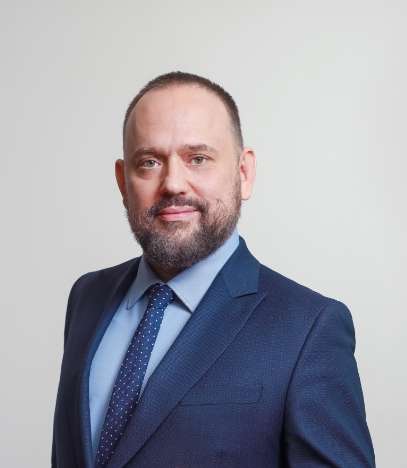
Robert Nogacki – licensed legal counsel (radca prawny, WA-9026), Founder of Kancelaria Prawna Skarbiec.
There are lawyers who practice law. And there are those who deal with problems for which the law has no ready answer. For over twenty years, Kancelaria Skarbiec has worked at the intersection of tax law, corporate structures, and the deeply human reluctance to give the state more than the state is owed. We advise entrepreneurs from over a dozen countries – from those on the Forbes list to those whose bank account was just seized by the tax authority and who do not know what to do tomorrow morning.
One of the most frequently cited experts on tax law in Polish media – he writes for Rzeczpospolita, Dziennik Gazeta Prawna, and Parkiet not because it looks good on a résumé, but because certain things cannot be explained in a court filing and someone needs to say them out loud. Author of AI Decoding Satoshi Nakamoto: Artificial Intelligence on the Trail of Bitcoin’s Creator. Co-author of the award-winning book Bezpieczeństwo współczesnej firmy (Security of a Modern Company).
Kancelaria Skarbiec holds top positions in the tax law firm rankings of Dziennik Gazeta Prawna. Four-time winner of the European Medal, recipient of the title International Tax Planning Law Firm of the Year in Poland.
He specializes in tax disputes with fiscal authorities, international tax planning, crypto-asset regulation, and asset protection. Since 2006, he has led the WGI case – one of the longest-running criminal proceedings in the history of the Polish financial market – because there are things you do not leave half-done, even if they take two decades. He believes the law is too serious to be treated only seriously – and that the best legal advice is the kind that ensures the client never has to stand before a court.