Jeffrey Epstein Bank Settlements
How Bank of America, JPMorgan and Deutsche Bank Financed Sex Trafficking
Bank of America has settled Epstein survivors’ lawsuit. It is the third major financial institution to pay—after JPMorgan Chase ($290 million) and Deutsche Bank ($75 million). A legal and financial analysis: how the global banking system became the operational backbone of a sex trafficking empire. – By Robert Nogacki
In March 2026, Bank of America settled with victims of Jeffrey Epstein. The financial terms remain undisclosed. The facts established over years of litigation, however, are public—and considerably more disturbing than any single figure. Bank of America is the third major bank to pay for its role in Epstein’s network: JPMorgan Chase paid $290 million. Deutsche Bank paid $75 million and separately received a $150 million regulatory penalty from the New York State Department of Financial Services. The combined total of fines and settlements imposed on banks and Epstein’s estate exceeds $775 million.
Not one banker has faced criminal prosecution. Not one institution has admitted wrongdoing.
What the record reveals—sworn depositions, regulatory consent orders, Senate Finance Committee analyses, and internal bank correspondence—is not the portrait of an exceptional criminal but of a smoothly functioning system. Epstein did not finance human trafficking from his personal wealth. He used the financial system as his operational infrastructure: bank accounts in victims’ names as immigration documentation, Virgin Islands shell companies as payment conduits, a banking license in an American overseas territory as a legitimacy layer.
The banks knew—or were required by law to find out—and chose silence.This is not a story about an exceptional criminal who outwitted the system. It is a story about a system that worked exactly as it was designed.
The Foundation: How to Build a Financial Empire on Other People’s Money
Jeffrey Epstein grew up in Coney Island in a working-class family, never finished college, and entered Wall Street through the father of one of his students at the Dalton School in Manhattan. By 1980 he was a limited partner at Bear Stearns, earning approximately $200,000 a year. He left in 1981 after being fined for a trading violation.
Between 1987 and 1989 he worked as a consultant for Steven Hoffenberg at Towers Financial—a debt-collection firm that turned out to be one of the largest Ponzi schemes in American history, defrauding investors of a billion dollars. Hoffenberg told CBS News that Epstein was his “wingman” in raising “a billion dollars illegally.” Epstein left Towers in 1989—four years before the fraud came to light. He was never charged.
The foundation of the empire was a single relationship: with Les Wexner, founder of The Limited and Victoria’s Secret. By 1991 Epstein had obtained broad power of attorney over Wexner’s personal finances. Wexner’s lawyers later disclosed that Epstein had “misappropriated vast sums”—purchasing properties on Wexner’s behalf and transferring them to himself at a fraction of their value. Wexner severed the relationship around 2007, after Epstein returned approximately $100 million. Notably: Wexner was named as a co-conspirator in a 2019 FBI document—and according to the New York Times Magazine, someone had warned him before the relationship began that Epstein was “a rat.” Wexner ignored the warning.
The second pillar was Leon Black, co-founder of Apollo Global Management. Black transferred $170 million from his Bank of America account to Epstein for “tax and estate-planning advice”—without a written agreement, without a defined scope of work. Senator Ron Wyden, in a July 2025 letter to the DOJ, described the amount as “abnormal for tax advice.” The October 2025 Bank of America lawsuit includes allegations against Black “beyond purely financial dealings.” No criminal charges. According to Forbes, Wexner and Black together accounted for more than 75% of Epstein’s fee income—estimated at a minimum of $490 million in total.
The U.S. Virgin Islands as a Tax Haven
In 1996, Epstein purchased Little St. James Island for approximately $8 million and became a resident of the U.S. Virgin Islands. The U.S. Virgin Islands are an independent customs territory operating largely as a free port—residents are not subject to federal income tax on Virgin Islands-source income. The key incentive was the Economic Development Commission (EDC): reductions of between 90 and 100 percent on most federal taxes. In 2014, the territory was officially designated a tax haven; in 2018, the European Union placed it on the blacklist of non-cooperative jurisdictions.
American legal protection, an American passport—and near-zero taxation. This was not a legal gray area but a deliberate state instrument to attract capital, which Epstein converted into an instrument to finance a criminal operation.
His primary vehicle—Financial Trust Company—was relocated to the Virgin Islands. A successor entity, Southern Trust Company, became the vehicle for fraudulently claiming EDC benefits through false representations. In proceedings concluded with a $105 million settlement, Virgin Islands authorities established that Epstein had fraudulently obtained more than $80 million in tax benefits—financing his criminal empire with public incentive funds in the guise of investment.
In 2014, Epstein obtained a banking license in the Virgin Islands for Southern Country International—an entity conducting minimal legitimate operations. A registered sex offender was operating a licensed bank in an American overseas territory. After his death in 2019, the company continued to receive payments.
Bloomberg identified more than 30 shell companies in the Virgin Islands and New York. The ICIJ Paradise Papers showed the network extended through Bermuda. Separately: Epstein held an account at BNP Paribas from 2008 to 2018, inherited when the bank acquired Fortis France. The account was used for personal expenses in France: a €90,000 Mercedes-Benz, Hermès items.
For a tax attorney, this architecture is a textbook case of corporate-form abuse. What distinguishes Epstein from ordinary aggressive tax planning is that each structural layer simultaneously served an operational function in the trafficking operation.
JPMorgan: Knowing and Staying Silent—for Fifteen Years
JPMorgan was Epstein’s primary banker from 1998. At peak, the bank held approximately $300 million in his accounts. Beyond the deposits, Epstein functioned as a business-development asset for the bank—introducing wealthy clients, including Wexner himself.
Jes Staley, a senior executive and once the favored successor to Jamie Dimon, intervened on Epstein’s behalf at least four times when the compliance department raised concerns. Internal AML specialists identified the cash-withdrawal patterns as a typology consistent with the financing of human trafficking. The accounts remained open.
Between 2004 and 2005, Epstein withdrew more than $1.7 million in cash from JPMorgan accounts. A 2006 compliance review flagged regular withdrawals of between $40,000 and $80,000, multiple times per month. The bank’s AML specialists identified these patterns as indicative of human trafficking. Nothing was done.
The most revealing number in this case is not the settlement figure. It is the ratio of Suspicious Activity Reports (SARs). While Epstein was alive and actively running his network, JPMorgan filed SARs on approximately $4.3 million in transactions.
One month after his death—when there was no longer a business relationship to protect—the bank filed retroactive SARs covering $1.3 billion across approximately 4,700 transactions dating to 2003. The ratio: 300:1.
The retroactive SAR filed in September 2019 contained one detail that should not be overlooked: the bank noted Epstein’s “relationships with two U.S. presidents.” The bank had known this for years. Which two presidents the filing referred to has never been officially confirmed. Senator Wyden’s November 2025 analysis concluded that the six-year delay between terminating the relationship and filing the SARs “warrants a federal criminal investigation.” As of this writing, none has been initiated. JPMorgan paid $290 million to victims and $75 million to the U.S. Virgin Islands. No admission of wrongdoing.
Deutsche Bank: Bureaucratic Theater
In 2013, when JPMorgan ended its relationship with Epstein, Deutsche Bank immediately took him on—knowing he was a convicted sex offender whose previous bank had just dropped him. The bank formally classified him as a “high risk” client—an act of bureaucratic honesty after which absolutely nothing followed.
The DFS established that the classification had become procedural fiction: the risk committee’s conditions were never properly transmitted to the relationship team, and the compliance officer who received them misinterpreted them. Epstein maintained up to 40 accounts at Deutsche Bank—and each time the bank attempted to close them, it discovered previously unknown ones.
Through those accounts moved: at least 18 wire transfers above $10,000 to publicly named alleged co-conspirators; more than $7 million in settlement payments to victims; transfers to “Russian models”; tuition fees and immigration costs for young women with Eastern European surnames; payments through “Butterfly Trust” accounts—described in the bank’s own documentation as covering the “lifestyle expenses” of young women connected to Epstein’s network.
The epilogue is almost operatic. In late 2018, Deutsche Bank formally notified Epstein it was ending the relationship. On April 9, 2019—three months before his arrest, after the relationship was supposedly already over—the bank fulfilled a €50,000 cash order in large-denomination bills ahead of one of his European trips. Epstein had the tickets. He was arrested at Teterboro Airport. The DFS imposed a $150 million penalty. The bank acknowledged it had “make a mistake.”
Bank of America: Victims’ Accounts as System Infrastructure
Bank of America’s role differs structurally from JPMorgan’s and Deutsche Bank’s. Those banks were Epstein’s personal banks. Bank of America was the bank of his victims and his administrative network.
The October 2025 complaint describes the mechanism precisely. In 2013, on the instruction of Richard Kahn and Epstein’s immigration attorney, accounts were opened in the name of an anonymous plaintiff—a Russian-born woman trafficked from 2011, abused “on at least 100 occasions.” The accounts were nominally hers. In practice they were controlled by Epstein’s staff to generate documentation for a visa application.
Through those accounts moved: regular wire transfers from Virgin Islands entities; payments disguised as wages; cash withdrawals in round numbers, linked to the building at 301 East 66th Street—long identified as the location of apartments used to house victims in Epstein’s network.
Equally significant is the Leon Black transaction: $170 million wired from his Bank of America account to Epstein for “tax advice” without a contract or a defined scope of work. Bank of America never filed a SAR. The March 2026 settlement—undisclosed amount, no admission of wrongdoing—closed the third chapter.
Kompromat and Counterintelligence: How Sex Becomes a Currency of Power
Until this point the analysis has focused on financial infrastructure. There is, however, another dimension of Epstein’s operation—equally well-documented, less often discussed in systemic terms—that explains why bankers, politicians, and lawyers did not leave, even when they had seen enough to do so. It is a mechanism older than any financial regulator: the honeytrap, the use of sexual intimacy as a tool of intelligence and control.
The honeytrap works not because its targets are uniquely naive, but because the psychology of power systematically eases entry into the trap. Analyzing this mechanism, Matt Hussey identifies three converging factors: overconfidence bias—the conviction of powerful men that they control every situation; entitlement—the sense that normal rules do not apply to them; and shame, which after exposure functions as a self-reinforcing mechanism of silence. Unlike guilt, which demands reparation, shame demands concealment. The trap does not need to be activated to function. Its existence is enough.
Epstein—according to widely reported investigative findings—was not running merely a trafficking operation. He was operating something closer to a private kompromat factory: collecting leverage material on wealthy and influential men, storing it, and converting it into a currency of silence. Evidence that this operation had at least one documented connection to Russian intelligence infrastructure was published by the Dossier Center, an investigative organization tracking the Russian elite.
The central figure is Sergei Belyakov, then Russia’s Deputy Minister of Economic Development and later director of the SPIEF Foundation—the organization running the St. Petersburg International Economic Forum, where, as modeling agencies openly acknowledge, the presence of Russian escorts has become an annual norm. Belyakov is a graduate of the FSB Academy, completing his studies in 1998 after service in the FSB’s border forces. Such career trajectories—from intelligence academy to deputy minister within a decade, via a succession of advisory posts with imprecise mandates—are in Russia widely understood as indicating FSB employees seconded to civilian institutions. Belyakov was in documented contact with Epstein from at least 2014—that is, after Epstein’s 2008 Florida criminal conviction.
In July 2015, Epstein wrote to Belyakov:
“How are you, I need a favor, there is a russian girl from moscow. Guzel Ganieva. she is attempting to blackmail a group of powerful biznessman in New York, it is bad for business for everyone involved.”
Ganieva—per Epstein’s account—claimed that “powerful men were taking advantage of women like her.” Belyakov responded within days, sending a profile of Ganieva:
“The girl arranges this business each summer in the US and other locations. She has nobody behind her. So far she has been engaged in numerous hard stories with no consequences for the other participants. Deny of the access to the US would be a great threat to her business. In good season (may-august) it brings her over $100 K.”
Ganieva subsequently accused Leon Black—Epstein’s associate—of sadistic conduct and harassment. The exchange acquires an additional dimension in light of that.
Belyakov provided other services: he assisted with Epstein’s Russian visa application and arranged planned meetings with the Deputy Finance Minister and the Deputy Chairman of the Central Bank. Epstein reciprocated by advising on Russian monetary policy after the annexation of Crimea and helping recruit Western participants for SPIEF—when serious Western businessmen were declining to travel to sanctioned Russia. He offered introductions to Nathan Myhrvold (Microsoft), Reid Hoffman (LinkedIn), Thomas Pritzker, and former Israeli Defense Minister Ehud Barak. The Dossier Center established at least five meetings between the two men.
The point of connection between both networks was Svetlana Pozhidaeva: a graduate of MGIMO—the university that produces Russia’s diplomatic and intelligence cadres—a model signed with Elite Models, and later the president of Education Advance, an organization funded by Epstein. In December 2010 she was photographed leaving Epstein’s mansion while Prince Andrew was present on the premises. The trademark for her subsequent organization, WE Talks: the Women’s Empowerment Project, was registered by Darren Indyke—Epstein’s personal attorney and, after his death, one of the two executors of his estate. The address on the trademark application was identical to the Epstein Foundation’s address.
Epstein did not invent the honeytrap. He demonstrated how far it can scale when combined with modern wealth, an offshore structure, and the absence of oversight. A kompromat factory requires very few moving parts: money, silence, paperwork, and someone with the right institutional credentials.
The Last Maneuver: A Will Signed Forty-Eight Hours Before Death
Epstein operated strategically to the end. Forty-eight hours before his death in federal custody—on August 8, 2019—he signed the “1953 Trust” and a pour-over will, attempting to transfer an estate of approximately $577 million beyond the reach of creditors and victims. The trust’s name comes from his birth year: a small narcissistic flourish in a legal instrument designed solely to ensure that the women he had abused received nothing.
Courts treated the transfer as a likely fraudulent conveyance—a disposition of assets intended to defraud future creditors. The mechanism did not ultimately prevent victim claims against the estate, but it delayed proceedings by years. The executors of the estate—Darren Indyke and Richard Kahn (the same accountant who had opened victims’ accounts at Bank of America)—for a long time obstructed disclosure of the exact structure of assets. That significant portions of the fortune likely remain hidden follows directly from the Paradise Papers.
Conclusion: What Remains
No chief compliance officer will stand trial.No banker will go to prison.The institutions paid without admitting wrongdoing, and used the formula “without admitting wrongdoing” as a pass back to normalcy.Epstein’s income from “tax advice”—$490 million without a single written contract—produced no criminal consequences for anyone who wrote the checks.
But something remains. A judicial record: internal correspondence, sworn depositions, compliance reports—documents that constitute a historical account of what each institution knew and when. The note in JPMorgan’s retroactive SAR about Epstein’s “relationships with two U.S. presidents”—written by the bank itself, seventeen years before its disclosure. The question of which two presidents. A will signed forty-eight hours before death. Staley at Barclays. Leon Black facing allegations “beyond purely financial dealings.”
And one question remains, the one that should accompany every compliance officer reading every client file in every bank in the world: Is the information in front of me the information I will have to explain under oath in fifteen years?
For Epstein, the entire machinery worked for as long as someone kept paying. He paid in cash. He paid by wire transfer from the Virgin Islands. He paid $170 million for “tax advice” without a contract. And the banks accepted every payment. Because that is how private banking works.
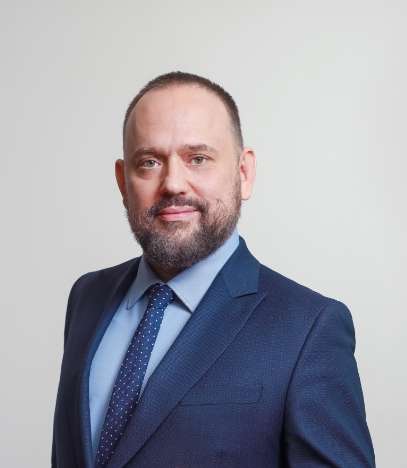
Robert Nogacki – licensed legal counsel (radca prawny, WA-9026), Founder of Kancelaria Prawna Skarbiec.
There are lawyers who practice law. And there are those who deal with problems for which the law has no ready answer. For over twenty years, Kancelaria Skarbiec has worked at the intersection of tax law, corporate structures, and the deeply human reluctance to give the state more than the state is owed. We advise entrepreneurs from over a dozen countries – from those on the Forbes list to those whose bank account was just seized by the tax authority and who do not know what to do tomorrow morning.
One of the most frequently cited experts on tax law in Polish media – he writes for Rzeczpospolita, Dziennik Gazeta Prawna, and Parkiet not because it looks good on a résumé, but because certain things cannot be explained in a court filing and someone needs to say them out loud. Author of AI Decoding Satoshi Nakamoto: Artificial Intelligence on the Trail of Bitcoin’s Creator. Co-author of the award-winning book Bezpieczeństwo współczesnej firmy (Security of a Modern Company).
Kancelaria Skarbiec holds top positions in the tax law firm rankings of Dziennik Gazeta Prawna. Four-time winner of the European Medal, recipient of the title International Tax Planning Law Firm of the Year in Poland.
He specializes in tax disputes with fiscal authorities, international tax planning, crypto-asset regulation, and asset protection. Since 2006, he has led the WGI case – one of the longest-running criminal proceedings in the history of the Polish financial market – because there are things you do not leave half-done, even if they take two decades. He believes the law is too serious to be treated only seriously – and that the best legal advice is the kind that ensures the client never has to stand before a court.