

Hedge Funds. The Architecture of Money
On the art and science of establishing hedge funds in a world of competing jurisdictions
The global hedge-fund industry crossed the five-trillion-dollar threshold in the third quarter of 2025—a figure that tells us something about scale but rather little about substance. What interests the legal mind is something else entirely: how, amid the thicket of jurisdictions, tax regimes, and regulatory frameworks, does one construct a structure capable of serving an investor’s purposes for decades rather than merely surviving the next fiscal year?
The third quarter of 2025 brought net inflows of thirty-three point seven billion dollars—the highest since the third quarter of 2007, which is to say, since before the world learned what a credit-default swap could do to a civilization. In the first half of 2025, two hundred and sixty-two new funds came into being, while only a hundred and thirty-eight were liquidated—the lowest number in two decades. The market is not merely growing; it is consolidating around larger players. Managers with more than five billion dollars in assets attracted ninety-six per cent of all capital inflows.
These statistics sketch a portrait of an industry that is mature yet still dynamic. For a certain kind of investor—a family foundation seeking diversification, an entrepreneur constructing a holding structure—hedge funds remain among the more sophisticated instruments of capital allocation. They demand, however, an understanding not merely of investment mechanics but, more crucially, of legal and tax architecture.
Part I: A Geography of Possibility
The Caymans: An Industry Standard
Choosing a jurisdiction for a hedge fund is rather like choosing a position on a chessboard—each square opens certain possibilities and forecloses others. The Cayman Islands remain the dominant piece in this game. Approximately seventy per cent of the world’s offshore funds maintain their seat here, which translates to more than twenty-nine thousand registered investment vehicles.
The Caymans’ advantage does not derive solely from tax neutrality—the absence of income tax, capital-gains tax, or withholding tax is a necessary but insufficient condition. The true value lies in the ecosystem. Over decades, a network of specialized service providers has taken shape: fund administrators, auditors, prime brokers, law firms. Case law concerning fund structures is rich and predictable. Institutional investors—pension funds, family offices, funds of funds—know and accept Cayman vehicles without additional jurisdictional due diligence.
The Cayman Islands Monetary Authority, known as CIMA, offers several registration categories:
The Registered Fund is the most common form for hedge funds. It requires a minimum subscription of a hundred thousand dollars from each investor, an open-ended structure permitting redemptions, and ongoing reporting to the regulator.
The Exempted Company is the standard legal form—the equivalent of a joint-stock company, with limited shareholder liability and flexible governance rooted in English common law.
The Exempted Limited Partnership, or E.L.P., is the structure preferred by institutional investors who value tax transparency. The division between general partner (the manager, bearing unlimited liability) and limited partners (the investors, liable only to the extent of their contributions) mirrors the logic of private-equity funds.
The Segregated Portfolio Company, or S.P.C., is a multi-cellular corporate structure, which we shall examine in greater detail below.
Registration with CIMA typically takes two to four weeks, though incorporation itself is a matter of forty-eight hours to a week. Full operational launch—including opening bank accounts, establishing prime-broker relationships, and implementing compliance infrastructure—requires three to six months.
Luxembourg funds: Gateway to the European Union
Luxembourg is the world’s second-largest fund jurisdiction and the undisputed leader in Europe. With net assets exceeding 5.77 trillion euros as of May 2025, investment funds domiciled in the Grand Duchy offer something the Caymans cannot: a European passport enabling distribution across all E.U. member states, plus access to a network of more than seventy double-taxation treaties.
The logic of choosing Luxembourg differs from that of the Caymans. Here, the appeal is not tax neutrality per se but rather structural tax transparency—the tax burden passes through to the investor level while treaty benefits are preserved at the fund level.
Among the fund types available in Luxembourg:
UCITS (Undertakings for Collective Investment in Transferable Securities) is the European directive standardizing open-ended funds with high liquidity. Diversification requirements and leverage restrictions render UCITS less attractive for classic hedging strategies, but it is ideal for long-only or long-bias funds with ambitions of broad retail distribution.
SIF (Specialized Investment Fund) is a Luxembourg structure for alternative strategies, offering greater leverage flexibility and restrictions limiting investors to qualified participants.
RAIF (Reserved Alternative Investment Fund) is an AIFMD-compliant structure designed for sophisticated investors. Minimal operational restrictions on investment strategy, flexible redemption terms. This is the preferred vehicle for hedge funds targeting an institutional L.P. base.
Supervision rests with the CSSF (Commission de Surveillance du Secteur Financier). Fund authorization takes four to eight weeks; full operational launch, three to four months. Costs are higher than in the Caymans, but for funds with a European investor base or strategies requiring E.U. market access, they are justified.
Singapore: An Asian Hub in the Making
Singapore is emerging as the third pole of the global fund market, particularly since the introduction in 2020 of the Variable Capital Company, or V.C.C. For funds with exposure to ASEAN markets, India, China, or Australia, Singaporean residence offers a unique combination: the regulatory credibility of the Monetary Authority of Singapore (MAS), a legal system rooted in English common law, English as an official language, and access to the world’s fastest-growing base of private capital.
The V.C.C. is a structure designed specifically for investment funds—with flexible share capital, tax efficiency, and the ability to create sub-funds under a single corporate umbrella. MAS maintains rigorous governance and compliance standards, which paradoxically constitutes an advantage: Asian investors value a regulator’s reputation more highly than the liberality of its rules.
Singapore offers selective tax exemptions for qualifying funds: no withholding tax on distributions to non-residents, G.S.T. exemption for fund-management services, and a favorable network of regional tax treaties.
V.C.C. formation time: four to six weeks; full operational launch: two to three months.
Alternative Jurisdictions: Malta, Cyprus, Ireland
Not every fund requires the scale of the Caymans or the prestige of Luxembourg. For smaller structures (fifty to five hundred million dollars in A.U.M.) or specific strategies, alternative European jurisdictions may offer a better cost-benefit ratio.
Malta positions itself as a less expensive alternative to Luxembourg within the E.U. An effective tax rate of five per cent for entities controlled by non-residents, MFSA regulation under the AIFMD regime, SICAV and unit-trust structures, significantly lower operating costs. The limitation is a smaller ecosystem of service providers and weaker recognition among global institutional investors. Malta works for funds targeting European investors with a cost-optimization priority.
Cyprus has grown into a competitive jurisdiction for alternative strategies, particularly in real estate, private equity, and private debt. The RAIF (Registered Alternative Investment Fund) structure under CySEC supervision, no withholding tax on distributions to non-residents, VAT exemptions for management services, and an extensive network of double-taxation treaties. Operating costs are lower than in Luxembourg, though there are fewer top-tier service providers.
Ireland is primarily a UCITS jurisdiction—for funds seeking the broadest possible distribution within the E.U. and beyond. The Central Bank of Ireland enjoys a solid reputation, and the common-law legal system is familiar to British and American managers. For leveraged or complex strategies, Ireland is less flexible than the Caymans, but for liquid products with global distribution ambitions, it is often optimal.
Part II: Structural Architectures
Master-Feeder: The Gold Standard of Global Distribution
The master-feeder structure remains the canonical solution for funds seeking capital from a geographically diverse investor base. The logic is elegant: a single master fund executes all portfolio transactions and generates returns, while separate feeder funds serve different investor groups according to their tax and regulatory domicile.
A typical architecture:
The Master Fund—usually a Cayman exempted company or exempted limited partnership—conducts all investment activity, maintains relationships with prime brokers and counterparties, and generates portfolio results. It does not accept capital directly from end investors.
The U.S. Domestic Feeder—an American L.L.C. or limited partnership—provides U.S. investors with tax transparency (pass-through taxation). Capital flows to the master fund, but for tax purposes, American investors are treated as if they participated directly in the portfolio’s gains and losses. This avoids classification as a Passive Foreign Investment Company, or P.F.I.C., which would trigger unfavorable taxation.
The Offshore Feeder—a Cayman exempted company for international (non-American) investors—offers complete tax neutrality at the fund level; taxation occurs only in the investor’s jurisdiction of residence.
The E.U. Feeder (optional)—a Luxembourg RAIF or Maltese SIF for distribution within the European Union, with an AIFMD passport.
The Asia Feeder (optional)—a Singapore V.C.C. for an Asian investor base.
The structure legally isolates different investor groups, enabling optimal tax treatment for each while maintaining unified portfolio management and execution efficiency at the master-fund level.
Implementing a master-feeder architecture requires four to six months of coordination and a budget exceeding two to two-and-a-half times the cost of a single vehicle (typically eighty to a hundred and fifty thousand dollars for a complete setup with two feeders). For assets exceeding two hundred million dollars, the tax and operational efficiency of this structure justifies the outlay; for smaller funds, a simpler single-entity structure is usually more rational.
Segregated Portfolio Companies: Multi-Strategy Efficiency
For managers running multiple strategies under one roof, the Segregated Portfolio Company, or S.P.C., offers an alternative to establishing separate entities for each portfolio. A single corporate structure houses multiple segregated portfolios, or “cells,” each possessing:
- Separate accounting and its own financial statements
- Its own investment strategy and risk parameters
- Dedicated share classes
- Legal segregation of assets and liabilities—creditors of one portfolio have no access to the assets of others
This last feature is critical. Cayman courts (and British courts, where the S.P.C. concept originated) have consistently upheld the effectiveness of segregation in insolvency proceedings and creditor disputes. For demanding institutional investors, this means legal comfort comparable to separate companies, at significantly lower cost.
A typical S.P.C. architecture for a multi-strategy fund:
SPC Holdings Ltd. (Cayman Exempted Company)
├── Cell 1: Long-Short Equity
├── Cell 2: Global Macro
├── Cell 3: Event-Driven
├── Cell 4: Credit Opportunities
└── Cell 5: Quantitative Strategies
Savings relative to the separate-company model reach thirty to fifty per cent for each additional portfolio. One board, one registration, shared service providers (administrator, auditor), consolidated compliance—while maintaining complete risk isolation between strategies.
The structure’s effectiveness depends on precise documentation: separate prospectuses for each portfolio, explicit segregation clauses in contracts with counterparties, separate bank accounts and custody arrangements, clear governance distinguishing cell-level decisions from those of the entire company.
Fund-of-Funds: Access Through Selection
The fund-of-funds structure, or FoF, serves investors seeking hedge-fund exposure without the necessity of selecting managers themselves. A FoF aggregates capital and allocates it to a portfolio of underlying funds, offering diversification and professional manager selection.
From a legal perspective, a FoF is a standard investment fund—it may take the form of a Cayman exempted company, a Luxembourg RAIF, or a Singapore V.C.C. The distinguishing feature is the fee layer: the investor bears the cost of FoF management (typically 0.5 to 1.5 per cent annually plus ten to twenty per cent of gains) as well as a proportional share of underlying-fund fees (another 1.5 to 2.5 per cent plus fifteen to twenty per cent). Total burden can reach three to four per cent annually plus twenty-five to forty per cent of performance—the price of outsourcing selection and monitoring.
AIFMD II (implementation by April 16, 2026) introduces additional reporting requirements for FoFs on aggregated leverage and systemic-risk indicators of underlying funds.
Jurisdictional Due Diligence
Choosing a jurisdiction for a fund or investment vehicle requires analysis extending beyond tax-rate comparisons. A practical checklist includes:
Blacklist status: Does the jurisdiction appear on the E.U. list of tax havens (Annex I/II), the FATF list of high-risk AML countries, or Poland’s Ministry of Finance list of non-cooperative tax jurisdictions? Presence on such lists may result in exclusion from exemptions, heightened reporting obligations, or outright transaction prohibitions for certain investor categories.
Treaty network: Does a double-taxation treaty exist between the fund jurisdiction and Poland? What are the withholding-tax rates on dividends, interest, and royalties? Does the treaty contain limitation-of-benefits or principal-purpose-test clauses?
Information exchange: Does the jurisdiction participate in automatic information exchange (CRS)? In practice: will Polish tax authorities receive information about a Polish resident’s participation in the fund?
Institutional recognition: Are funds from the jurisdiction accepted by global institutional investors without additional due diligence? For a fund seeking capital from pension funds or sovereign-wealth funds, this is a critical factor.
Part III: Digital-Asset Funds
The Peculiarities of Crypto-Assets
Hedge funds investing in cryptocurrencies, tokens, and other digital assets represent a growing market segment—though still niche relative to the industry as a whole. The specificity of this asset class generates additional structural and regulatory challenges.
Custody: Storing crypto-assets requires specialized solutions—cold storage, multi-signature wallets, theft insurance. Traditional custodians (banks, prime brokers) are only now building competence in this area; specialized providers (Anchorage, BitGo, Coinbase Custody) fill the gap.
Valuation: There are no uniform valuation standards for many tokens, particularly in the DeFi segment. NAV calculation requires clear policies regarding price sources, handling of illiquid positions, and treatment of airdrops and forks.
AML compliance: Elevated risk of money laundering and terrorist financing. Funds must implement blockchain-analytics tools (Chainalysis, Elliptic) to trace the origin of funds.
Regulatory Frameworks
MiCA (Markets in Crypto-Assets Regulation): The E.U. regulation entering full effect in 2025 establishes uniform frameworks for crypto-asset-related services in the Union. Funds investing in crypto-assets fall under AIFMD (if they meet the AIF definition), but service providers—exchanges, custodians, brokers—must obtain authorization as CASPs (Crypto-Asset Service Providers).
VASP in Poland: The Anti-Money Laundering Act requires registration for virtual-currency activities. A Polish fund or Polish entity intermediating crypto-asset investments may be subject to VASP obligations.
SEC (U.S.A.): The SEC’s aggressive stance treating many tokens as securities implies that crypto funds with American investors must navigate a complicated regulatory landscape, often excluding certain tokens from their portfolios.
For crypto funds, jurisdictions such as the Caymans or Singapore offer relative regulatory clarity, though requirements are increasing there as well. Luxembourg and other E.U. jurisdictions require full MiCA compliance for related services.
A Strategic Perspective
Establishing a hedge fund is an undertaking requiring legal, tax, operational, and regulatory coordination across multiple jurisdictions simultaneously. Entry costs and compliance barriers are rising—but so are industry assets and investor appetite for sophisticated capital-management strategies.
For a certain kind of investor—a family foundation, a holding structure, a family office—hedge funds remain among the more advanced tools for diversifying and professionalizing wealth management. They require, however, a thoughtful architecture that accounts for CFC rules, mandatory disclosure requirements, and transfer pricing, while simultaneously optimizing at the fund-jurisdiction level.
Kancelaria Prawna Skarbiec advises clients at every stage of this process: from analyzing investment objectives and selecting optimal structures, through preparing documentation and coordinating registrations across multiple jurisdictions, to ongoing support on tax matters, compliance, and corporate governance. We work with partner firms in the Caymans, Luxembourg, Singapore, Malta, and Cyprus, ensuring advisory consistency across borders.
Hedge funds are not for everyone—but for those who understand their mechanics and are prepared to invest in the appropriate infrastructure, they constitute a powerful instrument for building and protecting wealth on a global scale.
This article is for informational purposes only and does not constitute legal or tax advice. Each fund structure requires individual analysis considering the specifics of investors, strategy, and business objectives. For questions regarding the establishment or administration of hedge funds, we invite you to contact the Firm.
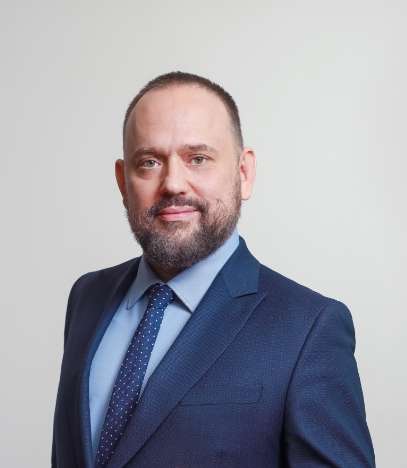
Robert Nogacki – licensed legal counsel (radca prawny, WA-9026), Founder of Kancelaria Prawna Skarbiec.
There are lawyers who practice law. And there are those who deal with problems for which the law has no ready answer. For over twenty years, Kancelaria Skarbiec has worked at the intersection of tax law, corporate structures, and the deeply human reluctance to give the state more than the state is owed. We advise entrepreneurs from over a dozen countries – from those on the Forbes list to those whose bank account was just seized by the tax authority and who do not know what to do tomorrow morning.
One of the most frequently cited experts on tax law in Polish media – he writes for Rzeczpospolita, Dziennik Gazeta Prawna, and Parkiet not because it looks good on a résumé, but because certain things cannot be explained in a court filing and someone needs to say them out loud. Author of AI Decoding Satoshi Nakamoto: Artificial Intelligence on the Trail of Bitcoin’s Creator. Co-author of the award-winning book Bezpieczeństwo współczesnej firmy (Security of a Modern Company).
Kancelaria Skarbiec holds top positions in the tax law firm rankings of Dziennik Gazeta Prawna. Four-time winner of the European Medal, recipient of the title International Tax Planning Law Firm of the Year in Poland.
He specializes in tax disputes with fiscal authorities, international tax planning, crypto-asset regulation, and asset protection. Since 2006, he has led the WGI case – one of the longest-running criminal proceedings in the history of the Polish financial market – because there are things you do not leave half-done, even if they take two decades. He believes the law is too serious to be treated only seriously – and that the best legal advice is the kind that ensures the client never has to stand before a court.