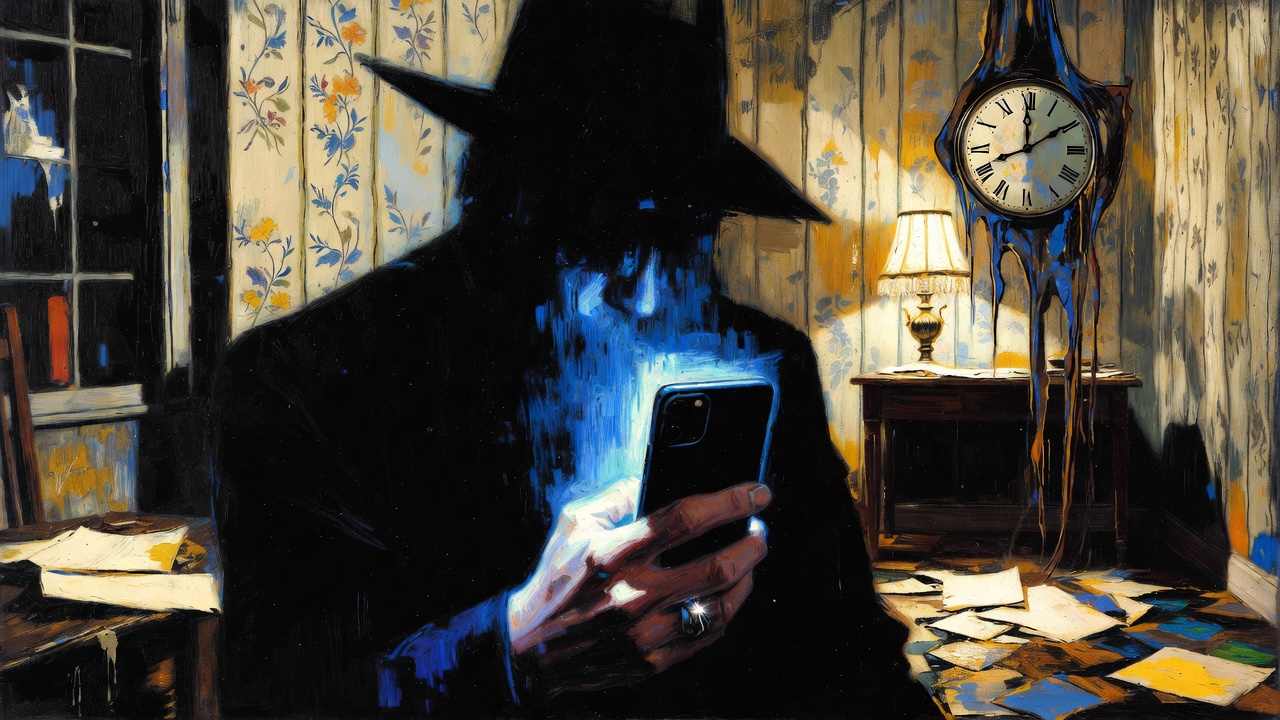
“Intellectual property is the oil of the twenty-first century,” Mark Getty declared—the heir to an oil fortune who built an empire licensing photographs. The comparison cuts to the point: in a knowledge economy, the intangible—brand, code, design, content—often exceeds in value anything you can touch.
Intellectual property law in Poland provides the framework for protecting these invisible assets. But protection requires vigilance, precision, and an understanding of how Polish IP regulations interact with European and international systems.
- Further reading: Trademark rights: enforcement and defence
The Paradox of Ownership Without Possession
Thomas Jefferson, himself an inventor and the author of America’s first patent regulations, wrote: “He who receives an idea from me, receives instruction himself without lessening mine; as he who lights his taper at mine, receives light without darkening me.”
Intellectual property is strange: you can steal it without depriving the owner. You can replicate it infinitely at no cost of production. It is property that defies the intuitions we have developed over millennia of dealing with physical things.
And that is precisely why it requires such meticulous legal protection. If you cannot rely on physical possession, you must rely on the law. And the law—in this domain more than any other—demands active defense.
Intellectual property law in Poland rests on this premise: rights exist only to the extent they are claimed, registered, and enforced.
Trademark Law in Poland: The Brand as Trust Capital
David Ogilvy, the advertising legend, defined a brand as “the intangible sum of a product’s attributes: its name, packaging, price, history, reputation, and the way it’s advertised.” The trademark is the legal anchor of that sum—the point at which reputation becomes property protected by law.
Philip Kotler, the father of modern marketing, argued that a strong brand reduces the risk perceived by the consumer. People buy Nike, Apple, Mercedes because they know what to expect. That predictability has value. And it retains that value only so long as the brand remains exclusive.
Trademark Protection Under Polish IP Law
Intellectual property law in Poland offers multiple pathways for trademark protection:
Polish national trademarks — Registration with the Polish Patent Office (Urząd Patentowy RP) grants protection throughout Poland. The process takes approximately 6-12 months, with protection lasting 10 years (renewable indefinitely).
European Union trademarks — A single registration with EUIPO covers all 27 EU member states, including Poland. For businesses operating across Europe, this is often more efficient than national filings.
International registrations — The Madrid System allows extension of trademark protection to Poland and other designated countries through a single application.
When Brand Value Erodes
When a competitor registers a similar mark, when counterfeits flood the market, when a cybersquatter occupies a domain bearing your name—that value leaks away. Every infringement is an erosion of capital built over years.
Trademark law in Poland provides remedies:
- Opposition proceedings before the Patent Office
- Cancellation actions against improperly registered marks
- Infringement litigation before Polish civil courts
- Customs seizure of counterfeit goods entering Poland
But remedies require action. Under Polish intellectual property law, a trademark owner who tolerates infringement for five years may lose the right to challenge it.
Copyright Law in Poland: The Work and Its Shadows Online
Lawrence Lessig, the law professor and theorist of digital culture, described the Internet as a space in which “the default is copying.” Every page view is, technically, a copy in the browser’s memory. Every share is a multiplication. Copyright, created for a world of printing presses and print runs, collides with a reality in which copying is free and instantaneous.
The Polish Copyright Framework
Intellectual property law in Poland protects original works through the Act on Copyright and Related Rights (ustawa o prawie autorskim i prawach pokrewnych). Protection arises automatically upon creation—no registration required.
Protected works include:
- Literary works, articles, documentation
- Software and source code
- Photographs, graphics, designs
- Musical compositions and recordings
- Audiovisual works
- Databases (under separate sui generis protection)
The Digital Challenge
For the entrepreneur operating online, copyright law in Poland presents a double challenge:
Protecting your own content — Texts, graphics, code, databases. Polish law grants authors both economic rights (transferable) and moral rights (inalienable). Understanding this distinction is essential when commissioning creative work.
Avoiding liability for user content — The hosting provider who fails to respond to infringement notices becomes complicit under Polish implementation of EU directives. The one who responds too zealously risks claims from users.
Tim O’Reilly, the technology publisher, advanced a provocative thesis: “Piracy is a tax on being undiscovered.” For small creators, lack of distribution is a greater threat than illegal copying. But for a business that has built its value on exclusivity, every unlicensed copy is a loss.
Intellectual property lawyers in Poland help navigate this balance—protecting valuable content while managing the risks of enforcement.
Patent Law in Poland: The Invention as Temporary Advantage
Joseph Schumpeter, the economist of innovation, saw economic progress as “creative destruction”—the continual replacement of the old by the new. A patent is legal protection for the temporary advantage an invention confers: twenty years of exclusivity in exchange for revealing to the world how something works.
Patent Protection Under Polish IP Law
Intellectual property law in Poland provides patent protection through:
Polish national patents — Filed with the Polish Patent Office, examined for novelty, inventive step, and industrial applicability. The process typically takes 3-5 years.
European patents — Filed with the European Patent Office (EPO), designating Poland. Once granted, the European patent must be validated in Poland (translation requirements apply).
Unitary Patent — The new EU Unitary Patent system (operational from 2023) offers single-filing protection across participating member states, including Poland.
The Reality of Patent Enforcement
But a patent is not automatic protection. It is, rather, a license to litigate.
Peter Thiel, the co-founder of PayPal, observed that “competition is for losers”—true advantage lies in building a monopoly, however temporary. A patent can be an instrument for building such a monopoly. Or it can be a piece of paper that frightens no one, because the owner lacks the resources to enforce it.
James Dyson, the inventor and entrepreneur, went through 5,127 prototypes of his vacuum cleaner before arriving at a working model. Then he went through years of patent disputes with industry giants. “Patents are only worth what you’re prepared to spend to defend them,” he concluded.
Under patent law in Poland, enforcement means litigation before Polish civil courts—or, increasingly, before the Unified Patent Court for Unitary Patents. Either path requires preparation, resources, and strategic judgment about when to fight and when to negotiate.
IP Contracts: The Foundation of Rights Transfer
Victor Hugo led the nineteenth-century campaign for international copyright protection. He understood that law without enforcement is fiction, and enforcement without clear contracts is chaos.
Common Pitfalls Under Polish IP Law
Every transfer of rights, every license, every commission to create a work requires an agreement that leaves no room for doubt. Yet ambiguity is endemic:
Software development — How often does a company discover that code written on commission does not, formally, belong to the commissioning party? Under Polish copyright law, the general rule is that the creator retains rights unless explicitly transferred in writing.
Design and creative work — How often does an agency learn that the graphic design it paid for remains subject to the creator’s moral rights? Polish law makes moral rights inalienable—the creator can always claim authorship, even after transferring economic rights.
Franchise and licensing — How often does a franchisee find that his trademark license does not cover the business he has just launched? Scope limitations in intellectual property agreements under Polish law can be narrowly construed.
The Precision Imperative
Richard Stallman, the founder of the free-software movement, built an entire legal philosophy around the precision of licenses. The GPL, the license he created, has generated hundreds of pages of legal analysis. Even a movement that, by design, rejects the traditional understanding of intellectual property rests on meticulously constructed agreements.
Intellectual property law in Poland demands the same precision for commercial transactions:
- Written form for copyright transfers (oral agreements are invalid)
- Explicit specification of fields of exploitation (pola eksploatacji)
- Clear territorial and temporal scope
- Allocation of moral rights considerations
Intellectual Property Law in Poland: What We Do
Since 2006, we have advised clients on intellectual property matters—from trademark registration, through the negotiation of licensing agreements, to defense against infringement and representation in disputes.
Trademark Services
- Trademark searches and availability opinions
- Registration before the Polish Patent Office and EUIPO
- Opposition and cancellation proceedings
- Infringement litigation and enforcement
- Domain name disputes
Copyright Services
- Copyright audits and ownership verification
- Licensing agreements and rights transfers
- Software licensing (proprietary and open source)
- Content protection strategies
- DMCA/DSA takedown procedures
Patent and Design Services
- Patentability assessments
- Patent application support (Polish, European, international)
- Industrial design registration
- Freedom-to-operate opinions
- Patent litigation support
IP Transactions
- Due diligence in M&A transactions
- IP valuation support
- Licensing and franchise agreements
- Technology transfer contracts
- Joint development agreements
IP Disputes
- Infringement proceedings before Polish courts
- Patent Office opposition and appeals
- Customs enforcement against counterfeits
- Alternative dispute resolution
Intellectual Property Law in Poland for Foreign Rights Holders
International companies seeking to protect or enforce IP rights in Poland encounter specific considerations:
Language requirements — Patent and trademark applications can be filed in Polish or, for European routes, in English/French/German. Court proceedings are conducted in Polish.
Representation — Before the Polish Patent Office, foreign applicants generally must act through a registered patent attorney (rzecznik patentowy) or advocate/legal counsel.
Enforcement jurisdiction — IP disputes are heard by designated regional courts with specialized IP divisions. Warsaw handles the largest volume of cases.
EU harmonization — Much of Polish intellectual property law derives from EU directives and regulations, making it familiar to rights holders from other member states. But national peculiarities remain.
Cost structure — Compared to Western European jurisdictions, IP litigation in Poland offers a cost-effective forum—relevant for pan-European enforcement strategies.
The Value of Exclusivity
“In a world of unlimited copying, exclusivity is what has value,” the technology futurist Kevin Kelly wrote.
Intellectual property law in Poland is the instrument that creates and guards that exclusivity. But exclusivity is not self-enforcing. It requires:
- Registration before rights can be asserted
- Monitoring to detect infringement
- Swift action before limitations expire
- Strategic judgment about when to litigate and when to license
We know that intellectual property is often a company’s most valuable asset—and, at the same time, the one most vulnerable to erosion. Our task is to ensure that this value is protected as it deserves to be.
Need to protect or enforce intellectual property rights in Poland? Contact us to discuss your situation—whether you’re registering a trademark, negotiating a license, or confronting infringement.
Contact form
Intellectual Property Law – Further Reading
AI in Court: The Global Copyright Landscape in the Age of Algorithms