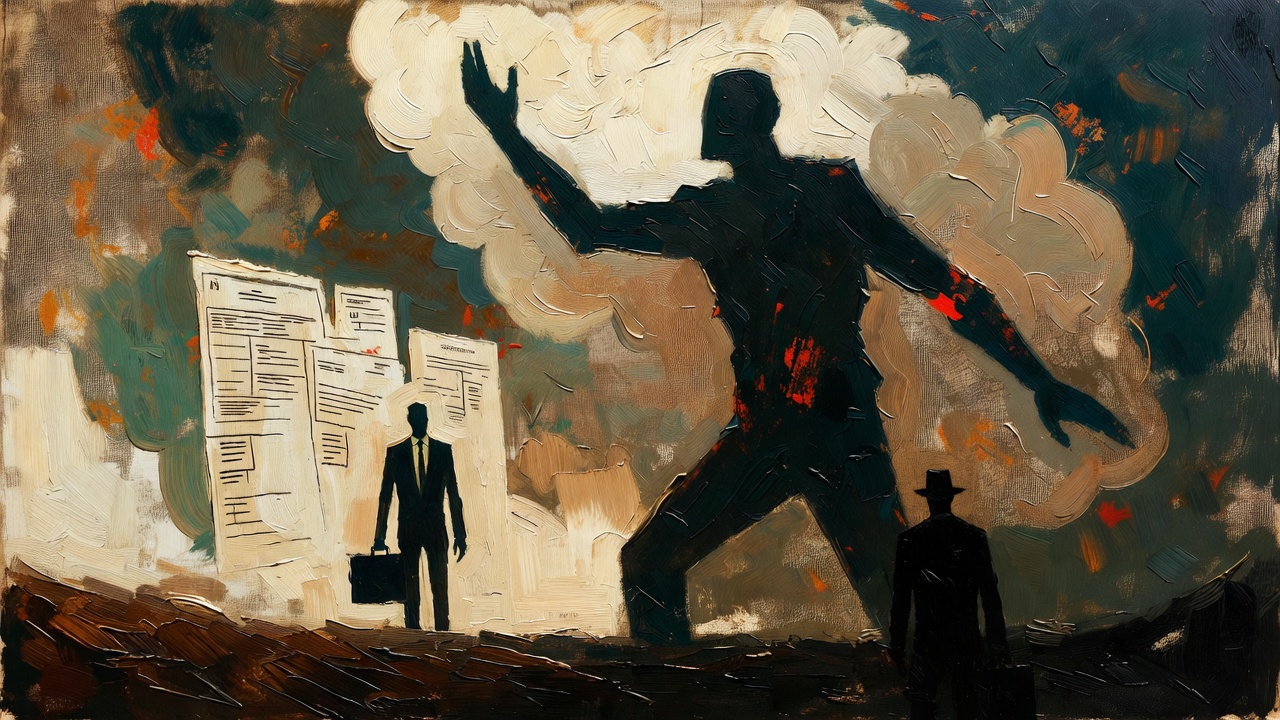
“No plan survives contact with the enemy.”
Helmuth von Moltke the Elder, chief of the Prussian general staff, uttered these words in the latter half of the nineteenth century. He won three wars and unified Germany—not because his plans were perfect, but because he had prepared for their imperfection.
The phrase, quoted more often than it is understood, is not a celebration of improvisation. It is a warning against the illusion of control—and a summons to preparation so thorough that it can survive chaos.
On Preparation: A Lesson from Twenty-Five Centuries Ago
Sun Tzu, the Chinese strategist writing five centuries before the common era, opens his treatise The Art of War with a chapter on calculations. Before the first arrow flies, before troops depart their barracks, the commander must answer five questions: Which ruler possesses moral authority? Which general is more capable? Which army better exploits terrain and weather? In which force is discipline more rigorously enforced? Which army is better trained?
“The victorious general first wins, then seeks battle,” Sun Tzu writes. “The defeated general first seeks battle, then hopes for victory.”
The translation into legal terms is direct. The entrepreneur who arrives at his lawyer’s office when the conflict is already ablaze—when the bank has called the loan, when the tax authority has launched an audit, when a partner has absconded with assets—has already lost the first battle. He may yet win the war, but he begins from a position of weakness.
The entrepreneur who arrives before the conflict—who builds structures resilient to attack, who secures assets before threats materialize, who knows his vulnerabilities and eliminates them—has won before the war begins.
Preparation is not a luxury. It is the foundation.
On Friction: Clausewitz and the Reality of Conflict
Carl von Clausewitz, the Prussian officer and theorist, survived the Napoleonic campaigns, witnessed Prussia’s collapse and its resurrection. His treatise On War, published posthumously in 1832, remains the most influential work on the nature of armed conflict.
Clausewitz introduced the concept of Friktion—friction. In theory, an army marches twenty miles a day. In practice, axles break, soldiers fall ill, orders go astray, bridges prove destroyed. The simple becomes difficult; the difficult, impossible. Friction is the sum of a thousand minor obstacles separating plan from reality.
In legal disputes, friction is omnipresent. The witness who was to confirm your version of events suddenly cannot recall. The document that should be in the file has vanished. The judge who presided over the case for two years has transferred to another division. A deadline has lapsed because the clerk mailed notice to an old address.
The lawyer who fails to account for friction is planning for failure. The lawyer who anticipates it—who builds redundancy, preserves evidence, documents everything, assumes the worst—gives the client a chance.
Clausewitz also wrote of the fog of war—the uncertainty that envelops the battlefield. A commander never knows precisely where the enemy stands, what forces he commands, what he intends. One must act on incomplete information.
The client arriving with a conflict often does not know what cards the adversary holds. He does not know what evidence exists, what strategy is being pursued, what resources are available. Constructing a picture of the situation—through document analysis, business intelligence, cautious procedural probes—is the prerequisite for rational action.
On Initiative: Moltke and Freedom of Execution
Moltke inherited the Prussian army after the Napoleonic era—an army that had tasted defeat. His reform consisted not in building larger battalions but in transforming a way of thinking.
The traditional army operated by command. The general issued orders; subordinates executed them. The system functioned so long as the situation remained predictable—and in war it never does.
Moltke introduced the principle of Auftragstaktik—mission-type tactics. The commander defines the objective; the subordinate selects the means. Decisions descend to the lowest feasible level. An officer in the field who perceives an opportunity does not await orders from headquarters. He acts.
The system demands more than regulations: it requires people capable of independent judgment. It requires trust. It requires a shared understanding of purpose.
In the lawyer-client relationship, this principle means partnership, not delegation. The client defines the goal: I wish to preserve my company, recover my money, protect my family. The lawyer selects the means. But the lawyer who encounters an unforeseen circumstance—an unexpected weakness in the adversary’s position, an opportunity for settlement, a novel argument—must possess freedom of action. And must possess the client’s trust.
Initiative is also a matter of tempo. Moltke was renowned for speed—Prussian mobilization in the war of 1870 caught France before it could react. In legal conflict, initiative means: do not allow yourself to be forced onto the defensive. Whoever dictates the tempo of the conflict controls its course. A sudden motion for preliminary relief, a counterclaim, a criminal complaint—these are tools for recapturing initiative.
On Asymmetry: The Lesson of Fabius
Not every war is won by battle.
When Hannibal invaded Italy in 218 B.C. and destroyed one Roman army after another, Rome stood at the edge of annihilation. The Senate entrusted command to Quintus Fabius Maximus. Fabius refused battle. He kept to the hills, harassed Hannibal’s supply lines, avoided engagement in open terrain. The Romans called him Cunctator—the Delayer. They meant it as an insult. Only after his successors allowed themselves to be drawn into battle at Cannae and lost fifty thousand men did they appreciate Fabius’s wisdom.
The Fabian strategy is the strategy of the weaker against the stronger. Do not attack where the enemy is strongest. Do not give him the battle he seeks. Play for time, exploit his weaknesses, let him exhaust his resources.
For the entrepreneur fighting a vastly more powerful adversary—a bank, the tax authority, a creditors’ consortium—the lesson of Fabius is invaluable. Some cases cannot be won by frontal assault. They are won by patience, by procedure, by a thousand small maneuvers. They are won by not losing—until the adversary runs out of time, patience, or money.
On Victory
Sun Tzu wrote: “The supreme art of war is to subdue the enemy without fighting.”
The best lawsuit is one that never reaches the courtroom—because the adversary knows he will lose and prefers to settle. The best asset protection is that which is never tested—because the structure is so solid that no one attempts to attack it. The best tax strategy is one the authorities never challenge—because it complies with the law and leaves no gaps.
This is victory without battle: a situation in which the mere readiness for conflict prevents the conflict from erupting.
But when it does erupt—and sometimes it erupts despite the finest preparations—one must fight with full determination, exploiting every advantage, every weakness in the adversary, every instrument the law provides.
Our Services
Clients seek our support in matters that transcend routine advisory work:
Strategic preparation—building structures resilient to crisis before crisis arrives. Asset protection, change of tax residence, succession planning.
Conflict management—when crisis is already underway. Representation in disputes, negotiations, protective measures. Recapturing initiative.
Business intelligence—constructing a picture of the situation. Who is the adversary, what resources does he command, what are his weaknesses. What he knows about you—and what he should not.
Digital assets—legal and tax advisory for cryptocurrency transactions. New technology, ancient principles of strategy.
On Trust
Clausewitz wrote that a commander’s character matters more than his intellect. In war, error is easy—and one must possess the courage to err and the character to bear the consequences.
The matters we handle require trust deeper than in a typical lawyer-client relationship. People tell us things they would tell no one else. They entrust us with knowledge that, in the wrong hands, could destroy them.
This creates an obligation—to discretion, to loyalty, to integrity. And to selection: we do not accept every case, we do not assist everyone. Our capabilities do not serve purposes that are legally or ethically dubious.
Sun Tzu concluded his treatise with these words: “Know yourself and know your enemy, and in a hundred battles you will never be in peril. Know yourself but not your enemy, and for every victory you will suffer a defeat. Know neither yourself nor your enemy, and you will be defeated in every battle.”
Knowledge of law is knowledge of terrain. Knowledge of the adversary is a matter of intelligence. Knowledge of oneself is a matter of values.
All three are indispensable.
Practice Areas
Antitrust / Competition Law in Poland
Commercial Law | Corporate Law in Poland
Criminal Charges – When Your Life Is at Stake
Criminal Defense Lawyer | Poland
Customs and Foreign Exchange Law in Poland
Disputes with Banks and Financial Institutions
Insolvency Law: The Art of Ending and the Art of Beginning Again
Intellectual Property Law – Protecting What Is Invisible Yet Invaluable
Labor Law – Between Capital and the Human Being
Litigation in Poland | Court Representation in Poland
The Public Offering or Private Placement – Where Capital Meets Regulation
Restructuring and Bankruptcy Law
Skarbiec Law Firm—strategic legal counsel for those who fight for what matters most.