

Diversification of Assets. The Art of Not Losing Everything
Every wealthy family eventually arrives at the same question: How do you make a fortune outlast the generation that built it?
Simple to ask, maddeningly difficult to answer. The statistics offer little comfort—seventy per cent of fortunes evaporate by the second generation, ninety per cent by the third. “Shirtsleeves to shirtsleeves in three generations,” goes the American version; the Chinese say “rice paddy to rice paddy”; the Italians, “from stables to stars to stables.” Something deep in human nature, it seems, makes accumulating wealth considerably easier than keeping it.
Yet some families defy the pattern. The Rothschilds have flourished for more than two centuries. The Liechtensteins have tended their fortune across nine hundred years and twenty-six generations—through the collapse of empires, two world wars, and economic upheavals that erased virtually every other medieval fortune from existence. The Rockefellers, now seven generations removed from the original John D., continue to grow what he started. Meanwhile, the Vanderbilts—who once commanded more wealth than the United States Treasury—managed to squander everything within seventy years.
What separates the dynasties from the cautionary tales? A single word: diversification. Not merely as investment technique, but as philosophy. A stance toward uncertainty. A way of acknowledging what you cannot know.
The Arithmetic of Humility
Diversification begins with a confession: the future is unknowable. No analyst, no algorithm, no oracle can reliably predict which industries will dominate in twenty years, which currencies will hold their value, which corners of the world will emerge as engines of growth. This uncertainty isn’t a bug in the system awaiting a clever fix. It is the system.
Given this reality, two approaches present themselves. The first seeks to outguess the future—to identify the coming winners and concentrate resources accordingly. The second spreads bets widely enough to survive regardless of which future materializes.
The concentrators have their patron saints. Andrew Carnegie famously counseled: “Put all your eggs in one basket, and then watch that basket!” And concentration can indeed create staggering wealth. The trouble is that it destroys wealth far more reliably than it creates it. Carnegie could afford his own advice because he possessed what most investors lack: intimate operational knowledge, industry expertise accumulated over decades, and direct control over outcomes. For everyone else—which is to say, for passive investors placing capital rather than running companies—concentration amounts to speculation wearing a suit.
Harry Markowitz demonstrated the alternative mathematically in 1952, work that eventually earned him a Nobel Prize. His insight was deceptively simple: combine assets that don’t move in lockstep, and you can reduce risk without sacrificing expected return. “Diversification,” he observed, “is the only free lunch in investing.” The phrase has the ring of a bumper sticker, but behind it lies rigorous proof. Spreading capital across uncorrelated assets genuinely does offer something for nothing—risk reduction at no cost to potential gain. It is, so far as anyone has discovered, the only such free lunch that exists.
How to Lose a Billion Dollars
The financial past is littered with fortunes undone by concentration. None illustrates the pattern more vividly than the Vanderbilts.
Cornelius Vanderbilt—”the Commodore”—assembled the greatest American fortune of the nineteenth century, virtually all of it in railroads. At his death in 1877, his holdings exceeded the cash reserves of the federal government. The Commodore’s concentration made sense: he understood the railroad business with an intimacy no competitor could match, knew every route and rate structure, and wielded operational control that let him shape outcomes directly.
His heirs inherited the assets but not the expertise. Worse, they maintained the concentration in an industry that was slowly losing ground to automobiles and aircraft. Rather than redeploy capital into emerging sectors, generation after generation clung to the rails—even as they adopted lifestyles that drained the family coffers at an alarming rate. Mansions proliferated. So did yachts, parties, and spectacular divorces. By 1973, when 120 Vanderbilt descendants gathered for a family reunion, not one among them qualified as a millionaire.
The economists Victor Haghani and James White, in their study “The Missing Billionaires,” ran a counterfactual: What if the Vanderbilt heirs had simply parked the fortune in a diversified basket of American equities, withdrawn a modest two per cent annually for living expenses, and paid their taxes? The family, they calculated, would still rank among the wealthiest on earth. No brilliance required. No prescience. Just systematic diversification and a measure of spending discipline.
The deeper lesson lies in what the research consistently shows: only about three per cent of generational wealth destruction traces to bad investment decisions in the narrow sense. The larger culprits are human—breakdowns in family communication account for sixty per cent of failures; inadequate preparation of heirs explains another quarter. Which suggests that true diversification must extend well beyond the portfolio. It must encompass governance, education, and the channels through which families talk to one another.
The Survivors
Consider, by contrast, the families that got it right.
The Rothschilds launched their empire in the early 1800s, when Mayer Amschel Rothschild dispatched his five sons to the financial capitals of Europe: Frankfurt, London, Paris, Vienna, Naples. Each established an independent banking house; all remained tightly coordinated. The geographic spread insulated the family against political risk—when revolution or war destabilized one market, the others kept operating. But the Rothschilds didn’t stop there. Over generations, they diversified into mining (at one point controlling Rio Tinto), commodities trading, London real estate, winemaking. No single bet ever grew large enough that its failure could sink the whole. Two centuries on, the family remains a force—not as passive coupon-clippers, but as active stewards of a genuinely diversified enterprise.
More remarkable still are the Liechtensteins, an Austrian dynasty that has preserved and grown its wealth across nine centuries. Twenty-six generations. The family attributes its longevity to “diversification strategy, innovative spirit, long-term perspective, discipline, and a bit of luck.” Current holdings span agriculture, forestry, real estate, renewable energy, and financial services—but the Liechtensteins emphasize that diversification of assets matters less than diversification of values. Investments, they insist, must align with family principles; sustainable growth trumps quick profit.
This may sound like boilerplate, but it encodes something important. Families that treat wealth purely as a score to maximize tend to lose it. Those that anchor wealth to purpose—philanthropy, stewardship, some vision larger than accumulation for its own sake—tend to keep it. Purpose, it turns out, is itself a form of diversification: it hedges against the short-termism that concentration breeds.
The Rockefeller Method
If the Rothschilds exemplify the European model of dynastic capitalism, the Rockefellers pioneered its American institutional counterpart.
John D. Rockefeller built Standard Oil into a monopoly controlling ninety per cent of the American petroleum market. Concentration incarnate—but, like Carnegie, Rockefeller possessed the operational mastery and control to justify it. The innovation came later, when subsequent generations institutionalized diversification in ways the founder never attempted.
In 1934 and 1952, the family established dynasty trusts administered by Chase Bank. These vehicles held diversified portfolios: Standard Oil’s successor companies, certainly, but also consumer-goods giants like General Mills and Procter & Gamble, prime real estate including Rockefeller Center, bonds, and eventually technology investments. Crucially, professional managers—not family members—made the allocation decisions, following written mandates rather than hunches or enthusiasms. The trusts also restricted access to principal; heirs received distributions but couldn’t raid the corpus on a whim. Structure enforced the discipline that the Vanderbilts never found.
Equally critical was investment in human capital. Each Rockefeller generation received systematic education in wealth stewardship, fiduciary responsibility, and family values. Heirs were groomed as future custodians, not passive beneficiaries. Seven generations later, the fortune has not merely survived but grown—proof that diversification, understood expansively as dispersed financial risk plus institutional governance plus educated heirs, can shatter the three-generation curse.
A Practical Taxonomy
Abstract principles demand concrete application. What does diversification actually look like for a family of means?
Asset-class diversification forms the foundation. Equities deliver growth at the price of volatility. Bonds offer stability and income. Real estate combines current yield with long-term appreciation. Commodities—gold chief among them—behave differently from financial instruments and hedge against inflation. Cash provides optionality, the dry powder to exploit dislocations. No single class should loom so large that its collapse imperils the whole.
Geographic diversification disperses sovereign and currency risk. Capital spread across North America, Europe, Asia, and emerging markets can weather localized storms. When one region contracts, another may expand; when one currency weakens, holdings elsewhere gain in translation. The Rothschilds grasped this two centuries ago. The logic has not aged.
Sector diversification guards against industry-specific disruption. Technology, finance, health care, energy, consumer staples—each dances to its own economic rhythm. Cyclical sectors surge in booms and crater in busts; defensive sectors hold steadier throughout. A durable portfolio contains both.
Temporal diversification—the discipline of investing fixed sums at regular intervals—sidesteps the trap of market timing. No one consistently calls tops and bottoms. Systematic deployment ensures that some capital enters at favorable prices, even when other tranches do not.
John Templeton, who built one of the great fortunes of the twentieth century on global diversification, distilled the philosophy: “Diversification is a safety factor that is essential because we should be humble enough to admit we can be wrong.”
Humility, then, is the point. Not timidity, not pessimism—realism. An honest reckoning with the limits of foresight.
Beyond the Portfolio
The most enduring family fortunes teach a final lesson: financial diversification is necessary but not sufficient. The dynasties that last diversify along dimensions that never appear on a balance sheet.
Governance. Family councils, written investment policies, professional advisory boards—these structures prevent any single member from exercising unchecked control. They institutionalize prudence.
Competence. Systematic education of rising generations ensures that heirs understand the origins of wealth and the disciplines required to preserve it. Families that treat inheritance as entitlement rather than responsibility rarely survive three generations.
Communication. Regular convenings, transparent reporting, mechanisms for surfacing and resolving conflict—these matter more than stock picks. Recall that sixty per cent of wealth dissipation traces to communication failures, not investment mistakes.
Purpose. A mission beyond accumulation—philanthropy, environmental stewardship, cultural patronage—anchors wealth to something larger than itself. Purpose counteracts the myopia that concentration encourages.
Warren Buffett is often cited as diversification’s great skeptic. “Diversification is protection against ignorance,” he has said. “It makes very little sense for those who know what they’re doing.” But Buffett carefully qualifies the remark: he speaks of professional investors capable of deep, sustained analysis of individual businesses—a category that includes almost no one. For everyone else, Buffett recommends low-cost index funds. Diversification, in other words, remains the right answer for nearly all of us. The Oracle of Omaha agrees.
Conclusion: The Only Free Lunch
Diversification will not generate the highest possible returns. It is not designed to. It is designed to ensure that you remain in the game long enough for compounding to work its magic—that a single catastrophic bet does not erase decades of accumulation.
In a world of irreducible uncertainty, where industries rise and collapse, currencies inflate to worthlessness, governments expropriate assets, and black swans arrive with unsettling regularity, dispersion of risk is not merely prudent. It is the only rational posture.
The families that internalized this truth—the Rothschilds scattering sons across a continent, the Rockefellers building institutions, the Liechtensteins adapting across nine centuries—navigated upheavals that obliterated concentrated fortunes. The families that failed to internalize it—the Vanderbilts clutching their railroads as the world moved on—serve now only as cautionary tales, their grand mansions converted to museums and tourist attractions.
Harry Markowitz proved that diversification is the only free lunch. John Templeton taught that it demands humility. The great dynasties demonstrate that it encompasses far more than portfolio construction—that it extends to governance, to education, to communication, to purpose itself.
For any family seeking to build wealth that endures, the question is not whether to diversify. The question is how thoroughly. And the answer, written across centuries of evidence, is unambiguous: as thoroughly as you possibly can. Because in a world where the future refuses to announce itself in advance, only the dispersal of risk offers a fighting chance that what you build will outlast you.
Similar topics
The Family Foundation And The Third-Generation Curse. How a new Polish legal instrument might save fortunes from the dramas that befell the Vanderbilts, the Guccis, and the Gettys
The Inheritance Trap. When family businesses attempt to outwit mortality, the results are rarely harmonious.
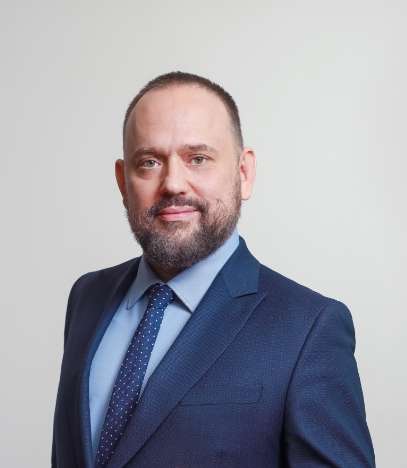
Robert Nogacki – licensed legal counsel (radca prawny, WA-9026), Founder of Kancelaria Prawna Skarbiec.
There are lawyers who practice law. And there are those who deal with problems for which the law has no ready answer. For over twenty years, Kancelaria Skarbiec has worked at the intersection of tax law, corporate structures, and the deeply human reluctance to give the state more than the state is owed. We advise entrepreneurs from over a dozen countries – from those on the Forbes list to those whose bank account was just seized by the tax authority and who do not know what to do tomorrow morning.
One of the most frequently cited experts on tax law in Polish media – he writes for Rzeczpospolita, Dziennik Gazeta Prawna, and Parkiet not because it looks good on a résumé, but because certain things cannot be explained in a court filing and someone needs to say them out loud. Author of AI Decoding Satoshi Nakamoto: Artificial Intelligence on the Trail of Bitcoin’s Creator. Co-author of the award-winning book Bezpieczeństwo współczesnej firmy (Security of a Modern Company).
Kancelaria Skarbiec holds top positions in the tax law firm rankings of Dziennik Gazeta Prawna. Four-time winner of the European Medal, recipient of the title International Tax Planning Law Firm of the Year in Poland.
He specializes in tax disputes with fiscal authorities, international tax planning, crypto-asset regulation, and asset protection. Since 2006, he has led the WGI case – one of the longest-running criminal proceedings in the history of the Polish financial market – because there are things you do not leave half-done, even if they take two decades. He believes the law is too serious to be treated only seriously – and that the best legal advice is the kind that ensures the client never has to stand before a court.