The Cartel of the Suns Faces American Justice: A Legal Analysis of United States v. Nicolás Maduro
Introduction
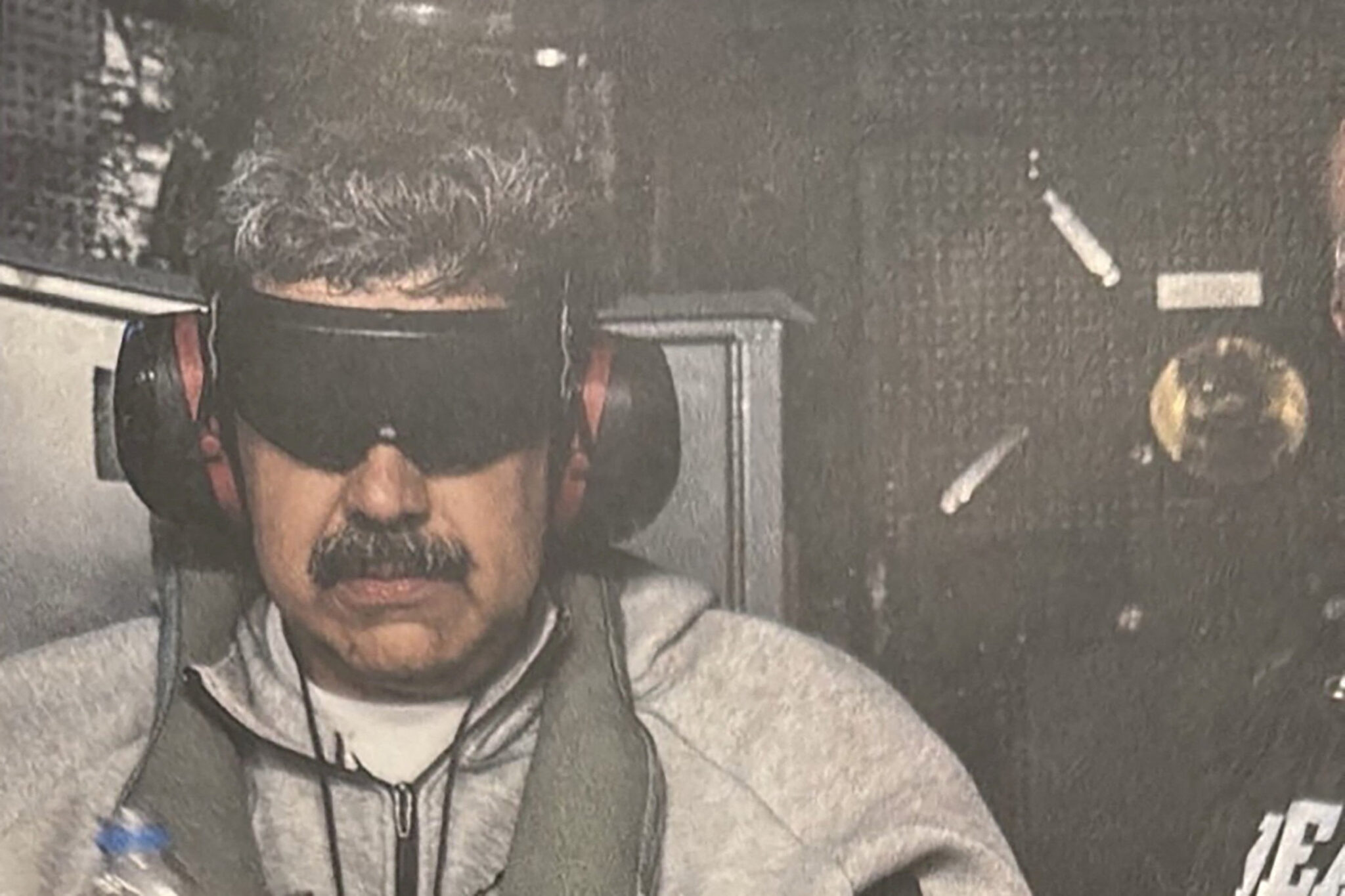
On January 3, 2026, American special forces captured Nicolás Maduro and transported him aboard the USS Iwo Jima to New York—an event without precedent in international criminal law since the operation against Manuel Noriega in 1990. For the first time in thirty-six years, the United States had forcibly seized a person exercising de facto authority over a foreign nation and brought him before a criminal court.
Many of Maduro’s defenders appear unfamiliar with the extensive criminal proceedings that the Southern District of New York has pursued against members of the Cartel de los Soles. The case files—including guilty pleas and convictions already secured—contain overwhelming evidence documenting a quarter-century of systematic, state-sponsored narco-terrorism.
This analysis examines the evidentiary record in indictment S4 11 Cr. 205 and related proceedings. The American action, however controversial from the perspective of classical international law, rests on solid foundations in established American jurisprudence and fundamental principles of accountability for transnational crimes.
- More legal issues I examine in article Venezuela – International Sanctions
- Continuation of this article: Three Potential Defense Strategies for Nicolás Maduro
I. Origins: From El Pollo to the President
The Case of Hugo Armando Carvajal Barrios (11 Cr. 205)
To grasp the scale and depth of evidence in the Maduro case, one must return to the original 2011 indictment against Hugo Armando Carvajal Barrios, known as “El Pollo”—the Chicken. Carvajal served as director of Venezuela’s military intelligence agency, the DIM, from 2004 to 2011 and again from 2013. He was the first high-ranking Venezuelan official indicted in these proceedings.
The central charge concerned his coordination of a shipment of 5,600 kilograms of cocaine from Venezuela to Mexico on April 10, 2006. The delivery traveled aboard a DC-9 jet—an aircraft capable of carrying more than a hundred passengers—departing from Simón Bolívar International Airport in Maiquetía.
In June 2025, Carvajal pleaded guilty in the Southern District of New York to charges of narco-terrorism, drug trafficking, and weapons offenses. This plea carries fundamental procedural significance: it confirms the existence of the Cartel de los Soles as an organized criminal structure operating under the protection of the Venezuelan state apparatus.
Structure and Objectives of the Cartel de los Soles
The indictments define the Cartel de los Soles as “a Venezuelan drug-trafficking organization comprised of high-ranking Venezuelan officials who abused the Venezuelan people and corrupted legitimate institutions of Venezuela—including parts of the military, intelligence apparatus, legislature, and the judiciary—to facilitate the importation of tons of cocaine into the United States.”
The cartel’s name derives from the sun insignia adorning the uniforms of senior Venezuelan military officers who belong to the organization.
Some commentators have argued that members of the alleged cartel never used this name in their internal communications, which supposedly proves the organization does not exist. The argument merits a moment’s consideration. Members of the Cosa Nostra do not introduce themselves by saying, “Good afternoon, I’m with the Cosa Nostra”—yet somehow no one has thought to question the Sicilian Mafia’s existence. The Colombian cartels of Medellín and Cali never printed business cards bearing organizational logos. Pablo Escobar did not wear a t-shirt reading “Medellín Cartel—Colombia’s Pride.” El Chapo did not sign invoices as “Chairman of the Board, Sinaloa Cartel S.A. de C.V.” Criminal organizations, by definition, avoid formal identification—this is not a bug but a feature. To expect Venezuelan generals to greet one another with “Hello, Cartel de los Soles here” betrays a fundamental misunderstanding of organized crime.
What proves particularly significant from a legal perspective is that the indictments identify the cartel’s objective as not merely enriching its members but “flooding” the United States with cocaine and “inflicting the drug’s harmful and addictive effects on users in this country.” Unlike most drug-trafficking organizations in South and Central America, which typically seek to distance themselves from direct importation into the United States to avoid American jurisdiction, the Cartel de los Soles under Maduro’s leadership “prioritized using cocaine as a weapon against America.”
II. Structure of the Current Indictment
Defendants and Temporal Scope
Superseding Indictment S4 11 Cr. 205 names six defendants and spans from 1999 to 2025:
Nicolás Maduro Moros—de facto ruler of Venezuela. Career trajectory: member of the National Assembly (2000–2006), Minister of Foreign Affairs (2006–2013), Vice President (2013), President (from 2013). In 2019, Venezuela’s National Assembly, invoking the constitution, declared that Maduro had “usurped power” and was not the legitimate president—a position shared by more than fifty nations. In 2024, he declared victory in yet another widely condemned election.
Diosdado Cabello Rondón—Minister of the Interior, Justice, and Peace; vice president of the ruling PSUV party; widely regarded as the second most powerful figure in Venezuela. Former chief of staff to Chávez (2001), vice president (2002), governor of Miranda State (2004–2008), president of the National Assembly (2012–2016), president of the National Constituent Assembly (2017–2020).
Ramón Rodríguez Chacín—former Minister of the Interior and Justice (2002–2008), governor of Guárico State (2012–2017). According to the indictment, he maintained on his estate in Barinas State a FARC encampment housing approximately two hundred armed guerrillas.
Cilia Adela Flores de Maduro—titular First Lady; formerly president of the National Assembly (2006–2011), Attorney General (2012–2013), member of the National Constituent Assembly (from 2017).
Nicolás Ernesto Maduro Guerra (aliases “Nicolasito,” “The Prince”)—the president’s son, member of the National Assembly. His father created for him the position of “Head of the Corps of Special Inspectors of the Presidency.”
Héctor Rusthenford Guerrero Flores (alias “Niño Guerrero”)—leader of Tren de Aragua, a criminal organization that originated in the Venezuelan prison system and now controls criminal networks throughout the Western Hemisphere.
Charges
Count One: Narco-Terrorism Conspiracy (21 U.S.C. § 960a)—Maduro, Cabello, and Rodríguez Chacín. Links drug trafficking to the financing of terrorist organizations: FARC, FARC-EP, Segunda Marquetalia, ELN, Tren de Aragua, the Sinaloa Cartel, and the Zetas (CDN).
Count Two: Cocaine Importation Conspiracy (21 U.S.C. § 963)—all defendants.
Counts Three and Four: Possession of and Conspiracy to Possess Machine Guns and Destructive Devices (18 U.S.C. § 924)—all defendants.
III. The Evidence: A Chronicle of Criminal Enterprise
2003–2005: Building the Infrastructure
In 2003, an associate of the FARC and the Cartel de los Soles paid FARC leader Seuxis Paucis Hernández Solarte (alias “Jesús Santrich”) three hundred thousand dollars to help establish a FARC camp near Apure, Venezuela, where the guerrillas could process cocaine.
In 2005, Chávez instructed Maduro—then a member of the National Assembly—and others that Venezuelan judges who refused to protect the FARC and its activities should be removed from their positions. That same year, the Venezuelan government effectively terminated its participation in bilateral counter-narcotics operations with the DEA and expelled the agency from the country.
2006: The Breakthrough—5.6 Tons and Five Million Dollars
The year 2006 brought two pivotal developments. First, Chávez appointed Maduro as Minister of Foreign Affairs. That same year, the FARC paid Maduro five million dollars in drug proceeds through an intermediary as part of a money-laundering scheme. Maduro and others agreed to launder tens of millions of FARC dollars by purchasing palm-oil extraction equipment from Malaysia with narcotics proceeds—equipment intended to support African palm plantations in Apure that would appear legitimate. In December 2006, Venezuela announced trade agreements with Malaysian firms concerning palm-oil extraction and crude-oil exploration.
Second, the Cartel de los Soles dispatched a shipment of 5.6 tons of cocaine from Venezuela aboard a DC-9 jet bearing a United States registration number. Cabello and Carvajal coordinated the shipment. The aircraft departed from Maiquetía Airport and landed at Ciudad del Carmen Airport in Campeche, Mexico, where Mexican authorities seized the cargo.
According to the current indictment (S4), following the seizure, National Guard Captain Vassyly Kotosky Villarroel Ramírez—who had approved the flight plan in exchange for bribes—informed the Venezuelan traffickers that they needed to pay Cabello to ensure that those who had assisted them at Maiquetía would not be arrested. Villarroel arranged a meeting with Cabello, after which the traffickers paid approximately $2.5 million to Cabello through a family member.
2007: Cilia Flores Enters the Picture
In 2007, Cilia Flores attended a meeting during which she accepted hundreds of thousands of dollars in bribes to arrange a meeting between a major drug trafficker and the director of Venezuela’s National Anti-Drug Office, Néstor Reverol Torres. The trafficker subsequently arranged monthly bribes to Reverol, plus approximately one hundred thousand dollars for each cocaine flight, a portion of which went to Flores. Reverol Torres was indicted on narcotics charges in the Eastern District of New York in 2015 and remains a fugitive.
2006–2009: Héctor Guerrero Flores and Tren de Aragua
Between 2006 and 2008, Guerrero Flores worked with one of Venezuela’s largest drug traffickers, Walid Makled. Members of the Venezuelan regime helped protect Makled’s cocaine shipments traveling from San Fernando de Apure to Valencia, from which they were flown out of Valencia’s international airport to Mexico and Central America.
Between 2008 and 2009, Guerrero Flores provided another major Venezuelan trafficker with protection for cocaine shipments moving through Venezuela, supplying armed men equipped with AK-47s, MP5s, AR-15s, and grenades. Guerrero Flores personally accompanied large cocaine loads guarded by teams of armed men en route to airstrips. He received a fee per kilogram of cocaine transported or took stakes in shipments in lieu of payment. The traffickers he worked with moved thousands of kilograms per shipment, multiple times per month.
2008: Strategic Summits
In 2008, Maduro, Cabello, and Carvajal attended a meeting with a FARC representative at which they agreed that the Cartel de los Soles would provide the FARC with cash and weapons in exchange for increased cocaine production. Maduro agreed to abuse his authority as foreign minister to ensure that the border between Venezuela and Colombia remained open to facilitate drug trafficking.
That same year, Cabello, Carvajal, and General Cliver Antonio Alcalá Cordones met and agreed that Alcalá would assume additional duties coordinating narcotics activities between the cartel and the FARC.
Also in 2008, Rodríguez Chacín maintained a large estate in Barinas State containing a substantial FARC encampment and training school—approximately two hundred armed FARC members carrying automatic rifles were present at any given time. Rodríguez Chacín accepted tens of thousands of dollars in bribes to use his corrupt influence to shield a major drug trafficker from arrest and extradition.
2009: Honduras and “Fucking Up the Business”
In 2009, Maduro, Cabello, and Carvajal attended a meeting with a FARC representative to discuss a four-ton cocaine shipment that the FARC was prepared to transport to the cartel. Cabello directed the FARC to deliver the cocaine to a specific location in Venezuela, where an aircraft would be waiting to transport the drugs to Nicaragua, then on to Mexico and the United States.
During the meeting, the group also discussed the recent coup d’état in Honduras. Cabello warned that the resulting instability could “fuck up the business.” Maduro subsequently traveled to Honduras, ostensibly in his capacity as foreign minister, but in reality to intervene on the cartel’s behalf and ensure that events in Honduras would not disrupt narcotics operations.
2011: The Sinaloa Laboratory Under Venezuelan Intelligence Protection
In 2011, the Sinaloa Cartel’s then-leader, Joaquín Archivaldo Guzmán Loera—El Chapo—financed cocaine laboratories in Colombia. Cocaine produced in these laboratories was transported under FARC protection into Venezuela and received safe passage to airstrips from Carvajal, a close ally of both Maduro and Cabello.
September 2013: The Paris Incident and the Regime’s Cynicism
In September 2013, mere months after Maduro assumed the presidency, the Cartel de los Soles dispatched 1.3 tons of cocaine on a commercial flight from Maiquetía Airport to Paris Charles de Gaulle Airport. French authorities seized the shipment.
Following the seizure, Maduro cancelled a trip to attend the U.N. General Assembly session in New York, citing to the media what he claimed were death threats. In Venezuela, he convened a meeting with Cabello and Carvajal. During this meeting, Maduro told Cabello and Carvajal that they should not have used Maiquetía Airport for drug trafficking after the 2006 seizure in Mexico, and that the cartel should instead use its other well-established drug routes and locations.
Shortly after the meeting, Maduro and others authorized the arrests of Venezuelan military officials—an effort to divert public and law-enforcement scrutiny from Maduro, Cabello, and Carvajal’s participation in the shipment.
2014: The FARC Trains Maduro’s Militia
In 2014, Maduro met with FARC leader Luciano Marín Arango (alias “Iván Márquez”) at a military base in Caracas. During the meeting, Maduro agreed to continue providing weapons to the FARC and requested that the FARC help train an armed militia group in Venezuela. Maduro told Marín Arango that the militia would not be associated with the Venezuelan government, affording plausible deniability for officials when the anticipated violence occurred. Marín Arango agreed and subsequently facilitated training for militia members near his FARC camp in Zulia State.
2014–2015: The President’s Son and the PDVSA Aircraft
Between 2014 and 2015, a National Guard captain on Margarita Island coordinated hotels, transportation, women, and food for visits by Venezuelan officials, including Nicolás Ernesto Maduro Guerra, who visited the island approximately twice monthly. Maduro Guerra arrived aboard a Falcon 900 jet belonging to the state oil company PDVSA. Before departure, the PDVSA aircraft was loaded—sometimes with the assistance of armed sergeants—with large packages wrapped in tape. Maduro Guerra was present during loading and on one occasion stated that the aircraft “could go wherever it wanted, including the United States.”
2015: Cabello Personally Delivers Weapons to the FARC
In 2015, following the agreement between Maduro and Marín Arango, cartel members diverted Venezuelan military equipment to the FARC. Cabello personally participated in the delivery of machine guns, ammunition, and rocket launchers to the FARC at a military base in Venezuela. During the delivery, Cabello and others discussed the fact that the weapons constituted partial payment for cocaine the FARC had provided to cartel members.
October–November 2015: DEA Recordings—”We Are at War with the U.S.”
Between October and November 2015, Efraín Campo Flores and Franqui Francisco Flores de Freitas—two relatives of Maduro and Flores—agreed during recorded meetings with DEA confidential sources to dispatch multi-hundred-kilogram cocaine shipments from Maduro’s “presidential hangar” at Maiquetía Airport.
During recorded meetings, Campo Flores and Flores de Freitas:
- explained they were “at war” with the United States
- described the Cartel de los Soles
- discussed a connection to a “commander for the FARC” who was “supposedly high-ranked”
- indicated they were seeking to raise twenty million dollars in drug proceeds to support the First Lady’s (Cilia Flores’s) campaign in connection with late-2015 elections for the National Assembly
Campo Flores referred to Maduro as his “father” and stated: “What we want is for him to take control again of the National Assembly.” Flores de Freitas joked that “any opposing candidate who comes out and starts to become a pest—three or four have already been locked up.”
In November 2016, Campo Flores and Flores de Freitas were convicted at trial in the Southern District of New York of conspiring to import cocaine into the United States.
2017: Maduro Guerra—Miami, New York, Scrap-Metal Containers
In 2017, Maduro Guerra worked to ship hundreds of kilograms of cocaine from Venezuela to Miami. He discussed with trafficking partners sending low-quality cocaine to New York because it could not be sold in Miami; arranging a five-hundred-kilogram shipment to be unloaded from a cargo container near Miami; and using scrap-metal containers to smuggle cocaine into New York ports.
That same year, Cabello and other cartel members facilitated air shipments of ton quantities of cocaine to clandestine airstrips in Barinas State. Uniformed FARC personnel armed with machine guns helped receive the cocaine and loaded the drugs into vehicles with hidden compartments for transport toward the Venezuelan coast.
2018–2019: Rodríguez Chacín as the FARC Liaison
In 2018 and 2019, Rodríguez Chacín made multiple trips from Barinas State to Caracas with a key FARC leader for meetings with Maduro. These trips were part of a long history of regular meetings between Rodríguez Chacín and members of the FARC and ELN in both their jungle encampments and Barinas—Rodríguez Chacín had been assigned by Maduro to provide the FARC and ELN with protection and support. Rodríguez Chacín also brought FARC leaders to meet Maduro at Miraflores (the presidential palace in Caracas) and at Fuerte Tiuna (the main military complex and Ministry of Defense headquarters).
July 2019: A Public Invitation to the FARC
In July 2019, Maduro and Cabello attended a recorded press conference at which Maduro announced that the FARC and its leaders were welcome in Venezuela.
2019: Guerrero Flores Offers “Cradles” on the Coast
In 2019, Tren de Aragua leader Guerrero Flores discussed drug trafficking with an individual he understood to be working with the Venezuelan regime. In multiple phone calls, Guerrero Flores offered escort services for drug loads, explaining that he and Tren de Aragua controlled the coastline of Aragua State. Speaking from Tocorón Prison—Tren de Aragua’s operational base—Guerrero Flores explained that his organization could handle the logistics of every aspect of the drug trade, including the use of storage compartments he called “cradles” located on a beach in Aragua State. He confirmed Tren de Aragua’s capacity to protect more than a ton of cocaine.
2020: Maduro Guerra in Medellín—A Six-Year Plan
In 2020, Maduro Guerra attended a meeting in Medellín, Colombia, with two FARC representatives. The meeting covered arrangements to move large quantities of cocaine and weapons through Colombia into the United States over the following six years, through 2026. Maduro Guerra also discussed paying the FARC with weapons in connection with cocaine shipments.
2007/2023: General Alcalá Delivers Weapons to the FARC
In 2007, at Carvajal’s direction, Venezuelan General Cliver Alcalá Cordones delivered four crates of weapons from the Venezuelan government to FARC leadership, including twenty grenades and two grenade launchers. In June 2023, Alcalá pleaded guilty in the Southern District of New York to conspiracy to provide material support to the FARC as a foreign terrorist organization.
2022–2025: Cabello and the ELN Routes
Between 2022 and 2024, Cabello regularly traveled to clandestine airstrips controlled by the ELN near the Colombia-Venezuela border to ensure the continued safe passage of cocaine through Venezuelan territory. From these airstrips, cocaine was dispatched both on flights approved by Venezuelan military officials and on clandestine flights designed to evade detection.
At the end of 2024, Cabello received narcotics proceeds from cocaine trafficking. In 2025, Colombian drug traffickers discussed with a Cabello associate plans for continuing cocaine trafficking through Venezuela.
IV. Scale of Operations
The U.S. State Department estimated that by 2004, 250 or more tons of cocaine were transiting Venezuela annually. By 2020, estimates ranged from 200 to 250 tons per year—figures that account only for detected flows.
According to the indictment, in 2010 alone, approximately seventy-five unauthorized flights suspected of drug-trafficking activity entered Honduran airspace using what is known as the “air bridge”—a cocaine route between Venezuela and Honduras.
Between 2003 and 2011, according to testimony in the Carvajal case, the Zetas collaborated with a group of Colombian traffickers, shipping cargo containers from Venezuelan ports to Mexican ports—each containing five to six tons of cocaine, sometimes as much as twenty tons. The tens of thousands of kilograms of cocaine dispatched by this group were protected in Venezuela by military officers referred to as “the generals.”
V. Foundations of American Jurisdiction
The Effects Doctrine
American jurisdiction over Maduro’s conduct rests on the effects doctrine, which permits prosecution of extraterritorial conduct producing substantial, direct, and foreseeable effects within United States territory. The indictment explicitly alleges that Maduro’s drug-trafficking operations caused “direct effects” in the United States through cocaine importation and its attendant social and economic harms.
United States v. Noriega established that extraterritorial jurisdiction is appropriate when foreign conduct produces direct effects in the United States, even when the defendant is a foreign head of state. The Eleventh Circuit upheld this principle, finding that jurisdiction over Noriega’s Panama-based narcotics activities was proper because the conduct was “aimed at the United States.”
The Ker-Frisbie Doctrine
American courts consistently apply the Ker-Frisbie doctrine, under which a defendant’s presence before the court obtained through irregular means—including forcible abduction from foreign territory—does not deprive the court of jurisdiction. In United States v. Alvarez-Machain (1992), the Supreme Court upheld the prosecution of a Mexican national forcibly abducted by American agents, ruling that the manner of obtaining custody was irrelevant to the court’s jurisdiction.
The Noriega precedent directly forecloses any defense argument based on the allegedly unlawful nature of the capture. The Eleventh Circuit, quoting Frisbie, affirmed that “This Court has never departed from the rule announced in Ker v. Illinois … that the power of a court to try a person for crime is not impaired by the fact that he had been brought within the court’s jurisdiction by reason of a ‘forcible abduction.'”
The Question of Head-of-State Immunity
Under customary international law, sitting heads of state enjoy absolute personal immunity (immunity ratione personae) from foreign criminal jurisdiction. However, American law distinguishes between sovereign immunity and official immunity. In Samantar v. Yousuf (2010), the Supreme Court held that the immunity of foreign officials is determined by federal common law, and courts must defer to executive-branch suggestions regarding immunity.
The executive branch possesses exclusive constitutional authority to recognize foreign governments and determine head-of-state status. State Department suggestions of immunity are treated by American courts as “conclusive.”
In Noriega, the court rejected the head-of-state immunity claim because the United States had never recognized Noriega as Panama’s legitimate ruler. The court deferred to the executive branch’s determination that Noriega was a “de facto” but not “de jure” leader, holding that immunity attaches only to internationally recognized heads of state.
The Trump administration has employed an identical legal strategy: Secretary of State Marco Rubio has consistently maintained that Maduro “is not the legitimate president of Venezuela” but rather “the leader of a drug-trafficking organization disguised as a government.” The Supreme Court’s decision in Zivotofsky v. Kerry (2015) reinforces this framework, confirming the President’s exclusive authority to recognize foreign governments.
VI. The International-Law Perspective
Violation of Article 2(4) of the U.N. Charter
The capture operation constitutes a prima facie violation of Article 2(4) of the United Nations Charter, which prohibits “the threat or use of force against the territorial integrity or political independence of any state.” The operation involved American military strikes on Venezuelan air defenses and the forcible removal of a head of state from his own territory without consent, Security Council authorization, or a valid self-defense justification.
No Effect in Criminal Proceedings
What matters from a procedural standpoint is that violations of international law do not provide individual defenses in American criminal proceedings. The Noriega court explicitly held that alleged violations of the U.N. Charter and customary international law do not divest American courts of jurisdiction. The Supreme Court in Alvarez-Machain similarly rejected the argument that treaty violations or breaches of international law affect domestic criminal jurisdiction.
American courts treat compliance with international law as a matter for the political branches, not the judiciary, in criminal cases.
VII. Conclusion
United States v. Nicolás Maduro tests the resilience of the international legal order against unilateral state action. American courts will almost certainly exercise jurisdiction and deny immunity based on the Noriega precedent and the executive branch’s non-recognition of Maduro’s government.
The evidentiary record assembled by the Southern District of New York over more than a decade—including guilty pleas from Carvajal and Alcalá, convictions of Maduro’s relatives, DEA recordings, and testimony from cooperating witnesses—depicts systematic, state-sponsored narco-terrorism on an unprecedented scale.
For legal practitioners, the key takeaways are:
- Jurisdiction is virtually certain: The Ker-Frisbie doctrine and the effects doctrine provide dual foundations for American jurisdiction.
- Immunity will be denied: The executive branch’s non-recognition is dispositive for American courts.
- The evidence is overwhelming: Guilty pleas from co-defendants, DEA recordings, and convictions of Maduro’s relatives create a robust factual foundation.
- International-law violations provide no defense: The political-question doctrine and established jurisprudence preclude the effective assertion of this argument.
Venezuela under Maduro transformed from a state tolerating corruption into a state built on the foundation of drug trafficking—a narco-state in the fullest sense of the term. The indictment documents not isolated instances of corruption but a quarter-century of systematic exploitation of the state apparatus to produce, transport, and distribute thousands of tons of cocaine while simultaneously supporting terrorist organizations with weapons, money, and sanctuary.
Whether military intervention was the appropriate response to this situation remains a subject of legitimate debate. That the evidence against Maduro and his associates is overwhelming does not.

Robert Nogacki – licensed legal counsel (radca prawny, WA-9026), Founder of Kancelaria Prawna Skarbiec.
There are lawyers who practice law. And there are those who deal with problems for which the law has no ready answer. For over twenty years, Kancelaria Skarbiec has worked at the intersection of tax law, corporate structures, and the deeply human reluctance to give the state more than the state is owed. We advise entrepreneurs from over a dozen countries – from those on the Forbes list to those whose bank account was just seized by the tax authority and who do not know what to do tomorrow morning.
One of the most frequently cited experts on tax law in Polish media – he writes for Rzeczpospolita, Dziennik Gazeta Prawna, and Parkiet not because it looks good on a résumé, but because certain things cannot be explained in a court filing and someone needs to say them out loud. Author of AI Decoding Satoshi Nakamoto: Artificial Intelligence on the Trail of Bitcoin’s Creator. Co-author of the award-winning book Bezpieczeństwo współczesnej firmy (Security of a Modern Company).
Kancelaria Skarbiec holds top positions in the tax law firm rankings of Dziennik Gazeta Prawna. Four-time winner of the European Medal, recipient of the title International Tax Planning Law Firm of the Year in Poland.
He specializes in tax disputes with fiscal authorities, international tax planning, crypto-asset regulation, and asset protection. Since 2006, he has led the WGI case – one of the longest-running criminal proceedings in the history of the Polish financial market – because there are things you do not leave half-done, even if they take two decades. He believes the law is too serious to be treated only seriously – and that the best legal advice is the kind that ensures the client never has to stand before a court.