Tether: The Shadow Dollar
In the shadowy corridors of global finance, where regulation fears to tread, a digital currency has quietly amassed more daily transaction volume than Visa—and made more profit last year than BlackRock, the world’s largest asset manager. It’s managed by a former plastic surgeon who lives in a villa on the French Riviera, employs fewer than a hundred people, and operates largely beyond the reach of American law enforcement. Welcome to the world of tether.
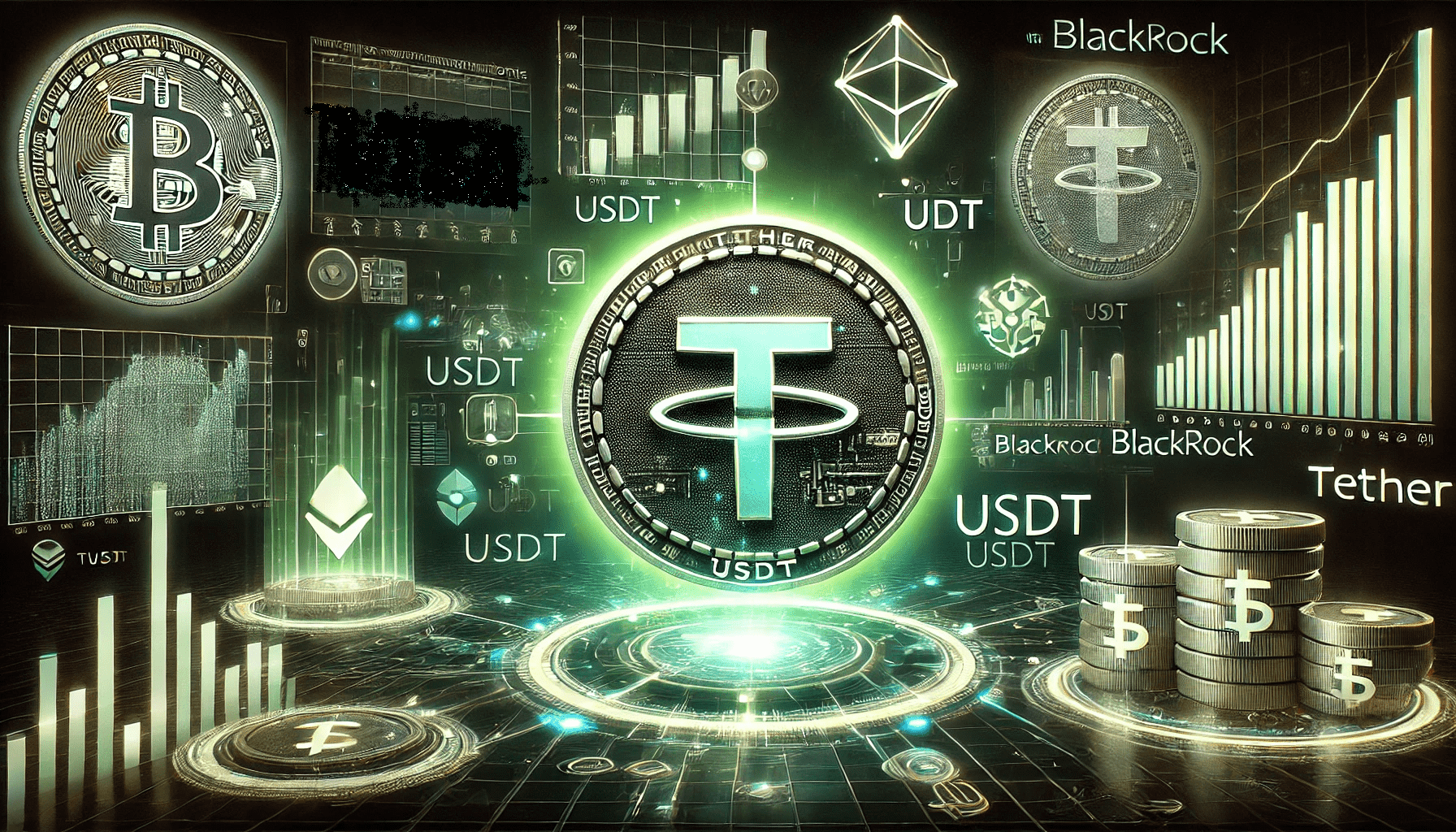
The cryptocurrency—more precisely, the stablecoin—known as tether (USDT) has become, as the Wall Street Journal puts it, “a vital component of the global financial system,” comparable in volume and profits to the largest payment networks and investment firms on earth. In 2023, nearly as much money flowed through this “digital dollar” as through Visa cards, while the company issuing the popular token, Tether Holdings, earned $6.2 billion—seven hundred million more than BlackRock. The Journal‘s recent analyses suggest that this “shadow dollar,” or “dollar incognito,” has proliferated throughout the financial underworld, effectively creating a parallel economy that functions entirely outside the purview of American authorities.
A stablecoin, for the uninitiated, is a digital currency pegged to a “stable” reserve asset—typically the U.S. dollar or gold. Stablecoins were designed to reduce the volatility inherent in unsecured cryptocurrencies like Bitcoin, offering the convenience of digital currency with the reliability of traditional money. In theory, at least.
Here’s how tether works: Tether Holdings, registered in the British Virgin Islands, issues virtual coins to a select group of clients—mainly trading firms—who in exchange send the company real dollars. Tether then uses these dollars to purchase assets, primarily U.S. Treasury bonds, which serve as reserves to ensure the stability and reliability of tether as a cryptocurrency pegged one-to-one with the dollar. Tether’s assets currently total a hundred and twenty billion dollars, mostly in safe U.S. Treasury bonds, though the company also holds positions in Bitcoin and gold.
As the Journal notes, Tether Holdings’ ownership structure remains largely secret, its operations deliberately concealed from the U.S. government. The company is managed by Giancarlo Devasini, the aforementioned former plastic surgeon, who leads a reclusive life at his French Riviera villa. The public face of Tether is Paolo Ardoino, an Italian who, in an interview with CoinDesk, characterized his company’s efficiency in remarkably blunt terms: the firm employs fewer than a hundred people, he said, and its revenue per employee is higher than that of any other company in history.
Every day, users conduct transactions using tether worth a hundred and ninety billion dollars. USDT can be exchanged for other tokens or traditional (fiat) currencies through exchanges and local brokers. In Iran, for instance, the cryptocurrency exchange TetherLand allows Iranians to convert rials into tether, effectively giving them access to a digital dollar—a significant workaround for a country facing strict financial sanctions.
A Dollar for Everyone
Between March and October of 2024, the Wall Street Journal published several investigations into the opaque financial operations involving the tether stablecoin. As the newspaper observes, USDT has become a “lifeline” for countries whose access to the dollar-based financial system has been curtailed by the U.S. government—particularly Iran, Venezuela, and Russia. Oligarchs, fraudsters, and arms dealers use this “anonymous dollar” to transfer money abroad to purchase real estate and pay for sanctioned goods. In Venezuela, the state oil company, itself under sanctions, accepts payment in tether for oil deliveries. The Journal notes that USDT may also be used for money laundering by drug cartels, fraud networks, and terrorist groups like Hamas.
Tether is also widely used in countries with dysfunctional economies, such as Argentina and Turkey, where hyperinflation and the absence of a stable currency are commonplace. Residents of such countries use stablecoins for everyday payments and to protect their savings from depreciation—a digital lifeboat in turbulent economic seas.
According to the Journal‘s reports, tether is also a “significant” payment channel in Russia. The publication cites a confidential report from an anonymous Russian research center identifying USDT as one of the most popular methods among importers for exchanging rubles for foreign currency. Large Russian financial institutions are involved in these exchanges. Rosbank, for example, arranges tether transfers for clients, enabling them to pay foreign suppliers. The digital dollar has become an important currency for Russian elites and is actively used in countries where many Russians relocated after the outbreak of the Russian-Ukrainian conflict—especially Georgia, which has become a target of expansion for Tether Holdings, as the company seeks to transform Georgia into one of the centers of cryptocurrency payments.
In its most recent analysis, published on October 25, 2024, the Journal reported that Tether Holdings is under investigation by the U.S. Attorney’s office in Manhattan. Prosecutors are focussing on potential violations by Tether of U.S. sanctions, anti-money-laundering regulations, and the company’s financing of illegal activities. According to the newspaper, the Treasury Department is considering imposing sanctions on the firm. The department’s Office of Foreign Assets Control (OFAC) is reportedly considering adding Tether to its list of “Specially Designated Nationals and Blocked Persons,” which would bar the company from accessing U.S. financial channels—including the Treasury bonds that form the foundation of Tether’s fiduciary reserve assets.
The Journal had previously reported that individuals associated with Tether Holdings used forged documents to obtain bank accounts in the U.S., because banks were unwilling to be associated with the scandal-ridden stablecoin issuer. In mid-September, 2024, the newspaper called USDT “the shadow dollar powering the financial underworld” and accused Tether of “enabling a parallel economy that operates beyond the reach of U.S. law enforcement.” In April, 2024, the Journal also quoted testimony by Deputy Treasury Secretary Wally Adeyemo before Congress, in which he called for the creation of additional tools to combat “foreign providers of dollar-backed stablecoins” who operate under “a different set of rules.”
The Defense
Responding to the Journal‘s publications, Tether’s C.E.O., Paolo Ardoino, called them irresponsible. He added that he has no knowledge of any investigation into his company. He noted, however, that “if the U.S. government wants to kill us, all they have to do is press a button.” In an interview with CoinDesk, Ardoino explained that Tether is doing “everything in our power” to curtail illegal use of the cryptocurrency, and that USDT’s role in illegal finance is “a drop in the ocean” compared to money laundering and other illegal operations conducted in American “hard” dollars. He also pointed to his company’s coöperation with OFAC and the U.S. Secret Service in combatting attempts to evade sanctions and launder money using tether.
In theory, Tether verifies the identity of its customers, but this applies mainly to so-called direct customers. Meanwhile, the larger part of the secondary market, where tether is freely available to ordinary users, remains largely unregulated. Tether coins can be transferred almost instantly between different digital wallets, making it difficult to determine their original owner and ultimate destination. Tether representatives claim that every transaction in their cryptocurrency can be tracked on “public blockchains,” where all USDT transactions are recorded, and that anyone can freeze coins in any digital wallet if violations or illegal activities are detected. In practice, however, this is very difficult, if not impossible.
According to ChainArgos, between 2018 and June, 2024, Tether blocked 2,713 wallets on its two most popular blockchains. A total of a hundred and fifty-three billion dollars was sent to suspicious wallets, of which the company managed to freeze only $1.4 billion. The rest of the money was transferred onward, and the company didn’t have enough time to stop those transactions. A United Nations report published in January, 2024, found that tether is the “preferred choice” for money laundering in Southeast Asia.
The Cantor Connection
So far, despite finding itself in the crosshairs of the current Administration in Washington, the tether stablecoin continues to function without hindrance. The financial potential of Tether Holdings certainly plays no small role in this. The company is estimated to have influence over a global digital-asset market worth two trillion dollars and is a key player in the cryptocurrency ecosystem. USDT’s market capitalization of a hundred and twenty billion dollars makes it by far the largest stablecoin in the industry.
It’s also possible that a certain role in maintaining tether’s stability is played by Tether Holdings’ close coöperation with Cantor Fitzgerald, a Wall Street bond-trading powerhouse. Cantor holds most of the eighty billion dollars that Tether Holdings has invested in U.S. Treasury bonds. The C.E.O. of Cantor is Howard Lutnick, who is simultaneously heading President-elect Donald Trump’s transition team. Lutnick’s name has also been mentioned as a candidate for Trump’s chief of staff.
In the struggle over tether, one cannot ignore the rivalry between the main competitors in the American stablecoin market. Circle, the issuer of another American stablecoin, USDC, has poured fuel on the fire by stating that if U.S. federal agencies really want to curtail Tether Holdings’ illegal activities, “all they have to do is seize the assets held by Cantor, and tether will collapse like a cheap suit.”
It’s worth noting, as a sidebar to the Tether Holdings and Circle rivalry, that legislative work is currently under way in the United States to regulate the stablecoin market. Several bills concerning this specific cryptocurrency are in play. Speculation has emerged that during his visits to Capitol Hill and conversations with congressmen, Lutnick has raised not only issues related to Trump’s transition but has also tried to persuade legislators to refrain from passing any laws that might promote Circle at the expense of Tether Holdings.
In the end, tether represents a curious paradox of the digital age: a currency designed to provide stability has instead become a vehicle for instability, a tool that promises transparency while thriving in opacity, a dollar that isn’t quite a dollar, circulating in an economy that isn’t quite an economy—at least not one that any government can fully see or control. Whether it survives the coming regulatory reckoning may depend less on its technological merits than on the political winds blowing through Washington, and on whether those winds favor a former plastic surgeon on the French Riviera or his rivals closer to home.

Robert Nogacki – licensed legal counsel (radca prawny, WA-9026), Founder of Kancelaria Prawna Skarbiec.
There are lawyers who practice law. And there are those who deal with problems for which the law has no ready answer. For over twenty years, Kancelaria Skarbiec has worked at the intersection of tax law, corporate structures, and the deeply human reluctance to give the state more than the state is owed. We advise entrepreneurs from over a dozen countries – from those on the Forbes list to those whose bank account was just seized by the tax authority and who do not know what to do tomorrow morning.
One of the most frequently cited experts on tax law in Polish media – he writes for Rzeczpospolita, Dziennik Gazeta Prawna, and Parkiet not because it looks good on a résumé, but because certain things cannot be explained in a court filing and someone needs to say them out loud. Author of AI Decoding Satoshi Nakamoto: Artificial Intelligence on the Trail of Bitcoin’s Creator. Co-author of the award-winning book Bezpieczeństwo współczesnej firmy (Security of a Modern Company).
Kancelaria Skarbiec holds top positions in the tax law firm rankings of Dziennik Gazeta Prawna. Four-time winner of the European Medal, recipient of the title International Tax Planning Law Firm of the Year in Poland.
He specializes in tax disputes with fiscal authorities, international tax planning, crypto-asset regulation, and asset protection. Since 2006, he has led the WGI case – one of the longest-running criminal proceedings in the history of the Polish financial market – because there are things you do not leave half-done, even if they take two decades. He believes the law is too serious to be treated only seriously – and that the best legal advice is the kind that ensures the client never has to stand before a court.