
Customs and Fiscal Audit in Poland: The Art of War You’d Rather Not Fight
Sun Tzu wrote that every battle is won or lost before it begins. A customs and fiscal audit confirms this intuition. The outcome rarely depends on what you tell the inspectors. It depends on what you did—and what you failed to do—in the months and years before they arrived.
But even the strongest opening position can be squandered through tactical errors. And even a difficult position can be defended, if you know how to move.
What Is a Customs and Fiscal Audit
A customs and fiscal audit (kontrola celno-skarbowa) is not an ordinary tax inspection. It is a quasi-prosecutorial procedure conducted by Poland’s National Revenue Administration (Krajowa Administracja Skarbowa, KAS), equipped with powers that under normal circumstances belong to law enforcement agencies.
Inspectors may demand files, records, ledgers, documents—anything they deem related to the subject of the audit. They may enter buildings and premises. They may check identification, interrogate witnesses, search rooms, secure evidence. They may film, photograph, record. They may summon experts and demand physical inventory counts.
This is not a visit. It is an operation.
The sooner you understand this, the better you will prepare.
First Principle: Do Not Fight on Their Terms
Sun Tzu: “The supreme art of war is to subdue the enemy without fighting.”
A customs and fiscal audit is a situation in which the advantage of resources lies with the state. They have time, personnel, authority, access to information. You have a business to run, nerves to steady, and—if you’re fortunate—competent legal representation.
In this configuration, frontal confrontation is a mistake. The point is not to fight. The point is to give them no reason to fight.
This means: documentation in order. Procedures transparent. Decisions justified. Decision trail legible. Everything that might raise questions—thought through and recorded before anyone asks.
The best customs and fiscal audit is one that ends with a protocol containing no findings.
Second Principle: Control the Flow of Information
Sun Tzu: “All warfare is based on deception.”
I am not suggesting you lie—that would be illegal and foolish. I am suggesting you understand that a customs and fiscal audit is an information game in which one side tries to learn as much as possible, while the other should say exactly as much as it must.
Taxpayers make the mistake of excessive openness. They want to explain, to clarify, to demonstrate good faith. This is human—and dangerous. Every word can be recorded in a protocol. Every unconsidered answer can open a new line of inquiry. Every attempt to be helpful can supply material the inspectors did not have.
A professional representative is not there to hide facts. They are there to separate what you must say from what you may leave unsaid. To answer questions—but only the questions that have been asked.
Third Principle: Do Not React—Respond
Sun Tzu: “Be extremely subtle, even to the point of formlessness. Be extremely mysterious, even to the point of soundlessness.”
A customs and fiscal audit generates pressure. Pressure generates emotion. Emotion generates error.
Inspectors know that people under stress say too much, agree to things they need not agree to, sign documents without reading them. The tempo and the tension are part of the tactic.
Your answer: slow down. Do not respond immediately. Ask for time. Document requests in writing. Do not argue—take notes. Let your representative be the one who talks.
Calm is an advantage. Silence is a tool.
Fourth Principle: Know Your Rights—and Enforce Them
A customs and fiscal audit has rules. Inspectors have powers—broad, but not unlimited. There are things they cannot do. There are procedures they must follow. There are deadlines they must observe.
A taxpayer who does not know their rights does not know when those rights are being violated. A taxpayer who does know—and who has someone beside them capable of pointing out a violation—changes the dynamics of the entire situation.
This is not a matter of aggression. It is a matter of presence. Inspectors who know they are dealing with professional legal counsel behave differently. Not because they are afraid—but because they know their actions will be evaluated by someone who understands the rules of the game.
Fifth Principle: Think Beyond the Audit
Sun Tzu: “Victory is the main object, not glory.”
A customs and fiscal audit is not the end of the process. It is often just the beginning. After the audit may come tax proceedings. After proceedings, a decision. After the decision, an appeal. After the appeal, administrative court. And running parallel—potentially—criminal fiscal proceedings.
Every step of the audit creates documentation that will be used later. Protocols, testimony, notes—all of it becomes evidentiary material in subsequent stages.
That is why, from the first day of the customs and fiscal audit, you must think not only about how to survive it, but about what position you are building for the future. What will end up in the file. How your picture will look. What arguments you will be able to raise in a year, in two years, before a court.
The game is long. One must play accordingly.
Legal Representation in Customs and Fiscal Audits
We represent businesses from day one of a customs and fiscal audit. We are present during inspection activities, we monitor procedures, we ensure that the inspectors’ powers are not abused.
We advise on what to say and what not to say. We analyze demands and help respond to them—precisely, in accordance with the law, without giving more than necessary.
We prepare strategy for the entire proceeding, not just its opening phase. We know that an audit is a beginning—and we plan with an eye toward what comes next.
Because in this game, the winner is the one who thinks further ahead than the opponent.
Customs and Fiscal Audit – Further Reading
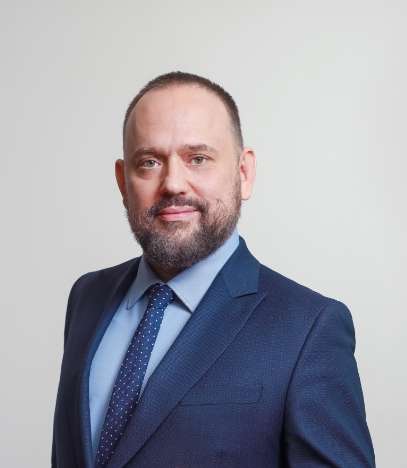
Robert Nogacki is a Polish attorney at law (radca prawny), the founder and managing partner of Kancelaria Prawna Skarbiec (Skarbiec Law Firm), which has operated continuously since 2006.
The law is equal for everyone, but the parties rarely are: on one side stands an organization with time, money, and lawyers, on the other a person with one business, one nest egg, and one life.
Clients rarely come to him with a legal problem. They come with a problem that also has a legal side: an audit that began with a single invoice, money entrusted to someone who has disappeared, a company that has to be passed on before it is too late. Most such matters are decided long before the first letter is written, in decisions made without asking and in deadlines nobody remembered. So he begins by asking how the client got here, not what the client should have done.
He advises entrepreneurs and families from more than a dozen countries, including those whose accounts the tax office has just seized and who do not know what to do tomorrow morning. He defends them in tax audits, customs and fiscal inspections, disputes with the tax authorities, and criminal tax proceedings. He represents victims of investment fraud and Ponzi schemes. He helps families set up family foundations and plan succession, so that a life’s work outlasts a single generation.
Not every case can be won. Every case can be run so that the client knows where they stand. Since 2006 he has represented the victims in the WGI case (Warszawska Grupa Inwestycyjna, the Warsaw Investment Group), one of the longest criminal cases in the history of the Polish financial market, because some things must not be left half finished, even when they take two decades. In the case of the collapsed cryptocurrency exchange Zonda (Zondacrypto, operated by BB Trade Estonia OÜ), he represents several hundred victims in the criminal investigation conducted by Poland’s National Prosecutor’s Office and in the Estonian bankruptcy proceedings.
Kancelaria Prawna Skarbiec is listed in the rankings of Poland’s largest tax advisory firms published by Dziennik Gazeta Prawna and Rzeczpospolita, and it is a four-time recipient (2015 to 2018) of the European Medal awarded by the Business Centre Club and the European Economic and Social Committee. Robert Nogacki publishes regularly, in the press and on the firm’s website, for people who have a problem rather than a law degree, because a legal opinion the client cannot understand protects only the lawyer.
He believes that the best legal advice is the kind that means the client never has to appear in court.