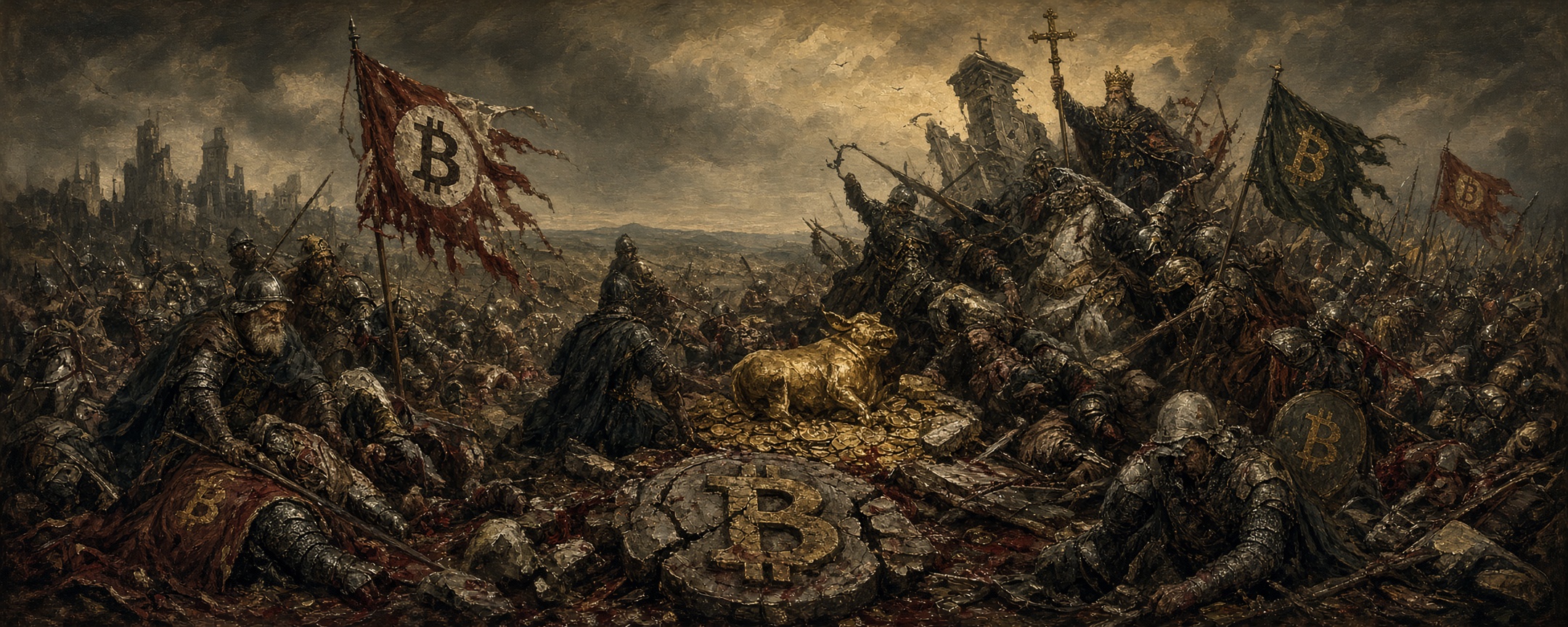
Helmuth von Moltke the Elder held that no plan survives first contact with the enemy. But he added: without a plan, there is nothing to adjust.
Litigation is controlled chaos
You know your arguments, but not your opponent’s. You know the statutes, but not how the judge will interpret them. You know the facts—but facts in court are not what happened. They are what can be proven.
Litigation strategy is not about predicting everything. It is about preparing for the unpredictable.
The Entropy of Dispute
Ilya Prigogine, the Nobel laureate in thermodynamics, studied systems far from equilibrium—systems in which a small impulse can trigger vast change. Litigation is such a system.
An unremarkable document produced at trial. Testimony that contradicts earlier statements. A question asked at the wrong moment—or the right one. Cases develop in directions that cannot be predicted in advance.
An experienced litigator recognizes these bifurcation points. He knows when to press, when to relent, when to let the opponent speak—because in silence there is sometimes more than in words.
The Butterfly Effect
Edward Lorenz, the meteorologist and father of chaos theory, posed the famous question: “Does the flap of a butterfly’s wings in Brazil set off a tornado in Texas?” The answer was yes—in nonlinear systems, small differences in initial conditions lead to radically different outcomes.
Litigation is a nonlinear system. One document you failed to attach to the complaint. One sentence you wrote in an email three years ago. One witness who testified differently than you remembered.
The court does not see the entirety of your story. It sees fragments—those that made it into the file. From these fragments it constructs an image. If a fragment is distorted, the image will be distorted. If a fragment is missing, the image will be incomplete.
This is why preparation for litigation begins long before litigation. Every email, every memo, every contract—is potential evidence. The flap of wings that may trigger the tornado.
Time as Resource
Philip Tetlock, the forecasting researcher, discovered that experts who most frequently update their predictions are the most accurate. Those who cling to their initial assessment err more often.
In litigation, time works against whoever fails to control it. Civil procedure is filled with preclusions—deadlines after which you lose the right to raise a defense, submit evidence, file a motion.
But time operates another way as well. A case lasting five years exhausts both parties’ resources—but not equally. Whoever has deeper reserves can afford a war of attrition. Whoever does not must seek rapid resolution.
Litigation strategy is also temporal strategy: when to accelerate, when to slow down, when to wait.
Two Players, a Third Decides
Thomas Schelling, the game theorist and nuclear strategist, analyzed situations where outcomes depend on the interaction of rational actors. But litigation adds a third actor—the judge—who does not play but decides.
This changes the dynamic fundamentally. You need not convince your opponent—you must convince the judge. Your opponent may know he is wrong and still win, if you fail to present your case properly.
The judge sees the case through the lens of the file. What is not in the file does not exist. What is in the file but incomprehensible also does not exist. Effective representation is the art of translating your truth into language the judge will understand and accept.
Final Word
Dwight Eisenhower used to say: plans are useless, but planning is indispensable. Litigation confirms this maxim at every hearing.
You cannot predict everything. You can prepare for the unpredicted. You can know procedure better than your opponent. You can understand the judge better than your client does. You can measure risk before it becomes loss.
That is our job: translating your conflict into language the court will understand, and into strategy that gives you the edge.
The rest is silence.