

Holding Structure – How to Protect Your Assets from Business Risks
Every entrepreneur who has built something valuable eventually asks a fundamental question: how do I protect what I’ve created? The answer is rarely simple, as the business landscape is fraught with dangers – from insolvent counterparties and operational errors to unpredictable regulatory changes. Yet there exists a legal architecture that has served entrepreneurs worldwide as a protective shield for decades: the holding structure.
This is not a magic formula guaranteeing impunity, nor a vehicle for concealing assets from creditors. A properly constructed holding is a deliberate separation of risk from value – a solution that courts and tax authorities respect, provided certain principles are observed. In this article, we examine not only the theory but, more importantly, the practice: when do holding structures effectively protect assets, and when do they prove illusory?
Foundations of Asset Protection in Business
Why Legal Form Matters
When running a business, an entrepreneur continuously generates obligations – to counterparties, employees, tax authorities, and banks. In a sole proprietorship or civil partnership, the business owner is personally liable for these obligations with their entire estate, including the family home and retirement savings. This is a fundamental truth that many entrepreneurs only discover in times of crisis – sometimes through tax authority seizure of assets, other times due to claims from business partners.
Capital companies – the limited liability company (sp. z o.o.) and the joint-stock company (S.A.) – offer something fundamentally different. Shareholders, as a rule, are not liable for the company’s obligations. Enforcement proceedings against the company cannot reach the private assets of its owners. This principle, enshrined in Articles 151 § 4 and 301 § 5 of the Polish Commercial Companies Code, forms the starting point for all discussions about asset protection.
However, a capital company is merely the first step. The management board of a sp. z o.o. bears subsidiary liability for the company’s obligations under Article 299 of the Commercial Companies Code – if enforcement against the company’s assets proves ineffective, creditors can reach into the board members’ pockets. Added to this are provisions of the Tax Ordinance regarding board member liability for tax obligations, insolvency law, and criminal liability. An entrepreneur who is simultaneously a shareholder and president of their company’s management board may discover that the protection offered by a capital company is far narrower than expected.
The Logic of Separation: Holdco and Opco
This is where the holding structure enters in its classic form. Its essence lies in separating two functions: asset ownership and operational business activities. A robust asset protection architecture typically combines a holding company separated from operating companies with orphan-type vehicles and cross-border allocation.
The holding company (holdco) serves as the owner – it holds shares in operating companies, real estate, intangible assets, and financial surpluses. It does not itself conduct activities generating liability risk toward customers, counterparties, or employees. A limited liability company or joint-stock company is often used for this purpose, and for international structures – a holding company in Cyprus or another jurisdiction offering favorable conditions.
Operating companies (opcos) are the vehicles where actual business takes place – they employ people, sign contracts, and bear liability for products and services. They use the holding’s assets under lease, license, or rental agreements.
The effect of this architecture is simple to understand: when an operating company runs into trouble – loses a lawsuit, fails to meet obligations, becomes insolvent – creditors can only reach its assets. Assets accumulated in the holding company remain beyond their reach, as do other operating companies within the group.
Architecture of an Effective Holding Structure
Basic Model: One Holding Company, Multiple Operating Companies
The simplest and most commonly used form is a capital group consisting of a holding company owning shares in one or more operating companies. Each operating company conducts a separate business segment or serves a distinct geographic market.
Imagine an entrepreneur running a restaurant chain and a catering company simultaneously. In the traditional model, both activities would operate within a single company. A problem with a spoiled delivery at a 500-person wedding could result in a lawsuit whose consequences would affect the entire business – including the real estate housing the restaurants.
In the holding model, the restaurants would operate in one operating company, catering in another, and the real estate would be owned by the holding company, leasing premises to the operating companies. A catering disaster would remain solely the catering company’s problem. For multi-line businesses, separate operating companies compartmentalize risk, preventing problems in one business line from contaminating others.
Choosing the Legal Form for Group Companies
When forming companies within a holding structure, several options should be considered:
Limited liability company (sp. z o.o.) is the most common choice for both the holding and operating companies. It offers flexibility in shaping the articles of association, relatively low capital requirements (PLN 5,000), and simpler corporate services.
Joint-stock company (S.A.) works well for larger structures, planned stock exchange listings, or when the ability to raise capital through share issuance is important. It requires higher share capital (PLN 100,000) and more formalized management.
Limited partnership (sp.k.) may be useful in certain structures, particularly for operating companies with lower risk profiles, though tax changes in 2021 reduced some of its attractiveness.
Limited joint-stock partnership (S.K.A.) can be interesting in specific configurations, especially when a sp. z o.o. serves as the general partner – this allows for limited liability while maintaining single-level taxation at the partner level.
General partnership and professional partnership are less commonly used in holding structures due to unlimited partner liability, but may serve specific purposes in certain professional contexts.
Advanced Asset Segmentation
More sophisticated structures go further, separating different asset categories into distinct vehicles:
Real estate company (PropCo) owns land and buildings, leasing them to operating companies on market terms. Real estate – often the most valuable and most liquid asset – is thus isolated from operational risk. Special real estate taxation rules and reporting obligations should be kept in mind.
Intellectual property company (IPCo) owns trademarks, patents, know-how, and software. It licenses these assets to operating companies for royalties. The value of a brand or technology, built over years, is not exposed to claims arising from current operations. With proper configuration, IP Box preferences may also be utilized.
Finance company (FinCo) manages group liquidity, provides intra-group loans, and handles cash pooling. This enables effective management of financial surpluses while protecting them. However, attention must be paid to thin capitalization rules and proper documentation of controlled transactions.
This multi-layered architecture requires significantly greater corporate discipline and generates higher administrative costs. It works well for groups with substantial scale of operations and significant assets to protect.
Orphan Structures: Foundations and Trusts
At the top of the protective pyramid may sit vehicles that completely detach assets from the entrepreneur’s person – private foundations and trusts.
A private foundation is a legal entity with no owners in the traditional sense. A foundation is an independent legal person that owns assets in its own name, without shareholders – hence the term “orphan structure.” The founder transfers assets to it, designates beneficiaries, and establishes management rules, but ceases to be the owner of the transferred assets. The foundation is managed by its council according to its statutes.
In the Polish legal system, the family foundation has been available since 2023, enabling a similar structure and serving as an interesting succession planning tool. In certain foreign jurisdictions – Liechtenstein, Panama, Cyprus, or the United Arab Emirates – private foundations have long served as asset protection and estate planning instruments.
A trust is a fiduciary relationship in which a trustee manages assets for beneficiaries. A trust is not a legal entity – it is a contractual relationship governed by common law or the law of jurisdictions that have adopted relevant regulations. Many asset protection trusts, incorporate governing law clauses and anti-forced-heirship rules that explicitly protect against foreign succession and matrimonial claims. In Poland, fiduciary services may serve a similar function in certain configurations.
Orphan structures offer the highest level of asset separation from the entrepreneur’s person. At the same time, they require genuine relinquishment of control over assets and involve complex tax implications, particularly regarding controlled foreign corporation (CFC) rules and international tax information exchange.
The Cross-Border Dimension: Benefits and Pitfalls
Advantages of Multi-Jurisdictional Allocation
Placing assets and entities in different jurisdictions adds another layer of protection. Cross-border structures allow for choosing jurisdictions optimal for foundation law, corporate law, insolvency regime, confidentiality, and tax neutrality.
Popular locations for holding companies include Cyprus (favorable holding regime, extensive tax treaty network), Luxembourg, Malta, and the Netherlands. Jurisdiction selection should consider not only tax aspects but also business substance requirements and legal system stability.
A creditor attempting to satisfy claims from assets dispersed across several legal systems faces a costly and time-consuming task – they must pursue proceedings in each jurisdiction, considering local rules on recognition of foreign judgments and limitation periods.
Risks of Over-Engineering
However, multi-layered international structures are strongly associated – also in academic literature – with fraud and asset concealment. This triggers enhanced scrutiny in AML, tax transparency, and anti-avoidance provisions, including the Polish GAAR clause.
Following BEPS and CRS standards, purely formal cross-border structures without genuine functions, risks, and governance in chosen jurisdictions are increasingly unstable. The risk of tax audits regarding residence changes is also growing.
Entrepreneurs should also be aware of domestic enforcement mechanisms – they should understand asset seizure conditions and know that tax disputes can escalate quickly.
Limits of Protection: When Structures Fail
The Doctrine of Piercing the Corporate Veil
Courts worldwide have developed the doctrine of piercing the corporate veil, which allows in certain circumstances for ignoring the legal separateness of companies and reaching the assets of their owners or related entities. Courts start from a strong presumption in favor of separate personality and limited liability; veil-piercing remains an exceptional remedy for serious misuse of form.
The grounds for applying this doctrine vary across jurisdictions, but certain patterns recur consistently:
Undercapitalization – the operating company conducts activities with significant risk exposure while having capital wholly inadequate for that risk. This signals that the structure serves to shift losses to creditors while retaining profits for owners. Undercapitalization and systematic asset stripping from the operating company are among the most common grounds for veil-piercing.
Commingling – lack of separation between bank accounts, payment of owner’s private expenses from company funds, treating company assets as a common pool. Courts treat this as evidence that legal separateness is a fiction.
Ignoring corporate formalities – lack of shareholder meeting minutes, board resolutions, and agreements between related parties. If an owner treats the company as an extension of their activities without observing required procedures, they cannot rely on the protection those procedures provide. Professional corporate services minimize this risk.
Instrumental use of legal form – creating companies solely to avoid existing obligations, without any business justification. Particularly risky are asset transfers made in the face of approaching litigation or enforcement – conduct that may be classified as fraudulent conveyance and give rise to criminal liability.
Enterprise Theory – Sister Company Liability
The Mortimer v. McCool case before the Pennsylvania Supreme Court well illustrates the limits of group protection. The court recognized the admissibility of enterprise theory, allowing enforcement from a sister company’s assets within a group. The rigorous Lumax criteria (undercapitalization, failure of formalities, commingling, use of corporate form to perpetrate fraud) were not fully satisfied.
This case illustrates both aspects: the risk that poorly separated sister companies may be aggregated, but also the resilience of a carefully maintained multi-entity structure – despite sympathy for the creditor, the court would not pierce the veil absent truly egregious circumstances.
Actio Pauliana and Fraudulent Transfers
Polish law recognizes the institution of actio pauliana under Article 527 of the Civil Code: a creditor may demand that a debtor’s legal act made to the detriment of creditors be declared ineffective if the third party knew or, with due diligence, could have known of the detriment.
In practice, this means that asset transfers to a holding company, foundation, or trust made after an obligation arose – or even before, if the debtor acted with intent to harm future creditors – can be challenged. The limitation period is five years from the date of the act. Creditors also have debt collection instruments for effective claim enforcement.
American courts apply analogous fraudulent conveyance doctrines with even greater severity. In the well-known BB&T v. Hamilton Greens case, a Florida court invalidated transfers to offshore trusts made after litigation commenced. Courts express impatience with explicit “asset protection” motives – especially when debtors candidly testify to stripping assets after being sued.
Threats from State Authorities
Independent of civil claims, entrepreneurs must reckon with potential intervention from law enforcement and tax authorities. Extended confiscation allows seizure of property derived from crime, and practice shows prosecutors increasingly reaching for these instruments. In extreme cases, asset seizure without judgment is possible as part of security measures during preliminary proceedings.
Tax audits or customs and fiscal audits may lead to unfavorable tax decisions, followed by enforcement against the entrepreneur’s assets. It’s worth understanding effective asset protection principles in the context of security proceedings and recognizing the irreversibility of criminal repression expansion as a lasting trend in state policy.
Debtor Insolvency: The Trustee Steps In
Declaration of insolvency opens another front of attack on protective structures. The trustee may challenge acts made to the detriment of creditors within periods specified in insolvency law – generally one year before filing for bankruptcy for gratuitous acts and six months for acts for consideration with related parties.
For transfers to related parties (and a holding is by definition related to its operating companies), the trustee has additional tools for challenging non-arm’s-length transactions. An alternative to bankruptcy may be restructuring, which allows asset protection while satisfying creditors.
Case Studies: Successes and Failures of Protective Structures
When Protection Worked: CES 2007 Trust (Delaware)
The CES 2007 Trust case decided by a Delaware court shows that even a self-settled trust (where the settlor is also a beneficiary) can effectively protect assets. As Forbes reports, a creditor with a substantial judgment tried to reach assets held by a trust owning LLC interests. The court upheld the trust: it met Delaware statutory requirements, trustees were qualified, the trust contained proper spendthrift clauses, and the settlor’s powers did not amount to de facto trusteeship or complete control.
Crucially important was pre-creditor funding – the trust was created before the later creditor’s loan and before litigation. Using an LLC as an additional intermediate layer increased difficulties for the creditor.
When Offshore Didn’t Protect: The Wyly Brothers
The Wyly brothers’ story serves as a warning to those who believe that a sufficiently complicated foreign structure will provide protection against all claims.
Sam and Charles Wyly, Texas billionaires, built a network of over 50 trusts and companies in the Isle of Man to manage stock options and investments. The structure was formally correct – trusts had professional trustees, companies maintained documentation.
The problem was that the brothers de facto controlled all investment and distribution decisions. U.S. bankruptcy court imposed over $1.1 billion in tax-related judgments, finding the structures were tools for concealing income rather than genuinely transferring control. The court emphasized the disconnect between formal offshore control and practical reality: the brothers dictated investment and distribution decisions, using structures to obscure ownership and income.
When Control Proved Excessive: FTC v. Affordable Media (Anderson Case)
The FTC v. Affordable Media case (known as the Anderson case) illustrates a similar pattern. The Anderson couple created a Cook Islands trust while remaining its protectors. When a U.S. court ordered them to repatriate assets, they claimed inability because the foreign trustee refused. The court treated this inability as self-created impossibility and jailed them for contempt.
When a debtor settles a foreign trust while retaining significant powers, acting as protector, or orchestrating trustee decisions, U.S. courts routinely order repatriation and impose contempt sanctions for non-compliance. An offshore jurisdiction does not protect if the structure’s creator retains actual control.
Trust Found to Be a Sham: Rahman v. Chase Bank
In the Rahman v. Chase Bank (CI) Trust Co case before the Jersey court, the court treated the structure as a sham and declared it invalid because the settlor retained such extensive powers (including the right to distributions to himself) that no genuine fiduciary relationship existed.
When Protection Works: Conditions for Effectiveness
Timing Is Everything
The most fundamental principle of effective asset protection is the timing of implementation. Structures created during sunny days – in periods of prosperity, before problems arise – are incomparably harder to challenge than those built in the face of trouble.
When an entrepreneur has already received a security order, options for action are drastically limited. Therefore, asset protection planning should precede any problems – ideally conducted as part of comprehensive legal audit and due diligence.
Real Separation and Substance
A holding structure protects when separation between entities is genuine, not merely formal. Empirical and doctrinal studies show that courts are most inclined to pierce the veil when a parent company uses a subsidiary as a mere instrument, particularly to externalize tort or environmental liability or to evade prior obligations.
Key design and governance practices that have survived judicial scrutiny:
- Each operating company has adequate equity and genuine business activity – no “empty shells”
- Intra-group transactions occur on market terms, are properly documented, and actually performed
- Separate boards, minutes, accounting, bank accounts; no routine fund transfers without formal arrangements
- Avoiding group-wide guarantees that contractually collapse separation through cross-default
Limited Control in Orphan Structures
For foundations and trusts, genuine relinquishment of control over assets is crucial. The founder or settlor may retain certain powers – rights to receive benefits, influence over beneficiary changes – but cannot be the de facto decision-maker in all matters.
Courts respect foundations when: founder powers are limited and exercised through the council/protector, and purpose/beneficiary provisions and documentation reflect genuine long-term planning rather than last-minute transfers under creditor pressure.
Tax Implications of Holding Structures
Holdings in Poland: Dividend Exemption
The Polish tax system offers significant benefits for holding structures. Dividends received by a Polish holding company from subsidiaries benefit from CIT exemption, provided conditions under the Parent-Subsidiary Directive implementation are met: at least 10% shareholding held for a minimum of two years.
This means profits earned by operating companies can be transferred to the holding company without corporate income tax burden at the holding level. Taxation occurs only upon distribution to a natural person shareholder – then dividend withholding tax is due.
Transfer Pricing Rules
Transactions between related parties within a holding group must occur on arm’s length terms. This applies particularly to royalties for IP use, property rents, interest on intra-group loans, and management service fees.
Transfer pricing and thin capitalization rules constrain profit shifting to low-risk entities, while substance requirements and anti-abuse doctrines challenge artificial segmentation. Proper documentation of controlled transactions is necessary, and obtaining individual tax rulings may be advisable for more complex structures.
Withholding Tax in International Structures
For cross-border payments (dividends, interest, royalties), withholding tax (WHT) is crucial. Rates may be reduced under double tax treaties, but this requires meeting conditions regarding beneficial ownership and the recipient’s genuine business activity.
Particular attention should be paid to dividend withholding tax, which in intra-EU relations may be completely eliminated when Parent-Subsidiary Directive conditions are met, but requires proper verification of recipient status.
CFC and Tax Transparency
Structures using foreign holding companies or foundations must consider controlled foreign corporation (CFC) rules. Passive income (interest, dividends, royalties) of a foreign company controlled by a Polish tax resident may be subject to taxation in Poland, regardless of actual distribution.
The automatic tax information exchange standard CRS (Common Reporting Standard) and DAC8 for crypto-assets mean that information about financial assets held abroad is transmitted to Polish tax authorities. The era of discreet offshore structures has ended.
Succession in a Holding Structure
Transferring Ownership While Retaining Control
One underappreciated advantage of a holding structure is flexibility in succession planning. An entrepreneur can gradually transfer shares in the holding company to successors while retaining operational control through positions on the management board or supervisory board.
Alternatively, the holding company’s articles of association may provide for preference shares with enhanced voting rights, allowing the founder to maintain decision-making control with a minority capital stake. With proper planning, burdens from inheritance and gift tax can also be optimized.
Avoiding Fragmentation
In case of intestate succession, company shares may pass to multiple heirs, paralyzing decision-making. A holding structure, especially combined with a family foundation or appropriate provisions in the articles of association, allows succession to be arranged in a way that ensures management continuity.
A family foundation’s statutes can precisely define rules for benefit distribution to beneficiaries, criteria for their selection and exclusion, and foundation governance after the founder’s death. This is a level of control over the family estate’s fate that ordinary inheritance does not offer.
Practical Implementation Aspects
Costs and Complexity
A holding structure generates costs: company registration and maintenance of additional entities, separate accounting, transfer pricing documentation, legal services for intra-group transactions. For foreign structures, costs of advisors in other jurisdictions and compliance risks are added.
For a small entrepreneur with assets of several hundred thousand zlotys, a full holding structure may be overkill. For a group with assets counted in millions, these costs constitute a reasonable insurance policy. Consider ongoing legal services and ongoing tax support under a retainer, which ensures continuous support at controlled costs.
Staged Structure Building
There’s no need to create complicated architecture immediately. A sensible approach involves staged structure building as the business grows:
- Initial stage: limited liability company instead of sole proprietorship
- Growth stage: separation of real estate or key IP into a separate company
- Maturity stage: full holding structure with asset segmentation
- Succession stage: family foundation or trust as holding owner
Each stage should have business justification beyond asset protection alone – management efficiency, preparation for merger or acquisition, tax optimization, succession planning. Company transformations or divisions can be implemented tax-neutrally when appropriate conditions are met.
Summary
A holding structure is not a magic spell protecting against all claims. It is a tool – effective when properly used, useless or even harmful when treated as a trick to deceive creditors.
A properly constructed holding offers real asset protection by separating operational risk from strategic assets. However, it requires discipline in maintaining genuine entity separateness, arm’s-length intra-group transactions, and appropriate implementation timing.
For an entrepreneur thinking long-term – about protecting life’s work, smooth succession, family security – investment in a thoughtfully designed holding structure may prove one of the most important business decisions. The key, however, is professional legal counsel and tax advisory that accounts for business specifics, risk profile, and the owner’s personal goals.
This article is for informational purposes only and does not constitute legal advice. Implementing a holding structure requires individual analysis of legal and tax circumstances.
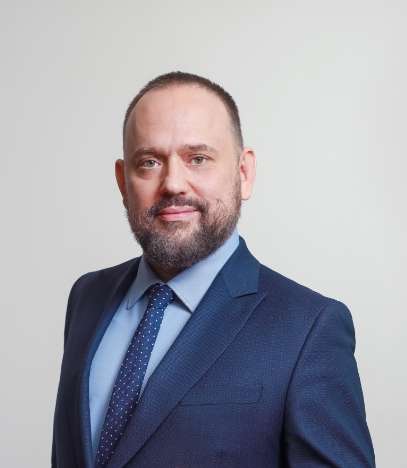
Robert Nogacki is a Polish attorney at law (radca prawny), the founder and managing partner of Kancelaria Prawna Skarbiec (Skarbiec Law Firm), which has operated continuously since 2006.
The law is equal for everyone, but the parties rarely are: on one side stands an organization with time, money, and lawyers, on the other a person with one business, one nest egg, and one life.
Clients rarely come to him with a legal problem. They come with a problem that also has a legal side: an audit that began with a single invoice, money entrusted to someone who has disappeared, a company that has to be passed on before it is too late. Most such matters are decided long before the first letter is written, in decisions made without asking and in deadlines nobody remembered. So he begins by asking how the client got here, not what the client should have done.
He advises entrepreneurs and families from more than a dozen countries, including those whose accounts the tax office has just seized and who do not know what to do tomorrow morning. He defends them in tax audits, customs and fiscal inspections, disputes with the tax authorities, and criminal tax proceedings. He represents victims of investment fraud and Ponzi schemes. He helps families set up family foundations and plan succession, so that a life’s work outlasts a single generation.
Not every case can be won. Every case can be run so that the client knows where they stand. Since 2006 he has represented the victims in the WGI case (Warszawska Grupa Inwestycyjna, the Warsaw Investment Group), one of the longest criminal cases in the history of the Polish financial market, because some things must not be left half finished, even when they take two decades. In the case of the collapsed cryptocurrency exchange Zonda (Zondacrypto, operated by BB Trade Estonia OÜ), he represents several hundred victims in the criminal investigation conducted by Poland’s National Prosecutor’s Office and in the Estonian bankruptcy proceedings.
Kancelaria Prawna Skarbiec is listed in the rankings of Poland’s largest tax advisory firms published by Dziennik Gazeta Prawna and Rzeczpospolita, and it is a four-time recipient (2015 to 2018) of the European Medal awarded by the Business Centre Club and the European Economic and Social Committee. Robert Nogacki publishes regularly, in the press and on the firm’s website, for people who have a problem rather than a law degree, because a legal opinion the client cannot understand protects only the lawyer.
He believes that the best legal advice is the kind that means the client never has to appear in court.