Zondacrypto: Legal Help For Customers
When I wrote the first version of this text, Zondacrypto was an exchange that “needed more time” for withdrawals. Today it is a bankruptcy estate: on 27 August 2026 the Harju County Court in Tallinn found its operator, BB Trade Estonia OÜ, insolvent, and the Polish National Prosecutor’s Office in Katowice is running a merged investigation into the exchange and the disappearance of its founder. The April diagnosis was that this was not AML verification but liquidity management, and that the history of failed exchanges told us what would come next. The diagnosis held, so I have left it in the text; what changed are the instruments, the deadlines and the order of steps. Below: what the firm does for the victims, what FTX, Mt. Gox and Celsius teach, why most customers do precisely what they should not, and which decisions have to be taken before 27 October 2026.
From the withdrawal freeze to bankruptcy: where things stand
Since April the case has passed through every stage the history of failed exchanges predicted: the licence revoked in June, a court ban on disposing of assets in July, the bankruptcy of BB Trade Estonia OÜ declared on 27 August 2026 with claims due by 27 October, and on the Polish side a merged investigation by the National Prosecutor’s Office in Katowice, assets secured and the first arrests. The current status, deadlines and timeline are kept on the page Zonda and Zondacrypto: the collapse, the bankruptcy and legal help for customers; the step-by-step procedure, from the criminal complaint to the proof of claim, is set out in Zondacrypto: The Vanishing. This text repeats neither. It answers three other questions: what a lawyer does in this case and what he will not do for the client, which decisions the client has to take alone, and why the experience of earlier collapses is a better guide through it than intuition.
What legal help in the Zonda case consists of
Work on every case begins with reconstructing the customer’s account outside the exchange’s books. This is not a formality. BB Trade Estonia OÜ’s auditors wrote in successive financial statements that the architecture of the company’s accounting system made it impossible to attribute customer liabilities to individual customers; the exchange’s panel is offline, and the trustee and the prosecutor will count only what can be proved by a document from outside that system. So we ask for bank statements showing transfers to and from the exchange’s accounts, confirmations of crypto deposits with transaction identifiers, exports of the operation history, screenshots of balances and withdrawal orders, and the correspondence with support. From that material come two figures, not one: the loss on the day withdrawals were blocked, at market prices, for the compensation motion in the criminal case, and the claim in euro as of the bankruptcy date, for the proof of claim filed with the trustee. Both are needed, each is calculated differently, and the gap between them can be wide; the methods are explained in What Is a Claim Worth When No One Has Counted It?
The division of labour between the authorities is simple and worth seeing clearly. The prosecutor works on public funds and for all injured parties at once; the trustee works for the estate, not for any single creditor; the lawyer works for one client and is the only one making sure that this client is counted in both proceedings. In practice that means a submission that gives the client injured-party status and files the motion under Article 46 § 1 of the Polish Criminal Code (or supplements a complaint the client filed alone, because a second complaint only clogs the file); a proof of claim in a form the trustee will accept without returning it, with reservations as to the status of users’ assets and the clauses of the terms of service; representation at the creditors’ meeting; replies to the trustee’s demands, including those concerning withdrawals made before the bankruptcy; and, for Polish tax residents, amended returns where the client paid tax on gains he never withdrew (The Digital Mirror). We correspond in English, and a foreign customer is an injured party in the Polish criminal case on the same terms as a Polish one.
What we do not do matters just as much. We take no commission on recovered funds, give no guarantees, file no lawsuits against the bankrupt company, and sell no “securing of claims” or “class actions” where the bankruptcy has replaced them with a single proceeding. We currently represent around 150 injured customers of Zondacrypto in the criminal proceedings. I gave the horizon of the case on Polish television in April: five to ten years. Where does that estimate come from? In the WGI case we have represented the victims since 2006, and the convictions of the brokerage’s board members came in March 2026, twenty years after its collapse. That is not an argument for patience but for method: complete documentation from day one, injured-party status before the file swells to hundreds of volumes, and every deadline treated as the last.
How the withdrawal freeze worked: an anatomy the court confirmed
The sums ranged from a few thousand to a million zloty. The stories, with minor variations in the ratio of frustration to panic, were identical: the customer tried to withdraw money from Zondacrypto, and the exchange said no. Not directly, because directly would have been easy to challenge. The exchange said not yet, and offered a reason that sounded like a reason: an AML verification, an expired document, a vaguely described technical problem. Any single case looked like a delay. It was only when a dozen of them were laid side by side that a pattern emerged, and it did not resemble a compliance procedure. It resembled a liquidity management strategy.
The script was always the same. A customer placed a withdrawal order, in zloty to a bank account or in cryptocurrency to an external wallet. The order was accepted and, minutes or hours later, cancelled. Then came an e-mail from the “AML department” demanding income tax returns going back several years, or other, equally abstract documents. A customer who had completed every verification step and could see “Completed” next to each of them in the panel learned that this was not enough, because a verification “initiated” years earlier, of which nobody had told him, was “still in progress”. Throughout those years the exchange had accepted his deposits without a murmur. The doubts arose at the moment he wanted to leave. Trading inside the platform worked without a hitch; only outbound operations were blocked. You can check in any time you like, but you can never leave.
In some cases the mechanism was more refined still. The system cancelled the order and, thirty-three minutes later (we have it documented to the minute), generated a demand for repeated KYC verification. The cancelled order ceased to exist; the customer who passed verification again had to place a new order with a new identifier, which went to the back of the queue. Each cycle of cancellation, re-verification and new order set the customer back by weeks without a formal refusal. Procedural perpetual motion: a machine that produced the appearance of process without the inconvenience of a result.
The most valuable document in our file remains a support message of 7 April 2026 whose author, probably unwittingly, told the truth: the operational wallet (the hot wallet) was not picking up funds automatically, withdrawals were landing in “confirming” or “rejected”, and the funds for each individual withdrawal were being “selected manually” by the technical department from customers’ deposit addresses. A normally functioning exchange processes withdrawals automatically, from a pre-funded operational wallet, within minutes. Manually moving funds from the addresses where customers’ deposits land meant one thing: the hot wallet was empty. The on-chain analysis by Recoveris, published by money.pl and Rzeczpospolita, confirmed it: operational bitcoin reserves had fallen from about 55 BTC in August 2024 to 0.086 BTC on 1 April 2026. The same pattern preceded the collapse of Celsius and FTX. I described it in The Email That Said Too Much.
Why was this not AML? The Estonian Money Laundering and Terrorist Financing Prevention Act (RahaPTS, § 23(2)(3)) requires ongoing, proportionate monitoring of the customer relationship, not a retrospective tax audit launched six years in, solely when the customer wants out. In a real AML procedure an institution uses one of two instruments, an account freeze or a suspension of the transaction, and notifies the supervisor (the Estonian Financial Intelligence Unit, or in Poland the GIIF) immediately, and no later than within two business days. A selective block on withdrawals alone, with no report, no frozen account and no notification, has no basis in any AML regime in the European Union. Its logic was the reverse of compliance: real compliance protects the financial system against taking dirty money in, not against giving money back. On 27 August 2026 the court gave what we saw in April its proper name: insolvency.
What the history of failed exchanges teaches
The history of liquidity crises in crypto is short, barely a decade, but dense with data, and the data tell a consistent story. The range of outcomes is extreme: from thirteen cents on the dollar to a hundred and twenty. The difference is explained by three variables: whether there were assets to recover, whether the estate’s administrators were competent, and how early the creditors acted.
FTX: a hundred and nineteen per cent, with an asterisk
FTX collapsed in November 2022 when it emerged that its founder, Sam Bankman-Fried, a twenty-something in a T-shirt who had persuaded Congress, regulators and institutional investors that he was building a responsible financial system, had been secretly channelling billions of dollars of customer deposits into his hedge fund, Alameda Research. The SEC complaint established a mechanism elegant in its simplicity: a backdoor in the code, the so-called allow negative flag, let Alameda withdraw funds from the exchange at a negative balance, an undisclosed credit line funded by the deposits of unsuspecting customers. When, within seventy-two hours, customers demanded six billion dollars, the accounts were nine billion short. Bankman-Fried was sentenced to twenty-five years.
The estate’s administrator, John J. Ray III, the same lawyer who had wound down Enron and who said he had never seen “such a complete failure of corporate controls”, achieved an extraordinary result: ninety-eight per cent of creditors received a hundred and nineteen per cent of their claims, with total recoveries of USD 14.5 to 16.3 billion. The fourth distribution round, USD 2.2 billion, took place on 31 March 2026.
The catch is not small. Claims were valued in dollars as of the petition date, when bitcoin cost about USD 16,000. A creditor who lost one bitcoin received about USD 19,000 in cash: a hundred and nineteen per cent of the claim, while the bitcoin itself was worth more than USD 100,000 in 2025. Formally a recovery with interest, in reality a fraction of the lost gains. The Delaware court approved that methodology; another court, in the Genesis case, allowed repayment in crypto, which let creditors keep the full appreciation. This valuation date problem (does the creditor get back the asset he lost, or its cash equivalent from the worst possible day) is the single most important legal variable for any customer of a crypto exchange. In the Zonda case it already has a concrete form, described below.
Mt. Gox: a decade, but bitcoin in kind
Mt. Gox handled seventy per cent of global bitcoin trading before it was discovered in 2014 that coins had been leaking from it for years, about 850,000 BTC in total. The theft was not a single break-in but a slow bleed that had begun in 2011 and went unnoticed for three years. The rehabilitation proceedings, not bankruptcy (the crucial difference), have run for twelve years. About 19,500 creditors have received distributions in actual BTC and Bitcoin Cash; the trustee’s wallets still held about 34,689 BTC, and the distribution deadline was set for October 2026.
The lesson of Mt. Gox is fundamental: the choice of legal regime determines the outcome more than any other factor. Had Mt. Gox been liquidated in 2014, with its bitcoins sold at about USD 600 each, creditors would have received about 20 per cent of their claims in yen. Conversion to rehabilitation kept the BTC in the estate and distributed it in kind at prices above USD 90,000. The difference between twenty cents on the dollar and full recovery came down to one procedural decision taken twelve years ago.
Celsius: the click that cost 4.2 billion
Celsius promised customers eighteen to twenty per cent annual yield on their deposits. To generate it, the company aggressively rehypothecated customer assets, pledging the same funds repeatedly across DeFi protocols, and parked at least USD 500 million in Terra’s Anchor protocol. When the UST stablecoin collapsed in May 2022, Celsius took heavy losses; separately, it lost about 35,000 ETH when a staking provider misplaced private keys, a loss customers were never told about. It froze withdrawals in July 2022 with a deficit of USD 1.2 billion.
Then came the moment every Zondacrypto customer should study. On 4 January 2023 Judge Martin Glenn of the Bankruptcy Court for the Southern District of New York ruled that the USD 4.2 billion deposited in Celsius Earn accounts by 600,000 users had become property of the bankruptcy estate, not customer assets. The basis? The platform’s terms of service, a standard clickwrap agreement accepted in the fraction of a second it takes to tap “I agree”. One click turned six hundred thousand owners into unsecured creditors at the back of the queue. Worse, the estate’s administrator filed thousands of suits against former customers who had withdrawn more than USD 100,000 in the ninety days before the filing, demanding the money back for the estate (so-called preference clawbacks). Those who had sensibly withdrawn on seeing the warning signs were sued for having acted earlier than others. Recovery: 64.9 per cent, with estimates of 67 to 85 per cent.
QuadrigaCX, Three Arrows and BlockFi: the extremes
Canada’s QuadrigaCX collapsed in 2019 after its founder, Gerald Cotten, died in India as the only person holding the keys to the wallets with customer assets. The Ontario Securities Commission later found that Cotten had run a Ponzi scheme from the start and lost about USD 115 million in fictitious trades on his own platform. 76,000 creditors recovered thirteen per cent. The lesson is not about fraud, which happens everywhere; it is about the risk of one man with the keys, no backup procedures and no multi-signature authorisation. No court order will open a wallet whose key died with its owner.
The Three Arrows Capital fund invested USD 200 million in Luna tokens and, after Terra’s collapse, dragged down Voyager Digital, to which it owed USD 650 million unsecured, BlockFi and Genesis Global: a cascade of insolvencies in which each exposed the hidden dependency of the next. The co-founders’ assets worth USD 1.14 billion were frozen. BlockFi achieved a hundred per cent recovery, the only such case in the history of crypto exchanges, and it was not the product of procedure but of the competence of the Haynes Boone team, which negotiated a USD 874.5 million settlement with the FTX estate and sold the claims at a premium. The exception, not the rule.
How much was recovered from failed crypto exchanges
| Exchange | Cause | Recovery | Time | Key lesson |
|---|---|---|---|---|
| FTX | Fraud | 96 to 120% | over 3 years | Valued in dollars on the petition date, not in crypto |
| Mt. Gox | Theft | close to full | over 12 years | Rehabilitation instead of liquidation made all the difference |
| Celsius | Rehypothecation | 65 to 85% | over 3 years | A clickwrap turned owners into creditors |
| BlockFi | Contagion | 100% | 2 years | An exceptional legal team, not the procedure |
| Voyager | Contagion (3AC) | 35 to 75% | over 2 years | An unsecured loan is a catastrophe |
| QuadrigaCX | Ponzi | 13% | closed | A dead man with the keys, zero safeguards |
| 3AC | Leverage | about 1.4% initially | ongoing | A cascade of insolvencies |
The common denominator: in insolvency, customers of crypto exchanges are as a rule unsecured creditors, at the back of the queue, behind the costs of the proceedings, priority claims and secured creditors. Insolvency law, American (the Absolute Priority Rule) and European alike, treats them as the last to be paid.
What this means for Zonda’s customers
Each of these lessons already has a concrete form in the Zonda case.
- The valuation date. The trustee values claims in euro as of the date of the bankruptcy order, 27 August 2026. A customer who held cryptocurrency can elect in the proof of claim between satisfaction in kind and in money; that election decides who bears the price risk over the coming years. FTX shows that this is one of the most important decisions in the whole proceeding, and it is made now, not at the end.
- The legal regime. Estonian bankruptcy is a liquidation, not a Mt. Gox style rehabilitation; nobody will hold the estate’s assets for a decade waiting for the price. That is why the full weight of recovery rests on the criminal proceedings, with their asset freezes and compensation orders.
- The clickwrap. Zondacrypto’s terms assured customers that the operator did not use their funds; the financial statements said otherwise. The proof of claim therefore contains a reservation that users’ assets never formed part of the exchange’s property. Whether the Estonian trustee will share that position is an open question; not raising it closes the question in advance.
- The keys. The 4,500 BTC wallet that the chief executive pointed to in April as the company’s reserve has never been linked to it by any cryptographic proof; the XRP wallet linked to the exchange came to life on 22 August, when the ban on disposing of assets was already in force. Whoever holds the keys holds the assets, and the court holds only orders; that is the QuadrigaCX lesson in its Estonian version.
- Competent administrators and active creditors. BlockFi recovered everything because someone competent watched over the estate. The first meeting of creditors on 17 September 2026 elects the creditors’ committee, the only body in this proceeding in which the victims have a voice. Absence is also a decision.
The psychology of waiting: why most customers do what they should not
There is a reason exchanges in a liquidity crisis do not declare insolvency, and instead run individual “AML verifications”, promise to resolve “technical problems” and assure everyone that “funds are safe”. The reason is psychological, and its effectiveness is empirically confirmed.
The sunk cost fallacy: a customer who deposited half a million zloty and has been waiting weeks for a withdrawal does not want to hear that the money is at risk. Each additional day of waiting increases the emotional investment and decreases the willingness to take action that would require admitting the waiting was a mistake. Every support e-mail promising “priority treatment” added another day to that investment. The endowment effect: the customer does not think of the balance on Zondacrypto as a claim against an Estonian company of uncertain solvency, but as his money, temporarily held. The difference in framing is fundamental: an owner waits patiently, a creditor acts. And hope as strategy: game theory calls it strategic optimism, assigning favourable values to unknown variables without any basis. The customer who did not know the state of the exchange’s reserves, the number of others in the same position or the odds of a licence assumed that the exchange “would sort it out somehow”. History said otherwise: Voyager cut its withdrawal limit a week before bankruptcy, Celsius froze withdrawals a month before filing, FTX two days.
The optimal strategy changes over time. When an exchange is running, waiting is rational. When it blocks withdrawals, documenting the claim immediately becomes rational. When it goes bankrupt, rationality has a date: 27 October 2026. The same psychological mechanism that in April said wait for the withdrawal now says put off filing the claim, because filing is an admission that the money will not come back by itself. The asymmetry remains unambiguous: the cost of acting is known and bounded, the cost of not acting potentially total, and in bankruptcy a third element appears that did not exist in April: a late claim, even if accepted, goes to the back of the queue.
Promises that do not add up
In April I wrote about offers to “secure claims” against Zondacrypto and proposed a simple exercise in arithmetic: interim security under Article 730 of the Polish Code of Civil Procedure requires identifying assets of the debtor on which a court can impose it, so which ones? The operator was an Estonian company; payments from Polish customers were taken by a separate Polish company, TryPay S.A. of Wrocław; customers’ cryptocurrencies were supposed to sit in wallets whose addresses the exchange did not disclose, and the only publicly identified operational wallet held a fraction of what the exchange should have had. The law provides tools. But tools work when there is something to secure.
Today the exercise has an answer. The court in Tallinn barred the company from disposing of its assets and then declared bankruptcy, which replaces every individual security measure with a single proceeding. Whoever paid in April for a lawsuit with an application for interim measures has costs today, not security. Whoever pays now for a “class action” against a bankrupt Estonian company is paying for a document whose addressee no longer exists as an entity able to pay anything outside the bankruptcy. Claims against third parties, board members or recipients of transfers, will mature with the findings of the investigation and will be assessed individually; nobody can price them today, let alone guarantee them.
The April text also had a date “that cannot be moved”: 1 July 2026, the end of the Estonian transitional period for VASP licences, by which Zondacrypto had to obtain a MiCA compliant CASP licence or cease operating in the Union. The date lost its meaning before it arrived: the licence was revoked on 29 June, and the “orderly wind-down” of which ESMA’s guidance spoke took the form of an asset disposal ban and a bankruptcy petition. The date that organises the victims’ actions today is 27 October 2026.
Why it could not have ended otherwise: MiCA, DORA and the terms of service
From the analysis of Zondacrypto’s terms of service (version of 1 January 2026), the support correspondence and publicly available information, the picture that emerged in April was of an entity whose infrastructure met the requirements of neither MiCA nor DORA. The terms declared, in § 8(21), that the exchange did not use customer funds for its own account; support admitted that the hot wallet did not work and that funds for withdrawals were picked manually from deposit addresses. There were two possibilities, and neither was comforting: either the declaration was true and the operator was so profoundly incompetent that it could not transfer assets it actually held, which in itself breached Articles 66 and 75 of MiCA; or the declaration was false and customer assets were not where the operator said they were, which breached Article 67 and was a ground for revoking the licence. Article 75(4) of MiCA spoke of returning crypto-assets “as soon as possible”; the terms, in § 8(14), spoke of twelve hours; reality spoke of weeks with no date. DORA required business continuity plans, disaster recovery and incident reporting; manual processing as the sole fallback was material evidence of their absence. Article 76(2) of MiCA required fair trading conditions; the exchange kept trading open and collected commissions on it while blocking every outbound operation. Customers could enter but could not leave.
The signs of careless governance were visible in the document itself. The accessibility chapter referred to a “Payment Operator” instead of the exchange, as if copied from another company’s filing without adaptation; the registered address in the terms (“office no. 10”) differed from the one in operational correspondence (“office no. 210”). An entity that cannot state its own office number consistently in two documents is hard to suspect of maintaining the internal control procedures that MiCA and DORA demand. The revocation of the licence on 29 June 2026 was the only decision consistent with what this document said about its author.
The terms also contained provisions that, under Article 385¹ of the Polish Civil Code and Directive 93/13/EEC, are almost certainly unfair, and they were not isolated lapses but a system of mutually reinforcing mechanisms: a “negative deposit” bearing interest of minus twenty per cent a month on the initial value (§ 8(28) and (31), § 13(2)), that is an automated confiscation spread over time so as not to look like a single seizure; an exclusion of liability for exchange rate losses during an account block (§ 13(1), § 19(9)); a right to change withdrawal fees without notice (§ 21(3)); compulsory conversion of crypto into fiat at an undefined “market rate” (§ 12(14)), with no benchmark, no consent and a tax consequence. These clauses are not history. If the trustee calculates claims according to the terms, each of them becomes a dispute about the amount of the claim, which is why the proof of claim should address them expressly before anyone applies them.
The recovery scam: the mechanism of the second fraud
Every customer whose funds are stuck on an exchange should be prepared for what will almost certainly follow: contact from a firm offering to “recover the funds”. The psychology of this fraud is precisely tuned to the victim’s state: desperation (pressure for a quick solution), confirmation bias (every promise is the information one wants to hear), loss of agency (whoever offers help restores a sense of control) and shame (the victim does not want to admit the loss to family, so seeks a discreet solution). The mechanism is banal: victims’ data leaks or is sold, the firm contacts the victim with surprisingly detailed knowledge of the case, which itself looks like competence, and offers rapid recovery for an “advance on operating costs”, a “processing fee” or a “tax on the refund”. Once paid, it vanishes. The global recovery rate for the proceeds of crypto fraud is three to seven per cent. No private firm has tools that a court, a prosecutor or a trustee would lack.
The rule is simple and admits no exceptions: if someone contacts you with an offer to recover your funds, rather than the other way round, it is a fraud. Since April a bankruptcy variant has joined it: “help with filing your claim” for an advance fee on a website that is not the trustee’s, or a “registration in the proceedings” that does not exist in these proceedings. The trustee’s details and the rules for filing claims are public; you check them at the source, not in a message from a stranger.
The decisions that belong to the customer
The order of steps, the addresses and the deadlines are in the guide Zondacrypto: The Vanishing; I do not repeat them here. There are, however, decisions no lawyer will take for the client, because they concern his risk, not the law.
- In kind or in money. In the proof of claim, a customer who held cryptocurrency on the exchange chooses whether he wants the same assets back from the estate or their euro value as of 27 August 2026. That is a decision about who bears the price risk for the years the proceedings will last; FTX’s creditors learned its price only at the payout. We prepare a comparison of scenarios; the client decides.
- Whether to contest the terms of service. The proof of claim can accept the amount as the trustee will calculate it under the exchange’s terms, or reserve from the outset that the “negative deposit”, compulsory conversion and exclusion-of-liability clauses are unfair and that users’ assets were never the company’s property. We recommend the reservation; its absence closes the dispute before it begins.
- Whether to be present in the bodies of the proceedings. The creditors’ meeting on 17 September 2026 elects the creditors’ committee, the only body in which the victims have a voice. Attendance through a representative makes sense for creditors with larger claims; for the rest it is enough that someone from that group represents them. The absence of everyone is also a decision.
- How to respond to the trustee’s demands. Withdrawals from the last months before the bankruptcy may be challenged by the trustee as satisfying some creditors at the expense of others; the risk is not automatic and is concentrated in the months immediately before the freeze. A reply without consultation is often worse than no reply.
- Tax correction now or later. For Polish tax residents, whoever paid tax on gains never withdrawn can amend the returns today; whoever waits, waits with the risk that the source of funds will be raised first by the prosecutor and then by the tax office. We settle this individually, on the basis of what the client has reported so far.
Video
- Fakty TVN, 20 April 2026, report by Michał Tracz (in Polish): the scale of losses, the athletes among the victims, the political dispute over regulation, and the answer to how long the victims’ case will take. Realistically five to ten years; prosecutors confirmed at the time that losses exceeded PLN 350 million.
- Polish Radio 24, 21 April 2026 (in Polish): a warning against false help in recovering money. Much of the “advice” given to victims is designed to get them to sign quickly and take an easy first step, and some of it comes from entities that are not law firms at all.
- Webinar for Zondacrypto’s customers, 26 April 2026 (in Polish): recorded before the bankruptcy order; everything about documents, injured-party status and caution towards “recovery” offers remains valid, and the date organising the victims’ actions is now 27 October, not 1 July.
Enquiries about Zondacrypto reach us through the contact form. A few sentences are enough: the dates and amounts of your deposits, the withdrawal orders that were not executed, and whether a criminal complaint has already been filed. We reply in writing, in English, with an assessment of which of the decisions above are urgent in your case and which can wait.
Legal and factual status as of 7 September 2026. The charges and detentions described in this text are not findings of a court; all persons named are presumed innocent. Assessments of the causes of the exchange’s collapse are hypotheses to be verified in the proceedings.
The Zondacrypto Case
The Zondacrypto case is being examined by authorities in several countries, and no one today can predict the fate of the entrusted funds. We represent the victims and protect their position in the ongoing proceedings.
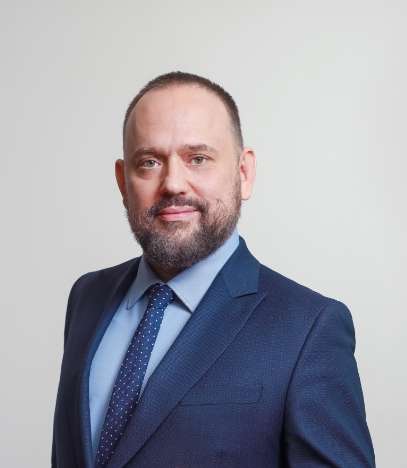
Robert Nogacki is a Polish attorney at law (radca prawny), the founder and managing partner of Kancelaria Prawna Skarbiec (Skarbiec Law Firm), which has operated continuously since 2006.
The law is equal for everyone, but the parties rarely are: on one side stands an organization with time, money, and lawyers, on the other a person with one business, one nest egg, and one life.
Clients rarely come to him with a legal problem. They come with a problem that also has a legal side: an audit that began with a single invoice, money entrusted to someone who has disappeared, a company that has to be passed on before it is too late. Most such matters are decided long before the first letter is written, in decisions made without asking and in deadlines nobody remembered. So he begins by asking how the client got here, not what the client should have done.
He advises entrepreneurs and families from more than a dozen countries, including those whose accounts the tax office has just seized and who do not know what to do tomorrow morning. He defends them in tax audits, customs and fiscal inspections, disputes with the tax authorities, and criminal tax proceedings. He represents victims of investment fraud and Ponzi schemes. He helps families set up family foundations and plan succession, so that a life’s work outlasts a single generation.
Not every case can be won. Every case can be run so that the client knows where they stand. Since 2006 he has represented the victims in the WGI case (Warszawska Grupa Inwestycyjna, the Warsaw Investment Group), one of the longest criminal cases in the history of the Polish financial market, because some things must not be left half finished, even when they take two decades. In the case of the collapsed cryptocurrency exchange Zonda (Zondacrypto, operated by BB Trade Estonia OÜ), he represents several hundred victims in the criminal investigation conducted by Poland’s National Prosecutor’s Office and in the Estonian bankruptcy proceedings.
Kancelaria Prawna Skarbiec is listed in the rankings of Poland’s largest tax advisory firms published by Dziennik Gazeta Prawna and Rzeczpospolita, and it is a four-time recipient (2015 to 2018) of the European Medal awarded by the Business Centre Club and the European Economic and Social Committee. Robert Nogacki publishes regularly, in the press and on the firm’s website, for people who have a problem rather than a law degree, because a legal opinion the client cannot understand protects only the lawyer.
He believes that the best legal advice is the kind that means the client never has to appear in court.