
The Discreet Charm of the Master Account
How copy trading and PAMM accounts became Europe’s most elegant way to manage other people’s money without admitting to it.
Imagine, for a moment, a financial product in which thousands of retail investors entrust their savings to a single person. That person makes every decision on their behalf, at the rate of several dozen trades a day, often with leverage, on foreign-exchange or crypto markets. The investors know nothing about the strategy, the exposure, or the risk. When the person wins, he collects a slice of the profits. When he loses, he loses other people’s money.
In the European Union, what I have just described would be portfolio management under MiFID II. It would require a license, regulatory capital, suitability assessment, conflict-of-interest controls, and periodic reporting. Unless, that is, you called it copy trading and routed it through something known as a PAMM account. Then, according to a certain class of operators, it would not be management at all. It would be technology.
The pages that follow explain why this argument fails, and why European regulators have begun, with what can only be described as patient impatience, to say so out loud.
What Copy Trading Is
Copy trading, in its current form, is the product of four distinct technological decades. Each added a new layer; the underlying economics never changed. Someone decides, someone else lives with the consequences.
In the nineteen-nineties, the retail market ran on paid signal services—stock-tip newsletters, fax alerts, CompuServe forums. A subscriber received a hint (“Buy XYZ at 47, stop at 44”) and walked it down to his broker. Client-side automation was zero.
In 2005, Tradency introduced something called Mirror Trader, in which strategies sat on the broker’s side and executed automatically in subscribers’ accounts. That same year, MetaTrader 4 popularized a scripting language called Expert Advisors and quietly built a global signal economy.
In 2010, eToro launched OpenBook and CopyTrader; ZuluTrade stitched together a cross-broker network. Signals stopped being subscriptions and started looking like a social network—rankings, likes, follower counts, one-click copying. Crypto arrived on eToro in 2013.
By the twenty-twenties, the infrastructure had migrated to crypto exchanges (Bybit in April, 2022; Binance Futures in May, 2023) and on-chain protocols. Signals are now generated not by a person but by a machine-learning model; execution travels through APIs in milliseconds, and, increasingly, through smart contracts. In May, 2025, eToro priced its I.P.O. on the Nasdaq at fifty-two dollars a share, giving the entire social-trading model an unmistakable stamp of legitimacy.
From this chronology emerges the observation around which everything else in this article turns. Each new decade brought a new technological wrapper, and with it a new argument that this time the service was something other than asset management.
In the nineties, the argument was that an investment newsletter fell within the publisher’s exemption of the Investment Advisers Act of 1940 and its analogues elsewhere. The locus classicus is Lowe v. SEC, 472 U.S. 181 (1985), in which the Supreme Court excluded bona-fide publications from the definition of “investment adviser” on three conjunctive grounds: the publication was impersonal—not tailored to any particular client; it was disinterested—untainted by conflict of interest on the publisher’s part; and it circulated, as Justice Stevens put it, “to the public at large in a free, open market.” Each of those features distinguishes a newsletter from the fiduciary, person-to-person relationship that the Act reserved for the regulated profession of investment advising. Lowe, in other words, is not a shelter for copy trading. It is its structural opposite. Copy trading through a PAMM account produces an individualized allocation to a named sub-account; it pays its lead trader a fee tied to the volume of subscribers’ transactions—a textbook equivalent of the scalping the Supreme Court had condemned in SEC v. Capital Gains Research Bureau (1963); and it generates precisely the fiduciary, person-to-person relationship the Lowe exemption was meant to protect against in its absence. Each of the three Lowe criteria, applied to copy trading, points in the opposite direction from the one a newsletter publisher might once have hoped.
In the two-thousands, the argument was that the automation executed the strategy, not the client. In the twenty-tens, it was that this was not management but a social network. In the twenty-twenties, it is that the decisions are being made by artificial intelligence, and that artificial intelligence, not being human, cannot be a portfolio manager. Every time, the regulator has arrived at the same conclusion: if execution is automatic and requires no further decision by the client, it is portfolio management. The arguments change. The legal classification does not.
From the consumer’s vantage, the appeal is obvious. The retail investor who lacks the time, the knowledge, or the courage to speculate alone on foreign exchange, index C.F.D.s, or crypto is offered something disarmingly simple: pick a trader from the platform’s leaderboard, click “Copy,” allocate an amount, and from that moment your account will mirror his decisions. The marketing keeps pace: passive income, invest like the pros, social trading for everyone, A.I.-powered strategies vetted by the community. Some of the largest platforms operate fully within the regulatory regime (eToro has been licensed by Cyprus’s securities authority, CySEC, under license No. 109/10 since January 14, 2010, and has been a Nasdaq-listed company since May, 2025), but the global majority of copy-trading operators hold no investment authorization of any kind. In the background sits a statistic that every licensed European platform is required to publish in its disclosures: between 70 and 85 percent of retail accounts in the C.F.D. segment lose money, with some industry studies putting the share above 89. That statistic does not vanish when, instead of clicking the buttons yourself, you delegate the clicking to an anonymous name in a leaderboard.
How the product works
Every copy-trading platform rests on the same three-part structure.
The lead trader (signal provider). The person publishing the signals, almost always anonymously or semi-anonymously, behind a leaderboard handle. He earns money in some combination of three ways: a flat fee per active subscriber, a share of the spreads from subscribers’ trades, or a high-water-marked performance fee. He is not required to disclose his qualifications, his experience, or his strategy. He is often not required to complete full KYC.
The platform. The operator of the infrastructure: brokerage accounts (usually C.F.D.s), the replication engine, the leaderboard, the statistics dashboard, the billing and information layer. The platform earns money on the spread from subscribers’ trades. The more trades, the more revenue. The more active the lead trader, the better for everyone—everyone but the followers.
The copy trader (follower). The retail client, who picks a lead trader, allocates capital, and grants one blanket consent to automatic copying. From that moment, every decision by the lead trader is, in real time and without any further input, mirrored proportionally onto the follower’s account. The follower does not pick individual trades, does not influence the strategy, and does not know it ex ante. He retains exactly one power: to terminate the subscription, which will close his open positions at market.
The defining feature of the arrangement is that the follower’s money formally stays in his own brokerage account, held in his own name. The lead trader has no authorization over the funds, no technical access, no power to transfer. He can do only one thing: generate a signal that will be executed, automatically, in the follower’s account. This feature is the foundation of every legal argument the operators make. We will return to it.
Copy trading, mirror trading, social trading
The terms get used interchangeably, even by regulators. The International Organization of Securities Commissions, in its 2024 consultation and again in its final report of May, 2025, settled on a working distinction worth keeping.
Copy trading is the automatic or semi-automatic replication of the specific trades of a chosen lead trader, proportional to allocated capital. The follower chooses a person.
Mirror trading replicates an entire strategy—an algorithm—rather than a person. The follower picks a strategy from a library, and the system mirrors every operation. Automation tends to be higher; the follower’s discretion lower.
Social trading is the loosest of the three. Users share ideas in the community—comments, charts, posts—and the follower decides whether and when to act. There is no replication engine.
From a legal standpoint, the first two matter most, because only they involve automatic execution without the client’s intervention at each individual trade. That single element, as we will see, determines whether the activity is portfolio management.
Why Asset Management Is Regulated
Before we explain the workaround, we have to explain what is being worked around. Without grasping why portfolio management requires a license in the first place, the operators’ arguments can seem rather persuasive. MiFID II was not designed to make life difficult for fintech startups. It descends from three classical sources of market failure, all well-trodden in the economic literature.
Information asymmetry
A retail client who entrusts someone with his savings has no practical way to evaluate whether the manager is competent, whether the strategy is rational, or whether the risk matches the profile he was sold. The manager has knowledge the client does not. Economists call this the problem of imperfect trust—it is the same insight that earned George Akerlof his Nobel Prize in 2001 for his 1970 paper on “The Market for Lemons.” Under asymmetric information, markets cannot spontaneously produce effective discipline. They require intervention: disclosure obligations, reporting standards, sanctions for breach. This is why MiFID II loads managers with detailed ex-ante duties—information before the contract is signed—and ex-post duties, in the form of periodic reports.
The agency problem
A portfolio manager is the client’s agent. His interests do not automatically align with the client’s. He can take excessive risk, because he participates more in profits than in losses, especially under success-fee structures. He can choose instruments that generate his commissions rather than the client’s returns—a practice known as churning. He can act in conflict with a broker he works alongside. Absent external legal discipline, this conflict tends, systematically, to resolve itself against the client. Sappington (1991) and Stracca (2006) demonstrate, in the literature, that no compensation scheme eliminates the problem entirely. It can only be cabined—through structural requirements (asset segregation, best execution, conflict-of-interest controls) and through sanctions.
Systemic risk and public confidence
Unlawful activity, especially at scale and especially in leveraged instruments, generates externalities. The consumers who lose money file complaints, report misconduct, draw on the courts. The reputation of financial markets as a whole suffers when the regulator allows large-scale de-facto asset management by unauthorized operators to flourish unpunished. The licensing regime thus performs a second function alongside investor protection: it protects the public’s confidence in the system itself.
The five duties the operator wishes to avoid
The practical consequence of classifying a service as portfolio management lies in five duties, each of them economically inconvenient or structurally impossible for most copy-trading platforms.
First, authorization by the national regulator, with minimum regulatory capital, fit-and-proper assessment of management, a program of operations, and a compliance function. Second, the suitability and appropriateness assessment, under which the operator must gather information about the client’s knowledge, experience, financial situation, investment objectives, and risk tolerance, and then match a product to all that. A leaderboard captioned “Copy the Best” is, to put it mildly, hard to reconcile with this duty. Third, best execution and conflict-of-interest management—the operator cannot profit from clients’ trades in ways that produce a systemic conflict. The business model of most C.F.D. platforms is built on precisely such a conflict: the more trades, the more revenue. Fourth, periodic reporting and cost disclosure in a standardized format. Most copy-trading platforms do not meet this standard. Fifth, civil liability for the manager’s duty of care in selecting strategies and making decisions. A lead trader who is, formally speaking, just another user of a social platform bears no such liability.
The entire purpose of the copy-trading architecture is to avoid these five duties while preserving the functionality of a service that is, economically, indistinguishable from asset management. The industry calls this technological innovation. The regulator calls it circumvention.
PAMM and MAM Accounts as the Central Workaround
The PAMM construct—Percentage Allocation Management Module, or, alternatively, Percentage Allocation Money Management—predates copy trading and comes out of the foreign-exchange market. The idea is simple and, at first glance, innocent. Clients deposit money into their own sub-accounts. The sub-accounts are technically linked to a single master account, run by a designated trader. The trader executes one transaction on the master account, and the system automatically and proportionally allocates the position and the result back across each client’s sub-account, in the ratio of that sub-account’s contribution to total capital.
A PAMM ACCOUNT—WORKED EXAMPLE
Clients A, B, and C deposit ten thousand, twenty thousand, and seventy thousand dollars, respectively, into their own brokerage sub-accounts. The master account totals one hundred thousand dollars, with sub-account shares of 10, 20, and 70 percent. The trader opens one long position of one hundred thousand notional. The system automatically mirrors the position as three positions on the sub-accounts—ten thousand, twenty thousand, and seventy thousand dollars of exposure. The profit or loss is allocated in the same proportions. The trader has no technical access to client funds; he cannot withdraw them. He does, however, collect a fee—typically a performance fee subject to a high-water mark.
The MAM variant—Multi-Account Manager—works the same way, except that allocation can flow not just proportional to capital but by fixed lot size, by equity percentage, by multiplier, or by other parameters. MAM gives the manager more knobs to turn. For regulatory purposes, the distinction is immaterial. Both are structurally identical: one person decides for many, with someone else’s capital, in exchange for a slice of the result.
Why PAMM is, on paper, different from old-fashioned management
The PAMM architecture allows the platform operator and the master trader to mount four defenses.
The money is never handed to the manager. The client deposits funds into his own sub-account, held in his own name at a licensed broker. The master trader holds no power of attorney, cannot transfer the funds, cannot withdraw them. This, the operators argue, eliminates the classical element of asset management: entrustment of funds.
There is no management agreement. The client and the master trader have no direct contract for portfolio management. The client has a contract with the broker (or platform) for a technical service; one term of that contract permits proportional allocation. This, the operators argue, eliminates the management mandate.
The client can withdraw at any moment. All he has to do is rescind his consent. This, the operators argue, demonstrates that the client retains control of his account, which supposedly forecloses any classification as discretionary management.
The master trader is invested alongside the followers. In the classical PAMM model, he holds his own sub-account inside the master, often with the largest share. This, the operators argue, means he is making decisions primarily in his own interest, and the clients’ allocation is merely incidental. The pitch, in compressed form, is: I am not managing your money; I am managing mine, and you are coming along for the ride.
Taken together, these four arguments construct a product that is regulatorily not the management of other people’s assets, yet functionally indistinguishable from it. That sentence deserves a moment. It is also a precise description of legal circumvention in its classical sense: a structure formally compliant with the letter of the rule but directed against its purpose.
Why these defenses do not survive a substance test
Each of the four arguments collapses on contact with elementary functional analysis.
Custody of funds is legally irrelevant. Article 4(1)(8) of MiFID II defines portfolio management as “managing portfolios in accordance with mandates given by clients on a discretionary client-by-client basis where such portfolios include one or more financial instruments.” The definition does not require that the client’s money be physically or legally transferred to the manager. On the contrary—in the vast majority of asset-management models, the client’s funds remain in the client’s account, held at a depositary bank or broker, and the manager wields only a power of attorney to make investment decisions. PAMM is the functional equivalent of such a power of attorney, even when it is called “consent to automatic allocation.”
The absence of a management agreement does not abolish the substance. The Polish Supreme Court, like its German, Austrian, and British counterparts, has consistently held that the label of a contract does not determine its legal classification. What matters is the content of the obligation. If a client pays a fee to a party that, on the client’s behalf and account, makes investment decisions affecting his portfolio’s value, the legal relationship is portfolio management, regardless of which document underlies it. Burying the management mandate in a platform’s terms of service is the textbook example of circumvention by nomenclature.
Revocability does not eliminate discretion. A client who has signed a classical portfolio-management mandate can also terminate it at any moment. That hardly strips the mandate of its discretionary character. Between the moment of subscription and the moment of termination, the trader is making decisions on his own, at the client’s expense and risk, without consulting him. That is the definition of discretion. The European Securities and Markets Authority, in its March, 2023, supervisory briefing, said as much, expressly stating that an ex-ante bulk approval—a single up-front consent—does not count as the client’s intervention at the level of individual trades.
Skin in the game does not discharge the duties. The argument that the trader is invested alongside his followers belongs to the family of “skin in the game” pitches, but it does not change the legal classification. Regulated portfolio managers also routinely invest in their own funds; nobody supposes this exempts them from MiFID II. The argument is, if anything, weaker here, because the client has no real input into what the trader does with his money at any given moment.
The Regulators’ Position: Substance over Form
ESMA: case-by-case, with a clear direction
ESMA has addressed copy trading twice in writing: in its 2012 Q&A (ESMA/2012/382) and in Supervisory Briefing ESMA35-42-1428, dated March 30, 2023. Its position has been consistent. Each copy-trading service is to be analyzed individually, but the starting question is always the same: is execution automatic, without a further decision by the client? If yes, the service is portfolio management under Article 4(1)(8). If the client must approve each trade, other classifications come into view—investment advice, the reception and transmission of orders (RTO), or the provision of general information.
Where the client sets certain parameters of the transaction—such as the amount to be invested or the amount he is prepared to lose—this does not affect the qualification of the service as portfolio management. By contrast, where execution is not automatic because the client must act before each transaction, the service is not portfolio management.
— ESMA Q&A (2012), Question 9; reaffirmed in the 2023 Supervisory Briefing
The 2023 briefing went further: even where the client retains the right to modify or reject a transaction within a defined time window, after which the transaction executes automatically, the service is still portfolio management. ESMA explicitly rejects two stock defenses. The first—”we provide only the technology”—fails because the regulation protects clients from discretionary third-party action on their accounts, irrespective of the technical wrapper. The second—”the client consented to the subscription, so every subsequent trade is his decision”—conflates consent to a rule with consent to its contents. A subscriber to a lead trader does not know, and cannot know, what trades will be executed in his name.
Extension to crypto: ESMA Q&A 2463 (2025)
In March, 2025, ESMA published Q&A 2463, extending these principles to crypto-asset services covered by the MiCA regulation. Because MiCA does not expressly define “auto-trading services” or “copy-trading services,” ESMA opted to apply the same functional analysis as under MiFID II. The consequence is straightforward: the argument that crypto copy trading sits outside the regulated perimeter has lost its remaining foothold. A platform that automatically replicates Bitcoin trades is now subject to the same substance test as one replicating euro-dollar.
A second regulatory layer arrives in the 2025-2027 window: Regulation 2024/1689 (the EU A.I. Act), in force across the Union since August, 2024. The A.I. Act classifies certain artificial-intelligence systems used in financial services as “high-risk,” imposing on their providers obligations of risk management, transparency, documentation, and human oversight. For copy-trading operators that market automatic signals generated by machine-learning models, the old “the A.I. decides, not us” line offers no relief. The A.I. Act treats the algorithmic black box as an aggravation of the operator’s responsibility, not a dispersal of it.
The F.C.A.: PAMM and MAM as the giveaway
Britain’s Financial Conduct Authority, in the position cited by IOSCO’s 2024 consultation report, put it plainly: much of what the market sells as “copy trading” is, in reality, MAM- or PAMM-style investment management conducted without authorization. The language is laconic:
The F.C.A. warns that fraudulent activity carried out under the banner of copy trading is often, in reality, investment management using the Multi Account Manager (MAM) or Percentage Allocation Management Model (PAMM). These models allow sub-allocation of orders from a single master account.
— F.C.A., quoted in IOSCO CR/10/2024
The F.C.A. maintains a Warning List on which unauthorized purveyors of “copy trading” appear with predictable regularity. A surprising number of them operate under names that include “PAMM” or explicit references to sub-allocation—Pam FX Market, added in December, 2021, and AccentForex, flagged in 2019 as an unauthorized provider of forex products and PAMM accounts. These are the operators using PAMM to do de-facto asset management without a license, and not even bothering to hide the model in the company name.
IOSCO: five recommended practices for the global market
IOSCO, the global standard-setter for securities regulators, published a consultation report in November, 2024, and a final report in May, 2025, in which it laid out five recommended practices for copy-trading operators: assess whether the service is portfolio management or another regulated service; monitor marketing, including the activity of lead traders; establish procedures for selecting and removing lead traders; regularly review their conduct and clients’ outcomes; and manage the conflicts of interest baked into the fee structures. IOSCO also flagged the growing intersection between copy trading and the phenomenon of “finfluencers”, to which it dedicated a separate final report. The line between “education” and “investment advice” in this terrain has become the subject of distinct enforcement actions in Belgium, France (under its 2023 law on financial influencers), Spain, and Italy.
The Japanese solution: brute force
Japan’s Financial Services Agency took the most conservative path and, consequently, the most effective. If a lead trader is paid for publishing signals, the F.S.A. requires him to register under the Financial Instruments and Exchange Act. The result: copy trading is, for practical purposes, absent from the Japanese market. According to the F.S.A., one platform operates in Japan—and only because it pays its lead traders nothing. This is, of course, inconvenient for the business model, but it solves the problem at the level of the regulated activity itself. Europe would find Japan’s trade-off politically unacceptable. It remains, all the same, a useful comparative benchmark.
The Three Exits, and Why None of Them Works
An operator who reads Parts III and IV and accepts their force still has three lines of retreat. Each attempts to relocate the service from portfolio management into some other, supposedly gentler, regulatory category. All three are available in theory only. None of them leads outside the regulated perimeter, and each opens a fresh catalogue of duties that the copy-trading economics cannot bear.
First exit: investment advice
The operator can argue that a lead trader’s signal is a personalized recommendation directed at a follower who then independently decides whether to act on it. If that argument were accepted, the service would qualify as investment advice under Article 4(1)(4) of MiFID II. The trouble is that this defense is available only in variants of copy trading in which each trade requires separate approval by the follower. In any commercially viable model, that requirement guts the product, because it destroys the automated replication that is its central selling point. An operator who chooses this path escapes portfolio management but loses his customers. Worse, investment advice is itself a regulated activity, requiring authorization, a suitability assessment before each recommendation, and a formal advisory mandate. The argument “this is advice, not management” moves the operator from one regulated activity to another—both subject to authorization, both criminalized if conducted without it.
Second exit: investment recommendations under the Market Abuse Regulation
A second line of defense is to say that the lead trader’s signal is simply an investment recommendation—information directed at distribution channels or the public, suggesting an investment strategy for a financial instrument. That classification is governed in the European Union by Article 3(1)(35) of Regulation 596/2014 (the Market Abuse Regulation, or MAR) and by the delegated regulation 2016/958, which sets out the detailed conduct rules.
Those rules impose a catalogue of duties that a standard copy-trading lead trader fails to meet at every point. A recommendation must identify its author by name, with qualifications and, in the case of professional employees, the firm and the supervising authority. An anonymous handle on a leaderboard does not qualify. The recommendation must state its date, the methodology used to value the instrument, the strengths and weaknesses of that methodology, the price projections with their assumptions, and a list of prior recommendations on the same instrument over the past six or twelve months. “Buy BTC/USD at 50x leverage” satisfies none of these. Most decisively, the author must disclose, on the face of the recommendation, all relationships and circumstances that could affect his objectivity—above all, his capital exposure to the instrument and the structure of his compensation. A lead trader paid out of the spread on his subscribers’ trades—earning, in other words, from sheer transaction volume—sits at the heart of a textbook conflict of interest, which he would have to disclose conspicuously on the first page of any document containing his recommendation. Market practice is the precise opposite.
The operator who reframes his service as “merely an investment recommendation” therefore exchanges one regulatory regime for another in which his actual practice constitutes a systemic breach of the duties of disclosure and conflict management. The escape is not an escape. It is a substitution of one charge for another, with the added bonus of MAR’s administrative sanctions regime on top.
Third exit: bona-fide publication, à la Lowe v. SEC
The third defense aims past the regulated perimeter entirely, invoking the construct American jurisprudence built in Lowe v. SEC, 472 U.S. 181 (1985). Justice Stevens, writing for the majority, excluded Lowe’s newsletters from the definition of “investment adviser” because they met three cumulative conditions: they were impersonal, not tailored to any particular client; they were disinterested, free of any conflict of interest on the publisher’s part; and they circulated in the open market—”sold to the public at large in a free, open market.” The Court emphasized that the heart of the exemption is the absence of a fiduciary, person-to-person relationship.
Copy trading meets none of these conditions. It is not impersonal—execution lands on a specific sub-account belonging to a specific client, in proportion to his individual capital allocation, with financial consequences booked to his name. It is not disinterested—the lead trader is compensated as a function of the volume and value of his subscribers’ trades, which is the functional equivalent of the scalping that the Supreme Court, in SEC v. Capital Gains Research Bureau, Inc., 375 U.S. 180 (1963), treated as a breach of fiduciary duty. And it does not circulate as information—it circulates as an instruction, executed on a specific account, on the strength of a continuing subscription that produces precisely the fiduciary relationship the Lowe exemption was designed to address by its absence. The conclusion is unavoidable: the Lowe line of authority does not shelter copy trading, because it shelters precisely what copy trading is not.
Take the three exits together. Each one routes the operator from one regulated regime to another, and none leads outside regulation. Investment advice requires authorization. A MAR-grade recommendation requires disclosure of conflicts that copy-trading compensation cannot survive. A bona-fide publication exemption requires the absence of three features copy trading has constitutively. The operator hunting for a way out of asset-management regulation finds himself not in the open countryside but in another regulated zone—with a different catalogue of duties and a different catalogue of sanctions. The injured client, conversely, gains a wider menu of charges to bring.
Three Cases Worth Knowing
Theoretical argument sharpens when it is illustrated with specific cases. Below are four that show how the architecture of PAMM, copy trading, and mirror trading is, in practice, used to circumvent asset-management regulation—and how enforcement bodies respond when they catch on.
Mirror Trading International (C.F.T.C., 2022-23): $1.7 billion
Founded in 2019 in South Africa by Johann Steynberg, Mirror Trading International promised its clients an automated Bitcoin-trading service via a purported A.I. bot delivering a daily return of half a percent—roughly five hundred percent a year. The platform attracted some two hundred and sixty thousand investors across a hundred and forty countries. In the C.F.T.C. action commenced on June 30, 2022, the U.S. District Court for the Western District of Texas subsequently entered orders in 2023 awarding over $1.7 billion in restitution (the order against Steynberg was issued on April 24, 2023; the order against MTI itself on September 6, 2023), making MTI the largest digital-asset fraud case to date. Structurally, MTI is a textbook composite of the three elements traced in this article: mirror trading (the supposed bot), the PAMM model (master account with proportional allocation to client sub-accounts), and a Ponzi pyramid. The circumvention mechanism: an asset-management service was presented as “A.I. technology,” and the clients, transferring their money to the platform’s account, believed they were participating in automated copy trading.
SEC v. Morocoin, Berge, Cirkor (December, 2025): $14 million
In December, 2025, the U.S. Securities and Exchange Commission filed charges against three crypto-asset platforms (Morocoin Tech Corp., Berge Blockchain Technology Co. Ltd., and Cirkor Inc.) and four associated “investment clubs” (A.I. Wealth, Lane Wealth, AIIEF, and Zenith). The defendants used WhatsApp and social media to recruit victims, then funneled them to fake platforms posing as legitimate exchanges. No trades, in fact, took place; everything was simulated. The operating script promoted “A.I.-generated signals”—the equivalent of copy trading. At least fourteen million dollars were stolen from retail investors. The case demonstrates that the copy-trading façade is sometimes used not just to soften the regulatory edge but, more bluntly, as the instrument of outright fraud.
F.C.A. Warning List: AccentForex and Pam FX Market
The F.C.A. placed Pam FX Market on its Warning List on December 22, 2021. The very name, which begins with the acronym PAM (Percentage Allocation Manager), is a structural confession of the business model. Earlier, in 2019, the F.C.A. had flagged AccentForex (Accent Markets Group Inc.) as an unauthorized provider of forex products and PAMM accounts targeting British consumers. Both cases confirm an observation: PAMM, as a technical construct, is by now not just a tool of regulatory circumvention but a name recognized by supervisors as a warning sign.
The Polish Front
Polish law implements MiFID II through the Act on Trading in Financial Instruments of July 29, 2005. Portfolio management involving one or more financial instruments is a regulated brokerage activity (Article 69(2)(4)) and requires the authorization of the Polish Financial Supervision Authority, the K.N.F. Providing this service without a license is a criminal offense.
ARTICLE 178 OF THE ACT—CRIMINAL LIABILITY
“Whoever, without the required authorization or other entitlement, conducts an activity involving trading in financial instruments shall be subject to a fine of up to five million zlotys.” The offense is a strict-liability one in the sense that criminal liability arises the moment the unauthorized activity begins, irrespective of whether any client has suffered harm. The offense is committed intentionally, in either direct or oblique form (dolus directus or dolus eventualis). In cumulative qualification with Article 286 §1 of the Penal Code (fraud) or, where property of significant value is involved, Article 286 §1 in conjunction with Article 294 §1, the framework reaches operators with fraudulent intent.
The strict-liability nature of Article 178 carries real practical weight. First, it means that initiating proceedings does not require proof that any specific client suffered loss. Second, it permits prosecution of platform operators at an early stage, before client losses reach irrecoverable levels. Third, it facilitates cumulation with other charges—most importantly Article 286 §1 of the Penal Code, which does require proof of deception, the inducement of a disadvantageous disposition of property, and the perpetrator’s intent to gain.
Four doctrinal reinforcements of Article 178
The leading commentary on Article 178—Anna Błachnio-Parzych’s contribution to the C. H. Beck treatise edited by Marek Wierzbowski and Ludwik Sobolewski, fourth edition, 2023—formulates four propositions especially relevant to copy trading and PAMM. Each closes a particular line of operator defense.
The absence of remuneration does not exclude liability. Polish doctrine, drawing on the work of Jarosław Majewski on the concept of “conducting an activity,” emphasizes that Article 178 does not include the adjectives “for-profit” or “economic.” The consequence is that a person without authorization who performs brokerage activities—even gratuitously, even without payment from those he serves—remains criminally liable under Article 178. That disposes of one of the perennial defenses of copy-trading operators: “I do not take money from the client; the follower keeps his funds in his own account.” The argument fails under MiFID II (as Part III set out) and equally fails under Polish criminal law. Gratuitousness does not eliminate criminality.
Managing one portfolio for one person is enough. There is a rhetorical trap in Article 69(2)(4): the statute speaks of “managing portfolios,” in the plural. An operator could argue that handling a single client does not satisfy the definition. Polish case law—including the Supreme Court’s resolution of November 21, 2001 (I KZP 26/01), its judgment of November 27, 2015 (II KK 216/15), and the Warsaw Regional Court’s judgment of December 16, 2013 (X Ka 1118/13)—has uniformly rejected that reading. To make out an offense under Article 178, the management of one portfolio belonging to one person suffices. The plural is grammatical, not substantive. The consequence for copy trading: an operator serving even a very small client base will not slip the legal classification by pointing at the modest size.
Oblique intent is enough for intentionality. Article 178 is an intentional offense, and intent can take the oblique form—the perpetrator foresaw the possibility of the qualification and reconciled himself with it. This element is decisive for copy trading. An operator will not defend himself by saying “I did not know this was portfolio management” if the circumstances show that he anticipated such a classification and accepted it. Given the publicly available ESMA positions from 2012 and 2023, IOSCO’s reports, and the warnings of the F.C.A., the K.N.F., and other national authorities, an operator of a commercial copy-trading platform would struggle to plead unawareness.
“Conducting an activity” implies a pattern of acts. Doctrine emphasizes that “conducting an activity” within the meaning of Article 178 requires a degree of organization. The defendant’s conduct must be shown to consist not in a single isolated act but in a pattern of acts and operations connected by a common purpose. For the architecture of copy trading and PAMM, this requirement is not just met but overfulfilled. A platform automatically replicating dozens of trades a day across the accounts of hundreds of subscribers satisfies the organization element by definition. Doctrine also notes that mere advertising or planning, while not yet constituting the offense, may amount to an attempt under Article 13 §1 of the Penal Code—opening the door to supervisory and criminal intervention against operators in the launch phase of their platform’s Polish rollout, before full functionality goes live.
The K.N.F. consistently publishes warnings about unauthorized copy-trading and forex platforms, has issued a separate position paper on the use of copy trading in the provision of brokerage services, maintains a public warning list, and works alongside prosecutors in cases where copy trading has been the vehicle of fraud. In 2024 the K.N.F. issued a communiqué on final convictions obtained in proceedings initiated by its supervisory arm, with fines ranging from five thousand to thirty-five thousand zlotys and bans on conducting business activity. The number of complaints filed by Polish consumers in copy-trading cases has grown steadily since 2020, and in our practice has become one of the principal categories of economic-crime cases in the investment segment.
From the perspective of a Polish client who has lost his savings on a copy-trading platform, three lines of legal action are available. First, a complaint to the K.N.F. and, in parallel, a criminal complaint addressed to the Warsaw Regional Prosecutor’s Office, with the charge laid under Article 178 and, where fraud is present, cumulatively with Article 286 §1 of the Penal Code (or 286 §1 in conjunction with 294 §1 for property of significant value). Second, civil claims—particularly an action to declare void any contract entered into with an entity providing investment services without authorization, together with claims for damages. Third, where the platform has cross-border elements, coördination with law-enforcement authorities in other jurisdictions, including the use of the European Investigation Order under Directive 2014/41/EU.
Conclusions
Let us state the conclusions precisely, because the stakes are real on both sides of the transaction.
Copy trading, in combination with PAMM or MAM, is deliberately engineered to formally evade the definition of portfolio management while preserving its full functionality. Four defensive components—no custody of funds, no management agreement, the right of withdrawal, the trader’s own skin in the game—together form a package of arguments designed to support the claim that the service falls outside the regulated perimeter.
None of these arguments survives the substance test. Article 4(1)(8) of MiFID II requires neither physical transfer of funds, nor a formal management contract, nor the irrevocability of the mandate, nor the manager’s personal disinterest. What matters is whether the investment decision is made by a third party and translates automatically into the client’s portfolio. In copy trading via PAMM, that is exactly what happens.
The position of the regulators—ESMA, the F.C.A., IOSCO—is consistent. Most commercial copy-trading models qualify as portfolio management and require authorization. Operators conducting business without it, on theories of “merely technology” or “neutral PAMM,” do so under an enforcement risk that climbs each year, both administrative and criminal. The extension of this logic to crypto-assets in ESMA Q&A 2463 of 2025 closes the last segment in which the non-regulated argument could still be made.
The retail client who has been caught by this model has, in our jurisdiction, a complete toolkit: a complaint to the K.N.F.; a criminal complaint to the Warsaw Regional Prosecutor’s Office under Article 178 (a strict-liability offense, requiring no proof of harm, satisfied by either direct or oblique intent) and, where fraud is present, in cumulative qualification with Article 286 §1 of the Penal Code; and civil actions for nullity of the contract and for damages. Cross-border coöperation within the European Union, especially after the AMLR/AMLA package and the full entry into force of DAC8 and MiCA, makes the operators’ flight to offshore jurisdictions less and less effective.
Substantia in re est, forma in nomine. If a mechanism behaves like portfolio management, is approached by the client as portfolio management, and produces the economic consequences of portfolio management, then its legal classification does not turn on what the operator chooses to call it in his terms of service. The copy-trading industry is learning this lesson slowly. The regulator never doubted it. The client, unhappily, usually grasps it only after losing the deposit—at which point the matter arrives in a lawyer’s office.
Investment Fraud: Legal Help
In investment fraud cases the deadlines run separately in criminal, civil and insolvency proceedings, and the fraudsters' websites disappear together with the evidence. We build the victim's position on all three fronts, with no promises as to the outcome.

Robert Nogacki is a Polish attorney at law (radca prawny), the founder and managing partner of Kancelaria Prawna Skarbiec (Skarbiec Law Firm), which has operated continuously since 2006.
The law is equal for everyone, but the parties rarely are: on one side stands an organization with time, money, and lawyers, on the other a person with one business, one nest egg, and one life.
Clients rarely come to him with a legal problem. They come with a problem that also has a legal side: an audit that began with a single invoice, money entrusted to someone who has disappeared, a company that has to be passed on before it is too late. Most such matters are decided long before the first letter is written, in decisions made without asking and in deadlines nobody remembered. So he begins by asking how the client got here, not what the client should have done.
He advises entrepreneurs and families from more than a dozen countries, including those whose accounts the tax office has just seized and who do not know what to do tomorrow morning. He defends them in tax audits, customs and fiscal inspections, disputes with the tax authorities, and criminal tax proceedings. He represents victims of investment fraud and Ponzi schemes. He helps families set up family foundations and plan succession, so that a life’s work outlasts a single generation.
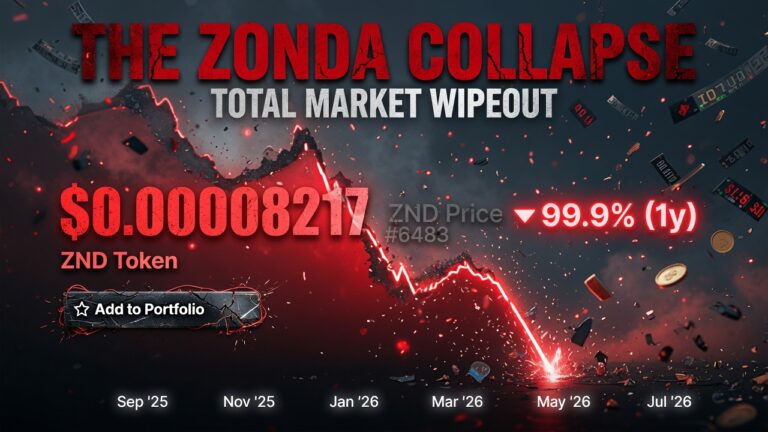
Not every case can be won. Every case can be run so that the client knows where they stand. Since 2006 he has represented the victims in the WGI case (Warszawska Grupa Inwestycyjna, the Warsaw Investment Group), one of the longest criminal cases in the history of the Polish financial market, because some things must not be left half finished, even when they take two decades. In the case of the collapsed cryptocurrency exchange Zonda (Zondacrypto, operated by BB Trade Estonia OÜ), he represents several hundred victims in the criminal investigation conducted by Poland’s National Prosecutor’s Office and in the Estonian bankruptcy proceedings.
Kancelaria Prawna Skarbiec is listed in the rankings of Poland’s largest tax advisory firms published by Dziennik Gazeta Prawna and Rzeczpospolita, and it is a four-time recipient (2015 to 2018) of the European Medal awarded by the Business Centre Club and the European Economic and Social Committee. Robert Nogacki publishes regularly, in the press and on the firm’s website, for people who have a problem rather than a law degree, because a legal opinion the client cannot understand protects only the lawyer.
He believes that the best legal advice is the kind that means the client never has to appear in court.