The Rabbi Is Dead
How graduates of the world’s finest law schools spent a decade running an insider-trading ring with a code their own wives could have cracked.
On April 28, 2026, a federal grand jury in the District of Massachusetts returned an indictment in United States v. Fejal et al., Criminal No. 1:26-cr-10133-LTS, that was unsealed nine days later. It runs to eighty-five pages, names sixteen defendants and fifteen unnamed co-conspirators (designated CC-1 through CC-15), and—counting the five additional defendants in a companion indictment and the nine charged in related sealed cases—accuses thirty people, in total, of running a ten-year scheme to trade on confidential information ahead of mergers and acquisitions. All of them are entitled to the presumption of innocence; what follows is drawn from the indictment and from a parallel civil complaint filed by the Securities and Exchange Commission, allegations that have yet to be tested in court.
Among those charged are retail traders from Brooklyn, a driver from Hollywood, Florida, two residents of the Russian Federation, and a citizen of Israel. There are also lawyers. Four of them, by the indictment’s architecture, though only two by name; the other two appear in the filings as anonymous figures, CC-1 and CC-2.
Nicolo Nourafchan—a 2011 graduate of Yale Law School, according to Above the Law—worked, over the course of his career, at three of the largest American firms by revenue: Sidley Austin, Latham & Watkins, and Goodwin Procter, identified in the indictment only as Law Firms A, B, and C, and named in subsequent reporting by Reuters and Bloomberg Law. Robert Yadgarov, his alleged partner, is licensed to practice in New York State and was, by all accounts, a college classmate of Nourafchan’s. CC-1 and CC-2, according to the same reporting, passed through Latham, Paul Weiss, Cleary Gottlieb, and a boutique investment bank; the indictment identifies them only by function. The four of them, the government alleges, spent a decade feeding the other defendants confidential information about pending transactions involving iRobot, Citrix, SailPoint, Momenta Pharmaceuticals, Qualcomm, Tim Hortons, and C.R. Bard.
Which brings us, by way of the seventy-second page of the indictment, to iRobot. There, the prosecutors reproduce a fragment of correspondence between Simon Fensterszaub (a trader, not a lawyer) and his brother-in-law Gavryel Silverstein (also a trader, also not a lawyer, but married to Fensterszaub’s sister and—here is what matters—the alleged middleman between Nourafchan and the rest of the network). The date is June 16, 2022. iRobot is about to be acquired by Amazon for $1.7 billion—a deal that will eventually collapse in January, 2024, after the European Commission objects, but in the summer of 2022 still looks promising. The market knows nothing. Nourafchan, however, knows: at the time, formally employed by Goodwin Procter but on a leave of absence, he had, nine days earlier, logged into the firm’s document-management system and reviewed materials concerning a transaction he was not working on and from which he had been organizationally removed. He has, the government alleges, told Silverstein, who has told Fensterszaub, who will tell his cousins, who will tell their friends from synagogue.
Only one has to be careful. The Feds do read these things.
Hence the code:
We cannot miss this boat!!
How’s the rabbi??
He’s stable.
Is he still scheduled for surgery?
We are still waiting for the doctor to check if it’s still needed.
Now I’m confused and worried at the same time.
You shouldn’t be worried.
Dude, that’s scary.
Yeah.
Should I tell people to pull out?
And so on, for three weeks. When Amazon announced the acquisition on August 5, 2022, at a price of sixty-one dollars a share—lower, the prosecutors say, than the conspirators had hoped—Simon Fensterszaub messaged one of his contacts: “Last-minute negotiations, I guess.” To his brother, he sent three dollar signs. The brother responded with a rocket and a pair of clapping-hand emojis. As for the rabbi: it turned out the surgery had been needed, after all, just not on the patient anyone had in mind.
✦
Insider trading, in the view of the prosecutors of the Eastern District of Massachusetts, is the oldest white-collar crime still committed with the enthusiasm of amateurs. It is, one could argue, a fundamentally literary offense: it requires that someone who knows something tell someone who doesn’t, in a way that someone who finds out later won’t understand. Which is to say, almost by definition, that it requires a language a third party cannot read.
There is no such language.
There is, in any case, no such language available to the average amateur trader from Brooklyn corresponding with three cousins and eleven neighborhood friends. The indictment runs to eighty-five pages, the bulk of which are text-message transcripts, and to read them as a philological exercise is to suspect that the great intellectual achievement of this particular decade in the history of American finance was that not one of the conspirators ever paused to consider what, exactly, a code is supposed to do.
A code has, after all, a single basic function: to preserve a compromising meaning before decryption and to remain innocuous after. A real code is like a well-made alibi—plausible under inspection, uninteresting if ignored. The expressions used by the defendants—”flight,” “rabbi,” “surgery,” “Torah and mitzvahs,” chavrusa (a partner for studying Talmud), “Otisville” (a federal prison camp in upstate New York, known for the most extensive kosher accommodations in the federal system and, accordingly, widely associated in the Jewish community with the incarceration of Jewish defendants, including Michael Cohen)—do exactly the opposite: they sound peculiar in the cleartext and incriminating once decoded. This is not a code. It is a confession written in puzzles.
The most telling moment occurs when Mark Fensterszaub, not entirely fluent in the subtleties of Hebrew substitution theology, receives from Silverstein the message “We might be starting to learn next week, God willing.” Mark, missing the metaphor, replies: “At this point I might just start learning the Koran.” It may be the only moment in the entire indictment when one of the alleged participants accidentally arrives at the foundational question—because once a code stops differing from speech, meaning collapses in both directions.
Two weeks later, on July 13, 2022—still before the public announcement, but at the moment when, according to the indictment, Nourafchan had passed Silverstein fresh and favorable signals—Silverstein wrote back to Mark: “You don’t need to learn Koran anymore.”
✦
To understand how the whole thing worked, technically, one might begin with the term document-management system, which in the legal industry generally means iManage, NetDocuments, or something similar. Every large corporate firm has one. Every document, for every transaction the firm has ever handled, lives there. The system logs who opened what, and when.
Nourafchan, the indictment alleges, made a habit of opening documents related to transactions he was not working on. He browsed them. He sometimes returned. He sometimes browsed them again while on leave of absence—a formal furlough during which his system access, technically speaking, remained intact, but which was, morally and contractually, a more delicate matter. On one occasion, he is alleged to have opened deal files on the day he turned in his firm-issued laptop, his last day of employment. On another, four days before his termination from a previous firm—a termination of which he had been informed ten days earlier—he is alleged to have looked into materials concerning the potential acquisition of Momenta Pharmaceuticals.
Nourafchan, perhaps, did not know that the DMS logs were preserved. Or he knew but assumed that no one would ever compile the list of documents he had opened and cross-reference it against the trading activity of his friends. Or, perhaps, he simply didn’t think about it. From the standpoint of investigative technology—whatever he thought—he was a graph: nodes were documents, edges were access events, labels were timestamps, and an external data set, the trades on the public market, had an identical temporal structure. Overlay one on the other and the picture comes into focus. Like a subpoena. The S.E.C., for this purpose, runs a system known as ARTEMIS (Advanced Relational Trading Enforcement Metrics Investigation System), which holds billions of trade records and identifies coordinated trading patterns by linked traders across multiple securities at once.
This, in essence, is how modern insider-trading investigations work—and it is the first of several points worth noting in legal markets outside the United States, including, though not limited to, my own. We will return to this.
✦
Strategically, the scheme was, in a certain sense, well conceived. At the top of the pyramid stood the two named lawyers. Between them and the eventual traders moved the middlemen—Silverstein, and two unnamed college classmates designated CC-3 and CC-4. The ground-floor traders—retail brokers, drivers, small-business operators from Florida, New York, California, and the Russian Federation—bought the securities of companies whose acquisitions had not yet been announced. Each layer of intermediaries was meant to dilute the connection between the source of the information and the person executing the trade.
The trades themselves, when feasible, were placed in foreign brokerage accounts (Russian), through Panamanian and Swiss shell companies, in others’ names. Money moved in cash, in fictitious loans (“just put business loan in the memo section,” one defendant is alleged to have advised another), through transfers between accounts whose holders were officially strangers. In one transaction, in 2017, Ilya Gavrilov—through a Swiss bank account belonging to a Panamanian shell company—wired four hundred and eighty-five thousand dollars to a New York real-estate attorney representing yet another shell, this one controlled by Yadgarov, in order to purchase property. All of this looks—and to one of the government’s experts, did look—like a reasonably designed money-laundering apparatus.
Until you start reading the texts.
In the texts, the conspirators told one another, regularly, that “the flight lands August 12,” that “the rabbi is feeling weak,” that “we need to pack the bags.” They told one another, “I just got a phone call to make sure the account is funded.” They told one another, “We have a flight in a week.” When the deals closed, they sent one another photographs of cash, bound with rubber bands; one of them sent a GIF of a cartoon mobster lighting a cigar; another sent a GIF of an airplane taking off; another responded with a champagne emoji.
The whole craft of laundering money lies in obscuring whose money it is and how it got where it got. It is an art of topology—of moving nodes around a graph until no one can make out the shape they trace. But if every transfer is accompanied by a text that reads, “That’s the kickback from the flight I told you about,” topology ceases to matter. All you need is a list of phone numbers, a calendar, and a mildly ironic junior analyst on duty at the U.S. Attorney’s office.
✦
There is a moment of psychological subtlety here that deserves separate attention. On July 28, 2022—five days after Simon Fensterszaub had passed the iRobot information along to eight more people—Yisroel Horowitz forwarded Simon a press article about a recent batch of insider-trading indictments. Brian Fensterszaub forwarded the same article to his brother Mark and asked whether Mark had seen it. Mark replied with a screenshot of his own Google search: “insider trading definition.”
It is a moment of nearly comic illumination. Five men who had been corresponding for weeks about flights and rabbis suddenly, for an instant, registered the existence of a category that described their lives. They Googled it. The next day, they bought more iRobot.
The first conclusion to draw is that knowing a thing is a crime, and having that knowledge alter your behavior, are two different things. Modern experimental psychology calls the gap between them akrasia—weakness of will—and locates its source in the dissociation between the deliberative and the appetitive systems. In an indictment, of course, akrasia goes by another name. It is one of the proofs of mens rea.
The second conclusion, considerably bleaker, is this: if the indictment proves out, the moment Brian and Mark Fensterszaub clicked on a Google search result will become, in retrospect, a portrait of their own ruin—drawn without distance, without irony, without any apparent awareness. The next day, the government says, they bought more shares. Full intellectual recognition of the risk, you might say, and complete behavioral indifference to it.
✦
One aspect of the case, which will probably go underemphasized in the press coverage, is that the scheme ran for more than a decade. The first transactions of the network are dated to August, 2014 (the Tim Hortons / Burger King deal), and involved, principally, Gavrilov and an unnamed associate designated CC-2. Nourafchan himself, according to the S.E.C. complaint, entered the scheme later—the civil filing dates his participation to 2018, though the criminal charges encompass an earlier period. The last transactions are from August, 2024. Between those dates, the world changed considerably: the U.S. Presidency changed (twice); the architecture of the markets changed; the document-management systems changed; the rules governing electronic surveillance changed; whole firms came and went. The conspirators rode out the pandemic—during which, judging by the dates of the trades, they did particularly brisk business in Momenta, Citrix, and SailPoint—two election cycles, one war, and four reboots of the Mission: Impossible franchise.
This kind of durability is not a function of conspiratorial talent. It is a function of two phenomena, which are worth stating precisely.
The first is that source-side control—control over access to documents inside Am Law 100 firms—has, in practice, existed at the level of employment, not at the level of the individual matter. If you were an associate, and the system recognized your password, you had access to every file, including transactions you weren’t staffed on. Chinese walls—the conceptual partition meant to separate teams working on conflicting matters—existed in policy memoranda, in compliance materials, in annual representations. They did not exist in the file system. They were a fiction.
The second is that the regulator—in this case, the S.E.C., the F.B.I., and the U.S. Attorney’s office—operates within what is called trade-based detection: it monitors movements in the market around M&A announcements and identifies, ex post, transactions that are statistically improbable. Because of the sheer volume of announcements each year (nearly thirty companies appear in this single indictment alone), the regulator’s ability to catch anomalies is a function of both transaction size and the temporal clustering of trades. Empirical studies suggest that more rigorous market surveillance reduces the frequency of insider trading while raising the profit per case—the perpetrators learn to be more careful. The conspirators, it turned out, had been operating right at the edge of detectability: just invisible enough not to be caught for ten years, just visible enough that, once an investigation began, they furnished the material for an eighty-five-page indictment.
What broke the scheme, then? Not the market. Not the regulator. Not compliance. What broke it, judging from pages 50 to 52 of the indictment, was an undercover agent posing as a representative of a regulatory authority. On March 12, 2024, Brian Fensterszaub allegedly took a call and behaved precisely the way a person aware of legal exposure behaves. He immediately phoned Silverstein and told him about the call. Silverstein’s reaction, according to the prosecutors: “Holy shit. That is the most nauseating thing I have ever heard.” The next day, on March 13th, the same undercover agent called Silverstein and asked him directly whether he knew anyone at the law firms working on iRobot or Momentive. “Uh, no, I don’t,” Silverstein replied.
These exchanges, the indictment alleges, form the basis of the obstruction-of-justice charges. Nourafchan faces two such counts, for separately encouraging CC-4 to lie to federal agents and to delete evidence from his phone. Mark Fensterszaub, David Moradi, and Joseph Suskind are charged with making false statements.
✦
Three observations, I think, follow—observations that bear on more than this particular case.
The first concerns the nature of crime committed by people with legal training. The criminal lawyer is older than Bartleby. United States v. Fejal et al., however, adds—if the charges are proved—a new note. Eugene Soltes, in his 2016 book Why They Do It, one of the better recent studies of white-collar criminal psychology, argues that the great corporate offenders rarely act in response to a rational cost-benefit calculation. They act intuitively, in a “gray zone,” without the deliberative pause in which the consequences are surveyed. The scheme alleged against Nourafchan would be, if proved, a particularly extreme version of the Soltes thesis. It would not be the case of a lawyer who broke the law out of greed, opportunism, or the conviction that his intellectual gifts entitled him to bend the rules. It would be the case of something worse than greed: ordinary, prosaic stupidity. The word stupidity sounds domestic when applied to a Yale Law graduate, but no better word exists. Nourafchan, the prosecutors say, participated in text-message threads in which his friends wrote one another “the flight takes off August 12” and “pack a big suitcase.” He knew—he had to have known, as a graduate of a leading law school and a former associate at three M&A firms—that the tipper-tippee doctrine, settled in United States v. O’Hagan and Salman v. United States, reached him, the first link in the chain. He did not know—or did not wish to know—that the whole thing was also stupid. These are two different categories of awareness, and only their conjunction reliably stops a person from acting.
The second observation concerns the technological architecture of law firms. This case built its evidentiary record not from witness testimony, not from physical surveillance, not from a laptop recovered at arrest, but from the metadata of a document-management system. This is, briefly stated, a new era—an era in which every law firm in every jurisdiction leaves behind a permanent digital trace that can, ex post, be read in ways that in 2014 were possible only in theory. The implication is asymmetric: while the mechanisms for protecting client data have been continuously strengthened (GDPR, ePrivacy, and their national equivalents), the mechanisms for internal auditing of access to that same data—that is, oversight of the firm itself—remain in many jurisdictions roughly where they were in 2010. A firm that does not know who has opened which documents in its DMS is, from a strictly technical standpoint, defenseless against both internal abuse and external investigation.
The third observation—and here a comparative tradition is worth invoking—concerns the boundary between law as a body of norms and law as institutionally enforced practice. This case illustrates a thesis that American law professors have been teaching for generations but have not, until now, formulated quite this brutally: that in U.S. capital markets the most serious sanction against insider trading is not Rule 10b-5, not the Securities and Exchange Commission, not even the modern apparatus of trade surveillance. The most serious sanction is shame—professional shame, social shame, family shame—the shame that attaches to the figure of an attorney walking in handcuffs past the cameras outside the federal courthouse in Boston. It is a sanction that appears in no statute. In the American system, it has, over the long run, been more effective than any seven-figure fine, although empirical research suggests that, for the very wealthy or the socially prominent, the public stain does not always adhere—reputational and legal resources can sometimes wash it away.
The question worth asking after one has finished reading the indictment is whether, in legal systems outside the United States—and I mean here, principally, my own, the Polish—anything functions as the equivalent of the perp walk. What plays the role of the social cost of being on the docket? Is there, beyond a generic fraud statute, a market-abuse provision (in Poland, Articles 180–181 of the Act on Trading in Financial Instruments, enacted to implement the European Union’s Market Abuse Regulation 596/2014), and a bar disciplinary proceeding, any mechanism that would, even mildly, sanction a member of the bar who—to put it gently—behaves like Nicolo Nourafchan?
You could argue, as many would, that there isn’t. Polish empirical research from 2023, surveying two decades of market-abuse cases, finds that criminal proceedings in this area lasted six and a half to seven and a half times longer than the average criminal proceeding, and that the rate of successful adjudication of insider trading was significantly lower than in the United States. This may, in the end, be the most consequential finding from the Fejal case: for an American attorney, mens rea becomes manifest at the moment armed federal agents appear at his door. For a Polish attorney, it becomes manifest at the moment friends at the bar stop inviting him to dinner—if, indeed, they stop. Which mechanism kicks in earlier is an interesting question. Which works better, in aggregate, is a more interesting one.
✦
On page fifty of the indictment, there is a piece of dialogue that is impossible not to quote. On November 29, 2023, in the course of a phone call, Nourafchan—recently let go from Goodwin Procter, looking for work—is alleged to have said to his partner, Yadgarov:
They do twenty billion a year, did they do a hundred and sixty-nine billion in deals a year?
Oh my God, Yadgarov is alleged to have replied.
I know, [Public Relations Firm A] does twenty billion, Nourafchan went on. That’s all we need, bro. That’s all we need. Twenty billion is all we need.
Nourafchan, at that moment, was reportedly looking for a job at a public-relations firm specializing in mergers-and-acquisitions communications—not, the prosecutors allege, in order to break with the scheme but to acquire a new source of information. Not long afterward, he was arrested. His prospective new employer, evidently, had already received a phone call from the F.B.I.
The whole affair is, if the indictment proves out, fundamentally tragic. Thirty people will have spent ten years of their lives trading securities with a code that wouldn’t have fooled the most junior analyst in any trade-surveillance unit; they now face up to twenty-five years in federal prison on the principal counts. They have lost—regardless of the verdict—what is hardest to recover: trust, careers, place in their professional communities. Some may lose, more painfully, the option of being anything other than “the lawyer indicted for insider trading in Boston.” For ten years they earned, the prosecutors say, tens of millions of dollars. On a per-day basis, that comes to a few thousand. They could, by all appearances, have earned it honestly.
Not one of them, judging from the indictment, ever stopped to think about that.
The rabbi, in any case, is dead.
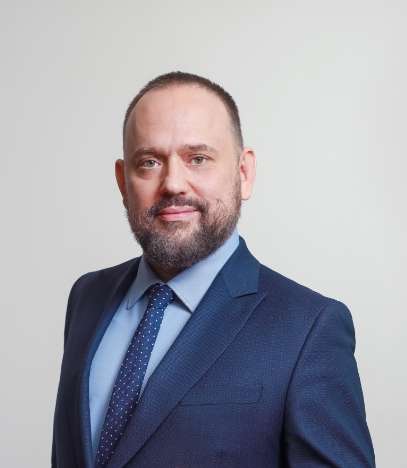
Robert Nogacki is a Polish attorney at law (radca prawny), the founder and managing partner of Kancelaria Prawna Skarbiec (Skarbiec Law Firm), which has operated continuously since 2006.
The law is equal for everyone, but the parties rarely are: on one side stands an organization with time, money, and lawyers, on the other a person with one business, one nest egg, and one life.
Clients rarely come to him with a legal problem. They come with a problem that also has a legal side: an audit that began with a single invoice, money entrusted to someone who has disappeared, a company that has to be passed on before it is too late. Most such matters are decided long before the first letter is written, in decisions made without asking and in deadlines nobody remembered. So he begins by asking how the client got here, not what the client should have done.
He advises entrepreneurs and families from more than a dozen countries, including those whose accounts the tax office has just seized and who do not know what to do tomorrow morning. He defends them in tax audits, customs and fiscal inspections, disputes with the tax authorities, and criminal tax proceedings. He represents victims of investment fraud and Ponzi schemes. He helps families set up family foundations and plan succession, so that a life’s work outlasts a single generation.
Not every case can be won. Every case can be run so that the client knows where they stand. Since 2006 he has represented the victims in the WGI case (Warszawska Grupa Inwestycyjna, the Warsaw Investment Group), one of the longest criminal cases in the history of the Polish financial market, because some things must not be left half finished, even when they take two decades. In the case of the collapsed cryptocurrency exchange Zonda (Zondacrypto, operated by BB Trade Estonia OÜ), he represents several hundred victims in the criminal investigation conducted by Poland’s National Prosecutor’s Office and in the Estonian bankruptcy proceedings.
Kancelaria Prawna Skarbiec is listed in the rankings of Poland’s largest tax advisory firms published by Dziennik Gazeta Prawna and Rzeczpospolita, and it is a four-time recipient (2015 to 2018) of the European Medal awarded by the Business Centre Club and the European Economic and Social Committee. Robert Nogacki publishes regularly, in the press and on the firm’s website, for people who have a problem rather than a law degree, because a legal opinion the client cannot understand protects only the lawyer.
He believes that the best legal advice is the kind that means the client never has to appear in court.