The Beautiful and the Superfluous: A.I., the Labor Market, and the Utopia of Basic Income
The architects of A.I. can picture a machine that will outperform us at everything—and cannot picture a human life beyond the paycheck.
The fear that machines will take human work is old. What is new, and strange, is where its latest version comes from: the people who build the machines. In June of 2026, Dario Amodei, the co-founder and chief executive of Anthropic, published an essay warning that the disruption to work could be larger and more lasting than any in economic history, and that the central task of the age would not be to spur growth but to find a way for everyone to share in its fruits. For the gravest case, in which the machines permanently and massively reduce the demand for human labor, he proposed a remedy: mechanisms such as universal basic income, funded by taxing the companies that profit or by raising the tax on capital gains. Anthropic committed two hundred million dollars to study the question, and that same week, in the Oval Office, the President of the United States promised that, thanks to the new machines, the public was going to be very rich.
Set aside, for now, whether the machines will truly take the work. Suppose they do. The remedy Amodei and others then propose is this: that the state pay every citizen a wage for producing nothing, and let him fill his days as he pleases. It has the shape of generosity, and it is offered in good faith. Beneath it, though, lies a question older than economics, one its authors have not paused to ask: what is left for a man to live for, once no one needs him?
The proposal, I will argue, is wrong, and wrong three times over: wrong economically, wrong about human nature, and wrong about the very scale of the event it means to address. The economic case and the historical one I will come to. The deepest objection, the one that concerns human nature, is best approached not through a theory but through a mouse.
What happens to society if AI replaces most human jobs?
In 1968, at the National Institute of Mental Health, a researcher named John B. Calhoun set out to build a paradise for mice. Into a metal pen a little over eight feet, or two and a half metres, to a side he placed four pairs of healthy animals, and then removed from their world everything that kills: no predators, no disease, no cold, no shortage of food or water or nesting space. Nothing remained that needed doing. He called it Universe 25, the twenty-fifth of a series, and he expected the colony to flourish. For a time it did. The mice doubled their number every fifty-five days, then more slowly, until the population reached a peak of twenty-two hundred. Then something went wrong. Births fell, and then stopped. The young that survived never learned to court, to fight, to mother, or to defend a patch of floor. And a colony built to hold nearly four thousand dwindled, generation by generation, to extinction, in a world that had everything and lacked only a reason to live.
In its last days there appeared a generation Calhoun called the beautiful ones. Their coats were immaculate. They bore no scars from fighting, because they did not fight, and no marks of mating, because they did not mate. They spent their days eating, drinking, and grooming themselves to a luster no mouse with anything to do has ever achieved. They had everything and wanted nothing. They were the last generation.
Calhoun gave his report a strange title, “Death Squared,” and a stranger thesis. Bodily death, the death the horsemen deal by sword and famine and plague, he called the second death, after the Book of Revelation. His real subject was the other one, the death of the spirit, which he called the first; and his claim, set down in an equation at the end of the paper, was that the one manufactures the other. Abolish that second death, lift every danger and grant every want, and you do not save the creature. You kill its spirit, its capacity for the behaviors that made it what it was. The conquest of necessity is itself the death of purpose. A mouse that needs nothing, it turns out, slowly forgets how to be a mouse.
I set this image beside the other, the one from California, where the engineers propose to lift from the rest of us the burden of being needed, because the two belong together. The question Calhoun’s mice put to us is not the one the engineers are asking. Theirs is: with what shall we feed the people the machines have rendered superfluous? His is harder, and older: what becomes of a creature whose every need has been met and whose every role has been taken away? Before I venture an answer, I will grant my adversary his due, for the argument worth having is always with the strongest version of another man’s view, never the weakest.
Will AI take our jobs?
Such a fear has usually proved misplaced. The Luddites smashed looms in the conviction that the power loom would take the weaver’s bread; it took his trade, not his bread. (They were not fools. What they defended, beyond the wage, was the craft and the workshop the factory dissolved, and that grievance was real.) Beneath most prophecies of technological unemployment lies the same silent assumption, that the quantity of work in an economy is a fixed sum, so that every hour done by a machine is an hour subtracted from a human being. The assumption is false, and has been false for two centuries: trades vanished, work multiplied, and employment rose with population and with productivity. It is tempting, this time too, to wave the worry away.
It would be a mistake. The difference is one of kind. Every previous machine replaced muscle or routine—the loom, the steam engine, the assembly line, the spreadsheet—and left untouched the faculty we took for our last redoubt: judgment, understanding, language. Artificial intelligence comes precisely for that. For the first time, a tool competes with a human being not where he is weak but where he believed himself irreplaceable. So I grant my opponent his premise in its strongest form. The wave is real, and its speed and reach may be without precedent.
Tellingly, the wave is for now a forecast and not a fact. Unemployment stands at 4.3 per cent, and the economy betrays no sign of the predicted collapse. But these are forecasts worth crediting, for they are made by the very people raising the wave. The dispute, then, is not whether the wave will come. It is what we will do when it does. And on that question the whole distance between wisdom and catastrophe lies in a choice between two metaphors.
Universal basic income (UBI): communism in a new disguise
The first answer the makers of artificial intelligence give contains an irony so perfect that, were it not true, one would have to invent it. The most rigorous minds of the age, engineers who trust nothing but numbers and first principles, reached at the decisive moment for the least rigorous idea in the history of economic thought. The basic income is not new. The dream behind it is the dream of utopian socialism, of the Saint-Simonians and the Fourierists, who would re-engineer society into a harmony of abundance so complete that no one need strive again. (The cash dividend itself has a more tangled and partly liberal pedigree, which I come to in a moment; it is the dream of striving abolished that is socialist, and ancient.) Silicon Valley has rediscovered the oldest utopia and mistaken it for the future.
Fairness requires that I mark a boundary at once, and it is the boundary on which the whole conservative-liberal case turns. An income floor for the poorest is not, in itself, a socialist notion. Milton Friedman proposed one, in the form of the negative income tax, expressly as a replacement for the swollen machinery of welfare, and structured, pointedly, so that working always paid more than not working. Friedrich Hayek allowed a guaranteed minimum in “The Constitution of Liberty,” but a minimum is a floor beneath the fallen, not a universal wage for the standing, and Hayek’s scholars are right to insist on the difference. Thomas Paine entertained something like it in “Agrarian Justice.” My objection, then, is not to the safety net. A floor is mercy. It is to something else entirely: to a basic income conceived as a universal and permanent substitute for work, paid to the able and the idle alike, offered as the answer to the mass superfluity of human beings. That is a different animal, and a very old one. The net that catches a man who falls and the hammock that keeps him lying down are not the same device, though they are woven of the same thread.
Why it fails is best explained by the tradition the question itself invokes, the ordoliberal and the Austrian. Begin with the arithmetic. A transfer large enough to replace the incomes lost at unemployment of ten per cent or more is an astronomical sum. It is to be financed by a tax on capital gains, but the base of that tax shrinks under its own weight, for capital is mobile, the taxed activity contracts, and the state finds itself taxing the goose whose golden eggs it means to give away. When the taxes prove insufficient, and they will, there remains the last resort of every deficit, the printing press. Here inflation begins, in the classic, Misesian sense: money printed to finance consumption unmatched by production loses its value, because the worth of money is set not by decree but by the ratio of the stream of money to the stream of goods. A government can vote a citizen a larger number. It cannot vote him more bread.
But suppose the transfer could be financed without printing. It would fail more subtly, and so more surely. The naïve criticism holds that a basic income would zero itself out at once, through a general rise in prices. That is a simplification, and as such easily dismissed. The real mechanism is stranger, and more interesting. Artificial intelligence will cheapen what it can replace; it will not cheapen what it cannot—the nurse’s hour, the plumber’s visit, the well-situated apartment, the teacher’s attention, the positional good whose entire value lies in the fact that not everyone can have it. These are precisely the goods toward which an income unmoored from production will send its stream of demand. Their prices will rise to meet the new money. The nominal floor will lift; the real one will not. The poor will be handed a number in place of a life, and the money will chase exactly what the machine does not make and bid it out of reach. In this, and not in naïve hyperinflation, lies the true sense of the claim that the transfer is suicidal. Not all prices rise at once; the prices of what people actually need rise, and the relief evaporates precisely where it was needed. The phenomenon even has a name, Baumol’s cost disease, and it does not vanish because we have forgotten to count it.
The deepest irony, though, is Hayek’s. The economy is a machine for processing information, a distributed computer that no central mind can replace, because the knowledge it processes—prices, wages, profits, losses—exists nowhere in its entirety but is scattered across millions of heads. The men who built the most powerful artificial information processors in history failed to notice the one machine they cannot replace, the market. They taught a machine every human language and forgot the one the market speaks. They propose to muffle its signals with a planner’s transfer, committing the very error Hayek named first “the pretence of knowledge,” in his Nobel lecture, and later “the fatal conceit.” The engineer’s premise runs thus: having modeled language, we shall model the passage of an entire civilization into a new order. We shall not. What is modeled is what can be counted. The transformation of a society is not an equation but a process of discovery, whose solution no one knows until it has been discovered.
And here the Freiburg school speaks. Walter Eucken made the bond between contribution and income a pillar of any sound economic order. Wilhelm Röpke, one of the architects of the German economic miracle, warned in “A Humane Economy” against massification and against a spiritual proletarianization, against a state that meets every need and, in the meeting, dissolves the very virtues on which freedom rests: responsibility, self-reliance, foresight. His thought, the most durable in the whole tradition, runs as follows. The market lives on a moral capital it does not itself produce and cannot replace. To sever, universally and permanently, the link between income and contribution is not merely to distort prices. It is to spend down a capital no budget records and no transfer restores.
The naïve critic says that a basic income zeroes itself out through inflation. Nearer the truth is the heavier verdict: the transfer will restore neither the prices it destroys nor the moral capital it consumes. What it finally subsidizes is not leisure but uselessness, and a society reliably gets more of whatever it agrees to pay for.
The impact of AI on society, or laborers without labor
The economic objection, though decisive, is not the gravest. Suppose, against everything above, that the transfer could be financed without inflation and without consuming capital. The heavier question remains: what does such a contrivance do to a human being.
No one put it better than Hannah Arendt. In “The Human Condition” she distinguished labor (animal laborans, the drudgery of biological persistence, consumption, the cyclical toil of the body), work (homo faber, the building of a durable world of things, the human artifact), and action (the political realm, speech and deed, the disclosure of who someone is). And she foresaw, with uncanny precision, our very moment: the prospect of “a society of laborers without labor,” a society of jobholders about to be freed from the one activity it still knows, and no longer acquainted with the higher pursuits for which that freedom would be worth winning. “Surely, nothing could be worse,” she wrote. The basic income is the political instrument of exactly the catastrophe she named. It frees a human being from labor and, in place of work and of action, hands him consumption.
Here the mouse returns, and now as more than an overture. I do not claim that human beings are mice; the analogy would be both insulting and false, and Calhoun’s experiment is itself scientifically suspect. It was never successfully replicated, the cages were by his own admission cleaned only every six weeks or so, and later work on people, such as Jonathan Freedman’s, found no comparable effect. Even his own audience pushed back: when he presented the study, a fellow scientist objected that Hong Kong and the East End of London were denser than any mouse pen and bred perfectly well. Calhoun’s reply, that density was never the point, that what killed his mice was the collapse of meaningful social roles, is in fact the version of his thesis worth keeping. I summon Universe 25, then, not as evidence but as parable, the parable its author intended, for he saw in the fate of his mice a figure for our own. The operative condition of his world was never the number of its inhabitants. It was the abolition of necessity. The males who lost the contest for a role did not riot; they withdrew, pooled in listless heaps at the center of the floor, and wore the scars of attacks they no longer troubled to flee. The beautiful ones went further still: healthy, unscarred, immaculate, they simply never attempted to enter the social world at all. They ate, they slept, they groomed. They were, in his sense, already dead. His warning for man was exact: such a creature might keep the routine of life but suffer, in his words, a “loss of creativity and an inability to live under challenge,” and with it the very capacity that makes it what it is.
For a human being, work was never merely a wage. It is the form through which we are needed, and to be needed is, for a social animal, not a luxury but a kind of food. A man can survive the loss of his livelihood. He is hard put to survive the discovery that nothing he does is required of him.
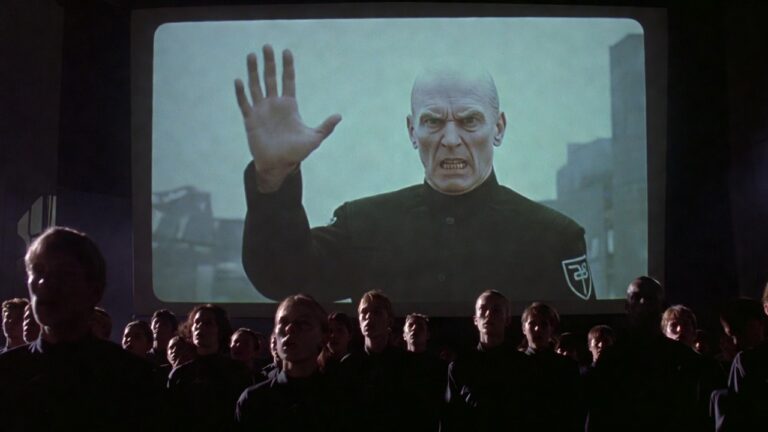
The political danger Tocqueville saw most clearly of all. He described a tutelary power, mild and provident, which later readers called soft despotism: a power that takes upon itself to secure men’s gratifications and to watch over their fate, and that keeps them in a perpetual childhood. It would resemble paternal authority, he wrote, if its object were to prepare men for manhood; but it seeks, on the contrary, to keep them in childhood forever. A nation so tended gradually loses the faculty of thinking, feeling, and acting for itself. The basic income is the purest soft despotism ever designed, for it asks nothing in return—not even a vote, not even gratitude—only that you fall quiet. The old despot broke your will. The new one merely relieves you of the trouble of having one.
Dostoevsky put the bargain in the mouth of the Grand Inquisitor: feed men first, and then ask virtue of them; they will lay their freedom at the feet of whoever gives them bread, for nothing tempts a man so much as to be relieved of the troublesome gift of choice. The Inquisitor offers bread and freedom from freedom. The basic income offers precisely that, and calls it compassion.
The citizen of this utopia is Nietzsche’s last man, the one who “invented happiness” and blinks. The basic income does not free him from work. It retires him from himself. And if I may add here a thought a deist will take for more than metaphor: work is the human mode of participating in creation, and the human being is perhaps the only creature through which the universe comes to a consciousness of itself and gives itself a shape. To pension off that creature on the dole of consumption is a waste on a scale for which it is hard to find a measure short of the cosmic.
The plow and the sword, not the granary
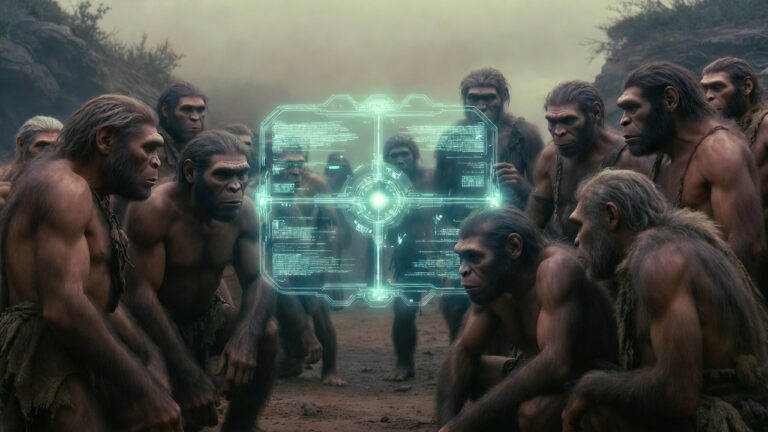
There remains the deepest error, the error of the frame. Twelve thousand years ago the Neolithic revolution did to the hunter what artificial intelligence threatens to do to the knowledge worker: it voided his skills. The forager who could read a track and bring down a stag found his mastery worth less in a world of fields and granaries. And here is the decisive fact: it occurred to no one to hand out grain to redundant hunters. The surplus that agriculture produced did not become a lifelong allowance for the superfluous. It became the material basis of everything we call civilization. Human energy, freed from the daily hunt, invented the city, the temple, law, the alphabet, mathematics, philosophy, and leisure itself—the Greek scholé, from which our word “school” descends, in which thought first becomes possible. Agriculture did not end work. It ended foraging, and it opened the human future. The plow did not retire the hunter. It promoted him.
And now the strongest objection, which I will not sidestep, for it is the whole of the opposing case. With agriculture, the plow could not do the work of the priest, or the scribe, or the geometer; the freed energy flowed toward tasks the machine could not perform. But artificial intelligence, Amodei says, is different: it can do the new work too. If the machine masters every new task we turn to, the analogy breaks, and we are not redundant hunters who will become farmers but the first species to have built its own successor at every occupation. This is a serious argument, and it deserves a serious answer. I note, in passing, that Amodei himself does not always hold it. In his calmer moods he has allowed that automating ninety per cent of a job tends to make the remaining ten per cent expand to fill the whole of it, which is to say that he, too, has glimpsed the plow. The basic income belongs to his darker forecast, not his clearer one.
Here is the answer. The objection rests on an ambiguity in the word “work.” It defines work as an economically necessary task, as that for which someone will pay. On that definition, indeed, if the machine performs every paid task, no work is left, and nothing remains for a human being but to consume. But work was never solely a paid task. The Athenian citizen did not work for a wage; he left necessary toil to others and called his freed activity not idleness but the highest life, the life of the polis and of contemplation. The monk, the scholar, the artist, the mother, the citizen, the athlete, the founder of things—not one of them is defined by a salary, and not one is a beautiful one from Universe 25. Human ends are inexhaustible, and they spill over the rim of the paycheck. The wage is not the meaning of work. It is only its rumor.
The agricultural analogy, properly understood, does not promise that new paid posts will appear, for those artificial intelligence may indeed not leave. It promises something the builders of this technology have not considered: that freed human energy has always found new and higher ends, provided there existed a culture able to receive and to honor them. The polis consecrated unpaid activity. So did the monastery, the republic of letters, the guild, the volunteer brigade, the parish, the chess club, the laboratory. The task before us is not to finance consumption but to build forms—the institutions and the honors that let a humanity without wages have something to strive for. Bread we know how to distribute. It is the reasons for rising in the morning that no treasury can disburse.
And here the basic income proves not so much useless as harmful. It gives bread and builds none of the forms. It feeds the body and starves the calling. Worse, by paying people to remain in the ruins of the old economy, it freezes them in redundancy at the very moment they ought to be carried into the new. The tsunami and the plow are not contradictory metaphors. The tsunami names the destruction of the old work, real and perhaps violent. The plow names the right response: not a granary for the superfluous but the cultivation of new ground. The basic income mistakes the one for the other. It watches the wave demolish the old posts, concludes that the human story has ended, and reaches for the ration book. It surrenders the human future to redundancy before the first shot of the contest has been fired.
The future of AI, or faith in the human being
Which brings me to the deepest accusation, and I suspect it is the one that will last. The people building artificial intelligence have an immense faith in their machines and almost none in the human being. They can imagine an intelligence that will surpass us at every task; they cannot imagine a human activity beyond the wage. And so, at the decisive moment, they reach not for the plow but for the granary, not for the polis but for the dole, not for a vision of what a freed humanity might become but for the oldest and most mechanical of consolations, the transfer. It is a failure of nerve dressed as compassion, and a failure of imagination in people who live by imagination. They trust the machine to exceed us and do not trust us to be worth exceeding.
Return to the beautiful ones. A civilization handed abundance faces only one question: what shall we now do with ourselves. Abundance is not an answer; it is a question, and every civilization is the answer it gives. The mouse, given abundance, groomed its coat to a sleek and sterile perfection and forgot how to be a mouse. The human being, given abundance, has always asked, in his better moments, a different question—not what shall I consume but what shall I now build. The wager of every civilization worthy of the name has been the second answer. The architects of artificial intelligence, for all their brilliance, have placed their bet, quietly and in good faith, on the first.
What saves a civilization is not the bread it hands out but the work to which it lends dignity. The danger of artificial intelligence is not that the machines will do what a human being can do. It is that a human being, freed at last from necessity, will be paid to forget what he is for.
Robert Nogacki – licensed legal counsel (radca prawny, WA-9026), Founder of Kancelaria Prawna Skarbiec.
There are lawyers who practice law. And there are those who deal with problems for which the law has no ready answer. For over twenty years, Kancelaria Skarbiec has worked at the intersection of tax law, corporate structures, and the deeply human reluctance to give the state more than the state is owed. We advise entrepreneurs from over a dozen countries – from those on the Forbes list to those whose bank account was just seized by the tax authority and who do not know what to do tomorrow morning.
One of the most frequently cited experts on tax law in Polish media – he writes for Rzeczpospolita, Dziennik Gazeta Prawna, and Parkiet not because it looks good on a résumé, but because certain things cannot be explained in a court filing and someone needs to say them out loud. Author of AI Decoding Satoshi Nakamoto: Artificial Intelligence on the Trail of Bitcoin’s Creator. Co-author of the award-winning book Bezpieczeństwo współczesnej firmy (Security of a Modern Company).
Kancelaria Skarbiec holds top positions in the tax law firm rankings of Dziennik Gazeta Prawna. Four-time winner of the European Medal, recipient of the title International Tax Planning Law Firm of the Year in Poland.
He specializes in tax disputes with fiscal authorities, international tax planning, crypto-asset regulation, and asset protection. Since 2006, he has led the WGI case – one of the longest-running criminal proceedings in the history of the Polish financial market – because there are things you do not leave half-done, even if they take two decades. He believes the law is too serious to be treated only seriously – and that the best legal advice is the kind that ensures the client never has to stand before a court.