Event Contracts – The Casino That Pretends to Be a Stock Exchange
A man in his thirties sits down at his laptop, opens an app whose logo could pass for a brokerage’s, and buys a “contract” on the Eagles winning Sunday. The payout will be binary—he hits or he doesn’t. Settlement, a few hours. The word bet never crosses his mind. The word he uses is position. This is what may turn out to be the most consequential semantic shift in the financial-products business of the past decade, and almost certainly the most expensive when measured in human lives.
In late April of this year, the Commodity Futures Trading Commission filed suit in federal court against the State of New York (No. 1:26-cv-03404, S.D.N.Y.). The federal regulator wants the state to stop going after companies—chiefly Kalshi—that offer what they call “event contracts”: instruments allowing users to wager on the outcome of football games, presidential elections, Federal Reserve decisions. In the background, parallel actions by the New York attorney general are pending against Coinbase and Gemini, as the Wall Street Journal has reported and as Bloomberg Law has analyzed. The state calls it illegal gambling. The federal regulator calls it a swap—a financial derivative. A court will decide which definition prevails.
The fight over a word is not a fight over a word. Whether this product is a “contract” or a “wager” determines whether it is subject to deposit limits, mandatory cooling-off periods, self-exclusion registries, addiction warnings—or none of the above. The name decides whether the state protects the citizen, or protects the product from the citizen.
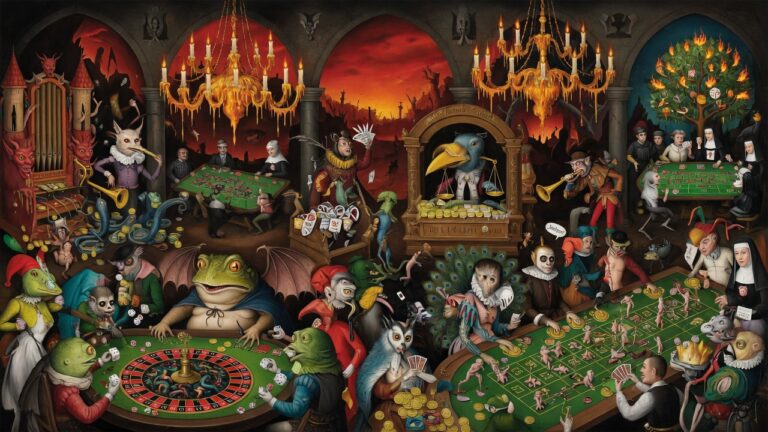
And the product in question is, psychologically speaking, indistinguishable from a slot machine.
What an “Event Contract” Actually Is
Before going further, it’s worth describing the mechanics. An event contract is an instrument in which a party buys or sells a yes/no position—will a specified event occur by a specified date. The Eagles will win on Sunday: yes or no. U.S. inflation will exceed three per cent in the third quarter: yes or no. A given nominee will win the Oscar: yes or no. The price of the “yes” position floats between one and ninety-nine cents and reflects the currently traded probability of the event. If the event occurs, the holder of the “yes” position receives a dollar per contract; if it doesn’t, he loses what he put in.
The C.F.T.C. itself, in its public explanation of the product, presents event contracts as instruments that help the public “forecast, plan for, hedge, and even harness perceptions of future events.” This is the framing of a regulator who is supposed to be neutral toward the product—and the regulator’s own rhetoric already shows why the sector is winning the war over words. “Hedging perceptions” is an elegant linguistic construction with no referent: there is no enterprise in the real economy for which the perception of the Eagles winning is an economic risk requiring a hedge. Even so, event contracts have been legally listed on federally regulated exchanges in the U.S.—Designated Contract Markets, or D.C.M.s—for more than two decades, first in academic and forecasting niches, and in recent years as a retail product available from a phone.
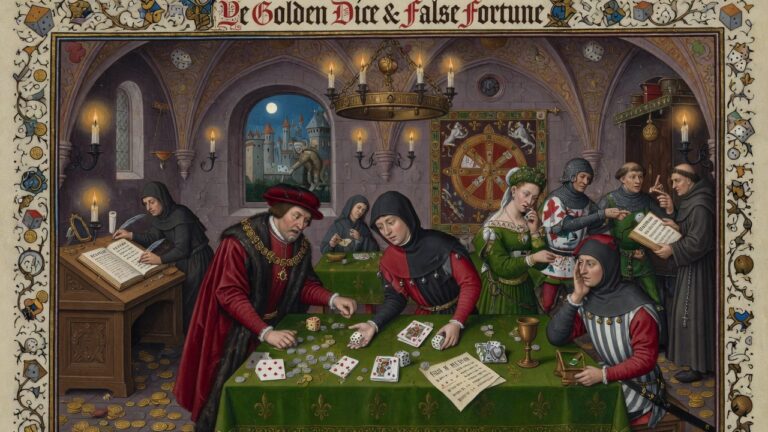
Which is where the difficulty starts. The mechanism is formally identical to serious derivative instruments: there is a price, there is liquidity, there is a central clearinghouse, there is a transaction record. But underneath all those layers of financial-market infrastructure sits a simple operation, well known from other contexts—putting money on the outcome of something that the bettor cannot influence and that has no relation to his economic position. In English we call that a bet. The Polish word is zakład wzajemny. No one in the industry uses either word.
Why the Brain Doesn’t Read the Fine Print
Behavioral economics has known for forty years that three things turn a person into a problem gambler, regardless of what the product calls itself.
The first is dopamine before the reward, not after. Counter to intuition, the brain doesn’t generate its strongest pleasure signal at the moment of winning. It generates it during the anticipation of the win—when the odds are still in play, when the outcome is suspended, when each passing second might tip the scale. This is why people stay at slot machines, at roulette tables, at in-game betting screens. It is also why prediction markets, where contract prices fluctuate in real time with every goal scored and every poll released, are neurologically equivalent to a slot machine. Each price tick is a microhit of dopamine. Six hours of a Super Bowl is six hours of uninterrupted stimulation.
The second is variable-ratio reinforcement. Behaviorists have known since Skinner that the most powerfully addictive reward is an unpredictable one. If a pigeon gets a pellet every time it pecks the lever, it loses interest. If it gets a pellet sometimes—it doesn’t know when—it will peck until it dies. The same mechanism animates slot machines, video-game loot boxes, and, as recent clinical reporting and first-hand accounts from addiction therapists make clear, trading on prediction markets. The difference is that the pigeon stops when it dies. The human stops when he goes broke.
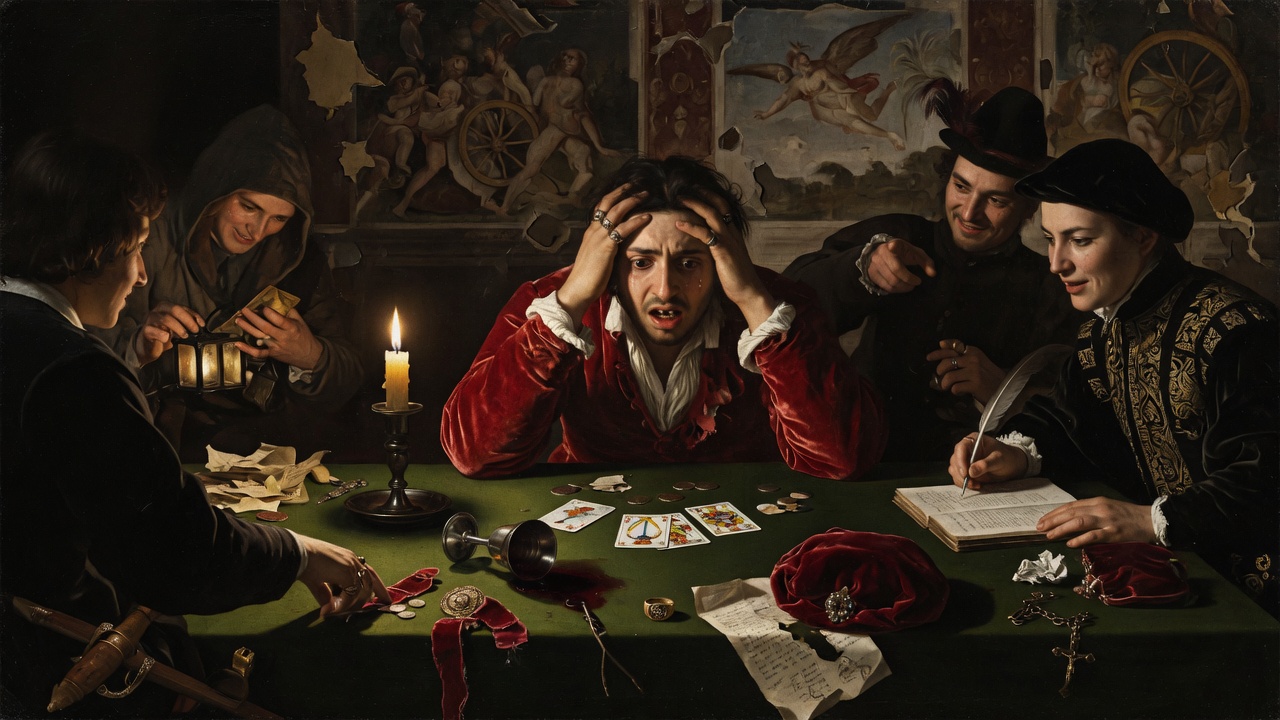
The third, and most insidious, is the illusion of control. Someone who has spent two hours combing through team statistics, polling data, and inflation reports holds a deeply rooted, neurologically grounded conviction that the outcome of his “trade” depends on his intelligence. It does not—or it does to roughly the extent that the outcome of casino blackjack depends on a player’s card-counting skill, which is to say much less than the player believes. But it is precisely because the player believes the outcome is a function of his intelligence that he never engages the defenses he would engage if he understood himself to be gambling. He doesn’t ask himself when he’ll stop. He doesn’t set a loss limit. He doesn’t think of himself as an addict; he thinks of himself as an investor having a bad month.
These three mechanisms together build an architecture that no informational disclosure will neutralize. The brain doesn’t read the fine print. The brain responds to the stimulus.
Who’s Losing the Money
A representative AIBM/Ipsos survey from March of this year lays out a picture that should surprise no one who lived through 2010 to 2018. Sixty-one per cent of American adults consider event contracts closer to gambling than investing. Eight per cent classify them as investing. The users themselves, when asked about their motivation, most often cite entertainment and the chance to make money, not “analytical forecasting.”
The demographic picture is even starker. The platforms’ most intensive users are men between eighteen and thirty-four. They are also the group least likely to call what they’re doing gambling. Which is to say: the people most exposed to the risk are the ones least equipped to recognize it. This is a regularity from every wave of speculative product over the past half century, from internet casinos to binary options to contracts for difference. The victim profile doesn’t change. Only the interface that draws him in does.
The most damning testimony, though, is coming from addiction therapists. Reporting from the Associated Press and the Washington Post over the first half of 2026 has documented a rising wave of patients who, a few years earlier, had successfully extricated themselves from sportsbook or casino addictions. They had voluntarily added their names to self-exclusion registries, blocked their accounts, rebuilt their finances and their families. They have come back to gambling through Kalshi, Polymarket, Coinbase—because “this isn’t gambling, these are financial contracts.” The psychology works exactly as designed. The “financial instrument” label dissolves the shame, evades the self-control, lifts the locks they had set on themselves when they thought of themselves as gamblers. A federal license, for these people, becomes a passport to relapse.
We’ve Been Here Before. It Was Called Binary Options
Anyone who practiced financial law in the second decade of this century reads this story with a rising sense of recognition. Because it is the same story, told a second time.
Binary options arrived around 2008 as a deceptively simple product: bet whether the price of oil rises or falls in the next sixty seconds, win or lose your stake, finished. They were sold as “trading,” as “investing,” as “financial instruments.” Celebrities endorsed them. The platforms looked like Bloomberg terminals, not casinos. The operators registered themselves in jurisdictions with loose financial supervision—Cyprus, Israel, the Marshall Islands—and argued that since they were licensed as financial firms, local gambling law didn’t apply to them. Exactly the argument the C.F.T.C. is now making in New York.
The damage was apocalyptic. Conservative estimates put global retail losses in the billions of dollars. Israeli prosecutors revealed in 2017 that the entire sector—run out of Tel Aviv—was effectively organized crime: rigged prices, blocked withdrawals, aggressive call-center operators conning retirees out of their pensions. Israel banned binary options for its own citizens, and ultimately banned exporting them abroad. Australia followed in 2021, by an ASIC product-intervention order. The European Union imposed its ban by a 2018 ESMA decision (EU 2018/795)—first temporarily, then made permanent through national legislation in member states. Eastern European prosecutors are still working through the criminal cases, with victims numbered in the tens of thousands and proceedings that have dragged on for years.
Prediction markets share an identical structural DNA: binary outcome, predetermined payout, no ownership of any underlying asset, short settlement cycles, financial-sounding nomenclature, and the jurisdictional argument we are a financial instrument, not gambling. They differ from binary options in one respect, and that difference is worse, not better.
Binary options were largely a crime. Prices were rigged. Withdrawals were blocked. Balances were stolen. Which is to say: the victim, sooner or later, discovered that he had been cheated. He could name a perpetrator, externalize blame, file a police report, achieve cognitive closure. Prediction markets, by contrast, are operationally legal. The prices are real. The payouts go through. The infrastructure passes audit. The user who loses his money on Kalshi has actually lost a fair bet. There is no perpetrator to sue. No civil pathway to recovery. No moment of revelation—I was robbed—only the private, accumulating sense that my analysis failed this time, and the irresistible logic that one ought to try again, smarter, harder.
It is harder to escape a legal addiction than a fraudulent one. Fraud gives the victim an opponent. A legal product gives him only a mirror.
What’s Actually Being Built
In the United States, eight CFTC-regulated platforms have so far self-certified more than three thousand event contracts. Kalshi alone cleared more than twenty-three billion dollars in 2025 volume, of which—against the official narrative about “price discovery” and “information aggregation”—eighty-six per cent was sports. That figure closes the argument about what this product is actually for. Polymarket, during the 2024 presidential election, processed volumes on the order of two billion dollars, and the press reported single participants placing tens of millions of dollars on a Trump victory—single actors capable, in a thinly traded market, of setting “probabilities” that CNN and Reuters and Google Finance would then display to their audiences as objective readings of reality.
Which leads to a second, less obvious risk this market poses—one that goes well beyond individual financial harm. When the news shows that “the market says Trump has a seventy-per-cent chance of winning,” the reader takes it as a measurement. In fact, it is the result of trading in which a few hundred very wealthy people with strong political motivations may have participated. The market does not aggregate knowledge. The market aggregates money. In conditions of low liquidity, manipulation is laughably cheap relative to the informational effect it produces. Democracy becomes a function of how many zeros sit in the account of the wealthiest player at the table. This mechanism was laid out in detail in Packin and Rabinovitz’s policy forum in Science, this past April, as one of the most serious public-health and democratic risks the market presents—and it is not a theoretical alarm. In recent months, specific cases have surfaced: alleged reported instances of insider trading on prediction markets around the company’s quarterly earnings releases, and allegations of classified-information misuse to wager on geopolitical contracts during the wagering on Middle East conflicts. A U.S. Army Special Forces master sergeant was charged in April 2026 in the Southern District of New York with using classified information to bet on the removal of the Venezuelan president from power—at a personal profit of more than four hundred thousand dollars.
But return to the individual user. The platforms are now available across virtually all of the United States, including in states that deliberately banned sports betting on the ground that it was too harmful. The federal C.F.T.C. license overrides those bans—and the Third Circuit confirmed this asymmetry in KalshiEX v. Flaherty, in April of this year, holding that sports-related event contracts are swaps within the meaning of the C.E.A. and subject to exclusive federal jurisdiction. Deposit limits run into the hundreds of thousands of dollars without the kind of financial-capacity vetting required of gambling operators. There are no mandatory cooling-off periods. There is no self-exclusion registry. There are no addiction warnings. There is none of the harm-reduction infrastructure that any reasonable state imposes on casinos and bookmakers—because, formally, these are not casinos and bookmakers. They are exchanges.
When, in 2030—because that is the horizon—we are watching congressional hearings about a market measured in the tens of billions of dollars and casualties in the hundreds of thousands, someone will note that the problem was already known, named, and described in 2026. And someone else will say that the whole thing took the regulator by surprise.
What Regulation Should Look Like
There is a simple test capable of resolving the New York case, and any future case like it: does the product serve the economy, or does it feed on human weakness?
The classic futures markets—wheat, oil, interest rates—exist because a farmer wants to lock in next year’s grain price today, and a baker wants to lock in next year’s flour price today. The futures contract physically transfers risk from those who want to shed it to those willing to take it on. Speculation, in this system, is a secondary function, supplying liquidity to the primary, hedging one. This is what the futures market has looked like for a hundred and fifty years, and this is its social warrant.
A contract on the Eagles winning Sunday meets none of these criteria. It does not let the team hedge against losing. It does not let the fan hedge against the disappointment. It does not aggregate information that bookmakers’ lines do not already aggregate. It is, simply, a wager dressed up in financial language. An honest functional test leaves no room for doubt—which is precisely why the C.F.T.C. doesn’t conduct one, confining itself instead to the formal test (does it fit the definition of a swap?). The formal test will tolerate anything.
From which three things follow that any reasonable state ought to do, regardless of how the New York case turns out.
First, event contracts based on sports, politics, and other outcomes lacking a hedging function ought to be legally classified as gambling products—with all the consequences that follow: licenses, gaming taxes, self-exclusion registries, deposit limits, addiction warnings. The test should not be does it fit category X, but what does it functionally do. Poland, with the architecture of its Gambling Act, has the tools to do this without enacting new legislation.
Second, the barrier to entry should be higher than for a financial product, not lower. If a casino must verify identity, document source of funds, and refuse service to anyone listed in a self-exclusion registry, then a “prediction” platform serving a nineteen-year-old must do so all the more. The argument that “this is a financial instrument, so lighter consumer protections apply” is precisely backwards. The retail investor on a stock exchange has access to more protective infrastructure than the casino patron, not less—from KYC to MiFID II suitability assessments to client categorization. If prediction markets want to be treated as financial products, they should start by behaving like financial products.
Third, the state should treat the advertising channel as the primary lever. Most victims do not arrive at these platforms because they sought them out. They arrive because they saw an advertisement during a game, in a sports app, on a social-media feed. European advertising restrictions on gambling-style products have shown that this works. Every other approach—warning labels, education, awareness campaigns—loses against the dopaminergic brain of an eighteen-year-old.
Behavioral Speculative Derivative – The Definition We’re Missing
The deepest regulatory problem is that we don’t yet have a name for the phenomenon. We say “prediction market,” “event contract,” “gambling under another label”—and each of these is either marketing copy from the platform or rhetorical shorthand from the critic. What we lack is a legal term that captures the essence of what has happened: a financial product without an economic function, using the infrastructure of the derivatives market to deliver a stimulus behaviorally identical to gambling, aimed at the retail consumer, under the protection of a regulatory shield that was not designed for it.
I would propose, then, a term: the behavioral speculative derivative, or B.S.D. Three constitutive features—each one necessary, the three together sufficient.
First: the absence of a hedging function in the real economy. A classical derivative exists because someone is genuinely managing the price risk of an existing asset or liability. The farmer hedges next year’s grain. The airline hedges fuel. The exporter hedges the currency. A B.S.D. performs none of these functions. The Eagles winning on Sunday is not a price risk that anyone in the real economy needs to transfer—no enterprise exists for which this contract is a tool of liability management. The test is straightforward: if the product disappeared tomorrow, would any productive enterprise lose its capacity to operate? If not, the product has no hedging function.
Second: a binary or quasi-binary settlement, a short cycle, no ownership of an underlying asset. A classical financial instrument gives its holder some form of economic participation—an equity share, the right to a payment stream, exposure to the price of a real asset capable of physical or cash settlement. A B.S.D. gives only a yes/no outcome or a narrow band of payouts, settles in hours or days, and conveys no ownership. Structurally, it is a wager—whether the label is “swap,” “event contract,” or “binary option.”
Third: a behavioral architecture aimed at the retail consumer. This is the decisive feature, and the one that distinguishes a B.S.D. from serious speculative products available to professional traders. A B.S.D. is designed in a manner that exploits known mechanisms of addiction—dopaminergic micro-cycles (continuous price movement during the underlying event), variable-ratio reinforcement (unpredictable rewards), the illusion of control (the user’s sense that the outcome depends on his analytical skill), interface gamification (notifications, progress bars, victory animations). This feature is empirically verifiable—it can be established by U.X. audit, by comparative analysis with the architecture of slot machines, by clinical study of user response. It is not a moral judgment. It is a description of design.
The legal consequence is precise: a product meeting all three criteria simultaneously is not a financial instrument within the meaning of MiFID II, nor a swap within the meaning of the C.E.A., regardless of what the operator calls itself or what license it has obtained. It is a behavioral speculative derivative—an intermediate category between gambling and financial instrument, subject to a sui generis regime.
This regime, if it is not to remain theoretical, requires concrete instruments. Permit me to sketch what they might look like. First: a mandatory gambling license for any platform offering a B.S.D. to retail clients, in addition to whatever financial license it holds; a minimum age of twenty-one, in line with most U.S. sports-betting regimes; full KYC with source-of-funds verification; tiered accounts dividing retail (with hard limits) from professional (lighter regime, but higher entry thresholds). Second: mandatory—not voluntary—harm-reduction tools: a national self-exclusion registry integrated with sportsbooks and casinos; hard deposit limits (something on the order of five hundred dollars a day and five thousand a month for retail users, higher only against documented proof of income); a twenty-four-hour cooling-off after a major loss or after four hours of active session; non-waivable, prominent addiction warnings. Third: advertising restrictions—a ban on targeting users under twenty-five, on broadcasts during live sporting events, on celebrity and influencer endorsements that lack a clear “this is gambling” disclaimer accompanied by harm statistics. The platforms should not be permitted to call their product “trading,” a “position,” or “investing”—those are terms from another order of things, used in defiance of function. Fourth: independent U.X. audits of every new contract before listing, conducted by behavioral economists and addiction psychologists; identified addictive mechanisms must be removed or redesigned. Fifth and finally: personal criminal and civil liability for platform leadership for systemic harm proven to have been inflicted on addicted users—paralleling certain European gambling regimes.
This definition does three things the current legal order cannot. First, it neutralizes the jurisdictional argument—the platform cannot hide behind a financial license, because the definition is functional, not formal. Second, it gives the regulator an ex ante tool, not merely an ex post one—the supervisory commission need not wait for a particular product to demonstrate its harm through waves of casualties; verification of three design features suffices. Third, it establishes a clear test applicable to products not yet invented—because this market will keep innovating, and the regulator is always running a few years behind. A definition built on function, not on name, ages more slowly.
Critically, this construction is not a ban. It does not eliminate the informational market for professional participants who want to wager on weather or central-bank decisions out of their own balance-sheet positions—because the professional segment does not satisfy the third criterion (a behavioral architecture aimed at retail). It does not eliminate hedging where genuine hedging exists. It eliminates only that segment of the market in which the product is deliberately exploiting the retail user—which is precisely the segment that today produces most of the volume and the entirety of the documented harm. In the American context, all that would be required is for the C.F.T.C., in its current rule-making round (the March 2026 ANPRM), to apply the functional test rather than the formal one. No new statute is necessary. What is required is the regulator’s willingness to look at the product it supervises through the eyes of an addiction therapist, rather than through the eyes of a corporate lawyer.
Polish legal doctrine has, in fact, a strong tradition of constructions of this kind—concepts closed functionally rather than nominally, familiar both from criminal-fiscal law and from the jurisprudence of the Supreme Administrative Court in tax matters, where the court has repeatedly held that the name a transaction is given by its parties does not bind the authority if the economic substance is otherwise. Applying the same logic to a B.S.D. is not a regulatory revolution. It is the consistent extension of a principle the Polish legal system has been applying for decades.
The Polish Angle: What the Customer Should Do When the Pitch Arrives
In Poland, the product hasn’t yet arrived at scale, but anyone who has spent twenty minutes on English-language TikTok already knows it exists. When the marketing campaign aimed at the Polish user does come—and it will—several solid legal frameworks will apply, regardless of whatever American license the platform invokes.
First, the Polish Gambling Act. The definition of a wager in Article 2(2) covers “wagering on the outcome of […] events, including sporting events”—and that definition is indifferent to whatever the platform calls itself. Unlicensed wagering directed at a Polish customer is a criminal offense under Article 107 of the Fiscal Penal Code, regardless of whether the operator invokes a banking, financial, or ecclesiastical license.
Second, the MiCA Regulation (E.U. 2023/1114). If the platform settles in cryptoassets or stablecoins—and many do—it falls within the European CASP licensing regime. The absence of such a license is a violation of E.U. law independent of the gambling question.
Third, the E.S.M.A. decisions. The European financial-markets regulator banned binary options for retail clients in 2018 and severely restricted contracts for difference. E.S.M.A.’s decisional and case-law line treats products without an economic hedging function, offered to the retail customer, with foundational suspicion. Any attempt to bring prediction markets into the E.U. under an American license will hit that wall.
The customer who sees an advertisement for an “event contract”—whether in Polish, English, or any other language—should ask one question. Not what the product is called. Rather: what, exactly, will change in his life if the game goes the wrong way? If the answer is “I’ll lose my money, and my real situation won’t improve under either outcome”—it isn’t a hedge. It’s a wager. And what that word does to the head of the player is exactly what the product does to him, regardless of the language in which the product addresses him.
There’s one more thing worth noticing before any of this fades from view. The binary-options industry needed ten years for Western governments to grasp that gambling remains gambling, no matter how prettily it presents itself. During that decade, the platforms saturated the market with advertising—in sports broadcasts, on social media, on highway billboards. They bought favorable coverage in the business press. They funded “independent expert studies” demonstrating that this wasn’t gambling at all but a financial innovation democratizing market access. They hired former regulators as consultants. They positioned themselves as champions of the middle class against the elite financial establishment. They sponsored academic conferences. They did everything a sector with billions in throughput and a reason to keep itself untouched is capable of doing.
Prediction markets have the same decade ahead of them. They have already begun. Kalshi advertisements appear in N.F.L. broadcasts. Polymarket funds the narrative that the wisdom of the crowd outperformed the Gallup Institute at predicting the election. The first academic articles arguing that prediction markets serve a public function by aggregating information are beginning to cite each other in a closed loop. The first former C.F.T.C. commissioners are turning up on platform boards. This is precisely the script we watched between 2010 and 2018—with the difference that, this time, they start with a federal license that the binary-options operators never had.
And society will pay for it with another generation. Twenty years to understand the same thing it has already understood once. Not because it is complicated. Because someone very much wants us not to understand it too quickly.
The name of the instrument does not change what happens in the brain of the person using it. The case being argued in federal court in New York will not decide that question—it will decide whether the state may use the word “gambling” to describe a phenomenon for which the market has invented the word “swap.” Whatever the verdict, the physiology remains. The brain does not read circuit-court opinions. It responds to the stimulus.
And the stimulus is precisely the same one designed by the inventors of the slot machine a century ago. The screen merely has better resolution now.
Gambling online – Further Reading
The House Always Wins: How Caribbean Islands Became the World’s Casino Regulators
Binary Options Scams: Gambling Disguised as Financial Investment
Illegal Online Casinos: How to Identify Unlicensed Gambling Sites and Recover Your Money

Robert Nogacki – licensed legal counsel (radca prawny, WA-9026), Founder of Kancelaria Prawna Skarbiec.
There are lawyers who practice law. And there are those who deal with problems for which the law has no ready answer. For over twenty years, Kancelaria Skarbiec has worked at the intersection of tax law, corporate structures, and the deeply human reluctance to give the state more than the state is owed. We advise entrepreneurs from over a dozen countries – from those on the Forbes list to those whose bank account was just seized by the tax authority and who do not know what to do tomorrow morning.
One of the most frequently cited experts on tax law in Polish media – he writes for Rzeczpospolita, Dziennik Gazeta Prawna, and Parkiet not because it looks good on a résumé, but because certain things cannot be explained in a court filing and someone needs to say them out loud. Author of AI Decoding Satoshi Nakamoto: Artificial Intelligence on the Trail of Bitcoin’s Creator. Co-author of the award-winning book Bezpieczeństwo współczesnej firmy (Security of a Modern Company).
Kancelaria Skarbiec holds top positions in the tax law firm rankings of Dziennik Gazeta Prawna. Four-time winner of the European Medal, recipient of the title International Tax Planning Law Firm of the Year in Poland.
He specializes in tax disputes with fiscal authorities, international tax planning, crypto-asset regulation, and asset protection. Since 2006, he has led the WGI case – one of the longest-running criminal proceedings in the history of the Polish financial market – because there are things you do not leave half-done, even if they take two decades. He believes the law is too serious to be treated only seriously – and that the best legal advice is the kind that ensures the client never has to stand before a court.