The Jedwabne Exhumation That Never Was. What the Evidence Established Anyway
In the spring of 2001, forensic experts opened the mass graves of Jedwabne under one condition: they could look at the dead, but they could not lift them, or even touch them. Polish law never recognized what followed as an exhumation. It proved to be enough.
On the morning of May 30, 2001, in a cordoned field at the edge of Jedwabne, a small town in northeastern Poland, a team of archeologists and forensic pathologists was briefed, at last, on the terms of its own assignment. The experts could remove the fill of the graves. They could expose the topmost skeletons where they lay, in anatomical order. They could not raise a single bone, and they could not touch one.
The paradox of what followed is easy to state and hard to exhaust. Formally, the people in that field were executing an order of exhumation, issued in a criminal investigation. Materially, no exhumation ever took place, because Article 210 of Poland’s Code of Criminal Procedure defines the act in a single sentence: to permit the examination or autopsy of a corpse, a prosecutor or a court “may order that the corpse be removed from the grave.” At Jedwabne, nothing was removed. And yet the procedure that failed its own statutory definition produced evidence of real forensic weight, and the evidence did not unsettle the account of the crime preserved in documents and testimony. It confirmed it, in the saddest way available. What follows is a lawyer’s reading of that record, not a brief in Poland’s memory wars: what the constrained procedure established, what it could not, and why the difference matters for the statute itself.
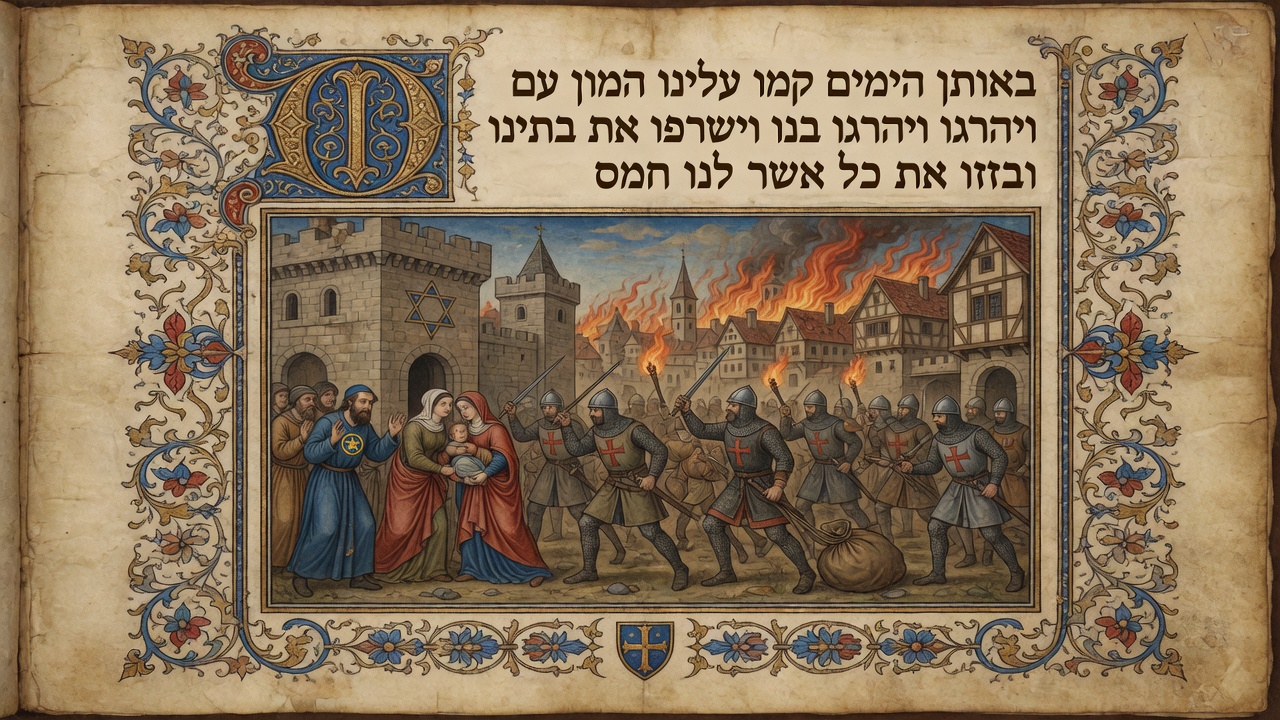
The crime was the massacre of Jedwabne’s Jews on July 10, 1941, in the weeks after Germany invaded the Soviet-held zone of Poland, when several hundred people, from infants to the very old, were driven into a barn and burned alive. For six decades the atrocity lived at the edge of memory. Then, in 2000, the historian Jan Tomasz Gross published a slim book, soon known to English readers as “Neighbors,” arguing that the hands that did the killing were largely Polish ones, and the country convulsed. The Institute of National Remembrance, the state body that prosecutes Nazi-era and Communist-era crimes, opened a formal investigation. Its prosecutor, Radosław Ignatiew, put six questions to the experts, questions about the number of the buried, their sex and age, the traces of fire, of firearms, and of tools, and the causes of death, and he planned a full exhumation to answer them. In March, 2001, a team under Andrzej Kola, an archeologist from Toruń seasoned at the Katyn-related exhumations in Kharkiv and at the site of the Bełżec death camp, surveyed the ground; in April, the site was inspected with metal detectors.
Days before the main work was to begin, the Minister of Justice, Lech Kaczyński, who under Polish law serves simultaneously as Prosecutor General, suspended the execution of his own prosecutor’s decision in order to negotiate with representatives of the Jewish community, for whom the peace of the dead is a matter of religious law. The terms that emerged were announced to the experts on May 30th, minutes before the graves were opened: excavation could proceed only until remains appeared in anatomical arrangement, and the remains could be neither lifted nor touched. A day later, the method softened by a degree; the fill could be taken out with shovels and passed through sieves. The prohibition on raising the skeletons stood. The specialists protested, in writing, that a procedure so shaped could not answer the questions about the number of victims or the causes of death. The exploration of both graves lasted two and a half days. The forensic physicians later described what they had been permitted to do with a fastidiousness that reads as its own commentary: not an exhumation, at most “an uncovering of the surface of the arrangement of the skeletons,” together with a study of the material lying above and around them.
Polish procedure knows exactly what an exhumation is, because the statute is nearly incapable of saying anything else. Article 210 serves the corpse examinations of Article 209, which are mandatory whenever a criminal death is suspected; the order belongs to a prosecutor or a court; the consent of the family is not an element of the act; and its core, its statutory heart, is the removal of the body, or of remains, from the grave. Without the removal there is no exhumation in the meaning of the code, however many orders are signed, experts appointed, and protocols drawn. Polish commentators, it is true, allow for a limited exhumation, confined to the sampling of tissue, in which the whole body never leaves the grave; but even that reading assumes that part of the remains is deliberately taken up. At Jedwabne the rule ran the other way, no lifting and no touching, and what reached the laboratory came only from the sifted fill of the graves. The act is, as a rule, unrepeatable in the procedural sense, above all because it irreversibly alters the grave and the original context in which remains lie. What is striking about the provision is what it lacks. It is one sentence long. It contains no balancing test, no procedure for weighing the investigative need against anything else, and no voice, none at all, for the people the decision touches. That absence explains much of what happened at Jedwabne, and it would return, fifteen years later, in another Polish case.
What, then, actually occurred in those two and a half days? In the language of the code: an inspection of a site and of objects under Article 207, extending, for the remains uncovered in place, into the corpse-inspection regime of Article 209, joined to expert examinations under Article 193 of the bone material and the artifacts sifted from the upper layers. The statutory core of Article 210 was never performed. The price of that renunciation was countable: without raising the remains there was no counting the victims, no individual causes of death, no record of injuries, no identifications. One thing, however, the file does not support. In public memory the dig survives as an exhumation broken off at the moment its results threatened to become inconvenient. The record, reconstructed with great care by the historian Krzysztof Persak from the investigative file, says otherwise: the restrictions were agreed before the graves were opened, and the first shell casings had already surfaced in March, during the reconnaissance.
* * *
Within the imposed frame, the archeological program for the site of the barn was carried out in full; a complete exploration of the graves’ interiors was precisely what never happened. The relic of the burned barn was fixed on the ground, roughly sixty feet by twenty-three. Grave No. 1 lay along the western stretch of its foundation. Inside the barn’s outline the team made the one discovery nobody had planned. Beneath a lens of charred debris lay the scorched concrete bust of Lenin, then the statue’s head, and beneath them human remains: grave No. 2, the pit of the Jewish men who, on the day of the crime, had been forced to smash the town’s Lenin monument and stage a mock funeral for it. In the same grave lay the blade of a slaughterer’s knife, which answers the account of Szmul Wasersztejn, a survivor, who described the town’s kosher slaughterer being placed at the head of the procession.
The inventory of finds runs to six hundred and thirty-three entries: more than three hundred coins, over thirty wedding bands, rings, and signets, house keys, dental bridges, a small gold pendant in the shape of the tablets of the Law. The anthropologists, working on what the sieves yielded, counted three hundred and ninety-five permanent teeth and a hundred and eight milk teeth. Both sexes lie in the graves, from infants to the very old. The burning of the bones varied from slight to total, and the chaotic arrangement of the exposed fragments indicated that some of the bodies had been broken apart, which agrees with a burial witness’s account of the burned corpses being torn with pitchforks. Confined to the uppermost layer, the forensic physicians still identified thirty-three diagnostic fragments of the mandible, which means the remains of at least thirty-three adults in the sampled fraction alone. The methodological moral is hard to miss: every element of the old accounts that was actually put to material verification found its confirmation in the ground.
* * *
In June, 2001, Polish media carried talk of nearly a hundred shell casings and of proof that the victims had been shot. Half a year later, the Central Forensic Laboratory of the national police delivered a set of reports that dismantled the story piece by piece. The correction never enjoyed a fraction of the circulation.
The findings are these. Of ninety-seven casings recovered, forty-nine carry stamped production dates from 1907 to 1915 and are residue of the German-Russian fighting of August, 1915, which left Jedwabne in ruins. Of thirty-eight Mauser casings attributable to the Second World War, twenty-nine were fired, according to the laboratory’s categorical findings, from an MG-42 machine gun, whose mechanism leaves a signature crimp in the case neck, and identical crimps argue the same origin for three more. The MG-42 entered German service in 1942 and was first used in combat that May, in Africa. Six further casings, made of steel, most likely postdate 1941, when the Reich began to run short of nonferrous metals. Eight casings never reached the laboratory at all, apparently through an oversight in the handover of evidence, and two more went missing inside it.
The bullets tell the same story. A bullet and a bullet jacket found on the cemetery side of the road came from Russian Mosin-pattern arms. A Mauser bullet from under the northern foundation bore no rifling marks; it had never been fired. The exhibit with the grandest press career, a supposed nine-millimeter pistol bullet from grave No. 1, dissolved in the laboratory into a capsule of thin stamped sheet metal packed with a fibrous filling, not a component of ammunition at all. A single casing from 1937, fired from an MG-42 and found in the uppermost layer of grave No. 1, was explained as secondary contamination, from decades of plowing or from the construction of the first memorial in the nineteen-sixties. Aerial photographs close the frame: a trench line cutting across the Jewish cemetery and passing hard by the relic of the barn is absent from an image of June 19, 1944, and sharp on one of September 6, 1944; in January, 1945, the Soviet offensive fought its way through Jedwabne.
The ballistic conclusion is exclusionary in the strict sense. Every element of ammunition that was examined and that could be identified was ruled out as a trace of the crime of July 10, 1941, and none was positively tied to it. Of the eight casings never tested and the two lost in the laboratory nothing can be said; they are evidence of nothing, in either direction. In forensic science this is the strongest kind of finding there is. A date stamped into a cartridge base and the tool marks of a weapon’s mechanism do not submit to interpretation. One can argue with an estimate. One cannot argue with a year of manufacture.
* * *
An incomplete procedure limits what can be established; it does not, by itself, make the findings unreliable. Polish criminal procedure judges evidence under Article 7 of the code, the free evaluation of the whole of the material in the light of knowledge and experience, and at Jedwabne four lines of evidence, pursued independently of one another, converged: the documents and testimony of the nineteen-forties and fifties, along with accounts gathered after 2000; the archeological and anthropological results; the ballistic reports; and the reading of aerial photographs. Each was produced by a different method, at a different time, by different hands, and all of them agreed. Cross-verification of independent sources is the elementary forensic standard, and here it was met.
Rigor still demands that the findings be sorted by their degree of certainty. Certain: the locations of the barn and of both graves; the action of fire on the corpses; the full demographic cross-section of the murdered; the burial of the fragments of the Lenin monument together with the murdered men; the stamped production dates of casings and bullets, and the MG-42 mechanism marks on part of them; and the fact that no MG-42 existed in any arsenal in July, 1941. Probable: the connection of the casings to the fighting of 1915 and 1945; the material-based dating of the six steel casings; the secondary contamination of grave No. 1; and the inference that, since grave No. 1 was never filled to capacity, Jedwabne holds no further mass graves, an inference supported by a hundred and sixty-seven negative boreholes on the ground by the cemetery and by a dig at a spot named in an anonymous letter, though victims of individual killings may lie elsewhere. Undetermined: the number of the dead. The working estimate of three hundred to four hundred was hedged by its own author; the anthropologists called it unverifiable without a full exhumation; and the town’s population deficit between 1939 and 1946, roughly a thousand and fifty people, which later stages of the Holocaust, wartime deaths, and migration do not fully explain, suggests the true figure may exceed the estimate’s upper bound. That arithmetic is Persak’s; the prosecutors themselves stopped at cataloguing the contradictory sources, dismissing only the figure of sixteen hundred as highly improbable. The “no fewer than three hundred and forty” adopted in the decision that closed the investigation on June 30, 2003, is the sum of two lower bounds, and nothing more.
A reader who does not live with forensic work might scan that ledger, the untested casings, the two lost in a laboratory, the count that cannot be made, and sense serious irregularity. The impression rests on a false point of reference. There are no perfect investigations, least of all sixty years after the fact, on ground churned by two world wars and half a century of plowing; evidence goes astray in ordinary cases, too, and a forensic conclusion is rarely a single decisive proof, more often a sum of probable hypotheses that happen to point the same way. Measured against that reality, Jedwabne is the unusual case: the datable material is categorical, the independent lines of evidence converge, and the caveats are printed rather than buried. In this craft it is concealment, not disclosure, that ought to arouse suspicion.
A full exhumation under Article 210 could have supplied what was missing: a count, identifications, a record of injuries. It would have carried its own cost. Even the rabbinic opinions that permit exhumation, like the one Rabbi Joseph Polak issued in 2001, or Rabbi Walter Homolka’s responsum in the Echterdingen case of 2005, tie it to a renewed and dignified burial, not to study as an end in itself. The solution carried out at Jedwabne, a layer of earth over the graves and plantings above them, answers the guidance that Homolka drew from a responsum of Solomon Freehof as the alternative to moving remains at all. The grave stands today in the registry of war graves and, under a statute of 1933, in the care of the state.
There is, finally, a lesson in pure craft. The sequence of 2001, a field find, a premature announcement, an expert report, a correction without echo, is a textbook case of botched scientific communication. The decision that closed the investigation records the mechanism outright: claims that firearms had been used began appearing in witness testimony, as a rule, only after the discovery of the casings had been made public; the announcement had shaped memory before the experts had examined the evidence. An artifact becomes evidence only after the laboratory. On ground crossed by two world wars and half a century of plowing, militaria lying near the surface are background, not signal. Whoever announces conclusions before the laboratory speaks cedes the field to myths, and then spends years correcting them, usually in vain.
* * *
So much for what the ground established; now for the norm that decided how the ground could be questioned. The one-sentence Article 210 provides no mechanism for weighing colliding values and no appeal for those the decision touches. In 2001, the weighing therefore happened entirely outside the statute: the Prosecutor General suspended the execution of his own prosecutor’s order, negotiated the limits of the procedure with the religious side, and the state treated those limits as binding. Witold Kulesza, the head of the Institute’s investigative division, explained the arrangement on site as a matter of raison d’état, and it is hard to imagine cleaner proof that the balancing was conducted in the language of the state rather than the language of the law.
Fifteen years later the same provision served the opposite outcome. After the 2010 crash of the presidential plane at Smolensk, in which President Lech Kaczyński and ninety-five others died, the National Prosecutor’s Office took over the investigation in 2016 and ordered the victims exhumed, in a number of cases over the objection of their families, whose complaints were left unexamined as legally inadmissible. Among the bodies raised under the one-sentence provision was that of Kaczyński himself, who, as Minister of Justice a decade and a half earlier, had drawn the limits at Jedwabne. Not even a referral to the Constitutional Tribunal in one of those cases (docket P 18/17) had any practical effect: the exhumations of May 14 and 16, 2018, went ahead before anyone had assessed their necessity, a fact the Strasbourg court later noted in paragraph 68 of its judgment. In 2018, in Solska and Rybicka v. Poland, the European Court of Human Rights held that the total absence of any review of such a decision’s proportionality violates Article 8 of the Convention, the right to private and family life. The court did not hand families a veto over exhumations; what it faulted was that Polish law provided no mechanism at all for testing the necessity and proportionality of the intrusion.
The legislative response has the shape of a parable about lawmaking. In November, 2024, the Ministry of Justice proposed an appeal for the deceased’s next of kin, with suspensive effect and a seven-day deadline for the court to rule. The statute that parliament finally passed on February 27, 2026, kept the appeal but dropped the suspensive effect, and a nonsuspensive remedy against an irreversible, unrepeatable act reviews a fait accompli, which is Strasbourg’s problem in a softer costume. The President then vetoed the statute, for reasons unrelated to exhumation; on March 27, 2026, the override fell twenty votes short; and a presidential counterproposal now starts the cycle again. As of this writing, nearly eight years after the judgment, the provision reads exactly as it did in 1997.
Set the two cases side by side and a more general conclusion follows. A norm that lacks a weighing procedure does not dissolve the conflict of values; it assigns the outcome to whoever happens to hold the pen. At Jedwabne the statute’s silence was filled in favor of those who objected; at Smolensk, against them. It is hard to imagine a better illustration of the point of procedural guarantees, which is that the result should not depend on who signs the order.
* * *
Formally, a road back exists. Article 327 of the code allows a discontinued investigation to be taken up again at any time, provided it would not run against a person who was previously a suspect. A witness who came forward in 2017 gave the Institute’s prosecutors no ground to reopen, and collective petitions for a renewed exhumation, filed since that year, have gone unresolved. The scenario of a full exhumation remains theoretical.
The balance sheet reads like this. The law of procedure saw no exhumation at Jedwabne; forensic science saw enough. The witnesses’ accounts passed the test of material verification at every point where such a test was possible: the barn, the two graves, the fire, the infants beside the old, the buried Lenin, the slaughterer’s knife. The one competing hypothesis that lent itself to testing, that the victims had been shot by Germans, found no support whatever in the examined material, and ruling out every last shot would have required precisely the full exhumation that never took place. Who did the killing is not a question the ground can answer on its own; it belongs to the testimony and the documents, which the investigation weighed, and which pointed to German instigation and Polish execution. What the studies of 2001 accomplished was to strip the revisionist narrative of its only material argument and to raise the credibility of the human sources at every point where they could be checked. The hope that the earth would tell a different story from the one people had told found nothing to stand on. That is the sad confirmation. A study that never became an exhumation was enough to establish that the fear had been justified all along.
A note on sources. The account of the 2001 works follows Krzysztof Persak’s study “Ekshumacja, której (prawie) nie było” (Zagłada Żydów: Studia i Materiały, vol. 14, 2018, pp. 248 to 275), and, directly, the decision of June 30, 2003, discontinuing investigation S 1/00/Zn, issued by prosecutor Radosław J. Ignatiew, head of the Institute’s branch commission in Białystok (full text on the Institute’s website), in particular: the operative part, p. 1; the questions put to the experts, p. 169; the restrictions of May 30 and 31, 2001, p. 171; the course of the works and the findings, pp. 172 to 174; the ballistic opinions, pp. 174 to 178; the resolution of the investigative hypotheses, pp. 193 to 201. The aggregate cartridge count and the analysis of the aerial photographs of June 19 and September 6, 1944, follow Persak. Legal status as of July 12, 2026.
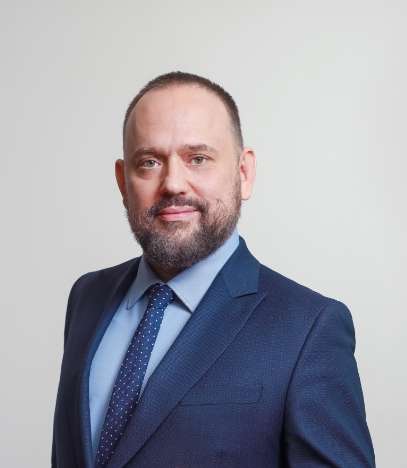
Robert Nogacki is a Polish attorney at law (radca prawny), the founder and managing partner of Kancelaria Prawna Skarbiec (Skarbiec Law Firm), which has operated continuously since 2006.
The law is equal for everyone, but the parties rarely are: on one side stands an organization with time, money, and lawyers, on the other a person with one business, one nest egg, and one life.
Clients rarely come to him with a legal problem. They come with a problem that also has a legal side: an audit that began with a single invoice, money entrusted to someone who has disappeared, a company that has to be passed on before it is too late. Most such matters are decided long before the first letter is written, in decisions made without asking and in deadlines nobody remembered. So he begins by asking how the client got here, not what the client should have done.
He advises entrepreneurs and families from more than a dozen countries, including those whose accounts the tax office has just seized and who do not know what to do tomorrow morning. He defends them in tax audits, customs and fiscal inspections, disputes with the tax authorities, and criminal tax proceedings. He represents victims of investment fraud and Ponzi schemes. He helps families set up family foundations and plan succession, so that a life’s work outlasts a single generation.
Not every case can be won. Every case can be run so that the client knows where they stand. Since 2006 he has represented the victims in the WGI case (Warszawska Grupa Inwestycyjna, the Warsaw Investment Group), one of the longest criminal cases in the history of the Polish financial market, because some things must not be left half finished, even when they take two decades. In the case of the collapsed cryptocurrency exchange Zonda (Zondacrypto, operated by BB Trade Estonia OÜ), he represents several hundred victims in the criminal investigation conducted by Poland’s National Prosecutor’s Office and in the Estonian bankruptcy proceedings.
Kancelaria Prawna Skarbiec is listed in the rankings of Poland’s largest tax advisory firms published by Dziennik Gazeta Prawna and Rzeczpospolita, and it is a four-time recipient (2015 to 2018) of the European Medal awarded by the Business Centre Club and the European Economic and Social Committee. Robert Nogacki publishes regularly, in the press and on the firm’s website, for people who have a problem rather than a law degree, because a legal opinion the client cannot understand protects only the lawyer.
He believes that the best legal advice is the kind that means the client never has to appear in court.