

WGI – Guilty, After Twenty Years
A Warsaw court has finally convicted the architects of one of Poland’s most audacious financial crimes. For the investors who lost everything—and the lawyer who never gave up on them—justice arrived on time for some, and far too late for others.
Warsaw, March 5, 2026
On the morning of March 5th, in a courtroom on the upper floors of the Warsaw District Court, a judge read out a verdict that a great many people had long since stopped believing they would live to hear. Two former executives of WGI Dom Maklerski S.A.—a brokerage house whose collapse, two decades ago, swallowed the life savings of more than eighteen hundred Poles—were found guilty of fraud and sentenced to five years in prison. A third received a two-year suspended sentence. The case number is XII K 152/22; the waiting, for those who had to endure it, was considerably longer than a case number suggests.
The total losses: three hundred and forty million złotych—roughly eighty-five million dollars at the time, and closer to three hundred and fifty million in today’s terms when inflation is applied. The amount recovered from the bankruptcy estate: about eleven percent. The years elapsed since regulators first pulled the company’s license: twenty.
Robert Nogacki, the attorney who has represented the victims pro bono for nearly all of those twenty years, offered a characteristically measured response. “A guilty verdict after twenty years is not a triumph of justice,” he said. “It is the minimum that justice owed these people.”
THE PROSTHESIS
To understand how WGI worked, it helps to understand what WGI was. The company had begun as a currency-trading fund, managing client money on foreign-exchange markets. When Poland joined the European Union in 2004, new regulations required that such operations be licensed as brokerage houses. WGI obliged—but not, the prosecution argued, out of any particular enthusiasm for legal compliance.
Maciej S., one of the two main defendants (Polish court practice withholds full surnames of the accused pending a final verdict), testified in 2023 that within three months of obtaining their brokerage license, management already knew the model couldn’t survive long-term. They continued for another eight months regardless. To route client funds to their American broker, Wachovia Securities, while sidestepping the regulatory constraints that came with their new license, they created a special-purpose vehicle—WGI Consulting—which issued bonds that served as the conduit. During his closing statement, Maciej S. reached for a word that the victims’ counsel would not soon let him forget: he called the arrangement a “prosthesis.”
“A prosthesis, by definition, substitutes for something that doesn’t work. The defendants themselves admitted they’d built an artificial structure precisely because the proper one couldn’t function. And yet it was through this ‘investment prosthesis’ that they funnelled their clients’ savings.” — Robert Nogacki
THE STATEMENT THAT WASN’T
Each month, clients of WGI received a document called “Account Value Information.” It looked, as such things are designed to look, entirely official. It listed a balance. It implied growth. Clients treated it the way one treats a bank statement—because, in every meaningful sense, it functioned like one: WGI itself used the documents as the basis for processing withdrawals. If you wanted your money, you received whatever figure appeared on the most recent monthly report.
The problem, which the forensic accountants appointed by the court established in exhaustive detail, was that the figures on those reports bore no reliable relationship to reality. Court-appointed experts concluded that “the amounts indicated in client information statements constituted real obligations, not mere projections, because they served as the basis for client withdrawals”—and yet no documented valuation methodology existed behind them, no assumptions, no analyses. The monthly numbers included “future profits” that nobody could explain how to calculate. Meanwhile, the figures reported to Poland’s securities regulator—the Commission for Securities and Exchanges, known as KPWiG—were dramatically lower.
One victim’s monthly statements showed balances of more than two hundred and seventy thousand złotych on one account and sixty-seven thousand on another. The regulator was being told something in the tens of thousands. When, in May 2006, she asked for her money back, she received four thousand and five złotych.
In practice, some clients received nothing more than unsigned slips of paper bearing their supposed results—and on that basis built their sense of financial security.
“This is the core mechanism of the fraud. A client receives a document that looks like a bank statement, that the firm itself treats as a bank statement—because it can be used to make withdrawals. But the number on the document is fictional. The client sleeps soundly because he sees rising balances. If he’d seen the truth, he’d have taken his money immediately. Which is precisely why the truth was withheld.” — R. Nogacki
“Dual reporting—one set of numbers for clients, another for the regulator—is not a ‘systemic imperfection.’ It is an architecture of disinformation. The client and the watchdog see two entirely different realities, and management knows about both and consciously maintains the discrepancy.” — R. Nogacki
THE MACHINE THAT COULD BE ADJUSTED
The defense devoted considerable effort to the argument that a defective computer system—not any deliberate malfeasance—was responsible for the distorted account values. For hours across multiple hearings, the defendants described themselves as the hapless victims of technology that had failed them.
Their own testimony undermined the argument rather thoroughly. Maciej S. admitted that the system had been tested on only a small sample of clients and a small sample of data. He acknowledged that by June 2005—two months after launching brokerage operations—troubling symptoms had already appeared. He confirmed that the system lacked any mechanism for closing monthly periods, which meant that a report generated for a given month in one week could differ from a report for the same month generated the following week. He conceded that, at the developer level, manual intervention in the data was possible.
Programmers who testified before the court confirmed that the system permitted modification of historical data, allowed manual entry of special transactions for selected clients with arbitrary profit allocation, and had no period-close controls that would prevent retroactive adjustments.
More revealingly still: before the software system was even deployed, during WGI’s earlier years, all client accounting had been conducted in Microsoft Excel spreadsheets. Maciej S. acknowledged this plainly. For years, hundreds of millions of złotych entrusted by clients had been tracked in spreadsheets, with employees manually updating account balances based on figures sent by email—with no cross-referencing against actual bank statements. One witness testified that, on the instruction of one of the defendants, WGI Consulting bonds had been allocated to clients in quantities exceeding the funds those clients actually held.
“The defendants wanted the court to believe the computer system failed them. But they were the ones who commissioned it and approved it for use. A programmer fulfills a commission. Responsibility for the fact that the commission served to manufacture fiction rests with whoever deployed that fiction against clients.” — R. Nogacki
“Imagine a bank where your balance changes depending on which day of the week you log in—not because you made a transaction, but because the system recalculates everything fresh with each query. No sensible person would entrust their money to such a bank. WGI’s clients didn’t know that’s how it worked. They knew only what the report showed them. And the report showed them fiction.” — R. Nogacki
THE WATCHDOG AS SALES PITCH
Perhaps the most corrosive element of the WGI story is what the company did with its regulatory status. Having been compelled by law to obtain a brokerage license when Poland entered the EU—a point Maciej S. himself conceded at trial, noting it was a legal necessity rather than a strategic choice—WGI proceeded to market that license to clients as evidence of trustworthiness. Materials directed at investors presented KPWiG oversight not as a routine legal requirement but as a mark of distinction, a seal of safety.
The clients who believed them were, in many cases, older Poles without specialized knowledge of financial markets. They heard “we are regulated by KPWiG” and understood “my money is protected.” The message was designed to produce exactly that understanding.
“The defendants used the very fact of regulatory supervision as a sales tool. The client heard ‘we are under KPWiG oversight’ and understood ‘my money is protected.’ And yet it was precisely under that oversight, during the very period it applied, that the double bookkeeping was maintained, that fictional valuations were dispatched, that personal loans were taken from client funds. The regulator was not a shield protecting clients. It was a façade behind which everything the regulator was supposed to prevent was being carried out.” — R. Nogacki
At one point during the proceedings, one of the defendants offered a self-exculpatory remark that Nogacki found instructive for its accidental candor: “No one with bad intentions would have sought out regulatory supervision.” Nogacki’s reply was sharp. “That’s a bit like saying: no one who plans to speed would buy a car with a speedometer. A speedometer doesn’t prevent speeding. Oversight didn’t prevent the double accounting. But it worked perfectly as a marketing argument.”
EIGHT HUNDRED AND SEVENTY-FIVE THOUSAND DOLLARS
Among the most straightforwardly damning facts in the case: Lłukasz K., the other main defendant, took a personal loan of eight hundred and seventy-five thousand dollars—“to purchase a property outright,” as he testified—from funds linked to the client portfolio. Maciej S. took a similar loan for real estate. The source of those funds, Maciej S. explained, was “leverage” provided by Wachovia, designated for client investments. Neither loan was repaid. When asked about the purpose of the funds, Maciej S. responded that the money had been used “in accordance with our, my and Mr. K.’s, private wishes.”
“There are moments when a single fact speaks more plainly than a thousand pages of case file. The management of a firm entrusted with other people’s money takes eight hundred and seventy-five thousand dollars of those funds to buy a house—and never gives it back. Everything else—the computer system, the investment prosthesis, the disputes with the regulator—is context. That is the substance.” — R. Nogacki
THREE HUNDRED MILLION SHORT
The arithmetic of the WGI collapse, laid out in the court record, is worth dwelling on. The total claims submitted by clients on the basis of their final monthly account statements: three hundred and thirty-nine million, four hundred and twenty-two thousand, one hundred and twenty-one złotych and ninety-eight groszy. The amount recovered from the bankruptcy estate of WGI Consulting: thirty-nine million, five hundred and thirty-four thousand, five hundred and fifty-eight złotych—eleven and seven-tenths percent of what was owed.
When the bankruptcy administrator arrived at WGI Dom Maklerski, the firm’s cash on hand was approximately two hundred thousand złotych. The bankruptcy proceeding was subsequently discontinued for lack of funds to conduct it—after eight hundred thousand złotych in advances from the victims themselves had been exhausted.
Court-appointed experts determined that WGI “was unable to meet its obligations to clients at any examined point in time” and that “the moment of insolvency coincided with the first day of brokerage operations.” From the very beginning, in other words, the company owed clients more than it possessed. For the following year, it continued to send them reports suggesting their investments were growing.
“Liabilities: 339 million. Cash on hand: 200 thousand. That’s a ratio of 1,700 to 1. If every WGI client had shown up on the same day to claim their money, each would have received less than 0.059 of a grosz for every złoty. But clients didn’t come — because the monthly report told them everything was fine. That’s exactly what those reports were for,” says Nogacki.
THE ART OF THE NON-APOLOGY
At the February 19th, 2026 hearing, Maciej S. delivered a closing statement that ran for several dozen minutes. He did not address a single specific piece of evidence. What he offered instead was a catalogue of other parties bearing responsibility for the affair: a law firm (DZP), the Securities Commission, KNF inspectors, the bankruptcy administrators, and—with a certain audacity—the exchange rate of the dollar. He and his co-defendants, he suggested, had been “passive observers.”
Not once did he speak to the specific harm suffered by any individual victim. Not once did he explain where three hundred million złotych had gone. He did, however, devote several sentences to his own suffering: the loss of friends, the difficulty of finding employment, the stigma of media coverage. He referred to the victims’ counsel as “a maestro of manipulation and pseudo-facts”—without specifying a single fact that was untrue.
“My closing argument cited only the defendants’ own words, from court transcripts, with dates and context. When a man is confronted with his own statements, he has two options: challenge the words, or challenge the person who assembled them. The defendant chose the latter. But the words remain in the record.” — R. Nogacki
THE ACQUITTAL THAT WASN’T
The current conviction might never have happened. The first WGI trial lasted eight years and concluded on November 17th, 2020, with a full acquittal. It was the appeal filed by Kancelaria Prawna Skarbiec, Nogacki’s firm, that changed the trajectory of the case.
The Warsaw Court of Appeal overturned the acquittal on June 28th, 2022. In the oral reasoning accompanying its decision, the appellate court reached for language that Polish courts deploy sparingly: the entire proceeding, it said, had been “a failure of justice,” and the manner in which the trial court had operated was “an example of how courts should not function.” That reversal opened the path to a retrial—and, eventually, to the verdict of March 5th.
“When the first court acquitted the defendants, many victims lost hope. The appeal was the last line of defense—and it worked. But it shouldn’t be the case that justice in a three-hundred-and-forty-million-złoty matter depends on whether a single attorney files an appeal pro bono.” — R. Nogacki
TWENTY YEARS
A chronology of the WGI affair also serves as a quiet indictment of the pace of Polish judicial machinery. April 4th, 2006: KPWiG revokes WGI’s brokerage license. December 2012: the indictment arrives at court—six years later. The first trial runs eight years and ends in acquittal. The appellate reversal comes in June 2022. The retrial begins in May 2023. The guilty verdict: March 5th, 2026. Not yet final.
A significant portion of WGI’s clients were elderly. Some did not live to see any verdict at all.
On April 4th, 2026—thirty days from now—it will be exactly twenty years since the securities regulator revoked WGI’s license.
“When I took on this case, I was not yet thirty. Some of my clients were already in their sixties. Some of them died waiting for a verdict. Justice that arrives after twenty years is better than no justice—but it must be said plainly that for many, it arrived too late.” — R. Nogacki
FIVE YEARS FOR THREE HUNDRED MILLION
The sentences handed down—five years for the two principal defendants, against the prosecution’s request for ten; a two-year suspended term for the third, against a request for five years, unsuspended—are substantially more lenient than what the state sought.
“The court said ‘guilty’—and that is what matters most. The length of the sentence is a separate conversation. But I will say this: these men spent twenty years living normally—working, travelling, building careers. Their clients spent those same twenty years waiting for a verdict and not recovering their money. Five years for three hundred million złotych and twenty years of proceedings—let each person judge the proportionality for themselves.” — R. Nogacki
“I will analyze the written reasoning once it is produced. But one thing I can say now: this case is not closed. I did not carry it for twenty years pro bono to let go in the final stretch.” — R. Nogacki
THE MOTHER OF POLISH FINANCIAL SCANDALS
The WGI affair is often described as the precursor to a generation of Polish financial frauds—Amber Gold, Finroyal, Interbrok Investment—that followed in its wake over the next decade. The template was consistent: promises of above-market returns, opacity of structure, management of other people’s money through vehicles that eluded meaningful supervision.
“WGI demonstrated that in Poland you can manage hundreds of millions of złotych of other people’s money, in Excel, without a functioning computer system, with an ‘investment prosthesis’ in place of a proper license, sending clients reports you know to be fictional—and that the justice system will require twenty years to pronounce it a crime. That lesson should be taught in every law school in the country.” — R. Nogacki
* * *
Robert Nogacki is a licensed legal counsel (radca prawny) and Managing Partner of Kancelaria Prawna Skarbiec in Warsaw. He has represented the WGI victims pro bono since the early stages of the investigation. The verdict of March 5th, 2026 is not yet final; both sides retain the right to appeal.
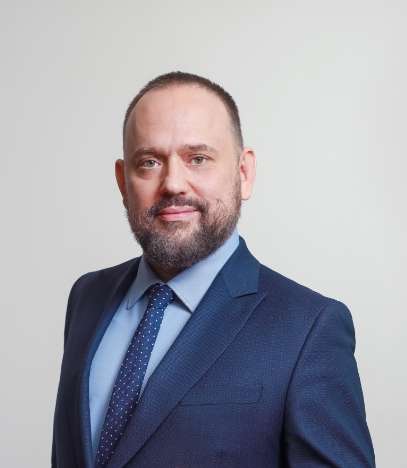
Robert Nogacki is a Polish attorney at law (radca prawny), the founder and managing partner of Kancelaria Prawna Skarbiec (Skarbiec Law Firm), which has operated continuously since 2006.
The law is equal for everyone, but the parties rarely are: on one side stands an organization with time, money, and lawyers, on the other a person with one business, one nest egg, and one life.
Clients rarely come to him with a legal problem. They come with a problem that also has a legal side: an audit that began with a single invoice, money entrusted to someone who has disappeared, a company that has to be passed on before it is too late. Most such matters are decided long before the first letter is written, in decisions made without asking and in deadlines nobody remembered. So he begins by asking how the client got here, not what the client should have done.
He advises entrepreneurs and families from more than a dozen countries, including those whose accounts the tax office has just seized and who do not know what to do tomorrow morning. He defends them in tax audits, customs and fiscal inspections, disputes with the tax authorities, and criminal tax proceedings. He represents victims of investment fraud and Ponzi schemes. He helps families set up family foundations and plan succession, so that a life’s work outlasts a single generation.
Not every case can be won. Every case can be run so that the client knows where they stand. Since 2006 he has represented the victims in the WGI case (Warszawska Grupa Inwestycyjna, the Warsaw Investment Group), one of the longest criminal cases in the history of the Polish financial market, because some things must not be left half finished, even when they take two decades. In the case of the collapsed cryptocurrency exchange Zonda (Zondacrypto, operated by BB Trade Estonia OÜ), he represents several hundred victims in the criminal investigation conducted by Poland’s National Prosecutor’s Office and in the Estonian bankruptcy proceedings.
Kancelaria Prawna Skarbiec is listed in the rankings of Poland’s largest tax advisory firms published by Dziennik Gazeta Prawna and Rzeczpospolita, and it is a four-time recipient (2015 to 2018) of the European Medal awarded by the Business Centre Club and the European Economic and Social Committee. Robert Nogacki publishes regularly, in the press and on the firm’s website, for people who have a problem rather than a law degree, because a legal opinion the client cannot understand protects only the lawyer.
He believes that the best legal advice is the kind that means the client never has to appear in court.