Swiss Investment of Zonda
How four annual reports from a European crypto exchange tell us, and then stop telling us, about a Swiss bank, about the missing money, and about a Bahamian subsidiary that appears in no table
Kancelaria Prawna Skarbiec · Robert Nogacki, attorney at law · published April 22, 2026, updated September 12, 2026
Halfway through the twenty-second page of BB Trade Estonia OÜ’s 2022 consolidated financial statement, in Note 9, wedged between a catalogue of seventy-odd cryptocurrencies available on the company’s platform and a table of lease receivables, there is a sentence. It reads: “B-class shares were acquired in SEBA Bank AG, which in 2021 were converted into equity tokens. The shareholding amounts to approximately 1.01 per cent.” It runs to twenty-three words. In the next year’s statement there are twelve. In the year after that, none.
The Bank That Was Meant to Be a Bridge
SEBA Bank AG was founded in April of 2018, in Zug, the stretch of Switzerland that people who care about such things call Crypto Valley. The founder was Sébastien Mérillat, a Swiss-French entrepreneur from Biel whose family holdings include a pocket-knife factory (Swiza), a watchmaking atelier (Les Ateliers Louis Moinet), and a regional airport in Neuchâtel. The name “SEBA” is the first four letters of his given name. Within five months of incorporation, the bank had raised a hundred million Swiss francs (roughly a hundred and three million dollars) from, among others, Julius Baer. In August of 2019, FINMA, the Swiss financial regulator, granted the bank a full banking and securities-dealer license, one of the first ever issued to an institution specializing in digital assets.
It was a serious project. Guido Bühler, the first chief executive, came from UBS Wealth Management (his later role in this story is the subject of Section IV). Andreas Amschwand, the first chairman, had spent twenty-five years at UBS as Head of FX. Hans Kuhn, a board member, had previously served as general counsel to the Swiss National Bank. SEBA did not market to retail clients. It served banks, pension funds, corporations, and family offices: institutional custody, over-the-counter trading, Lombard loans collateralized by digital assets, staking in Ethereum and Polkadot and Tezos, a house index (SEBAX) listed on the SIX Swiss Exchange, and tracker certificates on Euronext Amsterdam and Paris. In February of 2021, SEBA issued its own Series B participation capital as security tokens on the Ethereum blockchain, making it one of the first institutions in the world to tokenize its own equity. As will become relevant in a moment, that date is important.
Diligence on the personnel turns up nothing that would give a compliance officer pause. None of SEBA’s directors or board members appears on any sanctions list, in any FINMA enforcement proceeding, or in the investigative databases of the OCCRP and the ICIJ. All the careers run through the mainstream of Swiss finance. The one footnote worth mentioning, the participation of Alameda Research in the January, 2022, Series C round, ten months before FTX collapsed, never produced an enforcement action; the bank stated at the time that it had no operational exposure to Sam Bankman-Fried’s empire, and no regulator disagreed. It is a reputational blemish, not a disqualifying one. The connection that does deserve a pause runs the other way, from the bank’s founding team to the exchange’s boardroom, and it is described in Section IV.
In December of 2023, SEBA Bank AG changed its name to AMINA Bank AG. The reason was mundane: Skandinaviska Enskilda Banken, the Swedish bank known as SEB, had objected to the potential for confusion. The new name, as the bank explained, derives from “transamination,” the biochemical process by which an amino group is transferred between molecules, a metaphor for bridging worlds. In 2024, AMINA reported a sixty-nine-per-cent rise in revenue, to $40.4 million; assets under management grew to $4.2 billion; and, in the fourth quarter, the bank posted its first-ever profitable quarter. Its CET1 capital ratio stood at thirty-four per cent, against a regulatory minimum of seven. Its liquidity coverage ratio was above two hundred and twenty per cent. It had recorded zero loan defaults in five years of operation. No serious analyst has questioned the soundness of the institution.
All of that is publicly available information. The interesting part is what BB Trade Estonia’s own financial statements choose, and then decline, to say about it.
The Vanishing
In the archaeology of financial documents, omissions come in two varieties. Some are invisible because nothing ever marked them. Others are visible precisely because something once did, and then was taken away. BB Trade Estonia’s investment in SEBA/AMINA belongs to the second variety. It is the trajectory of the disclosure, not the disclosure itself, that rewards attention.
In the 2022 statement, Note 9 tells the reader almost everything: an opening balance of €2,317,819, further acquisitions for €952,199, a revaluation gain of €214,698, a closing balance of €3,484,716. Beneath the table sits the sentence with which this article began: issuer named, stake specified, instrument described. It is a model of tidy disclosure. A reader can tell what BB Trade Estonia owns, in what quantity, and in what form.
A year later, in the 2023 statement, the bookkeeping numbers continue without incident: the balance has risen to €3,827,891, lifted by a revaluation gain of €343,175 routed through the income statement. What has changed is the prose. Underneath the table, only one line remains: “Osaluse suurus on ligikaudu 1,01 %.” The shareholding amounts to approximately 1.01 per cent. The issuer’s name is gone. Someone has reached into the page and removed it.
The 2023 statement is dated June 30, 2024, six months after SEBA Bank AG became AMINA Bank AG. This is not something BB Trade Estonia could have failed to know. A shareholder, even a one-per-cent one, receives a notice of rebranding; that is routine corporate housekeeping. Had the name change been mentioned, even in a line of “post-balance-sheet events,” it would be an act of disclosure. Its absence is a choice. The holding described the year before as a stake in SEBA Bank is now simply a stake. The issuer exists either in the reader’s memory of the previous report, or nowhere.
The 2024 statement completes the process. Note 8 contains only a table of movements: opening balance €3,827,891, revaluation loss of €42,804, closing balance €3,785,087. No commentary. No name. No percentage. No description of the instrument. A reader without the institutional memory of the earlier filings faces an anonymous line, “shares and units,” valued at fair value by the directors, and cannot identify what, exactly, the company owns.
A year-by-year summary:
| Year | Balance (EUR) | Issuer named? | Stake disclosed? | Description of instrument |
|---|---|---|---|---|
| 2021 | 2,317,819 | No | No | None |
| 2022 | 3,484,716 | SEBA Bank AG | ~1.01% | B-shares converted to equity tokens |
| 2023 | 3,827,891 | No | ~1.01% | None |
| 2024 | 3,785,087 | No | No | None |
Nothing here violates Estonian accounting law. The Raamatupidamise seadus does not require companies to name every issuer of every financial instrument they hold, particularly not for minority positions. But a choice whose direction is consistent over three consecutive filings, and whose timing coincides precisely with the issuer’s rebranding and subsequent changes to its shareholder register, is a choice that invites comment. Assertum Audit OÜ, the auditor, issued qualified opinions for 2022 and 2023, but the qualifications concerned only the crypto holdings. The investment in the Swiss bank passed through three years of review without remark, even after its description quietly thinned out. The 2024 opinion carries no qualification at all. Where the trajectory was leading became clear in January 2025.
What “Approximately One Per Cent” Turned Out to Be, and What It Fetched
Two questions ought to occur to anyone reading a balance sheet who encounters a line called “shares and units” worth nearly four million euros. First: What is it? Second: What is it actually worth? In April the statements answered the first only partway and the second not at all. A share purchase agreement dated January 21, 2025, answers both.
The investment consisted of 781,250 registered participation certificates (Partizipationsscheine) of AMINA Bank AG, each with a par value of one franc, issued by the bank and recorded in its register; BB Trade Estonia warranted in the agreement that it was their sole legal and beneficial owner. Under Swiss law (Article 656a et seq. of the Code of Obligations), a participation certificate is equity without a vote: it carries a right to dividends and to a share of the liquidation proceeds, and no voice at the general meeting. Neither a full shareholding, then, nor a wrapper, but capital that pays and does not speak. The “equity tokens” of the 2022 statement were the tokenized form these certificates took in 2021; the form of the record changed, the bundle of rights did not.
The agreement also settles the arithmetic of “approximately 1.01 per cent.” The bank’s share capital stood at CHF 54,848,544 and its participation capital at CHF 22,187,500, a total of CHF 77,036,044. The 781,250 certificates amounted to 1.014 per cent of the whole and 3.52 per cent of the participation capital. The statement’s arithmetic was sound; what it lacked was the name of the thing being counted.
This also disposes of a question the April version of this article could only circle. AMINA Bank’s publicly known shareholder structure, drawn from its 2024 annual report and reported by the Swiss financial publication finews.com in 2025, identifies six major holders: Julius Baer Group (approximately fifteen per cent), Merse SA, Mérillat’s holding company (about nine per cent), Black River Asset Management, run by Guy Schwarzenbach (around eight per cent), Summer SEBA Holdings, the vehicle for Summer Capital (some seven per cent), DeFi Technologies, which is listed on the Nasdaq (5.07 per cent, confirmed by its own regulatory filings), and Philipp Baretta, a co-founder (about four per cent). Combined, roughly forty-eight per cent; the remainder is spread among holders whose positions are not published. BB Trade Estonia does not appear on the list. At 1.014 per cent it would have sat in the undisclosed remainder until January 2025; since then, if the transaction closed, it has not sat in the register at all. Of the four readings I offered in April, the innocent one was true up to January 21, 2025, and the sale has been true since, with one correction: nothing was bought in its place, and the position on the 2024 balance sheet was still the original certificates on the last day of that year. The sale is an event after the balance-sheet date, not before it.
The price is the interesting part. LL (BVI) Investment Limited undertook to pay CHF 3.40 per certificate, CHF 2,656,250 in all, roughly €2.8 million at the exchange rates of late January 2025. Three weeks earlier, at December 31, 2024, the same position stood on the exchange’s balance sheet at €3,785,087, about €4.85 per certificate. The sale was a quarter below the “fair value” set by the directors, and somewhat more than ten per cent below the amounts the exchange had itself recorded as opening balance and 2022 purchases (€3,270,018 in total, about €4.19 per certificate). The valuation that could not be tested in April tested itself: a company from Tortola paid nearly a million euros less than management had written down. The agreement disclaims any warranty as to value, transfers the certificates “as seen,” and submits disputes to the Cantonal Court of Zug.
Closing depended on consents: from the bank’s board, from the other shareholders and certificate holders, who had to waive their pre-emptive rights, and from the regulator. Had the conditions not been met by April 30, 2025, either party could walk away. The price was to be wired to BB Trade Estonia’s account at Sygnum Bank AG in Zurich, the second Swiss bank built for the crypto industry. The agreement therefore states not only what the certificates fetched but where the money was meant to land. The exchange’s ledgers tell a different story: between January 1, 2025 and April 22, 2026, the position fell from €3.79 million to one cent, with no cash coming in and no loss recognized. Four hypotheses, none of them good for creditors: the transaction never closed and the position was written off regardless; the price arrived in an account the books do not show; the price went somewhere else; the price was settled by set-off against something the books do not show. A statement from Sygnum and an extract from AMINA’s register would settle it, and the trustee has standing to request both.
The buyer: a company incorporated on January 12, 2022, registered at Vistra Corporate Services Centre in Road Town, Tortola, with its head office in Hong Kong at 100 Queen’s Road Central and no disclosed owner. It signed on January 22, 2025. The seller’s signature is on the document; the place and date beside it are blank.
Assertum Audit OÜ never remarked on this line in any year, and for 2024 it raised no qualification at all. The 2024 statement was prepared after the agreement had been signed. If its note on post-balance-sheet events says nothing of the sale, we have a third instance of disclosure in the style of the Bahamian subsidiary of Section V.
The Man from SEBA
Section I named Guido Bühler as SEBA’s first chief executive. The second half of the sentence has to be added. In October 2023, Bühler, a co-founder of the bank and its CEO until March 2022, joined the supervisory board of BB Trade Estonia as a non-executive director. The exchange’s own statement of related-party transactions for 2023 lists him as a director of BB Trade Estonia and of BB Trade Switzerland, and his company GILOCA AG of Chamerstrasse 85, Zug, as a supplier of services: €101,316 in 2023 and €244,100 in 2024. He resigned on April 20, 2026, together with the entire board, in a joint statement accusing management of systematic misinformation. This article appeared two days later and said nothing about it. I am correcting that now.
The configuration described in Section I, the same bank as issuer of the stake and as the exchange’s creditor, thus has a further element: the man who founded the bank, sitting on the debtor’s supervisory body. Chronology matters here, and it works in his favour. The certificates were acquired before 2021, the loan was taken in 2022, and Bühler arrived at the exchange a year and a half after leaving the bank. No document suggests he brokered either. There is, however, one date that cannot be passed over: in January 2025, when the exchange sold the bank’s certificates to a company from Tortola at a quarter below book value, a co-founder of that bank sat on its supervisory board. Whether the board knew of the sale, I do not know. The board wrote in April 2026 that management had not told it everything; the two are not mutually exclusive. In Zug this is called networking; in compliance it is called a conflict of interest to be documented. I have not seen the document.
Beyond Switzerland
The stake in AMINA Bank is, for all the attention it deserves, a relatively modest line on BB Trade Estonia’s balance sheet. Four million euros out of consolidated assets of seven hundred and sixty-eight million is under half a per cent. The company’s larger equity positions involve entities within its own corporate group, and those are where the real story of the group’s fixed capital resides. Each of them has a different history, and the sum of those histories bears on the question that ought to hover over any analysis of this company: Where is the clients’ money?
Orion Software, in Katowice
A Polish company, registered as KRS 0000827257; its described activity is “IT services.” BB Trade Estonia owns it outright. Its book value stood at €12,975,010 at the end of 2022 and 2023, then rose to €19,272,407 by the end of 2024, after a six-million-euro recapitalization, in two tranches of April 26 and July 16, 2024, that raised both the share capital and reserves. It is the largest equity position in the group.
The acquisition history is more interesting than the number. Orion was bought in July of 2022 from a related party. The transaction closed at a loss of €540,825, which was booked not against the income statement but directly against retained earnings, an accounting technique that has the convenient effect of keeping losses out of the profit-and-loss account. Before the acquisition, BB Trade Estonia had been transferring money to Orion for two years under an investment agreement dated March 2, 2020; by the end of 2021, those advances totalled €14,422,121, parked on the balance sheet under “financial investments.” In 2022, the advances were converted into share capital and share premium, which is why the book value of the holding ends up many thousands of times its nominal acquisition cost of €1,052. The whole arrangement, two years of advances to a future acquisition target, then a conversion acquisition, with the loss routed outside the income statement, is perfectly legal. It is also not the first thing one would think of.
What makes Orion relevant to any future criminal proceeding is that it is the operational heart of the group. The platform is built there; the developers are there; the IT costs and platform-licensing fees flow through it. The Polish subsidiary renders services to the Estonian operator, which in turn renders services to customers around the world. For the Katowice prosecutor’s office, jurisdictional access via Orion, registered at Gawronów 22 in Katowice, the city where the investigation under case number 1001-109.Ds.77.2022 is being conducted, is not a trivial thing. If the time comes when anyone needs to establish the technical facts (transaction logs, wallet histories, the platform’s source code), the answers are wherever the servers are. The loan agreement of August 4, 2022, for €50 million, its balance of €75.08 million at April 22, 2026, and the onward path of the money to Ostrava are described in the piece on Zonda’s loan agreements.
Zonda Token AG: A Swiss Façade
A Swiss company, CHE-221.704.071, at Chamerstrasse 14 in Zug, described as engaged in “advisory services.” BB Trade Estonia owns a hundred per cent, at a book value of €105,627. That number has not moved in four years. What strikes the reader is the stillness amid growth: every other holding gets topped up, Orion balloons to nineteen million, ZND Ventures to two and a half, while Zonda Token AG sits on its hundred and five thousand euros like an heirloom on a shelf. The statements do not say what the company does. The 2023 related-party statement says this much: the company has a director with an address in Monaco, whose remuneration was paid by BB Trade Estonia. The façade, then, had at least one post filled. Whether the pay was for work done for the Zug company or for the exchange, the document does not disclose.
A small but telling inconsistency: in the 2022 consolidated statement, at Note 7, Zonda Token AG appears in the general table of subsidiaries at a hundred-per-cent interest, but is missing from the detailed table that shows changes in book value; the entire figure of €12,975,010 was assigned to Orion alone, including the €105,627 that should have belonged to Zonda Token. The 2023 statement separates them correctly. This is almost certainly a presentation error corrected in the subsequent period. But for an adversary in litigation, inconsistencies in the balance sheet are material. They are also a signal about the rigor of the internal controls that produced the document.
ZND Ventures: A Stake That Grew Off the Books
An Estonian company, 16382854, engaged in programming. It first appears in 2022 as an associate, owned fifty-fifty (the other half belonged to ICEO RED Venture Builder OÜ, a company of Wojciech Sroka, whose conflict of interest I described in April), at a nominal value of €1,250. But in the same note, the statement says: “the balance-sheet investment cost amounts to €792,000.” The shares cost twelve hundred and fifty euros; the remaining seven hundred and ninety thousand consists of advances, loans, bridge financing. It is a fuzzy category.
In 2023, the figure climbs further: the narrative note cites €4,914,500, while the consolidated balance sheet shows €4,924,500. The ten-thousand-euro difference is the share capital of ZND Ventures, paid in on December 19, 2023, which the general ledger keeps on a separate account beside the conversions of the investment agreement into reserve capital: €2,500,000 in December 2024 and €2,414,500 in May 2025. In 2024, ZND Ventures is formally elevated, from fifty per cent to a hundred, from associate to subsidiary, at a book value of €2,510,000. What had figured as a five-million-euro “investment” in the balance sheet has a formal book value of less than a third of that. The rest has migrated into other line items, loans receivable, other receivables, as intercompany funding.
In the note on related-party transactions at the end of 2024, there is a line labelled “other receivables” from a legal entity with a significant interest or influence over the reporting company, in the amount of €30,509,787. In April I did not know from whom. Now I do: €30,451,398 of it is owed by Expofer Servis House s.r.o. of Ostrava, a company the exchange’s management described in its 2023 related-party statement as belonging to Kral; the remainder, €58,389, is interest on loans to S.B. Bay FZE, Suszek’s company in the Emirates. The Expofer receivable grew in a single year from €8,293,987 to €30,451,398, while the exchange was buying services from the same company: €2,046,754 in 2023 and €5,041,151 in 2024. What happens in Ostrava, and why the company files no accounts, is in the loan agreements piece. ZND Ventures has nothing to do with this receivable; it has an account of its own, with €18.6 million disbursed against a limit of five.
ZND.CO: New in 2024
An Estonian company, 16874675, programming. Fifty-per-cent stake, acquisition cost of five thousand euros. No advances, no capitalizations; the one case in which the record is tidy to the point of being perplexing. It appears only in the 2024 statement. What does ZND.CO do? Is it a sister of ZND Ventures? Who owns the other half? The statements are silent. In zondacrypto’s external communications, ZND.CO is identified as the operator of the ZND suite: Earn, Wallet, Trade, Token. One plausible reading is that the structure was designed to move liability for the tokenized product off BB Trade Estonia, the licensed VASP, and onto a separate entity. Another is possible. The statements alone cannot tell us which.
BB Trade Bahamas Ltd.: The Company That Is Not There
And here we come to the one that requires a paragraph of its own. In BB Trade Estonia’s 2024 consolidated financial statement, in Note 1, the statement of accounting policies, among the entities included in the consolidation, as the fifth item, after Orion, Zonda Token, and ZND Ventures, we read:
BB Trade Bahamas Ltd (Bahama Ühendus) alates 2024.a.
That is the only mention of the company in the entire document. Note 6, the note on subsidiaries, which details every subsidiary with its registration number, country, activity, ownership percentage, and book value, does not contain BB Trade Bahamas. There is no acquisition date. No ownership percentage. No book value. No description of activity. The company simply exists, according to the consolidation policy, and simply does not exist, according to the tables that are supposed to describe it. Assertum Audit has issued an unqualified opinion.
The absence is a problem on three levels. It makes the statement internally inconsistent: the company is there, and it is not. It runs counter to the disclosure requirements of the Estonian accounting act and the internal standards of the RTT; the omission undermines the reliability of the filing as a whole. And, most importantly, a company in the Bahamas within the corporate structure of an exchange whose customers have seven hundred and twenty-two million euros on deposit and which holds nine and a half million in cash is not a jurisdictionally neutral development. The Bahamas is where FTX was headquartered at its peak. It is also an insolvency jurisdiction unusually unkind to unsecured creditors, the category to which every zondacrypto customer whose funds have been moved outside the European Union belongs. Claims against BB Trade Bahamas Ltd. would be resolved under Bahamian law, subordinated to local creditors and administrators, at local cost, on a local timetable.
Update, September 2026: the ghost had a body. Company no. 213148 B of Nassau provided outsourcing services to the exchange from June 2024, and in 2025 it was credited within the exchange’s own system, by balance adjustment and without any agreement, with $5.3 million in stablecoins, as described in the loan agreements piece. The April question of where the clients’ money went has here a partial answer, documented in the exchange’s own hand.
Proportions, Redrawn
If one returns, now, to the sentence in Note 9 of the 2022 statement, it looks different in context. The stake in AMINA Bank was the smallest equity position in the group, the one whose description shrank fastest, and, as it turns out, the first to be sold. It was also the only position whose value could be spoken of with confidence, and the January 2025 price shows what that confidence was worth: the directors’ mark stood a quarter above what a buyer would pay.
The rest of the map has changed too. BB Trade Estonia OÜ, operator of zondacrypto and, until June 29, 2026, holder of VASP licence FVT000209 (partially suspended on May 18, revoked on June 29, 2026; on August 27, 2026, the Harju County Court declared the company bankrupt), is wholly owned by Divisio Holding AG of Zug, which in turn belongs to Przemysław Kral; until July 12, 2021, that role was played by LuxBay S.A. of Luxembourg. Divisio’s address is Baarerstrasse 78. At the same address sits AT Advisory Services, the firm of its director, André Terlinden, and at the same address is registered BB Trade Switzerland (CH-170.3.044.963-8), a wholly owned subsidiary of the exchange with Timo Fenner and Guido Bühler as directors, absent from the April version of this map. The holding did not sustain the exchange; the exchange sustained the holding. Divisio invoiced it for services at €200,000 in 2023 and €400,000 in 2024, BB Trade Switzerland at €200,000 in 2023, Divisio’s director drew €100,200 in remuneration from the exchange in 2023, and his advisory firm billed domicile and directorship fees. Ownership control was in Switzerland; its cost was in Estonia.
Below BB Trade: Orion Software in Katowice (one hundred per cent, €19.3 million in capital and share premium, plus a €75 million loan), Zonda Token AG in Zug (one hundred per cent, €105,000), ZND Ventures in Tallinn (one hundred per cent since January 2024, €4.9 million in capital after the May 2025 conversions), ZND.CO in Tallinn (fifty per cent, €5,000), BB Trade Bahamas Ltd in Nassau (since 2024, with no value in any table), a branch in Italy, and two companies no financial statement has yet reached: BB Trade (Cyprus) Limited of Nicosia (HE 468498, two directors from a corporate services firm; three loans from the exchange at ten per cent, repayable in 2030: €100,000 on April 25, €50,000 on September 26, and €150,000 on October 10, 2025) and BB Trade Lithuania UAB of Vilnius (305790188, director Kral; a €10,000 loan of May 5, 2025, for one year at ten per cent). Cyprus and Lithuania were among the jurisdictions of choice for MiCA licence applications in 2025. That this is why the companies were formed is a hypothesis; that they were formed in the year the Estonian licence was running out is a date.
Beside them, through ZND Ventures, a second Swiss node: BeOne group AG (CHE-169.308.129), owned half by ZND Ventures and half by Iceo group AG (CHE-460.943.522), the company of Wojciech Sroka and D. Duniec. BeOne group AG is the sole owner of BeOne Europe SIA of Riga (50203620371), incorporated on January 27, 2025, with €500,000 of capital paid in June 2025 and described in the group’s own structure chart as the holder of an electronic money institution licence. An exchange whose own licence was expiring was building, in 2025, through a subsidiary and a partner from Iceo, a payment institution in Latvia.
Until January 2025, the participation certificates of AMINA Bank AG lay to one side of all this. Switzerland, on this map, is not the site of an investment but the centre of gravity: the owner (Divisio), two subsidiaries (BB Trade Switzerland and Zonda Token AG), a joint venture (BeOne group AG), the bank that kept the accounts and made the loan (SEBA), the bank that was to receive the price for the certificates (Sygnum), and the man on the supervisory board (Bühler). All of it in Zug, except Sygnum in Zurich. The operating assets are in Poland, licence and liability were in Estonia, the clients’ money is in Ostrava, in Nassau and in loan agreements, and control sits in a canton where discretion need not be asked for.
The most eloquent part of the picture is still the part the statements do not spell out, but which one can see by lining up the numbers. Liabilities to customers at the end of 2024, crypto and fiat combined: €722 million. Cash in the bank: €9.7 million. Investments in subsidiaries and associates: €43 million. Receivables from related parties: €30.5 million in a single line, €30.45 million of it from Expofer; €89.5 million in two loans, “laen 6” and “laen 7,” which turned out to be a credit line for Admitrade, Wojciech Sroka’s company, and not intercompany loans as I wrote in April; €407,297 lent to Kral personally; €721,000 in loans and interest owed by Suszek’s Emirati company. Bitcoin, which ought to serve as reserves covering the obligations to customers who deposited Bitcoin, present in quantities that, according to an analysis by the blockchain-forensics firm Recoveris, cover approximately one-third of one per cent of the total exposure. And, at the margins, until January 2025, one per cent of a Swiss bank that is itself perfectly respectable, and whose presence on the balance sheet of an Estonian crypto exchange served a reputational rather than an economic purpose. The brass anchor was sold while the boat was already taking on water. To whom and for how much is known; where the payment went is not.
What Can Be Said Honestly
BB Trade Estonia’s annual filings are public documents. Anyone can pull them from the Estonian commercial register. They do not contain anything the company has not disclosed. But disclosure is not the same thing as showing. Listing the Bahamian subsidiary in the consolidation policy while omitting its ownership percentage, acquisition date, and book value discloses in a formal sense and conceals in a real one. Participation certificates carried at nearly four million euros, described in a single sentence in 2022 and never again by the issuer’s name, disclosed the quantity but not the nature; the nature was disclosed only by the agreement that sold them, and the fate of the price has not been disclosed by any document yet. An interest in an associated company whose book value runs to four times its nominal acquisition price discloses the amount but not the structure.
As of December 31, 2024, BB Trade Estonia carried a long-term financial investment of €3,785,087, valued at fair value through profit and loss. Three weeks later it agreed to sell what that line represented for a quarter less. What remains open fits into three questions. Did the Tortola transaction close, and does AMINA’s register now show LL (BVI) Investment Limited? Did anything arrive in the Sygnum account, and where is that account in the books? Does the 2024 statement mention the sale among post-balance-sheet events? The trustee can answer the first two by writing to two banks in Zug and Zurich; anyone can answer the third by opening the statement at the right page.
For a customer who deposited a Bitcoin with zondacrypto, these are not matters one considers on a given Tuesday. For a customer trying to get that Bitcoin back, they are the only matters. The question “Where is the clients’ money?”, taken seriously rather than rhetorically, begins with the financial statements and ends with what those statements decline to say. Between the two lies the practice of the firm.
For cross-border digital businesses, AI Act implementation adds another regulatory layer to an already complex international compliance environment.
The Zondacrypto Case
The Zondacrypto case is being examined by authorities in several countries, and no one today can predict the fate of the entrusted funds. We represent the victims and protect their position in the ongoing proceedings.
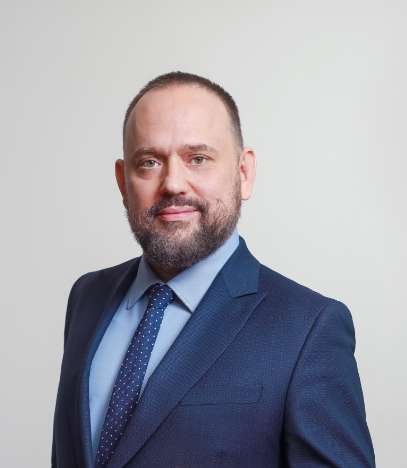
Robert Nogacki is a Polish attorney at law (radca prawny), the founder and managing partner of Kancelaria Prawna Skarbiec (Skarbiec Law Firm), which has operated continuously since 2006.
The law is equal for everyone, but the parties rarely are: on one side stands an organization with time, money, and lawyers, on the other a person with one business, one nest egg, and one life.
Clients rarely come to him with a legal problem. They come with a problem that also has a legal side: an audit that began with a single invoice, money entrusted to someone who has disappeared, a company that has to be passed on before it is too late. Most such matters are decided long before the first letter is written, in decisions made without asking and in deadlines nobody remembered. So he begins by asking how the client got here, not what the client should have done.
He advises entrepreneurs and families from more than a dozen countries, including those whose accounts the tax office has just seized and who do not know what to do tomorrow morning. He defends them in tax audits, customs and fiscal inspections, disputes with the tax authorities, and criminal tax proceedings. He represents victims of investment fraud and Ponzi schemes. He helps families set up family foundations and plan succession, so that a life’s work outlasts a single generation.
Not every case can be won. Every case can be run so that the client knows where they stand. Since 2006 he has represented the victims in the WGI case (Warszawska Grupa Inwestycyjna, the Warsaw Investment Group), one of the longest criminal cases in the history of the Polish financial market, because some things must not be left half finished, even when they take two decades. In the case of the collapsed cryptocurrency exchange Zonda (Zondacrypto, operated by BB Trade Estonia OÜ), he represents several hundred victims in the criminal investigation conducted by Poland’s National Prosecutor’s Office and in the Estonian bankruptcy proceedings.
Kancelaria Prawna Skarbiec is listed in the rankings of Poland’s largest tax advisory firms published by Dziennik Gazeta Prawna and Rzeczpospolita, and it is a four-time recipient (2015 to 2018) of the European Medal awarded by the Business Centre Club and the European Economic and Social Committee. Robert Nogacki publishes regularly, in the press and on the firm’s website, for people who have a problem rather than a law degree, because a legal opinion the client cannot understand protects only the lawyer.
He believes that the best legal advice is the kind that means the client never has to appear in court.