The Fire Was for the Camera: Inside Iran’s Propaganda Machine
A newly unsealed federal indictment offers a rare look inside the machinery of Iranian-aligned terror, and a discomfiting proposition: that the propaganda is not the residue of the operation but the operation itself.
On the night of April 18th, in London, a synagogue was set alight. The act was crude. The staging was not. Far away, on a screen, several men were watching the fire catch, in real time, over a video call, the picture framed against the logo of their organization. One of them, in English, was talking the attacker through it—light one in your hand, light it, throw the fourth one—the way a director talks an actor through a take. The footage that resulted was not a record of the attack. It was the attack’s product. The fire had been lit so that the recording could exist.
We are accustomed to thinking of terrorist propaganda as exhaust: first the violence, then the video, then the boast. An eight-count indictment unsealed in late May, in the Southern District of New York, proposes the opposite. The propaganda is not the residue of the operation. It is the operation.
◆
The defendant is Mohammad Baqer Saad Dawood Al-Saadi, thirty-two, a dual Iranian-Iraqi national whom the government calls a commander in Kata’ib Hizballah—an Iraqi militia that the United States designated a foreign terrorist organization in 2009, and that operates, the filing says, hand in glove with Iran’s Islamic Revolutionary Guard Corps. (The charges are accusations; Al-Saadi is presumed innocent until a jury says otherwise.) Analysts who have traced his career read him as something subtler than a brigade commander—an Iran–Quds Force asset who moved across several militias without holding formal rank in any of them, which is to say a man closer to Tehran than to any single Iraqi unit.
To read the indictment, it helps to know the dead man at its center. Qasem Soleimani commanded the Quds Force, the I.R.G.C.’s expeditionary arm and the instrument through which Tehran runs its constellation of proxies—what the Iranians call the Axis of Resistance, a network of militias seeded across the region since the 1979 revolution. In January of 2020, an American drone strike in Baghdad killed Soleimani and Abu Mahdi al-Muhandis, the leader of Kata’ib Hizballah, in the same instant. Iran has been promising to avenge them ever since; the president at the time vowed “harsh revenge,” and the judiciary went so far as to name ninety-six Americans, the President among them, as “suspects” in the killing.
Al-Saadi’s connection to that morning is not abstract. He told the F.B.I. agents who later flew him to New York that he had been “like a son” to Soleimani, that he traveled with him constantly, and that he had been meant to drive the general to his meeting with al-Muhandis on the day the missile found them both. He missed, by the accident of a schedule, being in the car. On every platform he uses—an X account, a Telegram channel, the WhatsApp account registered to his phone—his profile picture is the same: himself, beside the dead general. A man can build an entire vocation on a near miss, and this one, apparently, did.
He was not, the open-source record suggests, only a publicist. Before the war he is said to have run drone-procurement networks for Iraqi militias—the kind of logistics that leave an operative with contacts and infrastructure across borders—and, during Iraq’s 2019 protests, to have helped run a cell that hunted civil-society activists. He traveled, the same record notes, on an Iraqi service passport, the document of a man the state calls one of its own. The prosecution leaves the detail alone, and it sits uneasily beside the theory of a freelancer: the deniability the whole enterprise exists to manufacture may, in his case, have begun at a government passport office.
By the government’s account, the war that gave him his opening began on February 28, 2026, when the United States and Israel struck Iran and killed its Supreme Leader; in the weeks that followed, Al-Saadi set about answering it. He was detained in Turkey at the start of May—the day after, prosecutors say, he called a contact in the United States to ask whether the man knew anyone who could “attack” here, “by burning,” or “whatever he can,” including “killing.” Two weeks later he was flown to New York. Somewhere over the Atlantic, having waived his right to remain silent, he began to explain himself.
◆
The idea that an act can be a message—louder than any pamphlet—is not new. In the eighteen-seventies, anarchist theorists gave it a name: propaganda of the deed. A spectacular act of revolt, they argued, would rouse the masses more effectively than any tract; the deed spoke for itself, at once the event and the text. Paul Brousse coined the phrase, Kropotkin and Malatesta carried it forward, and a long season of bombings and assassinations followed.
What the indictment describes is a mutation of that idea, and a consequential one. The deed no longer speaks for itself. The deed is staged in order to be recorded. Violence has been demoted to raw material—the feedstock from which the actual product, the image, is then manufactured. The distinction is subtle, and it is total. The old doctrine held that the act was the message. The new one holds that the act exists for the camera. The call from London is the literal proof: the commander is not documenting the attack so much as directing it, the arson cued to the broadcast.
◆
He had, in any case, been in the business a long time. The spring campaign did not spring from nowhere. For years Al-Saadi had run a one-man content studio, posting from a verified account that listed its location, with some nerve, as the United States, to a following that never exceeded eleven hundred. The reach was modest; the persistence was not. He posted the U.S. Capitol in rubble (“our revenge for the martyred leaders is ongoing”). He posted the President’s face inside a rifle’s crosshairs. He posted the President golfing beneath the shadow of a B-2 bomber. Beside a photograph of himself with Soleimani, in 2021, he wrote, “An eye for an eye, a tooth for a tooth, and coming to Washington and Florida”—Washington and a Florida residence, named five years before he would try to make good on it.
The most revealing genre in his catalogue is the farewell. Every so often Al-Saadi announces that he is finished—that he will “turn off all my phones until the American enemy is defeated,” that it is “victory or martyrdom.” In July of 2025 he published a long, keening elegy for fallen Guard officers and signed off: “I will not carry the phone after this tweet … This is the last tweet.” It was not the last tweet. The performed disappearance, the staged martyrdom that is itself a post—here is a man for whom even grief is a production, and the camera never quite gets switched off.
◆
Which brings us to the question of authorship. Responsibility for the London synagogue, and for some twenty other attacks across Europe this spring, was claimed by an outfit billing itself as new and independent: Harakat Ashab al-Yamin al-Islamiya, the Islamic Movement of the Companions of the Right, with its own logo and its own founding statement. The indictment’s case is that it is nothing of the kind—a front, a brand stood up to do the work of Kata’ib Hizballah while wearing a different face. Outside analysts reached the same verdict within weeks, calling it a “fabricated front,” and, in one assessment, a model best summed up as “deniable, disposable, disruptive.”
The evidence for the disguise is almost forensic. The new logo is a near-cousin of Kata’ib Hizballah’s and Hezbollah’s. The founding statement went out over the same channels—the established organs of the Shiite militant world—that Kata’ib Hizballah, Hezbollah, and the I.R.G.C. have used for years. The most damning detail is one of timing: Al-Saadi posted the group’s founding statement to his own Snapchat more than four hours before it surfaced publicly. That is not the footprint of a sympathizer reposting a manifesto; it is the footprint of its author. And the tempo of what followed says the rest. A group only days old was somehow able, in the filing’s phrase, “essentially overnight,” to switch on cells across Europe and carry out more than a dozen attacks in a matter of weeks. That is not something one improvises. You cannot activate twenty cells from a standing start unless they are already there, wired and waiting. The novelty of the brand is the surest proof of the antiquity of the network beneath it.
This is the logic of proxy war, and its central tension. A state that stands behind an attack needs two incompatible things: deniability, so that it cannot be blamed, and credit, so that the violence does its political work. A new name is the device built to hold both at once—to let the sponsor take the bow while keeping its distance from the stage. The indictment, in effect, shows the device failing. The very infrastructure assembled to broadcast the message betrayed the connection it was meant to hide.
◆
The most instructive passage in the document is the one that upends a Western assumption. Within “the resistance”—his term for the I.R.G.C. and its proxies—Al-Saadi told the agents that he was responsible for media and psychological warfare, and also for strategy and military intelligence. Not three jobs. One. The man in charge of the propaganda is the commander.
We are fond, in the West, of filing information operations under support—a communications shop bolted to the “real” business of fighting. The architecture here inverts the order. It is the armed act that serves the message. Al-Saadi called the attack videos “psychological warfare,” meant, he said, to “instill fear and terror” in civilians, and he put the point with disarming economy: anything that distracts the enemy is useful. The whole enterprise is in that sentence. An attack is useful to the degree that it yields an image; the image is useful to the degree that it presses on a civilian and political audience. When he pushed a clip to a Kata’ib Hizballah contact, the instruction was an assignment editor’s: post it in the news—important.
Two details fix his role as producer rather than fan. The attack videos he posted were not, at the moment he posted them, available anywhere else; he had the raw footage before it surfaced. And he was running not one operation but, as he said on a recorded call, “multiple teams”—a claim the indictment corroborates by noting that a different hand carried out each European attack. There is, too, a photograph from February of 2024: Al-Saadi in a conference room he later described as a military-intelligence facility, standing before a rack of machine guns, a map of the United States on the wall behind him and, beside it, a list of “legitimate targets” naming prominent American officials. The studio, it turns out, kept a kill list on the wall.
◆
Then there is the form of the thing, where the machinery shows its kinship with advertising. The materials are full of clocks. A frozen frame holds a counter at 23:59:58. A poster reads “72 HOURS,” over the words “TIME IS RUNNING OUT.” A graphic titled “European Frontier” sets a map of Europe above a twenty-four-hour countdown. This is the grammar of the movie trailer and the limited-time offer—manufactured urgency, the most reliable lever in the kit. Loss aversion, harnessed to terror: the clock does not inform; it coerces.
The bilingualism is its own tell. Some messages are in Arabic, some in English, and a “Final Warning” is addressed, pointedly, “to all the peoples of the world, especially in the European Union.” Two languages, two audiences. The Arabic is for adherents and recruits. The English is for the victim—a Western public to be frightened into a particular politics, the explicit aim being to compel the United States and Israel to stop their war on Iran. Which is, more or less, the dictionary definition of terrorism: the coercion of a government through fear sown in a population. The studio could also run a trailer for itself; before two operatives tried to plant a device at the Bank of America building in Paris, the group published a video previewing an attack on that very site.
Not all of the output is so disciplined. One seventy-two-hour ultimatum curdled into a page of personal invective against the President and his family—the sort of thing better characterized than quoted. And the operational signals hide, as they always do, in plain sight: cell-activation codes (“Badr 1 – Badr 2 – Khaybar 14,” the names of ancient battles; strings like R362, C357, A351) nested among Quranic verses, so that a command reads as a prayer. When one of the group’s Telegram accounts was shut down, it simply migrated onto the established Axis-of-Resistance feeds and kept broadcasting—the distribution network, once again, older and deeper than the brand it served.
◆
And then the books open. The economics, when they surface on the recorded calls, are startlingly industrial. What emerges is a contract model. The price for an attack in the United States was ten thousand dollars—three thousand up front, in cryptocurrency, the balance on completion, payment to be initiated by a QR code and a wallet address. The labor was to be subcontracted, through a middleman who claimed to have located a willing member of a Mexican cartel.
The most telling clause is the warranty. Al-Saadi laid it out, allegedly, in the flat idiom of commerce: if the job gets done, good; if not, “I get my money back. This is how the deal is.” Terror priced like a contract, with a refund clause. There was a volume option, too—he offered to wire the full ten thousand in a single transaction if the operative could “set the three locations on fire at the same time”—and a market analysis to go with it. Europe, he explained, was running itself: “things are working for us here in Europe,” “we really don’t need anything.” It was the United States and Canada that mattered, that were “very, very important.” A saturated market and a growth market, discussed like quarterly territories.
The targets were specified with a project manager’s care. He sent the undercover officer a photograph and a map pinpointing a Manhattan synagogue, with a document describing its congregation as supporters of “the right for Israel to exist,” and then two more: Jewish centers in Los Angeles and in Scottsdale, Arizona, annotated as “staunch supporters of Zionism.” (His teams in Canada, he noted on another call, had already managed “the consulate and the Knesset”—a U.S. consulate and a synagogue.) Then came the line that gives the whole logic away. Asked whether he wanted a bombing or a fire, he said he had no objection to starting with fire, but that what mattered “most” was that “the incident … be recorded.” The footage, for an attack that had not yet happened and never would, was already the deliverable.
What followed reads, queasily, like project management; the impatience is corporate, the object is not. “Will the operation be today or tomorrow,” he texted. Then: “the operation needs to happen TODAY … It’s important that it’s done tonight … We have more important work to do but this needs to be done first.” And, finally, in the register of a man chasing a late vendor: “I wanna see good news tonight … not tomorrow bro.” The operative, who was an F.B.I. employee, sent back a video of police on the synagogue’s block. The good news never came. Days later, Al-Saadi was still asking why the job had not been done.
◆
If the footage was the product, the labor was just as disposable. The hands that actually lit the fires were, by the evidence now assembling across Europe, not ideologues at all but petty criminals and teenagers recruited on Snapchat and Telegram for small cash payments and low-skill arson—a “gig-economy proxy group,” as one research outfit dryly put it, terror let out to contract labor, down to the refund clause. The Washington Institute, which has traced the pattern, counts the arrests so far in the dozens across at least four countries, among them boys aged fourteen to seventeen. The design is sinister precisely because it is cheap: an operative with no belief leaves no trace of belief—no manifesto, no sermon, nothing for the conventional radar to catch. It is the logic of the disposable image extended to the human being: use once, discard, and let the footage do the lasting work.
◆
The single best illustration of the thesis, though, is a gap between what was claimed and what was true. On April 16th the group announced that its members had struck the Israeli Embassy in London with drones loaded with “dangerous, carcinogenic and radioactive” material. The next day, police recovered, near the embassy, the wreckage of a drone and two jars of powder. The powder was harmless.
There it is, in miniature. The message outran the reality. The propaganda proclaimed something like a dirty bomb; the operational capacity came to a sprinkle of inert dust. The threat was produced for effect, not built from means—and the production values had been laid in days ahead. Two days before the public claim, Al-Saadi received the raw footage of men in hazmat suits, the group’s logo taped to each, posed beside a drone rigged with vials. Hazmat suits as costume. In the older terrorism, what counted above all was the blast radius. In the model the indictment describes, what counts is the radius of the image—and the image of a radioactive drone does its work whether the jars hold a hazard or flour.
The machine generates not only footage but justification; every atrocity arrives pre-captioned. A London charity was hit because its founder had once served in the Israeli army. A London media outlet was chosen for its “financial ties with Israel and Saudi Arabia.” The video of a firebombed Israeli restaurant in Munich carried the note that it “could have happened during the day”—the menace dressed as regret. And among the targets was one that no caption can launder: four ambulances belonging to Hatzalah, the volunteer service that runs emergency medical care for Orthodox Jewish communities. The studio annotated even that.
It keeps up sacred appearances throughout. The order activating the cells went out under the heading “Shadow soldiers,” its codes tucked among scripture so that an instruction sounds like devotion. Even the bio on Al-Saadi’s account is pitched in the key of moral counsel—what is forbidden remains forbidden, it advises, “even if everyone else is doing it.” That, too, is manufacture: the production of meaning, to wrap the production of fear.
◆
The legal scaffolding is, by the standards of American counterterrorism, conventional—conspiring to provide “material support” to designated terrorist organizations, attempting an act of terror transcending national boundaries, conspiring to bomb a place of public use, destroying property by fire. What rewards a pause is the jurisdiction. A provision of the federal code lets prosecutors reach offenses begun outside the territory of any state; the tether to Manhattan is the rule of where a defendant is “first brought,” together with the targeting of Americans. In practice, the United States is reaching across an ocean to claim attacks that happened in Liège and Rotterdam and Amsterdam and Paris.
And here a gap opens, the kind a careful reader notices. Nearly all of these statutes—American and, for that matter, European—are aimed either at the armed act or at “content” imagined as a single post. The machinery is neither. It is a line: the staging of the violence, the filming, the editing, the distribution over captured channels, the pricing of the contract, all one continuous technology. American law already strains here: since Holder v. Humanitarian Law Project, in 2010, even speech can count as material support when it is “coordinated with” a terrorist organization, but no court has had to decide how tightly propaganda-for-hire must be directed to clear that bar, and the indictment’s quiet theory—that the producer of the footage is himself a supporter of terror, upstream of any single arsonist—is novel enough to invite a serious fight. A law that cuts the line into pieces—support here, content there, financing somewhere else—will catch the links and miss the factory. Which is the lesson for anyone who studies influence operations: do not analyze the message and the violence as two things. They are one supply chain. The attack is filmed because the film is the product.
Al-Saadi’s case will be settled, as they all are, by a judge and a jury, and he keeps the presumption of innocence until a verdict takes it from him. The Justice Department plainly intends it as a message of its own: prying him out of Turkey was, by one assessment, an unusually aggressive reach for an Iraqi militia figure, a signal that the distance the network buys may no longer be reliable. But the machine the document describes will outlast the prosecution, because its logic is repeatable and its raw material—grievance, and the men willing to act on it—is not in short supply. He said as much himself, on one of the recorded calls, planning the American attacks his arrest would soon foreclose. It is the closest thing the enterprise has to a mission statement. “This war will not end,” he said. “Either they eradicate us, or we eradicate them.”
Further reading
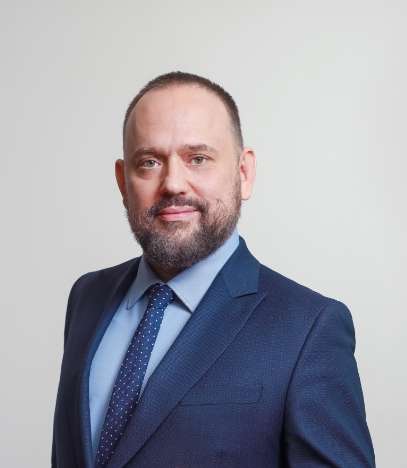
Robert Nogacki is a Polish attorney at law (radca prawny), the founder and managing partner of Kancelaria Prawna Skarbiec (Skarbiec Law Firm), which has operated continuously since 2006.
The law is equal for everyone, but the parties rarely are: on one side stands an organization with time, money, and lawyers, on the other a person with one business, one nest egg, and one life.
Clients rarely come to him with a legal problem. They come with a problem that also has a legal side: an audit that began with a single invoice, money entrusted to someone who has disappeared, a company that has to be passed on before it is too late. Most such matters are decided long before the first letter is written, in decisions made without asking and in deadlines nobody remembered. So he begins by asking how the client got here, not what the client should have done.
He advises entrepreneurs and families from more than a dozen countries, including those whose accounts the tax office has just seized and who do not know what to do tomorrow morning. He defends them in tax audits, customs and fiscal inspections, disputes with the tax authorities, and criminal tax proceedings. He represents victims of investment fraud and Ponzi schemes. He helps families set up family foundations and plan succession, so that a life’s work outlasts a single generation.
Not every case can be won. Every case can be run so that the client knows where they stand. Since 2006 he has represented the victims in the WGI case (Warszawska Grupa Inwestycyjna, the Warsaw Investment Group), one of the longest criminal cases in the history of the Polish financial market, because some things must not be left half finished, even when they take two decades. In the case of the collapsed cryptocurrency exchange Zonda (Zondacrypto, operated by BB Trade Estonia OÜ), he represents several hundred victims in the criminal investigation conducted by Poland’s National Prosecutor’s Office and in the Estonian bankruptcy proceedings.
Kancelaria Prawna Skarbiec is listed in the rankings of Poland’s largest tax advisory firms published by Dziennik Gazeta Prawna and Rzeczpospolita, and it is a four-time recipient (2015 to 2018) of the European Medal awarded by the Business Centre Club and the European Economic and Social Committee. Robert Nogacki publishes regularly, in the press and on the firm’s website, for people who have a problem rather than a law degree, because a legal opinion the client cannot understand protects only the lawyer.
He believes that the best legal advice is the kind that means the client never has to appear in court.