
Private Equity and Venture Capital
Charles Darwin did not claim that the strongest survive. He claimed that the best adapted survive. In the Private Equity ecosystem, this principle operates with brutal precision.
When capital is cheap and abundant, funds multiply. When capital grows expensive and dries up, those remain who have cash, experience, and patience. The rest become prey or disappear.
This is not pessimism. It is a description of a mechanism that operated in 2008, operated in 2020, and will operate in every subsequent cycle. Those who understand this mechanism can exploit it. Those who do not will become its victims.
- Further reading: All or Nothing: Negotiation Strategies Employed by Private Equity Funds
Anatomy of a Predator
A Private Equity fund is a transformation machine. It buys a company in one state, transforms it, and sells it in another—better, more valuable, more efficient.
Between purchase and sale, everything happens: operational restructuring, cost optimization, management replacement, market consolidation, geographic expansion. The fund is not a passive investor. It is an operator that enters and changes.
This transformation requires legal tools at every stage. Entry transaction structure. Management agreements. Incentive programs. Debt financing. Add-on acquisitions. And finally—the exit that closes the cycle and realizes the return.
Keynes on Animal Spirits
John Maynard Keynes wrote of “animal spirits”—the irrational forces that drive investment decisions. The optimism that compels buying at the peak. The fear that compels selling at the bottom.
Private Equity attempts to be the antithesis of animal spirits. Long horizons, cold calculation, decisions based on models rather than emotions. But funds are also run by people—and people also succumb to animal spirits.
The best transactions arise when a fund keeps its head while the market panics. When it buys assets others are dumping in fear. When it sees value where others see risk.
This requires discipline—and documentation that permits swift action when opportunity appears.
- Furter reading: Corporate Control Litigation. On hostile takeovers, boardroom warfare, and the eternal question of corporate control
Both Sides of the Table
We represent both sides of PE/VC transactions—and understand the perspective of each.
The fund’s side: Due diligence on targets. Transaction structuring. Entry documentation. Agreements with founders and management. ESOP/MSOP programs. Acquisition financing. Portfolio management. Exit preparation.
The company’s/founders’ side: Preparation for the round. Term sheet negotiations. Protection of founder rights. Terms for staying with the company. Limiting dilution. Protection against drag-along. Planning one’s own exit.
These perspectives are different—sometimes conflicting. But knowledge of both allows us to build transactions that work for all parties.
Schumpeter and Creative Destruction
Joseph Schumpeter described capitalism as a process of creative destruction—the constant tearing down of old structures so that new ones may arise. Private Equity is an instrument of this destruction.
The fund enters a company that has stalled. It changes what is not working. Sometimes gently—sometimes brutally. It dismisses people, closes divisions, sells assets. And then it builds something new on the ruins of the old.
This is not a painless process. But it is a process that—when executed well—creates value. The company after transformation is worth more than before. The market operates more efficiently. Capital flows to where it is best utilized.
Law accompanies this destruction and construction. It structures layoffs, protects against claims, documents changes, secures new structures.
What We Do for Funds
Legal due diligence. Before the transaction—what are you buying? What risks? What liabilities? Where are the mines that could explode after closing?
Transaction structuring. SPA, SHA, financing documentation, conditions precedent, pricing mechanisms (locked box, completion accounts, earn-out).
Portfolio management. Ongoing service for portfolio companies. Corporate governance. Compliance. Add-on transactions. Refinancing.
Restructurings. When a portfolio company has problems—turnaround plan, negotiations with creditors, restructuring proceedings, sometimes controlled insolvency.
Exit preparation. Vendor due diligence. Sale structuring. Documentation for the buyer. Negotiations with strategic acquirers or the next fund.
Taleb on Antifragility
Nassim Taleb described antifragile systems—those that grow stronger under stress. A well-managed PE fund can be antifragile: crises eliminate competition, lower target valuations, create opportunities.
But antifragility requires preparation. Cash that allows survival and acquisition. A structure that does not crack under pressure. Documentation that permits rapid action.
Funds that survived 2008 emerged from the crisis stronger. Funds that survived 2020 built portfolios at multi-year lows. This was not accident—it was preparation.
Venture Capital — A Different Species
VC is not smaller PE. It is a different species of animal.
Horizon: PE buys mature companies and transforms them over three to five years. VC enters early and waits longer—sometimes a decade.
Risk: PE minimizes risk through due diligence and control. VC accepts high risk in exchange for the potential for exponential growth.
Control: PE typically acquires a majority or the entirety. VC enters as a minority shareholder—but with rights that provide real influence.
Return: PE seeks stable two-to-three-times returns on capital. VC seeks outliers—individual companies that return the entire fund.
These differences have legal consequences. VC documentation differs from PE. Investor rights differ. Protective mechanisms differ. Negotiation dynamics differ.
What We Do for Startups
Preparation for the round. Company structure, cap table, legal clean-up. Before the fund begins due diligence—put your house in order.
Negotiations with VC. The term sheet is not a formality—it is the moment when the framework takes shape. We defend founder rights, limit dilution, negotiate vesting terms.
Round documentation. SHA, new articles of association, issuance documents. Everything that closes the round and defines relationships for years to come.
Subsequent rounds. Series A after seed, B after A. Each round shifts the balance of power. We ensure founders do not give up more than they must.
Bridges and down rounds. When reality does not meet projections—bridge financing, rounds at lower valuations. Difficult situations, but not hopeless ones.
Jensen and the Agency Problem
Michael Jensen described the conflict of interest between owners and managers. The manager maximizes their own utility, not the firm’s value. This is not a moral accusation—it is a structure of incentives.
Private Equity solves the agency problem through alignment. Management receives shares that have value only if the company grows. Management equity, options, phantom shares—tools that make the manager think like an owner.
But these tools require precise design. Vesting, cliff, good leaver / bad leaver, valuation mechanisms—everything must be clearly documented, because conflicts arise precisely where documentation is unclear.
Cycles and Timing
Howard Marks, an investing legend, repeats: you cannot predict the cycle, but you can recognize where in the cycle you are.
Peak of the cycle: high valuations, easy capital, aggressive competition for targets. Funds overpay because they fear missing the opportunity.
Bottom of the cycle: low valuations, difficult capital, market panic. Those with cash and courage buy assets for a fraction of their value.
Entry timing determines return. A fund that bought at the 2007 peak counted losses for years. A fund that bought at the 2009 bottom realized multiples.
Law does not change the cycle—but it allows swift action when opportunity appears. Documentation prepared in advance. Processes rehearsed. Decisions that can be made in days, not months.
In Closing: Patient Capital
Warren Buffett said that the stock market is a mechanism for transferring wealth from the impatient to the patient.
Private Equity is patient capital. It does not react to quarterly fluctuations. It does not sell in panic. It waits until the transformation is complete, until value is realized, until the right moment for exit arrives.
This patience requires structure—legal, financial, organizational. It requires documentation that survives years and changing circumstances. It requires partners who understand the horizon.
We accompany funds and companies through those years. From the first term sheet to the final exit. From seed round to IPO. From acquisition to integration.
Because in Private Equity and Venture Capital, law is not a formality to be checked off. It is the infrastructure on which value is built.
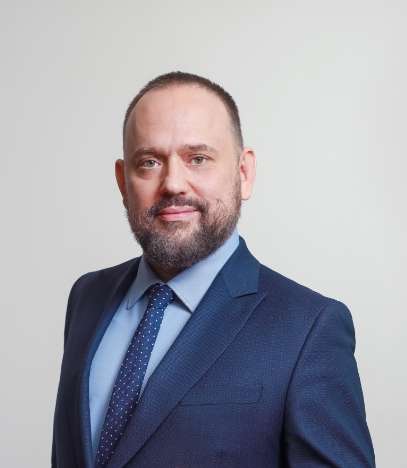
Robert Nogacki is a Polish attorney at law (radca prawny), the founder and managing partner of Kancelaria Prawna Skarbiec (Skarbiec Law Firm), which has operated continuously since 2006.
The law is equal for everyone, but the parties rarely are: on one side stands an organization with time, money, and lawyers, on the other a person with one business, one nest egg, and one life.
Clients rarely come to him with a legal problem. They come with a problem that also has a legal side: an audit that began with a single invoice, money entrusted to someone who has disappeared, a company that has to be passed on before it is too late. Most such matters are decided long before the first letter is written, in decisions made without asking and in deadlines nobody remembered. So he begins by asking how the client got here, not what the client should have done.
He advises entrepreneurs and families from more than a dozen countries, including those whose accounts the tax office has just seized and who do not know what to do tomorrow morning. He defends them in tax audits, customs and fiscal inspections, disputes with the tax authorities, and criminal tax proceedings. He represents victims of investment fraud and Ponzi schemes. He helps families set up family foundations and plan succession, so that a life’s work outlasts a single generation.
Not every case can be won. Every case can be run so that the client knows where they stand. Since 2006 he has represented the victims in the WGI case (Warszawska Grupa Inwestycyjna, the Warsaw Investment Group), one of the longest criminal cases in the history of the Polish financial market, because some things must not be left half finished, even when they take two decades. In the case of the collapsed cryptocurrency exchange Zonda (Zondacrypto, operated by BB Trade Estonia OÜ), he represents several hundred victims in the criminal investigation conducted by Poland’s National Prosecutor’s Office and in the Estonian bankruptcy proceedings.
Kancelaria Prawna Skarbiec is listed in the rankings of Poland’s largest tax advisory firms published by Dziennik Gazeta Prawna and Rzeczpospolita, and it is a four-time recipient (2015 to 2018) of the European Medal awarded by the Business Centre Club and the European Economic and Social Committee. Robert Nogacki publishes regularly, in the press and on the firm’s website, for people who have a problem rather than a law degree, because a legal opinion the client cannot understand protects only the lawyer.
He believes that the best legal advice is the kind that means the client never has to appear in court.