Why Was a Polish Crypto C.E.O. Collecting Offers for Mortars, Submarines, and Gold?
The founder of Poland’s largest bitcoin exchange led two parallel lives. Polish prosecutors have spent four years not asking why.
“Dear Sylwester, attached is a list of ammunition in practically every caliber. If you don’t see the product you’re after, just ask.” So began, according to a morning report by the Polish broadcaster TVN24, one of the e-mails that Sylwester Suszek, the founder of the cryptocurrency exchange BitBay, received in 2019 and 2020 from a Spanish “businessman” who signed himself Javier Gomez. In the messages that followed, the catalogue grows to the dimensions of a medium-sized arms-and-commodities conglomerate. Bulletproof vests from Colombia, tested against .44 Magnum rounds. Explosives. Mortar systems. Armored vehicles. Miniature submarines and unmanned surface vessels. High-resolution maritime cameras of the Turret variety. LiDAR systems.
And, running beneath all of that, a complete gold-refining chain. Extraction in the Democratic Republic of the Congo. Refining in Cyprus and Oman. Bars ready for distribution across Europe. In the background, marijuana cultivation halls in the Swiss town of Spreitenbach, with planned expansion to Gran Canaria and Colombia, sent to Suszek with photographs and video—appended with a note that the project enjoyed “government alliances and the support of the authorities.”
Some of these e-mails Suszek forwarded onward. To his then-lawyer, Przemysław Kral. In the subject line, he wrote a single word: “IMPORTANT.”
That same Przemysław Kral is, to this day, the chief executive of Zondacrypto.
The first step a prosecutor takes when the head of an exchange handling billions disappears is to secure his correspondence. This is not a hypothesis. It is procedure, drawn directly from Article 218 § 1 of the Polish Code of Criminal Procedure. The telecommunications operator and the e-mail service provider are obliged to surrender the records. It is done in the first days, because data gets wiped and servers get cleared.
So, from March, 2022, Polish law enforcement knew, or could easily have come to know. Who had been writing to Suszek. What had been written. That Suszek had selected those e-mails, internally tagged them “IMPORTANT,” and forwarded them to his lawyer. That the same lawyer, three months before Suszek’s disappearance, had become the chief executive of the Estonian company servicing the exchange’s Polish clients.
And yet, for the next four years, Zondacrypto continued to operate on the Polish market. It continued to advertise on football stadiums. It continued to accept deposits from pensioners, schoolteachers, and family men who wanted to buy their first bitcoin. The overwhelming majority of the complaints now reaching the Regional Prosecutor’s Office in Katowice concern payments made after March, 2022.
The TVN piece does not state outright where the e-mails came from, or whether law enforcement was in possession of them. But if journalists were able to obtain them, what difference does it make?
What does the chief executive of a cryptocurrency exchange need with mortar systems?
This is the question of the title. It is worth pausing on, because in TVN24’s coverage no one has yet asked it outright.
A client of a legal cryptocurrency exchange needs three things. A financial-supervision license. An I.T. infrastructure with proper cold-storage architecture. A settlement bank willing to work with him. He does not need mortars. He does not need armored vehicles. He does not need miniature submarines. He does not need bulletproof vests tested against .44 Magnum rounds. He does not need marijuana halls in Swiss Spreitenbach with expansion plans for Gran Canaria “with government alliances.”
A set of items like that, however, is needed by someone else. And here it is worth slowing down, because the Gomez catalogue is not random.
Submarines and unmanned vessels are for transporting goods through territorial waters without having to explain oneself to the coast guard. High-resolution Turret-technology maritime cameras, used by border services, are for monitoring who is watching. LiDAR systems map coastlines down to the centimeter; very practical, if one wishes to unload something without witnesses. Bulletproof vests and armored vehicles are the standard kit of convoys. Explosives and mortar systems belong to a task of an entirely different scale—the kind that calls for defense against a state, or against a competing organized group.
The whole catalogue has one common feature. It is not civilian. It is paramilitary. It is the procurement profile of an entity that moves goods, protects them, monitors the competition, and possesses the capacity to respond to threats with force exceeding ordinary personal protection. In the technical literature, such an entity has a name. The FATF calls it a “transnational organized criminal organization.”
What such an entity does with a cryptocurrency exchange is described by the FATF itself, in successive editions of its typology: in 2014, in 2020, and—in the European context—in MONEYVAL’s December, 2023 report. A cryptocurrency exchange is, for an organized group, what a money-changing booth was for the mafias of the nineteen-nineties. The point at which cash meets the digital system. The point at which dirty money becomes a clean ledger entry. The point that has to be controlled from above, if the scale of operations exceeds a single transaction.
The red flags that the FATF lists in its 2020 typology read today like a précis of Suszek’s correspondence. Contacts with high-risk jurisdictions (the D.R.C., Colombia, the U.A.E.). Dual-use equipment (paramilitary). The mixing of legal business (gold, real estate) with illegal (drugs, weapons). A multi-jurisdictional offshore structure with a license in a jurisdiction of weak supervision—Estonia, before MiCA came into force, one of one thousand four hundred and forty-seven VASP licenses issued in a span of one to two weeks, identified in MONEYVAL reports as a sector “exposed to high money-laundering risks.” The Gomez catalogue is not random. It is the procurement profile of a group that needs both a fiat-to-crypto on-ramp and the physical capacity to move and protect goods.
The gold-refining chain sent to Suszek—extraction in the Democratic Republic of the Congo, refining in Cyprus and Oman, distribution in Europe—is not an exotic combination. It is the standard route for conflict gold described by The Sentry, SWISSAID, and the O.E.C.D. According to The Sentry’s estimates, roughly ninety-five per cent of the gold exported from East and Central Africa passes through the United Arab Emirates; Oman serves the same trading zone. Gold, today—as the UNODC documents in its 2025 report, and as Interpol described in 2021 with regard to Central Africa—is, in some Latin American jurisdictions, a more lucrative subject of organized crime than cocaine. My own piece, “The Golden Pipeline,” on the portal pranie-brudnych-pieniedzy.pl, describes the same mechanism from the vantage of a Polish anti-money-laundering authority.
The question is no longer why people connected to the arms and drugs trades write to the chief executive of a Polish cryptocurrency exchange. The question is why the Polish state, not once, has publicly signaled that the current chief executive of that exchange is the same man to whom Suszek forwarded those e-mails.
The Two Sylwester Suszeks
In the same 2020 in which Sylwester Suszek was receiving offers for weapons and marijuana from Javier Gomez, the Polish press was calling him “the king of bitcoin.” “The son of a coal miner who built a bitcoin exchange worth billions.” “An ordinary boy from Piekary Śląskie who, in five years, had built a financial empire.”
In the same 2020 in which Gomez was sending Suszek photographs of halls containing dozens of kilos of marijuana, Suszek was giving interviews to the financial news site Comparic. “I am convinced that Bitcoin is digital gold.” In the same 2020 in which Spanish authorities were arresting his acquaintance in Marbella, Suszek went on Facebook live to say that TVN’s “Superwizjer” report on his alleged ties to organized crime was “a total fabrication,” and that he himself “had a clean criminal record.” In the same 2020 in which e-mails were arriving for Suszek signed by a man who introduced himself, in his opening lines, as a veteran of the Colombian jungle and of mining bases in the Congo, Suszek was telling Polish journalists that his firm had “educated law enforcement” in the fields of A.M.L. and K.Y.C.
Two Sylwester Suszeks existed in 2020, in parallel. One spoke to the Polish media of digital gold and hard work. The other was receiving, from Colombian intermediaries, offers for “diverse weapons systems adapted to contemporary operational scenarios,” and forwarding them to his lawyer with a single word in the subject line: IMPORTANT.
In any other industry, two parallel lives would draw attention. In the crypto industry of the 2018–2022 period, they did not, because the crypto industry of the 2018–2022 period was built on precisely this principle. A legal façade on the outside. A network of high-risk contacts within.
The most humbling lesson from today’s TVN24 piece is not what Gomez wrote. The most humbling lesson is that Suszek did not hide the correspondence. He forwarded it to his lawyer. From a Polish server to a Polish server. By ordinary e-mail. Without end-to-end encryption, without disappearing-message apps, without a diplomatic courier. Like a man who has no sense that he is doing anything he ought to fear.
Four Years of Silence
Four years in which Zondacrypto advertised on football club jerseys. Four years in which Kral, its chief executive, spoke at industry conferences. Four years in which the company ran its Convention with the participation of Polish state officials. Four years in which the Polish pensioner, the Polish schoolteacher, the Polish family man opened an account on an exchange whose chief executive—the successor and the recipient of the “IMPORTANT” e-mails—had long been in law enforcement’s field of interest, but had never been publicly flagged as someone associated with so dramatic a level of risk.
The April installment of this series posed the question whether Suszek’s disappearance in March, 2022, was not, in fact, a prepared exit on the model of Jan Marsalek. The hypothesis now deserves modification. TVN24’s piece of May 25th shifts the center of gravity from Suszek to a third party—and, in doing so, changes the geography of the entire narrative.
In April, I wrote about Marsalek as an analogy. The Marsalek case, from today’s perspective, requires recapitulation, because only in full light does it show why the analogy to Suszek is at once tempting and unfinished.
On June 19, 2020, Jan Marsalek, the chief operating officer of the German fintech Wirecard AG, boarded a private plane at Bad Vöslau airfield, outside Vienna. The plane flew to Minsk, where Marsalek changed aircraft and flew on to Moscow. The public account was that he had fled to the Philippines “in search of the missing one-point-nine billion euros.” The Philippine central bank later announced that Marsalek had never crossed its border.
Six years later, the Financial Times, Der Spiegel, Le Monde, Radio Free Europe / Radio Liberty, The Insider, and finally the London trial of the Bulgarian spy ring (a Crown Prosecution Service conviction of March, 2025) have documented what, in the first weeks after his flight, no one yet knew. Marsalek had been recruited by Russia’s G.R.U. as early as 2014, initially through an affair with a Russian actress in 2013. Wirecard had, between 2014 and 2020, run an informal financial channel for Russian operations in Libya and Syria; Marsalek’s network was to take over the assets of the RSB Group, a service provider to Russian mercenaries. Marsalek today lives in Moscow under the established identity of “the Orthodox priest Konstantin Bayazov,” confirmed by Der Spiegel and The Insider; Wikipedia, the only open source, mentions a second identity—”Aleksandr Mikhailovich Nelidov”—which awaits independent confirmation. In 2023, he was sighted in occupied Crimea; Reuters sums up the entire trajectory with the headline “from financial fraudster to Russian spymaster.“
What matters is not that Marsalek fled. What matters is that his flight was not the first day of the story. It was the last. For six years before that June 19, 2020, Marsalek had been building channels, passports, identities, and contacts in Moscow. On that day, he simply boarded a plane that had been waiting for him for a long time.
Wirecard ran a financial channel toward Libya and Syria; its center of gravity lay on the Vienna–Minsk–Moscow axis. The Gomez network has an entirely different center of gravity. Marbella. Alicante. Finestrat. Spreitenbach. Zug. Kinshasa. Bogotá. Dubai. Nassau. This is not a Central European–Russian axis. It is a Mediterranean-Atlantic ring, linking commodity mines in sub-Saharan Africa, plantations in South America, smuggling infrastructure in Spain, distribution in Central Europe, tax residences on the Persian Gulf, and deposits in discreet-banking jurisdictions.
The routes are different. The mechanism is the same. A single person—a cryptocurrency chief executive with a public image of the self-made innovator—turns out to be the point of flow between the regulated world and the world that wishes to evade regulation. Marsalek found that point in Moscow. Suszek, if one is to credit the profile of the Gomez network, may have found it farther south, and farther west.
So even if Suszek did not board a plane to Minsk, he may have got into a car heading in a direction the Polish prosecution has not checked for four years.
In the e-mails whose publication TVN24 apparently waited to release until the day it could do so without violating any secrecy, there is one word that Sylwester Suszek wrote in the subject line whenever he forwarded correspondence to Przemysław Kral.
That word is: IMPORTANT.
The Polish state, apparently, judged it otherwise.
A pity.
The Zondacrypto Case
The Zondacrypto case is being examined by authorities in several countries, and no one today can predict the fate of the entrusted funds. We represent the victims and protect their position in the ongoing proceedings.
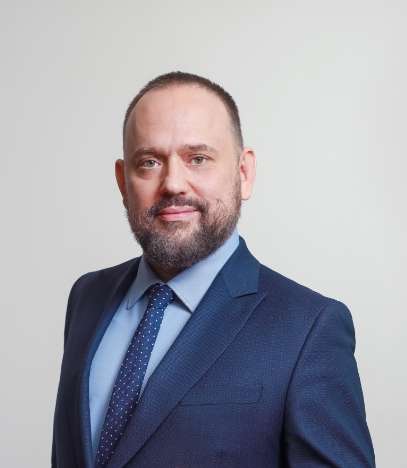
Robert Nogacki is a Polish attorney at law (radca prawny), the founder and managing partner of Kancelaria Prawna Skarbiec (Skarbiec Law Firm), which has operated continuously since 2006.
The law is equal for everyone, but the parties rarely are: on one side stands an organization with time, money, and lawyers, on the other a person with one business, one nest egg, and one life.
Clients rarely come to him with a legal problem. They come with a problem that also has a legal side: an audit that began with a single invoice, money entrusted to someone who has disappeared, a company that has to be passed on before it is too late. Most such matters are decided long before the first letter is written, in decisions made without asking and in deadlines nobody remembered. So he begins by asking how the client got here, not what the client should have done.
He advises entrepreneurs and families from more than a dozen countries, including those whose accounts the tax office has just seized and who do not know what to do tomorrow morning. He defends them in tax audits, customs and fiscal inspections, disputes with the tax authorities, and criminal tax proceedings. He represents victims of investment fraud and Ponzi schemes. He helps families set up family foundations and plan succession, so that a life’s work outlasts a single generation.
Not every case can be won. Every case can be run so that the client knows where they stand. Since 2006 he has represented the victims in the WGI case (Warszawska Grupa Inwestycyjna, the Warsaw Investment Group), one of the longest criminal cases in the history of the Polish financial market, because some things must not be left half finished, even when they take two decades. In the case of the collapsed cryptocurrency exchange Zonda (Zondacrypto, operated by BB Trade Estonia OÜ), he represents several hundred victims in the criminal investigation conducted by Poland’s National Prosecutor’s Office and in the Estonian bankruptcy proceedings.
Kancelaria Prawna Skarbiec is listed in the rankings of Poland’s largest tax advisory firms published by Dziennik Gazeta Prawna and Rzeczpospolita, and it is a four-time recipient (2015 to 2018) of the European Medal awarded by the Business Centre Club and the European Economic and Social Committee. Robert Nogacki publishes regularly, in the press and on the firm’s website, for people who have a problem rather than a law degree, because a legal opinion the client cannot understand protects only the lawyer.
He believes that the best legal advice is the kind that means the client never has to appear in court.