
Zonda: A Hundred Million for Everybody. Why Asking Prosecutors to Ship the Seized Millions to the Estonian Trustee Sounds Wonderful and Means Nothing, and Who Should Actually Pay
An idea keeps circulating around the bankruptcy of the Zonda exchange, and it sounds like a solution to every problem at once: Polish prosecutors would hand over to the Estonian bankruptcy estate the assets they have seized from suspects and from the suspects’ companies, and the trustee in Tallinn would divide the money among the creditors. Were anyone to announce such a demand in the creditors’ name, it would sound about as good as a promise of a hundred million for everybody, and it would have about as much to do with the law. Worse, it would shift the burden from Kral and the perpetrators onto the prosecutors, who would be handed demands that are spectacular and entirely unreal, while the people who took the money watched from the sidelines. I represent several hundred creditors, whose claims account for more than half of the value of everything lodged with the trustee so far, and more than two hundred and twenty injured parties in the Polish criminal investigation, and I would rather explain this before anyone announces anything: why no prosecutor will do it, because none can; whom such a demand serves; and who really can, today, before any verdict, send money to Estonia. His name is Kral.
Hostage to a Verdict: What “Secured” Actually Means
On August 27th, Poland’s Minister of Justice, who under the Polish system is also the Prosecutor General, spoke of more than a hundred million zlotys, roughly twenty-five million dollars, “secured” toward future compensation for the exchange’s customers. “Secured” sounds like “set aside for you.” It means something else. A security order in Polish criminal procedure (Article 291 and following of the Code of Criminal Procedure) freezes a suspect’s property so that a future judgment has something to be executed against: forfeiture of the proceeds of crime, an order to compensate the victims, a fine, costs. The owner remains the person the property was seized from, and that person is someone whose guilt has not been established, protected by the presumption of innocence in the Constitution (Article 42, section 3) and in the code (Article 5, section 1). The Constitution adds a sentence that ends the argument before it starts: property may be forfeited only on the basis of a final court ruling (Article 46). Money secured from a suspect is therefore a hostage to his verdict. The prosecutor guards it; he is not its custodian. He cannot “hand it over,” “release it to the estate,” or “return it to the creditors,” because before the verdict nobody is entitled to it, and a public authority may act only on the basis and within the limits of the law (Article 7 of the Constitution). The Prosecutor General cannot do it. Parliament could not do it by resolution, because a resolution is not a statute, and a statute would still have to pass through Article 46.
There is one crack in this wall, and it is worth looking at closely, because it shows the distance between a wish and a procedure. A criminal security order gives the state no priority over the suspect’s other creditors and decides nothing about ownership; it freezes assets so that a future judgment has something to bite on. A creditor of the suspect who holds an enforceable judgment may levy execution against the frozen assets, and the prosecutor may narrow his own order to that extent, because securing assets is his power, not his duty. The catch is that you first have to hold the judgment. The Estonian estate would have to win a case in Tallinn against specific people: for damages from the members of the management board (Section 187 of the Estonian Commercial Code) or for the avoidance of the transactions by which the money left the company (Sections 109 to 119 of the Estonian Bankruptcy Act), have the judgment recognized in Poland, hand it to a bailiff, and then stand in line for the suspects’ property as one creditor among many, next to the victims enforcing their own compensation orders under Article 46 of the Penal Code. An interim order securing the estate’s claim, which can be had faster, delivers nothing but a second seal on the same money. The road exists, the trustee is obliged to examine it, and nothing on it depends on the prosecutor’s good will. It is measured in years, not in resolutions.
There is a second misunderstanding, and it is the more dangerous one, because it concerns people rather than money. “Injured party” and “creditor” are two different words and two different lists. In the Polish investigation, every customer who lost money is an injured party by the fact of the loss, whether or not he has come forward (Article 49, section 1 of the Code of Criminal Procedure); he may come forward until the investigation closes, and he may file his compensation claim until the trial itself closes (Article 49a). A creditor in Estonia is someone who lodged a claim with the trustee by October 27th. According to figures made public on October 21st, about five thousand people had done so; at the end of 2025, the exchange had roughly fifty-seven thousand active accounts. The trustee’s list is therefore a minority of the victims, topped up with creditors who are not victims at all: sports clubs with sponsorship contracts, suppliers, affiliated companies. Juventus queuing for the money of small investors from Poland is a scene that Sławomir Mrożek, the Polish master of the absurd, would have cut as implausible. Whoever demands that assets seized from suspects be delivered to that list is demanding that a minority of the victims, plus a soccer club, be paid out of what the law reserves for all the victims. And the law does reserve it: forfeiture is not ordered where the proceeds are due back to the injured party (Article 44, section 5, and Article 45, section 1 of the Penal Code), and compensation is ordered at the victim’s request, to be executed out of the secured assets, without a trustee, without Estonian hourly rates, and without sharing with anyone. The victims’ priority over the Treasury does not require a resolution. It requires a verdict.
Moscow, 1921: The Door That Does Not Open
In 1921, the Soviet political police founded a monarchist organization. It called itself the Monarchist Union of Central Russia; the history of espionage knows it as the Trust, and for five years it was the most vigorous anti-Bolshevik resistance that the émigrés in Paris, Berlin, and Warsaw had ever heard of. They sent it couriers, money, and men. Boris Savinkov, terrorist and novelist, crossed the border in 1924 to lead the uprising and ended up in the Lubyanka. Sidney Reilly, the ace of British intelligence, crossed the Finnish border in September, 1925, to meet the Trust’s leadership and was shot in November. For five years the opposition was not fought. It was led, toward a door that did not open. Any émigré who doubted whether the Trust existed at all was told by other émigrés that he was a defeatist and an ally of the enemy.
Forty years later, a Soviet mathematician named Vladimir Lefebvre gave the pattern a theory and a name: reflexive control. You do not fight your adversary’s decision; you arrange his picture of the world so that he chooses what you need and believes the choice to be his own. Lefebvre emigrated to the United States in 1974; his concept stayed in Moscow and returned in the past decade as a primer for hybrid operations. I bring this up not to ascribe an intention to anyone in the Zonda case; I do not know anyone’s intentions and I am not writing about them. I bring it up because an effect does not need an intention, and lawyers are paid to see effects.
An impossible demand, by which I mean a demand addressed to an authority that has no legal power to grant it, has the same architecture in every large financial fraud. It burns the authority’s good will: a prosecutor who must refuse reads the next request from the same senders differently, and in this case the only money and the only data the company has left are sitting in the prosecutor’s office. It sets the victims against the state, because “the prosecutors won’t give it back” is a story that is simple, catchy, and false, and once launched it lives a life of its own. It creates a market for hope, because a proceeding in which “hundreds of millions are coming back” has to be financed by somebody, and since the estate has no money, that somebody is always the victims; an advance on the impossible is the most expensive product in that market, because it cannot be recovered even in theory. And it comes with a built-in loyalty test, the oldest device in the Trust’s arsenal: it cannot be rejected without looking like an enemy of the people in whose name it was made. Whoever questions an impossible demand becomes an enemy of the victims in the eyes of those who sold it to them. A lawyer who nods along to the impossible to avoid the epithet betrays his clients for the price of his own comfort; if it comes to a choice, I will take the epithet.
The most important effect, though, is the fourth, and the rest of this piece is about it. An impossible demand turns everyone’s eyes away from the right addressee. As long as the victims and their lawyers are arguing with the prosecutor about what the prosecutor cannot do, nobody asks the man who can. The defense counsel for the exchange’s chief executive announced on August 25th that his client had handed the prosecutors an enormous fortune, enough for every injured party who had come forward so far. The demand that the prosecutors ship that fortune to Estonia is the mirror image of the announcement: it asks the state to execute the defense’s narrative, and it relieves the defense of the trouble of executing it itself.
The Trust has a bankruptcy edition, too, and it is called Mt. Gox. When, in 2017, the creditors of that Tokyo exchange moved the proceedings into civil rehabilitation and refiled their claims, everyone filed what they had lost, except a former American partner of the exchange, which raised its claim from seventy-five million dollars to sixteen billion. Until the court had assessed that single claim, nobody could vote on a plan, and without a plan nobody got anything; the head of the largest creditors’ group resigned and sold his own claim at a discount, because he did not believe he would live to see the payout. The first money reached creditors in July, 2024, ten years after the collapse, and on October 16th of this year the trustee postponed the repayment deadline for the fourth time, to October 31, 2027. In a bankruptcy, the most expensive thing is the thing that does not exist, because everybody else pays for it in time.
The Wrong Addressee: The One Man Who Can Send Money to Estonia Today
The Zonda estate has no money to run its proceedings. That is a fact, and it is why the demand that the state should pay is so tempting. But the question of who should finance the bankruptcy has, in this case, an answer so obvious that it is strange how rarely anyone says it: the man who emptied the company. Zonda’s assets did not evaporate. They left by contract, and contracts have parties, dates, and signatures. The documents in the bankruptcy court file tell a sequence that fits in five sentences. The foundation is an investment agreement of March 2, 2020, between the exchange and Orion Software, then a private company of Przemysław Kral’s with a share capital of five thousand zlotys, about thirteen hundred dollars: the exchange pays to build the platform, Orion is to become the exchange’s property by the end of 2022, and in July, 2022, the exchange buys Orion and converts 60.6 million zlotys of earlier payments into its capital. The main loan is an agreement of August 4, 2022, less than five months after the disappearance of Sylwester Suszek, the exchange’s founder: fifty million euros to Orion at ten per cent, repayable ten years from each tranche; an annex lowers the interest to 4.6 per cent from 2024 and defers its payment to the end; seventy-five million was paid out, twenty-five million more than the contract allowed, the last tranche on March 16, 2026, three weeks before withdrawals were frozen; Orion lent the money onward, to Expofer, a Czech company; the same man stood on both sides of the agreement. The customers’ money from the Earn program went out as a loan to Admitrade, an entity of Wojciech Sroka’s, 89.5 million euros at the start of 2025; in July, 2025, crypto-assets worth fifty-eight million came back, left the exchange’s wallets again before the year was out, and by the end of the year the entire 89.5 million had vanished from the books without a write-off. The smaller contracts repeat the pattern: the founder’s company in the Emirates (2020, two per cent, a pledge on crypto), credit lines for two private individuals (2.9 million euros at two per cent until 2041, and 1.5 million zlotys), three loans to a Cypriot company in April, September, and October of 2025, when the exchange’s wallets were already emptying, and the sale of a stake in SEBA Bank, in Switzerland, in January, 2025, after which no price appears in the books.
Each of these items has an addressee, and it is not the prosecutor. On the Estonian side, the trustee is Orion’s sole shareholder and exercises its rights in Katowice: he replaces the board, calls the seventy-five-million-euro loan with interest, and follows the money to Expofer. Transactions by which assets left the company during the period the trustee himself describes as permanent insolvency can be set aside (Sections 109 to 119 of the Bankruptcy Act), and board members are liable for the damage they caused the company (Section 187 of the Commercial Code); those claims can be secured before trial and enforced in Poland. On the Polish side, the instruments are sharper, and, in a detail this debate keeps missing, they already exist. The press reported over the summer that the exchange’s chief executive may seek the status of a crown witness, Poland’s version of a coöperating witness who testifies in exchange for immunity. The Crown Witness Act allows the admission of such testimony to be made conditional on the suspect’s undertaking to return the proceeds of the crime and to repair the damage (Article 3, section 2); the court sets the deadline and the manner of performance, and failure to perform reopens the case. The law thus allows the prosecutor to say, in four words: money first, status second. Extraordinary leniency for coöperation (Article 60, sections 3 and 4 of the Penal Code), conviction without trial (Article 335 of the Code of Criminal Procedure), the compensation order (Article 46 of the Penal Code): all of them share a denominator, which is surrendering assets rather than describing them.
And here is the heart of the matter, the thing the impossible demand obscures. Money secured from a suspect remains his property, and an owner may use his property to pay his debts. The prosecutor cannot transfer it to a bankruptcy estate, but the suspect can apply for its release in order to repair the damage or to repay the debt of the company he emptied, because that is precisely what a security order exists for: to make sure the obligation to repair the damage can be performed. The only person who can, today, before any verdict, direct money to Estonia to finance the Zonda bankruptcy is Przemysław Kral. Not the prosecutor, not the Minister, not the creditors’ committee, not the Estonian court. Kral: as Orion’s debtor, as the board member liable for the damage, as a candidate for crown witness, as the owner of secured assets who can pay with them. A demand addressed to the prosecutor is a demand addressed to the wrong man, and its charm is that the right man can watch it calmly from the side. The defense speaks of an enormous fortune handed to the prosecutors. The test of that statement is simple and requires no lawyer: a list of legal titles and wire transfers, not a list of adjectives. Here is what a man would surrender if he wished to be taken seriously: the keys and credentials to the company’s wallets and to its workspace in the Fireblocks custody system; the documentation of the loan to Orion and of the onward loan to Expofer; an accounting of the 89.5 million euros with Admitrade, including the addresses to which the crypto-assets went in the second half of 2025; the names and contracts of the two individuals with credit lines running to 2041; the Cypriot and Emirati agreements; the sale price of the SEBA Bank stake and the account it was paid into; and an explanation of who holds the keys to the wallet with 4,503 bitcoins, because the story of the vanished founder is convenient for everyone except the people whose money supposedly sits in it. Assets shown are not assets surrendered. Only the surrendered kind counts in criminal law as reparation, and only then is there anything to discuss with the man who surrenders them.
What Can Be Taken Without Anyone’s Favor
Beside what must be demanded of Kral is what belongs to the estate by operation of law and need only be asked for. According to the interim trustee’s report of August 21st, the company’s cash at seven financial-services providers (AMINA Bank and Sygnum in Switzerland, ZEN.COM in Lithuania, Clear Junction in London, and Fenige, TryPay, and Tpay in Poland) came to 167,675.04 euros, per book balances from before the withdrawal freeze, which may have changed since. Add the database of customers and balances on the seized data carriers, without which the trustee cannot verify thousands of claims; the company’s wallets, including an XRP wallet from which funds were still leaving after the court had prohibited the company from disposing of its assets; and Orion, a wholly owned subsidiary with the servers, the code, and the backups. None of this is the suspects’ property. It is the property of the bankrupt company, which the trustee represents throughout the European Union by force of law (Article 21 of Regulation 2015/848), and the prosecutor can release it to the company’s representative without a title, without resolutions, and without press conferences: copies of the data as items no longer needed once they have been secured as evidence (Article 230, section 2 of the Code of Criminal Procedure), the accounts by lifting the security order in that part, if the accounts were ever covered by one, and if they were not, by an ordinary letter from the trustee to the bank. I applied to the prosecutors for exactly this, on behalf of my clients, on October 21st; the details are in my earlier piece on what the prosecutors can do for the trustee, and what they should not. A hundred and sixty-seven thousand euros does not sound like hundreds of millions. On the other hand, it exists.
November 23, 2026: The Day Poland Learns to Put Money on Trial
That leaves the question my clients ask, and it is a fair one: must we really wait for a final verdict before the money secured from the perpetrators returns to the victims? Today, yes, with one exception: when the perpetrator pays of his own accord. But today’s law has an expiration date, and it is November 23, 2026. On that day the deadline expires for transposing Directive (EU) 2024/1260 of the European Parliament and of the Council of April 24, 2024, on asset recovery and confiscation. The directive requires member states to introduce confiscation without a conviction (Article 15) where proceedings cannot end in a conviction because of illness, death, immunity, a lapsed limitation period, or the suspect’s flight abroad, and in the Zonda case flight is not a hypothesis but a fact. It requires the confiscation of unexplained wealth linked to criminal activity (Article 16), offices to manage frozen assets, including crypto-assets, and, most important for this case, it requires that victims’ claims be taken into account at the tracing, freezing, and confiscation stages, and that property to which a victim is entitled be returned to the victim (Article 18). Polish law contains the seed of this construction: forfeiture without a conviction where the perpetrator has died, has not been identified, or where proceedings against a defendant who cannot be apprehended have been suspended (Article 45a, section 2 of the Penal Code). The seed has to be grown into a procedure, and the scholarship, already before transposition, notes that the current Polish forfeiture model is functionally inconsistent with the direction of E.U. law and needs serious rebuilding precisely at the seam between forfeiture and compensation. As I write, I have found no published draft of a transposing bill; the clock is running.
Palm Beach, October 25, 2009: How a Fortune Comes Back Without Anyone Being Convicted
The federal courts of the United States have heard cases with titles that read like short stories: United States v. One 1958 Plymouth Sedan, United States v. Approximately 64,695 Pounds of Shark Fins, United States v. One Lucite Ball Containing Lunar Material. The defendant in such a case is not a person but a thing. This oddity, forfeiture in rem, explains more about the Zonda case than all the official communiqués combined: it explains why, in America, money gets back to the victims before anyone is convicted, and why a Polish prosecutor will not send a single zloty of what he has seized from suspects to Estonia, however much he might wish to.
Jeffry Picower, aged sixty-seven, is found at the bottom of the swimming pool at his Palm Beach estate. For two decades, he had been the single largest beneficiary of Bernard Madoff’s Ponzi scheme, drawing 7.2 billion dollars in fictitious profits out of it. He was never charged and never will be. Fourteen months later, in December, 2010, his widow signs a settlement under which the entire sum comes back: five billion to the trustee for Madoff’s firm, and 2.2 billion to the United States government by way of civil forfeiture. The largest forfeiture in the history of American justice concerns a man whom nobody convicted, because the defendant was not the man but the money.
What happens next has no name in Polish law. The Department of Justice sets up the Madoff Victim Fund and entrusts it to Richard Breeden, a former chairman of the Securities and Exchange Commission. The fund litigates nothing. It takes petitions: more than sixty-five thousand of them, from a hundred and thirty-six countries. It works out how much each petitioner lost and pays pro rata, out of money that was forfeited, not out of the taxpayer’s pocket. Over ten distributions it returns 4.3 billion dollars to 40,930 victims in a hundred and twenty-seven countries, 93.71 per cent of their losses; alongside Picower’s fortune sit 1.7 billion dollars from a settlement with JPMorgan Chase, which was not convicted either. The legal basis fits in one section of a statute and one part of a regulation: Title 18 of the United States Code, Section 981, provides for the civil forfeiture of the proceeds of crime and authorizes the Attorney General to transfer forfeited property to the victims as restoration (subsection (e)(6)), and Part 9 of Title 28 of the Code of Federal Regulations describes the procedure: a petition for remission, an official, a decision, a wire. Since 2000, the program has returned more than twelve billion dollars to crime victims. Not one of those payments required a conviction of the person whose property was forfeited. It required a procedure in which the thing itself is put on trial.
In Poland, things are not put on trial. People are, and the thing waits for their verdict. That is not a defect of Polish law but its grammar, and the directive now requires the grammar to be completed. Here is how.
Four Provisions: What I Proposed to the Minister of Justice
The word “remission” means nothing yet in Polish law, so let me translate it into provisions. In a letter of October 22nd, I proposed four to the Minister, not a new branch of law, and each of them has a counterpart that is already working somewhere.
First: forfeiture without a conviction also where the suspect has fled abroad and cannot be tried, provided the evidence shows that forfeiture would have been ordered had he been convicted. A court decides, on the prosecutor’s motion, in a proceeding in which the owner can defend himself, if only through a lawyer dialling in from Dubai. The Constitution requires a court ruling for forfeiture, not a conviction, and Article 45a, section 2 of the Penal Code already allows this for the dead and the unidentified; the directive says to add fugitives. In the Zonda case, this provision would operate from day one, because here flight is a fact, not a hypothesis.
Second: property forfeited in such a case does not flow into the budget but into a segregated account for the case, where it waits for the victims before anything goes to the Treasury. Today forfeiture enriches the state, and the victim has his own judgment under Article 46 and his own enforcement, usually against nothing, because whatever there was has already been forfeited. The victims’ priority that Article 18 of the directive requires needs a bank account; otherwise it remains a principle.
Third: a petition instead of a lawsuit. Every injured party, including those who never filed a criminal complaint, submits one claim for restoration on a form. The loss is verified against the exchange’s customer database seized in the investigation, the very database the trustee in Tallinn is still waiting for, and the payout is pro rata, ordered by the court and carried out by an appointed administrator, who in Poland could be a court-appointed custodian or a licensed insolvency practitioner. No lawsuit, no court fee, no lawyer, one proceeding instead of tens of thousands. This is exactly what the Madoff Victim Fund does in the United States, and this is the whole of “remission”: not a privilege for the state but a till for the victims, in which the state is merely the cashier.
Fourth: a side door for the perpetrator, because without it the first three provisions would wait years for a ruling. A suspect who wants to reduce his liability may, before the verdict, surrender the assets secured from him to the case account; the surrender counts as reparation under Article 46 and as a ground for leniency, and a refusal counts as a circumstance the court weighs at sentencing. The law then tells him what the Crown Witness Act tells a would-be crown witness: money first. In the Zonda case, this provision has one addressee, and he knows it by name.
What it costs: nothing, because the assets are already frozen and the administrator is paid out of them. How long it takes: as long as transposing the directive, which must be done by November 23rd anyway. Whom it hurts: only the man who was counting on his money outlasting the victims abroad. I will draft the outline of this bill without a fee, because Poland has to pass this law regardless, and the difference between a good law and a careless one is, in this case, the difference between recovery and waiting. Poland does not need to learn how to sue moon rocks. It only needs to write into its statutes that money whose owner has fled can stand trial without him.
Three Questions for Anyone Promising Hundreds of Millions
In the coming months, the Zonda victims will hear many promises, some of them from people acting in good faith. Three questions will do for all of them: who gets the money, when, and at what cost. The demand that the prosecutors send the suspects’ assets to Estonia passes none of the three, because there is no addressee with the power to decide it, no date, and no cost that can be counted, other than everybody’s time. A demand on Kral, the company’s own assets, and a statute due by November 23rd pass all three. That is where the money will be, if it is anywhere.
Anyone who did not lodge a claim with the trustee by October 27th may still do so, though the claim goes to the back of the line. Anyone who has not filed a complaint in the Polish investigation is an injured party by operation of law, but without a motion under Article 46 of the Penal Code the court will not order reparation in his favor. And nobody should pay anybody for the promise that the state will hand over any part of a fortune that does not yet belong to anyone. My analyses of the case, from Suszek’s contracts to the present state of the bankruptcy, are collected on the firm’s Zonda bankruptcy page; the law described above is the law as of October 26, 2026.
Robert Nogacki, attorney at law, Kancelaria Prawna Skarbiec
The Zondacrypto Case
The Zondacrypto case is being examined by authorities in several countries, and no one today can predict the fate of the entrusted funds. We represent the victims and protect their position in the ongoing proceedings.
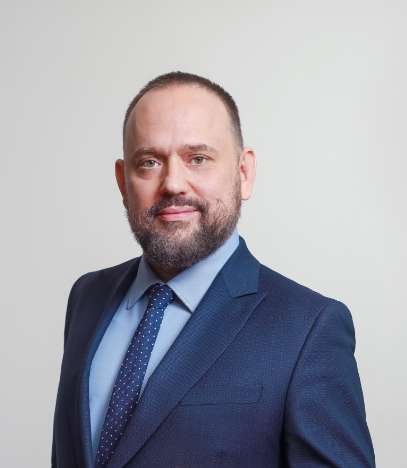
Robert Nogacki is a Polish attorney at law (radca prawny), the founder and managing partner of Kancelaria Prawna Skarbiec (Skarbiec Law Firm), which has operated continuously since 2006.
The law is equal for everyone, but the parties rarely are: on one side stands an organization with time, money, and lawyers, on the other a person with one business, one nest egg, and one life.
Clients rarely come to him with a legal problem. They come with a problem that also has a legal side: an audit that began with a single invoice, money entrusted to someone who has disappeared, a company that has to be passed on before it is too late. Most such matters are decided long before the first letter is written, in decisions made without asking and in deadlines nobody remembered. So he begins by asking how the client got here, not what the client should have done.
He advises entrepreneurs and families from more than a dozen countries, including those whose accounts the tax office has just seized and who do not know what to do tomorrow morning. He defends them in tax audits, customs and fiscal inspections, disputes with the tax authorities, and criminal tax proceedings. He represents victims of investment fraud and Ponzi schemes. He helps families set up family foundations and plan succession, so that a life’s work outlasts a single generation.
Not every case can be won. Every case can be run so that the client knows where they stand. Since 2006 he has represented the victims in the WGI case (Warszawska Grupa Inwestycyjna, the Warsaw Investment Group), one of the longest criminal cases in the history of the Polish financial market, because some things must not be left half finished, even when they take two decades. In the case of the collapsed cryptocurrency exchange Zonda (Zondacrypto, operated by BB Trade Estonia OÜ), he represents several hundred victims in the criminal investigation conducted by Poland’s National Prosecutor’s Office and in the Estonian bankruptcy proceedings.
Kancelaria Prawna Skarbiec is listed in the rankings of Poland’s largest tax advisory firms published by Dziennik Gazeta Prawna and Rzeczpospolita, and it is a four-time recipient (2015 to 2018) of the European Medal awarded by the Business Centre Club and the European Economic and Social Committee. Robert Nogacki publishes regularly, in the press and on the firm’s website, for people who have a problem rather than a law degree, because a legal opinion the client cannot understand protects only the lawyer.
He believes that the best legal advice is the kind that means the client never has to appear in court.