Sportradar Lawsuit: Illegal Gambling and Integrity
Sportradar spent two decades selling itself as the policeman of global sports betting. Two short sellers, and now a federal class action, allege that the referee was also the black market’s plumber.
On the first of April, 2025, Carsten Koerl settled into a chair on the set of CNBC’s “Mad Money,” across from Jim Cramer, who was in an expansive mood. Cramer described Koerl’s company, Sportradar, as “the SEC” of gambling. Koerl, a compact Bavarian who bought control of the firm in 2001, back when it was a piece of Norwegian student software that scraped betting odds off the internet, accepted the compliment and enlarged it: Sportradar, he said, was the SEC or the FBI of the industry. It was a good line, and it was, in a sense, the company’s entire business model compressed into a syllable count. Sportradar, headquartered in the Swiss town of St. Gallen and listed on the Nasdaq since 2021, when it went public at a valuation of eight billion dollars with Michael Jordan and Mark Cuban among its earlier investors, does not take bets. It is the plumbing behind the people who do: its 3,900 employees, spread across twenty countries, count the corner kicks in Latvian second division soccer, generate odds for thousands of matches in some forty sports, sell them to hundreds of bookmakers, and, in the company’s capacity as official integrity partner to FIFA, the NBA, Major League Baseball, the NHL, and the PGA Tour, watch the world’s betting markets for the telltale ripples of a fixed match, an operation with roots in a 2005 German refereeing scandal and formal agreements reaching as far as Europol. The leagues were not buying data so much as they were buying a reputation. They were buying the cop.
A year and three weeks after the Cramer interview, on April 22, 2026, two investment research firms published coördinated reports arguing, in effect, that the cop had been running the numbers racket on the side. Muddy Waters Research, the firm founded by the short seller Carson Block, gave its report a title that doubles as a thesis: “Putting the BET into Aiding and Abetting.” Callisto Research, working independently and from public sources, arrived the same morning at the same conclusion by a different road. By the closing bell, Sportradar’s shares had fallen 22.6 per cent, from $16.84 to $13.04, and roughly eight hundred million dollars of market value had evaporated. On May 18th, a shareholder class action, Smale v. Sportradar Group AG, was filed in the Southern District of New York.
The case is more interesting than the standard securities complaint it superficially resembles, because it forces open three questions that reach well past one Swiss company listed on the Nasdaq: how the global black market in gambling is actually constructed, whom that market makes its money from, and what responsibility attaches to an infrastructure vendor whose defense, distilled, is that it only sells the pipes.
⁂
Honesty requires putting the strongest objection first, in the lede rather than the footnotes. Muddy Waters and Callisto are short sellers. Both had positions that paid off the moment the stock cratered, which is to say they profited from a fall they themselves precipitated. This is not investigative journalism, and it is not a regulator’s finding; it is a business model in which the sharper the thesis, the better it sells. There is also a genuine evidentiary caution, raised by sober observers of the affair: a Sportradar widget, a stray line of code, or a familiar logo on an outlaw casino’s website does not, by itself, prove a current commercial relationship, much less knowledge or intent in a Swiss boardroom. Sportradar has said the reports contain factual errors and reflect a fundamental misunderstanding of its business, and it has put a number on its exposure to what the industry politely calls gray markets: low to mid single digits, as a share of revenue. The short sellers say 20 to 40 per cent. Between those figures lies most of the company’s valuation, and, arguably, its soul.
What is certain, then: the reports, the crash, the lawsuit, and years of the company’s own public assurances, including Koerl’s description, on an earnings call in November of 2025, of a four level vetting process and a global compliance team that scrutinizes every operator. What is probable: that the true exposure is materially higher than the company let on, a judgment that rests less on any single allegation than on convergence. Two teams that do not appear to have shared notes, one running a months long investigation that included an undercover approach at a trade fair in Barcelona, source code analysis of more than forty gambling platforms, and interviews with fifteen current and former employees, the other cataloguing more than two hundred and seventy platforms from open sources, reached the same destination, and three American gambling regulators have reportedly opened reviews. What remains uncertain is the arithmetic itself. A range of 20 to 40 per cent is an estimate produced by parties who make money when it is believed. A federal courtroom, not a press release, will test it.
⁂
It helps to be precise about what the lawsuit is not. The investors do not accuse Sportradar of violating gambling law. They accuse it of lying to them about whether it was. This is the classic architecture of Section 10(b) of the Securities Exchange Act of 1934 and the SEC’s Rule 10b-5, under which liability springs not from the underlying sin but from the materially false statement about it, aimed at the market. The complaint covers the period from November 7, 2024, to April 21, 2026, and assembles the paper trail: annual report language about holding all necessary licenses, a code of ethics placing integrity and professionalism at the center of everything, and Koerl’s four level answer to an analyst who asked, on that November call, precisely the question the short sellers would answer differently five months later. Named alongside the company are Koerl and the chief financial officer, Craig Felenstein, the latter under Section 20(a), as a controlling person.
Two things will decide the case. The first is scienter, the legal term for knowing, or recklessly indifferent, falsity. Here the most dangerous material is the Barcelona episode. At ICE 2026, the industry’s flagship trade fair, Muddy Waters investigators posing as prospective clients say a Sportradar salesman rattled off notorious unlicensed Asian operators as customers and offered help entering forbidden markets quickly. If a jury believes that account, it is not a description of a gap in the procedure. It is a description of the procedure. The second is the fraud on the market presumption, which spares each investor from proving he personally read the annual report; it is enough that the falsehoods were baked into the price of a stock trading in an efficient market. The deadline to seek appointment as lead plaintiff passed on July 17th; the case is now entering its consolidation phase, the procedural equivalent of the tide going out.
⁂
The phrase “illegal bookmaker” conjures a lone crooked website, perhaps a man with a ledger. The reality is closer to a transnational supply chain. A modern offshore operator is an integrator: it buys its player account platform from one vendor, its odds and live sports data from another, its casino games from a third, and its payments, hosting, identity checks, affiliate marketing, and customer service from still others. The brand a bettor sees is the most replaceable part of the machine. Shut it down and the back end simply reappears under a new name.
Nor is illegality a fixed property of a company; it is a relationship between a company and a territory. The typical operator holds a license from a small, lightly supervised jurisdiction, most often the Caribbean island of Curaçao or Anjouan, in the Comoros, and then knowingly recruits players in Poland, Germany, Britain, or the United States, where it holds no license at all. The same firm can be legal on one market, gray on a second, and flatly criminal on a third. Which means the real compliance question was never whether a client can produce a document with a seal on it. It is where the client’s players actually live, what languages and currencies the site runs in, where the traffic comes from, how the money arrives, and whether the vendor bothers to switch its product off in forbidden territories. That is a far more demanding test than checking a scanned license, and it is the ground on which the Sportradar allegations are fought.
Regulators have begun to absorb this logic. Britain’s Gambling Commission now systematically maps the unlicensed market and aims its enforcement not only at websites but at the payment processors, search engines, internet providers, and software houses that keep them alive, on the theory that the black market persists exactly as long as legitimate businesses keep supplying its components. In that chain, live sports data is not a garnish. It is one of the preconditions for offering a competitive product at all, which is why a business to business vendor can matter more to the market’s continuity than any of the disposable storefronts out front.
⁂
The black market’s decisive advantage is not a better product. It is the freedom to serve the customers a regulated market is required to turn away. A licensed operator in a mature jurisdiction must verify ages, cap deposits, watch for the behavioral signatures of compulsion, and honor self exclusion registers, the lists on which gamblers place themselves to be refused service. An unlicensed operator can display all the same furniture, the terms and conditions, the identity form, the little responsible gambling icon, but there is no authority to check whether any of it functions, whether the excluded are actually blocked, or whether a refused payout has any basis beyond the operator’s convenience. Player protection becomes a promise from a counterparty rather than an enforceable standard.
And the sorting is not hypothetical. The Gambling Commission’s research on unlicensed operators found affiliate sites optimizing for search phrases like “not on GAMSTOP,” GAMSTOP being Britain’s national self exclusion scheme, which is to say: marketing aimed with precision at people searching for a way around their own safety mechanism. A Swedish clinical study supplies the other half of the picture. Among patients in treatment for gambling disorder, 81 per cent had previously enrolled in Spelpaus, Sweden’s national self exclusion register, and the study’s very subject was their continued gambling despite it, at offshore operators the register cannot reach.
The economics of acquisition sharpen the point. Affiliates who deliver players are often paid on revenue share, a percentage of what the operator eventually wins from each customer, so the player who plays longest and loses most is worth the most to recruit. One should state the resulting thesis carefully, because the careless version is wrong. A compulsive gambler is not, by definition, any operator’s most profitable customer. He is, however, a customer whose behavior raises his economic value right up to the moment a regulated system is supposed to recognize that behavior as a reason to intervene: to throttle the marketing, impose the limit, close the account. An operator beyond effective supervision has no incentive to intervene, and its customer management software can respond to the same signals with a bonus, a call from a VIP host, a reactivation campaign. The black market earns its margin on the intervention that never comes.
It is in this frame that the reports’ harshest claims should be read. Callisto, as relayed by Courthouse News Service, writes of Sportradar’s direct participation in illegal gambling revenue, and two former employees reportedly assessed that one of the company’s ten largest clients, 1xBet, is likely the largest illegal gambling operator on earth by revenue. Muddy Waters adds the detail that moves the affair from the compliance file to the moral one: among the prospects its undercover investigators say the salesman offered introductions to was Yabo Group, a Chinese operation notorious not only for unlicensed bookmaking but for Cambodian service compounds where investigators documented human trafficking and violence against workers. These remain the short sellers’ allegations, awaiting the discovery process. The economic machinery they describe is documented independently of this case.
⁂
The true chokepoint of an illegal operation is not its domain name but its money. The operator must take deposits in local currency, credit them to player accounts, and pay out winnings, all without letting a bank or a processor understand what the business is. Hence the churn of payment processors, wallets, local agents, prepaid instruments, and crypto assets, the last of these not the market’s dominant funding channel but one tool among several for loosening dependence on traditional finance. MONEYVAL, the Council of Europe body that evaluates anti money laundering regimes, lists the sector’s core vulnerabilities as speed, borderlessness, alternative payment rails, and the ease of borrowed identity.
A gambling account can also function as a small, informal bank. The Basel Institute on Governance describes the simplest and most common laundering pattern as cash in, cash out: dirty money becomes a balance, a token amount is wagered, and the remainder returns as apparent winnings, with variants involving multiple accounts, withdrawal in a second jurisdiction, or deliberately losing to an accomplice. None of which makes every unlicensed casino a laundromat. The defensible claim is narrower and worse: the absence of real identity checks, transaction monitoring, and supervision makes the platform available, to opportunistic customers or to a criminal system that builds it in on purpose.
⁂
Seen from the player’s side of the screen, these mechanisms assemble into a single, repeatable script, and its genius is that every stage looks like ordinary friction rather than fraud. It opens with the bonus. A bonus is not a gift; it is a liability denominated in future bets. The standard terms require the customer to wager the bonus thirty or forty times over before any withdrawal, cap the stakes he may place while doing so, exclude whole categories of games from counting, and reserve the right to void winnings for violations that only the operator is empowered to adjudicate. A payout that is conditional, on conditions interpreted by the debtor, is not a promotion. It is an obligation designed to be deferred until a pretext arrives for not honoring it.
The second act is the pattern that fills gambling complaint forums the world over: identity checks applied asymmetrically. The unlicensed operator does not skip verification so much as deploy it selectively, minimal at deposit, exhaustive at withdrawal, with fresh document demands after a large win and account freezes justified by discrepancies. Verification, in that configuration, is not compliance. It is a mechanism for controlling payouts, wielded by a party that is simultaneously the author of the rules, the custodian of the evidence, the judge of the violation, and the debtor of the prize. There is no third act, because there is no appeal: the complaint is heard by the counterparty, and the counterparty has already ruled.
What remains for the player is triage. Preserve the evidence before the account vanishes: screenshots of balances and transaction histories, the full correspondence, the terms as they read on the day of play, the payment confirmations. Ask the bank about disputing card transactions, a path that exists and runs on deadlines, though operators blunt it by labelling charges neutrally. Consider a criminal complaint, ideally with advice, for reasons Poland will illustrate in a moment. And absorb the one warning that should accompany every first conversation with a defrauded gambler: after the first fraud, a second fraudster almost always calls. Victims are targeted by purported fund recovery firms demanding fees up front and guaranteeing results. No one operating legally guarantees recovery; the guarantee is itself the tell.
⁂
For a Polish reader, none of this is exotic, and for an American one, Poland is worth a detour, because it is a natural experiment in what happens when a wealthy European country tries to police this market with a blacklist. Poland is the last member state of the European Union to maintain a full state monopoly on online casinos. According to H2 Gambling Capital figures presented in April at the European Economic Congress, in Katowice, illegal operators turned over roughly 74 billion złoty in 2025, around eighteen billion dollars, against about 85 billion on the legal market, and more than three million Poles a year, industry groups say, including several hundred thousand teen agers, gamble on unlicensed sites. Poles deposited an estimated 15 billion złoty with illegal operators in 2025 alone. The fines imposed on those operators over three years: a cumulative fifty thousand złoty, or about twelve thousand dollars. Less a deterrent than a rounding error.
Polish law then adds a twist that operators could hardly have designed better themselves. Under the country’s Fiscal Penal Code, merely participating in unlicensed gambling is an offense, punishable by a fine, which means the defrauded player who walks into a prosecutor’s office begins the conversation by confessing. Being a victim of fraud does not depend on one’s own clean hands, and a stiffed customer may well have a claim under the ordinary criminal code; but the arithmetic of self incrimination keeps most of them silent, and their silence is the black market’s cheapest form of insurance.
The state’s principal weapon is a registry of banned domains, which, by the Finance Ministry’s own account, has passed fifty five thousand entries and grows by about seven hundred a month. The growth rate is the tell. A DNS block raises the cost of reaching an operator; it does not touch the brand, the player balances, the payment plumbing, or the software. An operator holding a pool of mirror domains and a channel to its customers experiences each new registry entry as a forwarding address. It is the supply chain logic again, from the enforcement side: an intervention that stops at the website has not reached the business.
The numbers, it should be said, are contested, and both sides of the contest are talking their book. The Finance Ministry, citing the same research firm, says the gray market’s share of online gambling fell from 79.7 per cent in 2016 to 29.1 per cent in 2024, and that gaming tax receipts rose 17.6 per cent in 2025, to about 6.19 billion złoty; the ministry is defending its monopoly. Industry groups say 46 per cent of the market operates outside the law; they want a licensing regime that would let them into the casino segment. The probable truth sits between: a gray market that has shrunk in relative terms since 2016 and remains, in absolute terms, a business measured in the tens of billions of złoty, disproportionately patronized by exactly the players the legal system has excluded or capped.
⁂
Whatever the jury eventually decides, the case has already changed the weather in three places. For Sportradar itself, the existential risk is not the damages award but the licenses. Callisto framed the bind precisely: the company must choose between the revenue and the licenses that let it operate in Europe and North America, and if the short sellers’ estimates are even half right, either choice reprices the business. It is probable that the American regulators now reviewing the matter will want an audit of the client book, and that whatever the audit finds will walk straight into the civil case as evidence.
For the leagues, the question is more uncomfortable. FIFA extended its integrity partnership with Sportradar through 2031, covering the next two World Cups; the American leagues are similarly entangled. They bought the cop, and if the cop was earning on the side from the market he was hired to watch, they must now ask whether their match fixing alarms were operated by a structurally conflicted party. The conflict, in fairness, was always latent in the model: the firm that flags suspicious betting volume also earns from betting volume.
And for everyone who sells infrastructure, the case is a test of where neutrality ends. If an illegal platform can be assembled almost entirely from components supplied by reputable firms, sports data, games, cloud hosting, payment gateways, identity software, then each supplier can inspect its own fragment of the relationship and truthfully say it runs no casino. The law is learning to grade the fragments: mere sale of a neutral product at one end, and, ascending, knowledge of the client’s real markets, an unused technical ability to switch off forbidden territories, fees that rise with betting volume, silence after a regulator’s warning, and, at the far end, active help entering a banned market. The more of those elements stack up, the thinner the pipes defense becomes, and the trend, on both sides of the Atlantic, runs in one direction. Whoever builds the pipeline is finding it harder to claim indifference to what flows through it.
The available data do not tell us what share of the black market’s global revenue comes from the addicted, the excluded, or the underage; no honest analyst will pretend otherwise. What the data do show is that these groups constitute the market’s structural advantage, the customers it alone is free to keep. Which returns us, finally, to the studio on April 1, 2025, and to Koerl’s expansive answer. The SEC and the FBI police markets they do not participate in. The allegation now before the Southern District of New York is that Sportradar invented a third kind of institution: a regulator that charged the crooks a subscription.
Further reading
Event Contracts – The Casino That Pretends to Be a Stock Exchange
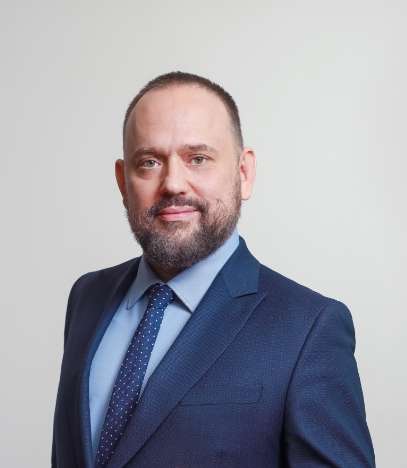
Robert Nogacki is a Polish attorney at law (radca prawny), the founder and managing partner of Kancelaria Prawna Skarbiec (Skarbiec Law Firm), which has operated continuously since 2006.
The law is equal for everyone, but the parties rarely are: on one side stands an organization with time, money, and lawyers, on the other a person with one business, one nest egg, and one life.
Clients rarely come to him with a legal problem. They come with a problem that also has a legal side: an audit that began with a single invoice, money entrusted to someone who has disappeared, a company that has to be passed on before it is too late. Most such matters are decided long before the first letter is written, in decisions made without asking and in deadlines nobody remembered. So he begins by asking how the client got here, not what the client should have done.
He advises entrepreneurs and families from more than a dozen countries, including those whose accounts the tax office has just seized and who do not know what to do tomorrow morning. He defends them in tax audits, customs and fiscal inspections, disputes with the tax authorities, and criminal tax proceedings. He represents victims of investment fraud and Ponzi schemes. He helps families set up family foundations and plan succession, so that a life’s work outlasts a single generation.
Not every case can be won. Every case can be run so that the client knows where they stand. Since 2006 he has represented the victims in the WGI case (Warszawska Grupa Inwestycyjna, the Warsaw Investment Group), one of the longest criminal cases in the history of the Polish financial market, because some things must not be left half finished, even when they take two decades. In the case of the collapsed cryptocurrency exchange Zonda (Zondacrypto, operated by BB Trade Estonia OÜ), he represents several hundred victims in the criminal investigation conducted by Poland’s National Prosecutor’s Office and in the Estonian bankruptcy proceedings.
Kancelaria Prawna Skarbiec is listed in the rankings of Poland’s largest tax advisory firms published by Dziennik Gazeta Prawna and Rzeczpospolita, and it is a four-time recipient (2015 to 2018) of the European Medal awarded by the Business Centre Club and the European Economic and Social Committee. Robert Nogacki publishes regularly, in the press and on the firm’s website, for people who have a problem rather than a law degree, because a legal opinion the client cannot understand protects only the lawyer.
He believes that the best legal advice is the kind that means the client never has to appear in court.