

Roman Abramovich Loses Again in Luxembourg. Economic Importance, Not Personal Wrongdoing, Sustains His Listing
On September 9, 2026, the General Court of the European Union dismissed Roman Abramovich’s third challenge to the sanctions against him, refused his claim for a million euros in damages, and ordered him to pay the Council’s costs (Case T-358/25). Thirteen days later, the Council extended its individual sanctions on Russia for three years, and bought unanimity with the delisting of Alisher Usmanov and Mikhail Fridman. Abramovich stayed on the list. His case is more than a chronicle of defeats. The offshore industry, whose product is secrecy about ownership, from trusts in Cyprus and Jersey to yachts chartered from oneself, was built so that the question “Whose is this?” would have no good answer. To keep a man on its list, European sanctions law does not ask whether he did anything wrong, nor whether he controls the company: it asks how much he weighs in the Russian economy, and a 28.64 per cent stake in a London-listed company answers that. The question survives one floor down, where particular assets are frozen, and there it has grown teeth: ownership, control, the date the money moved, and the signature on the papers. A structure can hide an owner. It cannot hide a stake in a London-listed company, and since the leaks it hides the rest less well than it used to.
One Question, Nine Stops: A Map of This Story
This piece travels through nine stops at which, over four years, the question of whose money Roman Abramovich’s is has been decided, and each of them answers it differently. In Luxembourg, the General Court of the European Union held in September that, for the purpose of keeping him on the list, personal wrongdoing and actual control are beside the point: what counts is economic importance, measured by a 28.64 per cent stake in Evraz, a company listed in London. In London, the Supreme Court had said much the same a year earlier about Abramovich’s partner Eugene Shvidler, under a different test and with a louder dissent. In Cyprus, over two decades, a machine was built to make the question “whose?” unanswerable: trusts rewritten in favor of children three weeks before the war, an art collection nudged one point below the threshold, yachts chartered from oneself, directors who were only employees. The same machine, started by another oligarch a month later, lost in July, 2025, before the High Court in London, in the EuroChem case; that judgment serves here as the reference for what courts do once they get the documents.
In Surrey, at the house of the man with the powers of attorney, the question changes shape: not whose, but where the decisions were made, because on that depends whether companies in the British Virgin Islands were British taxpayers. On Jersey, a Crown dependency that had invited this capital in, the question is “where from?”, investigated as suspected money laundering, with all the procedure Abramovich has since turned against the island. In London and Moscow, the same fortune sits between two jaws of a vise: the British Treasury can freeze the £2.5 billion from the sale of Chelsea but cannot take it without a judgment, while the Russian state lifts Evraz’s Russian plants out of the London company. In New York, American law reached two airplanes not through the man, whom Washington never listed, but through the origin of the machines; in Porto and Bodrum, a passport and a yacht showed what travels with an owner and what stays behind. At the end come Brussels, where in September, 2026, two other oligarchs came off the list without any court at all, and Warsaw, where all of this applies with a Polish criminal statute in the background. The bracket that holds it together is a single sentence: a structure can hide an owner, but it cannot hide weight, a date, or a signature, and since 2022 those are what the law asks about.
Luxembourg: The Sanctions Don’t Punish Abramovich. They Weigh Him
The judgment opens, beneath the applicant’s three nationalities (Russian, Israeli, Portuguese), with his address: Nemchinovo, Russia. The man who spent six pleas persuading the court that for more than twenty years he had conducted his business essentially outside Russia gave, as his address for the proceedings, a village outside Moscow. The operative part fits in two sentences: the action is dismissed; the applicant bears his own costs and the Council’s. The reasoning runs to more than fifty pages, because the court answered each plea separately, and how it answered says more about sanctions law than the outcome does.
The first plea concerned the Council’s kitchen. The decision to keep him listed, he argued, was made not by ministers but by the working parties known as COEST and RELEX and by the Committee of Permanent Representatives, with ministers voting on a finished package by written procedure. The court did not dispute the description; it disputed the conclusion. The Council reviews some twenty-five hundred persons and entities every six months, must rely on its preparatory bodies, and, so long as it keeps the last word, delegates nothing. The third plea reached for human dignity under Article 1 of the Charter of Fundamental Rights: the Council had “instrumentalized” a celebrity, as evidenced by his photograph on the Council’s website beside other oligarchs. The court recalled where it had invoked dignity before: the prohibition of torture, the reception conditions of asylum seekers, a Hungarian statute stigmatizing minorities. The grievances of a billionaire whose fortune is frozen are, the court said, of a different nature and gravity, and a photograph proves recognizability, not intent. The sixth plea grew out of the Portuguese passport: a citizen of the Union, the argument went, cannot be barred from entry without reference to his personal conduct, and the derogations don’t work in practice, as shown when Luxembourg refused him entry to attend the hearing in his previous case. Directive 2004/38, the court replied, binds member states, not the Council acting in foreign policy; who is admitted is decided by each state separately and challenged before that state’s own courts. His observation that the President and the Foreign Minister of Russia enjoy travel derogations in certain member states while he does not, the court dispatched in a sentence: diplomatic functions are not a comparable situation.
The center of gravity, though, lay in the numbers. On the record before the court, Abramovich holds 28.64 per cent of Evraz plc, the London-registered parent of one of Russia’s largest steel and mining groups. Only three other shareholders hold more than five per cent; the four of them together command 61.54 per cent of the votes, the rest being free float. He has the right to appoint up to three of the eleven directors. He says he has not used it since 2006, which he did not prove, and the court held that a power exists whether or not it is exercised. Add roughly 2.5 per cent of Norilsk Nickel, by his own account. From the documents the Council placed in the file, the court drew two figures the applicant did not contest: according to a document of May, 2022, Evraz made twenty-eight per cent of Russia’s railway wheels and ninety-seven per cent of its rails. Rails are what Russian military logistics runs on; the court did not need to say so.
Here is the crux. The Council did not have to show that Abramovich controls Evraz, supports the Kremlin, or has any influence over it. Criterion (g), in the wording in force since June, 2023, has several limbs. The first covers leading businesspeople operating in Russia and requires two things: that a person is a leading businessperson and that he operates in Russia. A further limb covers businesspeople active in sectors that give the Russian government a substantial source of revenue, and another reaches immediate family and other persons who benefit from them. The court found that Abramovich met the first limb and the sector limb. “Leading” is measured by professional status, scale of activity, and the size of capital holdings, not by access to offices. So held the Grand Chamber of the Court of Justice on March 26, 2026, in appeals concerning the 2022 wording of the criterion brought by Pumpyansky, Khudaverdyan, Rashnikov, Mazepin, and Khan, and the General Court carried that reasoning over to the amended text in September. The Council had, in fact, quietly retreated from one of its grounds: its 2023 statement of reasons still said that Abramovich “benefits from” Russian decision-makers; in the March, 2025, acts that sentence is gone. What remain are shareholdings. And one sentence of the reasoning is worth keeping: the purpose of sanctions is not to induce the listed person to change his conduct but to raise the cost of the Russian government’s actions. A sanction is neither a punishment for an act nor an offer of reform. It is a tariff on a position in the Russian economy, collected from those who hold the position.
Across the Channel, the same kind of dispute ended the same way, only louder. On July 29, 2025, the United Kingdom Supreme Court dismissed the challenge of Eugene Shvidler, Abramovich’s longtime partner, by four votes to one. The statutory test is not the E.U.’s: Shvidler was designated for his association with Abramovich and his years on the Evraz board, and the government had to show that the designation was proportionate. The majority, Lord Sales and Lady Rose writing, accorded ministers a wide margin of appreciation on foreign policy, held that no single measure need be shown to work so long as the cumulative pressure plausibly contributes to the aim, and accepted the government’s theory of how it works: a designation signals to the associates of the Russian elite that implicit legitimation of the regime has a price, and may move them to distance themselves from it or to press it; sanctions, the majority added, often have to be severe and open-ended to be effective. Lord Leggatt, dissenting, called the designation Orwellian: it prohibits, indefinitely and worldwide, a man accused of nothing unlawful from using his own funds without the government’s permission, on a rational connection he found unproved, and he refused to defer to the executive on whether that struck a fair balance. The theories differ. The Luxembourg court says its measures are not meant to change the listed person’s conduct at all, only to raise Moscow’s costs; the London majority hopes they will change it. What the two judgments share is what matters here: neither required proof that the man had done anything wrong. That is what I mean by a law of status rather than of conduct, and it is the first reason the offshore industry stopped protecting its clients. Its product was the invisibility of the owner. Criterion (g) needs no assets abroad; a stake in a London-listed company will do, and that cannot be hidden, because the prospectus is public. No trust can put Evraz on a diet.
Cyprus: A Statute from 1535, a Decision from 2025, and Six Hundred Years of the Trust at War with the Sovereign
On February 4, 2022, two of Abramovich’s representatives signed a document adding his seven children, the youngest not yet ten, as beneficiaries of the trust that owned his fleet of yachts and aircraft. Four days later, Abramovich himself ceased to be a beneficiary. According to the Cyprus Confidential files, as reported by the Guardian, at least ten trusts in Cyprus and Jersey, holding assets worth more than four billion dollars (yachts, aircraft, helicopters, real estate), were amended in February, 2022, in differing ways, with the changes beginning on February 4th and some finishing on the day of the invasion. The trusts bear Greek names, Europa, Zeus, Perseus, Ermis, Zephros; they have Cypriot addresses and, at least in the case of the Europa trust, Cypriot law, itself a descendant of the English trust. They were administered by MeritServus, the firm of Demetris Ioannides, and in September and November of 2021, with Russian troops already massed at the border, Deloitte was signing engagement letters with him to audit nine Abramovich trusts. Britain sanctioned MeritServus in April, 2023.
The trust is not a Cypriot invention. It was born in medieval England as the “use”: a knight leaving for the Crusades conveyed his land to a friend, who would hold it for the use of the knight’s family. The Crown lost feudal dues on the arrangement, so Henry VIII answered with the Statute of Uses of 1535, the lawyers answered Henry by inventing a use upon a use, and the Lord Chancellor decided that a trustee’s conscience fell within his jurisdiction. Ever since, every sovereign who wanted to pry an owner’s hand from his property, the king, the tax collector, the creditor, the former wife, has run into the same instrument and answered the same way: by rewriting the definitions. Sanctions law joined the list in two steps. In June, 2023, the Union extended its criterion to immediate family members and other persons benefitting from leading businesspeople. With Decision 2025/904, of May 13, 2025, it went further: transfers of ownership, control, or economic benefit made on or after February 24, 2022, are presumed to have been made to obscure the structure; a listed businessperson who claims such a transfer stays listed until he produces “sufficient, recent and reliable” information that he no longer meets the criterion; and those who took part in or enabled transfers that significantly frustrate the measures, trustees, nominee directors, law firms, may be listed themselves, expressly authorized dealings excepted; Regulation 2025/903 is the decision’s directly applicable twin. February 4th falls twenty days before the cutoff. The presumption doesn’t reach it, and the judgment notes that the Council did not apply the decision to Abramovich. But the calendar is the one asset that cannot be transferred to one’s children, and the date of a transaction is a fact prosecutors can read without a trustee’s help. Whether the reshuffle was meant to shield against sanctions the Guardian called an open question; the experts it quoted found it ethically dubious but not unlawful; Abramovich’s lawyers deny it consistently. It is a journalists’ hypothesis, not a court’s finding.
The second operation of the same day is arithmetically perfect. The art collection of Abramovich and his former wife, Dasha Zhukova, three hundred and sixty-seven works valued in 2018 at nine hundred and sixty-three million dollars, among them Lucian Freud’s “Benefits Supervisor Sleeping,” bought for $33.6 million, belongs to Seline-Invest, a company incorporated in the British Virgin Islands and later moved to Jersey, which is controlled by a Cypriot trust called Ermis. In January, 2021, the interests in the trust were split in half. On February 4, 2022, Abramovich went down to forty-nine per cent and Zhukova up to fifty-one. The regimes differ in their arithmetic. American rules automatically block entities owned fifty per cent or more, in aggregate, by blocked persons, and ownership is the test; the E.U. has used the same fifty-per-cent-or-more threshold since 2024, while British rules require more than fifty per cent; and the British and E.U. rules also look, separately, at control. A single percentage point satisfies the letter of every ownership threshold to the decimal. It does not satisfy the spirit of the British and E.U. rules, because there control is a matter of fact: who can replace the trustee, who writes the letter of wishes, who signed the document on February 4th. No court has found the change a sham; Zhukova’s representatives told the Guardian that decisions about the trust were not hers; and the Guardian reported in 2023 that the collection had not been frozen. The more precise the rule, the more precise the workaround; that is why legislators add clauses on control and on acting on someone’s behalf, and clauses need evidence, and evidence comes from leaks. The secrecy industry lost not to the state but to its own archive.
What happens when a court gets such an archive is shown by the High Court’s EuroChem judgment of July, 2025, which I have described elsewhere under the heading sanctions evasion and offshore trusts. Andrey Melnichenko, the founder of EuroChem, retired as beneficiary of the Bermudian Firstline Trust by a deed dated March 8, 2022, the day before his listing, allegedly on the slopes of Kilimanjaro; his wife automatically became the beneficiary. Justice Bright found that the deed was most likely created on March 9th or 10th and backdated, that the wife acted as her husband’s proxy, and that the beneficiary of a discretionary trust can be, for sanctions purposes, the owner of the trust’s assets, as the E.U. General Court had already held in Melnichenko’s own case in January, 2025. Two hundred and eighty million euros of bank guarantees stayed frozen. The difference between February 4th and March 8th is not a moral one but a procedural one: Abramovich moved before the sanctions and before the cutoff of Decision 2025/904; Melnichenko failed to move even before his own listing. In both cases, what decides the outcome is not the deed but who keeps making the decisions afterward, and the September judgment did not examine that.
A reader in Warsaw might add two notes in the margin. Polish law has no trust of its own; Poland never joined the Hague Trusts Convention of 1985, though its anti-money-laundering and controlled-foreign-company rules expressly address foreign trusts. The domestic instrument for family wealth, since 2023, is the family foundation, which must report its beneficial owners, beneficiaries included, to the Central Register of Beneficial Owners, one of the beneficial ownership registries that have spread across Europe in the past decade. The maneuver of February 4th would, in Poland, leave a trace in a register, if not every percentage of it. Second, since 2019 a Polish-resident beneficiary of a foreign trust can be taxed on its income under the controlled-foreign-company rules, once the statutory conditions on control, taxation, and income are met. Had Abramovich’s children lived in Warsaw, the question “Whose is this?” would have been put to them by the tax office, and it would have been put first.
Surrey: A Company Lives Where Its Attorney Works (Keygrove and a Polish Statute)
Eugene Shvidler lived in England from 2004 to 2022, in London and in Surrey. The leak, which the BBC and the Bureau of Investigative Journalism spent more than a year examining, suggests that under documents headed “general powers of attorney” he made the investment decisions for a network of British Virgin Islands companies clustered around Keygrove Holdings Ltd. Keygrove belonged to a Cypriot trust whose sole beneficiary was Abramovich, and from the late nineteen-nineties into the early twenty-twenties it placed as much as six billion dollars with more than two hundred hedge funds, earning, by the reporters’ calculation, about $3.8 billion. The British Virgin Islands levy no tax on profits. England does, subject to a rule the House of Lords laid down in 1906 in De Beers: a company resides where its central management and control actually abides, not where it is registered and not where its papers are kept. If the decisions were taken in Surrey, the BVI companies were British taxpayers. The reporters put the tax at more than five hundred million pounds and, on their assumptions about interest and penalties, at as much as a billion, a scenario rather than an assessment, and more than Bernie Ecclestone’s record settlement. Members of Parliament called on H.M.R.C. to investigate; H.M.R.C. does not comment on individual cases. Abramovich’s lawyers replied that he had always relied on independent advisers and acted on their advice; Shvidler’s, that the reporters had drawn wrong conclusions from incomplete documents. None of this has been established by any court or tax authority. It remains a press finding.
The doctrine is a hundred and twenty years old. All it lacked was a leak. Polish law went a step further than English case law and wrote the doctrine into the statute. Since 2022, Article 3(1a) of Poland’s corporate-income-tax act has provided that a taxpayer has its management in Poland whenever its day-to-day affairs are conducted there in an organized and continuous manner on the basis of a contract, a decision, a court ruling, or “powers of attorney granted.” The document that, in the reporters’ eyes, sank Keygrove, the Polish legislature named explicitly. Anyone who forms a company in Delaware, Cyprus, or Dubai and runs it from Warsaw by power of attorney is hiding nothing; he is walking into the statute’s hypothesis, and a foreign company managed from Poland becomes a Polish taxpayer the moment someone asks not only who signs but where the affairs are actually run. There is a coda that ties this story to the next: from Keygrove, the reporters found, money flowed to Camberley International Investments, a Jersey company that financed Chelsea with loans. And Shvidler, the man with the powers of attorney, became in 2025 the leading precedent of British sanctions law.
Limassol: A Yacht Chartered from Oneself, and a Director Who Was Only an Employee
On October 9, 2025, the district court in Limassol held the first hearing in the criminal case against BOYM Blue Ocean Management, the company reported on as Blue Ocean Yacht Management, three of its former directors, and Meritservus Secretaries Limited. The company sent no lawyer. One director, Neil Wade, a British national, could not be found, and the indictment could not be served on him. Maria Damianou, another of the accused, told reporters that she had been a mere employee of MeritServus, had acted on its instructions, and had never heard of the tax debt. The sum is twenty-six million euros, with interest.
The mechanism was as simple as a mirror. A private yacht in E.U. waters pays V.A.T. on fuel, provisions, maintenance, and port fees; supplies to vessels used commercially on the high seas can be exempt, and the exemption attaches to the actual use, not to the label, which is precisely why a charter to oneself fails. Between 2005 and 2012, the BVI companies that owned Abramovich’s yachts, Eclipse among them, leased them to Blue Ocean in Cyprus, which chartered them on to clients who looked independent. The clients were other BVI companies belonging to the same trust. The owner rented his yachts from himself and thereby refuelled like a shipping line. The Cypriot tax authority assessed fourteen million euros in 2012; the company fought for twelve years; an administrative court rejected its case on the merits in 2018, and in March, 2024, the Supreme Court dismissed its final appeal after the company’s own lawyer told the court that she had lost contact with her client. In July, 2024, the company was struck off the register without paying. When the leak was published, in 2025, the tax commissioner told parliament that the debt could not be recovered, whereupon the Limassol court restored the company to the register as if it had never been struck off, and in August an indictment was filed. Abramovich’s lawyers said that he had acted on independent tax and legal advice, knew of no scheme, and bore no responsibility for one. He is not the defendant. The defendants are the people who signed.
That is how the nominee-director industry works: the benefit flows up the structure, and the liability falls down it, until it lands on someone whose name nobody knows. Poland has its own version, familiar to anyone who has sat on a board: Article 116 of the Tax Ordinance, under which board members can be made to answer, subsidiarily and on statutory conditions, for a company’s tax arrears once enforcement against the company has failed, and the subsidiary liability of directors that comes with it. The second lesson concerns the sentence “I acted on my adviser’s opinion.” The court in Luxembourg answered it, by analogy, in this very judgment, assessing a legal opinion Abramovich had commissioned to prove that he could not sell his Evraz shares: an opinion prepared at a party’s request for the purposes of its defense has limited probative value, all the more so when it cites documents that were not attached. Its authors were Ian Forrester, until 2020 a judge of that same court, and Usman Tariq. Poland’s fiscal penal code recognizes an excusable unawareness that an act is punishable (Article 10 § 4), but the statute offers no safe harbor: whether reliance on advice excuses depends on the facts and on the diligence reasonably expected, and an opinion written to justify a decision already taken rarely passes that test. An opinion commissioned after the decision is a letter the client writes to himself, and courts on both sides of Europe tend to read it as exactly that.
Jersey: The Island That Invited a Guest and Then Looked Inside His Suitcase
In 2016 and 2017, Abramovich and four associates obtained “high value resident” status on Jersey, one of the offshore centers through which Russian capital entered the West, under a program for the ultra-rich. The island’s attorney general asked a British official whether any investigation was pending; the answer was that there were no significant concerns. Abramovich never moved in, but in 2021 assets of two trusts worth more than seven billion dollars were moved to the island. On April 12, 2022, a month after the sanctions, the Royal Court froze them at the attorney general’s request, a restraint in aid of a criminal investigation, distinct from the sanctions freeze, and the police searched offices. The searches turned out to be unlawful; the police apologized and paid costs. The freeze stayed.
The basis of the suspicion surfaced in stages during 2025: first through a Swiss court’s decision on mutual assistance, reported in September, and then, in more detail, in November, when Jersey’s courts published more than a dozen judgments that had been sealed. The investigators had started by reading a case Abramovich won. In 2012, in London’s High Court, Boris Berezovsky sought billions from him, claiming that they had been partners in Sibneft. Abramovich’s defense ran: there was no partnership; there were payments for krysha, political protection, without which an oil company could not be held in the Russia of the nineteen-nineties. The judge believed him and dismissed the claim. Thirteen years later, that same admission, substantial cash payments for political patronage, is read by Jersey’s prosecutors as grounds to suspect that control of Sibneft, bought for about a hundred million dollars and sold to Gazprom in 2005 for thirteen billion, was obtained through corruption, and that part of the proceeds passed through trusts on the island. Evidence accepted in a civil case came back, thirteen years on, as material for a money-laundering investigation; neither proceeding has found the Sibneft money to be criminal. Abramovich’s lawyers reply that the 2012 judgment contains no finding of any breach of law or of corruption, and that the investigation is political. As of the last reports, in April and September of 2026, no charges had been brought.
In 2023, Abramovich challenged the decision to investigate him at all: since Jersey had admitted him with the public record of the Berezovsky case within arm’s reach, it had assured him that his money was welcome, and the later investigation was entrapment engineered by the state. The Royal Court rejected this in 2024, and the Court of Appeal in June, 2025: the attorney general of the day did not know the 2012 file; the island’s chief minister has no power to promise anyone immunity; the prosecution is independent of the government. Legitimate expectation ends where the prosecutor begins. In parallel, Jersey asked Switzerland, in June, 2022, for banking records; companies linked to the structure fought for three years to keep them, until on May 7, 2025, the Swiss Federal Criminal Court dismissed their appeals (decision RR.2024.66) and let the specified records go to Jersey, deciding nothing about guilt. For this file, Swiss banking secrecy ended, which is not the same as a verdict. In January, 2026, prosecutors searched Deutsche Bank’s headquarters in Frankfurt in a money-laundering inquiry; according to the Süddeutsche Zeitung, past dealings involving Abramovich, a former client of the bank, are in the background, and the question is whether suspicious transactions were reported in time; prosecutors did not name him as a target, and his representatives denied any connection to the probe.
The most refined move in this game consists not in hiding wealth but in turning the state’s procedures against it. In April, 2023, Abramovich’s lawyers requested access to his personal data held by the government of Jersey. It emerged that in March, 2022, the government’s e-mail archive had been purged of messages predating March, 2020. The Master of the Royal Court criticized the government’s disclosure conduct as extreme, and out of the ordinary for any litigant, let alone an office holder; separately, on appeal, Abramovich was permitted to plead conspiracy and misfeasance in public office, allegations that the government denies and no court has upheld, with a trial expected in 2027. In April, 2026, the same judge described the disclosure exercise: 8.8 million documents identified, more than ninety-nine per cent of them containing no data about Abramovich, and he ordered officials to explain the numbers under oath. That month, Abramovich’s lawyers also took the Jersey investigation to the European Court of Human Rights, with the United Kingdom as respondent. The state’s strength is coercion. The individual’s strength is time. Procedure exchanges one for the other, at a rate set by the judge. In November, 2025, Abramovich’s spokesman summed up: three and a half years, no charge, no visible progress. The seven-billion-dollar freeze continues, but every month spent litigating data is a month in which nobody talks about Sibneft.
London and Moscow: A Gift That Remained Property, and the Evraz Vise
In May, 2022, a consortium led by Todd Boehly and Clearlake Capital bought Chelsea for £2.5 billion and committed a further £1.75 billion to investment in the club. The British government consented on condition that Abramovich not benefit and that the net proceeds, about £2.5 billion, go to a foundation for victims of the war. From the start, Abramovich spoke of all victims of the war in Ukraine; London demands that the money be spent solely on humanitarian purposes inside Ukraine. Four years on, it sits in a frozen account belonging to Fordstam Ltd. In December, 2025, Prime Minister Starmer announced an O.F.S.I. license permitting the transfer of the proceeds to a charitable foundation for humanitarian causes in Ukraine, with future gains earned by the foundation spendable on victims of conflict worldwide and nothing to benefit sanctioned persons, and gave ninety days. The deadline of March 17, 2026, passed; the government declared that it had given Abramovich a last chance and was preparing to sue. His lawyers at Kobre & Kim replied that the funds remain the property of Fordstam, which their client wholly owns, that there is no legal basis for taking them, and that any attempt would be contested.
They are right on one point, and it is the heart of sanctions law. A freeze does not transfer title to the state; an O.F.S.I. license is permission to transfer, not an order. Any compelled transfer needs its own legal basis and its own procedure, which is why the Treasury describes the threatened litigation as enforcement of the agreement reached with him in 2022, and why Jersey’s proceeds-of-crime investigation, which reaches part of the same money, is a separate question again. Britain has no confiscation for the mere fact of being listed. Poland learned the same in 2022: a bill to amend the constitution so that the Treasury could take over property used to support Russia’s aggression, filed in the Sejm on April 7, 2022, stalled in committee and was never adopted; amending the constitution takes a two-thirds majority, and that majority never materialized. The rule of law that froze £2.5 billion will not hand it over without a claim and a judgment, which is why frozen Russian assets across Europe remain, for now, what they were on the day they were frozen: someone else’s property. There is a second layer. Fordstam’s accounts state an intention to give £987 million to charity, after repaying loans, because the club was financed with debt: as early as March, 2022, the Jersey press described a £1.5 billion loan from a company in St. Helier, Camberley International Investments, the same company to which the Keygrove money flowed and whose assets were frozen on the island. A gift the donor can withhold is called an option. An option calculated after the debts are repaid is called a residue.
Meanwhile, in the East, the other jaw of the vise is closing at a speed Luxembourg does not see. Evraz plc has had its London listing suspended since March, 2022, and British sanctions since May, 2022; its Russian plants have been on the American S.D.N. list since 2024; and, since October 23, 2025, the company has had a place of its own on the E.U. list. Moscow did not wait. In January, 2025, the Russian government placed Evraz NTMK, the group’s main works in Nizhny Tagil, on its list of “economically significant organizations”; a law of 2023 allows a foreign holding company to be severed from its Russian subsidiary and the shares handed directly to Russian beneficiaries. On July 22, 2025, the arbitration court of the Moscow region suspended Evraz plc’s corporate rights in NTMK; shareholders of the London company may, and Russian residents must, exchange its shares for Russian ones. A Russian subsidiary sued the London parent for 196.7 billion rubles and won behind closed doors, and in November, 2025, Putin approved the transfer of 93.2 per cent of Raspadskaya and fifty-one per cent of Timir from Evraz plc to Evraz KGOK. Trading in the new PJSC Evraz began on the Moscow Exchange on May 19, 2026.
In Luxembourg, Abramovich argued that he was trapped: he could not sell his 28.64 per cent, because he could not prove he owned it. The shares sat in a nominee account at Euroclear; Computershare, which kept the register until August, 2022, would not issue certificates; O.F.S.I. had not answered a license request. The court demanded proof of a locked door, not of a difficult corridor: the applicant had not shown that he himself had approached Euroclear, Computershare, or O.F.S.I., that any of them had refused formally and finally, or even whether such a refusal could be challenged before a British court. The blockage, if it exists, arises from British law, not from Union acts, and the Union’s sanctions system is autonomous from those of third countries. That sentence has consequences: two sanctions regimes can together build a trap for which neither answers. A structure in which the owner’s name appears on no register works as such structures do: now the owner has trouble showing that he is the owner, and the court has told him that the trouble is his to document. And had he accepted Russia’s offer and taken shares in Nizhny Tagil directly, his passive minority stake in a London company would have become a direct holding in a Russian steelworks, which is what criterion (g) describes most exactly. Whether he did is not publicly known. The hostage of two sovereigns has this peculiarity: each of them calls his captivity protection.
Porto, New York, Bodrum: What Can Be Moved, and What Travels with You
In March, 2022, at the Porto airport, police detained Rabbi Daniel Litvak as he boarded a flight to Israel. It was he who had certified the Sephardic ancestry on which Abramovich obtained Portuguese citizenship, in April, 2021, under a law meant to make amends to descendants of the Jews expelled from Portugal in the fifteenth century. Reporters noted that Abramovich is a common Ashkenazi surname and that Sephardic history in Russia is thin, which proves nothing about one man’s ancestry; the certification came under investigation for corruption, forgery, and money laundering. In the autumn of 2022, the Lisbon Court of Appeal lifted the coercive measures against the rabbi, finding that prosecutors had not pointed to a single fact supporting the thesis of privileged contacts; that is a ruling on the measures, not an acquittal. Portugal had already tightened the law. The passport remained. As a shield, it proved worthless: Regulation 269/2014 applies regardless of nationality, the Council listed a Union citizen exactly as it would a Russian one, Luxembourg denied him entry to his own hearing, and the passport neither immunizes him from designation nor guarantees him entry anywhere but Portugal, which cannot refuse its own national. It does something else, less pleasant: as a citizen of a member state, he is bound by E.U. sanctions wherever he is. A second citizenship is not a shield. It is an address to which the summons is delivered. Two of Abramovich’s children, Arkadiy and Anna, reportedly held Lithuanian passports, which prompted Vilnius to draft rules for stripping citizenship.
An airplane travels with the export controls of its factory. According to the sworn F.B.I. affidavit behind the American warrant, a Boeing 787-8, registration P4-BDL, bought in 2017 as a bare “green” airframe for about $93.65 million and fitted out in Europe into what is said to be one of the world’s most expensive private jets, worth about three hundred and fifty million dollars, was held by Wenham Overseas Limited in the British Virgin Islands; a Gulfstream G650ER, registration LX-RAY, bought in 2020 for about sixty million, was held by Clear Skies Flights Limited in Jersey. Both companies belonged to Wotton Overseas Holdings in Jersey, whose shares were held by a Cypriot trustee company, Finservus, as nominee for the Europa Settlement Trust, established under Cypriot law, of which the agent believed Abramovich to be the beneficiary until, in February, 2022, he made his children the beneficiaries. On March 4, 2022, the Boeing flew from Dubai to Moscow and back the same day; the Gulfstream flew from Istanbul to Moscow on March 12th, on to Tel Aviv and back to Istanbul, and to Moscow again on the 15th, where it remained. No export license had been applied for. On June 6, 2022, a magistrate judge in New York issued seizure warrants for both aircraft, for violations of export controls, even though the United States, reportedly at the request of Kyiv, which counted on Abramovich as a go-between in talks, never put him on its own list. The warrant itself contemplates transmission through the Justice Department’s Office of International Affairs to a foreign central authority for service under a treaty; whether Abu Dhabi or Moscow cooperates is another matter. And export controls, together with counterparty risk, make such an aircraft very hard to insure, lease, or service in the West. For practical purposes it is half-grounded even when it flies.
The yachts showed the edge of the reach most precisely. Solaris left Barcelona on March 8, 2022, avoided E.U. waters, and docked at Bodrum on March 21st; Eclipse, one of the largest yachts in the world, arrived the next day at Marmaris. Turkey had not joined the Western sanctions. By April 4th, Solaris had left Bodrum. The port there is run by Global Ports Holding, a company listed in London, which said it would not accept fees connected with the yacht and would not say why the yacht left, adding that Turkish authorities decide who is admitted; Eclipse stayed at Marmaris, where the operator is different. The sanctions reached the yacht, if they did, not through territorial waters but through the name of the company that runs the quay. A freeze is not a thief. It is a frost: it takes nothing away, and, licenses apart, it permits nothing.
Brussels: The Second Pair of Doors, or the E.U. Sanctions List, the Veto, and the Court
On the evening of September 21, 2026, the Irish Presidency launched a written procedure. The individual sanctions were to expire at midnight the next day; they had already been extended by an emergency seven days, because the ambassadors could not agree. Latvia objected, first in private, then in public, and then abstained, so as not to let the whole regime lapse. The Council extended the sanctions for thirty-six months, to September 22, 2029, breaking for the first time with the six-month cycle. The price: the delisting of Usmanov, for which France had pressed, and of Fridman, whose removal Luxembourg and Slovakia had backed, according to Reuters and other reports. Latvia and Estonia announced national sanctions against both. Ukraine’s foreign minister called the decision shameful.
The dates say it all. Usmanov lost before the General Court on September 3, 2025, and it is his judgment the court cites repeatedly in Abramovich’s case. Fridman won, in April, 2024, a dispute over his first listings, from 2022, which did not remove him from the list, because the Council kept him on amended grounds. Both came off the list not because they persuaded judges but because individual states made their consent to a package covering three thousand names conditional on it. Sanctions law, then, has two doors. The court opens a narrow one and guards it itself: for three years it made Abramovich prove that selling his shares was impossible, and never once found it proved. The other, wider door opens at every renewal, and the key lies in every capital. For the rule of law this is awkward: the very kind of listing that judges uphold, ministers strike out in a night so that a vote can pass. No state is reported to have stood behind Abramovich. The three-year extension does not lock the list; the Council can amend it or delist on review at any time. What it removes is the routine deadline at which one capital could hold three thousand names hostage, twice a year, until 2029. What remains, for the listed, is the court, and the court opens to those who have really left the Russian economy: Dmitry Pumpyansky, who by his lawyers’ account had sold his businesses and resigned his positions before the sanctions, won in September, 2025, a dispute over later renewals, because the Council could no longer show that he met the criterion.
For businesses in Poland, this September had one more consequence. The lists are diverging. A counterparty delisted in Brussels may be listed in Riga, Tallinn, or Warsaw, because Poland’s sanctions act of April 13, 2022, maintains its own list, independent of the Union’s. Checking a counterparty against one list is not checking.
Warsaw: What the Abramovich Case Teaches
First, a secret lasts exactly as long as the loyalty of the people who service it. Cyprus Confidential is 3.6 million files from seven leaks, most of them from six providers on one island; no state cracked them, they simply leaked. Likewise, in an unrelated case, investigators say an FSB-linked hacker was identified through payment, e-mail, and social-media records rather than by breaking his cryptography; he denies the charges. The anonymity of structures does not break under state pressure; it leaks through convenience, and through the fact that someone has to administer the structures.
Second, the date outweighs the form. Changing a trust’s beneficiary is a lawful legal act. The same act, performed in the week governments announce sanctions, is evidence in a case. The Union wrote this into Decision 2025/904; British and American authorities applied the logic without a provision; Melnichenko’s deed, backdated by a day, helped keep two hundred and eighty million euros of EuroChem’s bank guarantees frozen. Whoever plans a structure also plans a calendar, and the calendar is what stays in the file.
Third, the court does not weigh the wisdom of a sanction; it checks legality, proportionality, and whether the Council’s file holds a sufficiently specific, precise, and consistent body of evidence that the criterion is met. The Council carries that burden and must refresh its assessment at each renewal; what the listed person must prove are his own assertions: that he sold, that he resigned, that a sale was impossible. On these facts, the arguments from dignity and Union citizenship failed; they are not futile in every case, but they are hard. What has worked, for others, is a documented exit from the Russian economy, documented so that nobody has to take your own lawyer’s opinion on trust.
Fourth, all of this operates in Poland too, and with a criminal edge. Regulation 269/2014 applies directly; Poland’s act of April 13, 2022, on countering support for the aggression against Ukraine provides administrative penalties of up to twenty million zlotys for failing to freeze, and makes specified breaches and circumventions of the sanctions crimes: Article 15 sets no less than three years’ imprisonment for the basic offense and three months to five years in cases of lesser gravity. An ownership-and-control test applies in Poland as in London, with different thresholds: forty-nine per cent does not end the analysis, and a change of shareholder after February 24, 2022, is a signal, not a reassurance. A Polish entrepreneur who makes funds available to a company controlled by a listed person has the same problem as a bank in London; in Poland it is answered with the administrative penalty, since the three-year floor of Article 15 is reserved for the trade prohibitions, the embargoes on goods and services, not for the asset freeze. That code is changing: a draft act on restrictive measures, in the legislative pipeline since June, 2025, to implement Directive 2024/1226, would replace the rigid three-year minimum with a catalogue of offenses carrying three months to twelve years, and would add corporate liability of up to two hundred million zlotys or five per cent of annual revenue.
So much for the map. Nine stops, nine answers to one question, and none of them sounds the way it was designed to sound in Cyprus.
The legal and factual position is stated as of September 25, 2026. Findings drawn from leaks are identified as journalistic. Abramovich’s lawyers consistently deny that he knew of, or is responsible for, any tax scheme; they call the Jersey investigation baseless and the sanctions unjustified, and they announce further proceedings, including before the Court of Justice, where an appeal on points of law may be lodged within two months and ten days of notification; whether one had been filed was not clear at the time of writing.
Kancelaria Prawna Skarbiec advises businesses and investors in sanctions matters: screening counterparties and ownership structures against sanctions lists and the control test, applications to release frozen funds, and defense in proceedings for sanctions violations. When international structures are built, the firm sees to it that asset protection does not depend on whether anyone ever looks into the administrator’s archive.
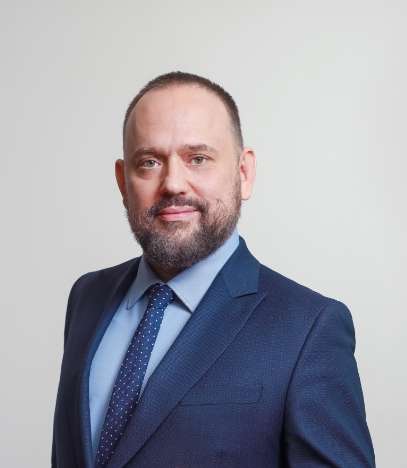
Robert Nogacki is a Polish attorney at law (radca prawny), the founder and managing partner of Kancelaria Prawna Skarbiec (Skarbiec Law Firm), which has operated continuously since 2006.
The law is equal for everyone, but the parties rarely are: on one side stands an organization with time, money, and lawyers, on the other a person with one business, one nest egg, and one life.
Clients rarely come to him with a legal problem. They come with a problem that also has a legal side: an audit that began with a single invoice, money entrusted to someone who has disappeared, a company that has to be passed on before it is too late. Most such matters are decided long before the first letter is written, in decisions made without asking and in deadlines nobody remembered. So he begins by asking how the client got here, not what the client should have done.
He advises entrepreneurs and families from more than a dozen countries, including those whose accounts the tax office has just seized and who do not know what to do tomorrow morning. He defends them in tax audits, customs and fiscal inspections, disputes with the tax authorities, and criminal tax proceedings. He represents victims of investment fraud and Ponzi schemes. He helps families set up family foundations and plan succession, so that a life’s work outlasts a single generation.
Not every case can be won. Every case can be run so that the client knows where they stand. Since 2006 he has represented the victims in the WGI case (Warszawska Grupa Inwestycyjna, the Warsaw Investment Group), one of the longest criminal cases in the history of the Polish financial market, because some things must not be left half finished, even when they take two decades. In the case of the collapsed cryptocurrency exchange Zonda (Zondacrypto, operated by BB Trade Estonia OÜ), he represents several hundred victims in the criminal investigation conducted by Poland’s National Prosecutor’s Office and in the Estonian bankruptcy proceedings.
Kancelaria Prawna Skarbiec is listed in the rankings of Poland’s largest tax advisory firms published by Dziennik Gazeta Prawna and Rzeczpospolita, and it is a four-time recipient (2015 to 2018) of the European Medal awarded by the Business Centre Club and the European Economic and Social Committee. Robert Nogacki publishes regularly, in the press and on the firm’s website, for people who have a problem rather than a law degree, because a legal opinion the client cannot understand protects only the lawyer.
He believes that the best legal advice is the kind that means the client never has to appear in court.