
Confessions of a Defense Attorney: When Your Dream Client Becomes Your Worst Nightmare
Let me tell you about the kind of case that makes defense attorneys simultaneously salivate and reach for their Maalox. Our latest reminder just landed in Bogotá – none other than Fabio Ochoa.
Former Medellín cartel founder Fabio Ochoa Vasquez has returned to Colombia as a free man after serving more than 20 years in a US prison for drug trafficking. The 67-year-old landed in Bogotá on Monday following his deportation from the United States.
The story of Fabio Ochoa Vasquez presents a fascinating case study in client relationships and the challenges of managing high-profile criminal defense cases. The case exemplifies a recurring challenge in the legal profession: clients who turn against their attorneys, often leading to post-conviction claims of ineffective assistance of counsel.
The Call Every Defense Attorney Dreams Of (Be Careful What You Wish For)
Picture getting that call: “Hey, want to defend a founder of the Medellín cartel?” It’s like being offered the legal equivalent of a Super Bowl case. Your inner voice screams “Career maker!” while your ulcer whispers “Career breaker!”
The Reality Check (Or: How I Learned to Stop Worrying and Love the Headache)
Here’s what they don’t teach you in law school: defending a high-profile client who thinks “innocent” and “caught red-handed” are merely suggestions. Our friend Ochoa was moving 30 tonnes of cocaine monthly – that’s not a typo, folks, that’s enough powder to make Tony Montana blush – yet launched a public campaign called “Soy Inocente.”
Pro tip: When your client is mass-producing innocence pamphlets at a rate that would make Pablo Escobar’s industrial weight-based accounting system look like a corner store cash register, it’s time to stock up on antacids.
The Twenty Attorney Tango
Most clients have one lawyer. Some have two. Ochoa? He assembled a legal team the size of a small law firm – TWENTY attorneys! That’s not a defense team; that’s a legal flash mob. And still, it wasn’t enough because…
Despite having assembled an impressive team of approximately twenty attorneys – a move that should have provided robust legal coverage – Ochoa later attempted to vacate his conviction by claiming misconduct by one of his pre-extradition attorneys.
The former cartel boss was sentenced in 2003 to over 30 years in US prison for trafficking approximately 30 tonnes of cocaine monthly into the United States between 1997 and 1999. His arrest came during the US-led Operation Millennium in 1999, following an earlier release from Colombian prison in 1996.
According to a United States Court of Appeals ruling, Ochoa claimed one of his pre-extradition attorneys attempted to orchestrate a $30 million bribe scheme disguised as a plea agreement.
The allegations emerged in Ochoa’s appeal to vacate his conviction, where he asserted that Perez, while representing both him and Nicholas Bergonzoli (an uncharged cooperator with the government), tried to convince him to pay the massive sum as part of a fraudulent plea negotiation that would benefit Bergonzoli.
This alleged corruption attempt occurred during a critical period when Ochoa was fighting extradition from Colombia to the United States. Initially maintaining his innocence through a public campaign titled “Soy Inocente” (I am Innocent), Ochoa had assembled a team of approximately twenty lawyers to handle his defense.
However, the court ultimately rejected Ochoa’s appeal, noting that he had simultaneously received representation from multiple non-conflicted attorneys who pursued legitimate plea negotiations on his behalf. Among them was one who secured a potential deal offering a reduced sentence in exchange for pleading guilty and waiving formal extradition. After extradition, Ochoa’s new legal team even obtained an offer for a 20-year sentence, all of which he rejected.
The court’s ruling highlighted that the presence of multiple unconflicted attorneys throughout his case undermined Ochoa’s claim that Perez’s alleged corrupt behavior had violated his Sixth Amendment right to effective counsel. The judges concluded that having access to other legitimate legal representation meant Ochoa’s overall defense was not compromised, even if one attorney had ulterior motives.
These allegations of attorney misconduct were claimed by Ochoa and were never confirmed by the court.
The Lesson (Besides “Update Your Malpractice Insurance”)
The truth is, sometimes your biggest obstacle isn’t the prosecution, the evidence, or even the law – it’s managing client expectations. They want Perry Mason meets Harry Houdini, and when you turn out to be just a mortal attorney working within the bounds of reality, well… that’s when the ineffective assistance claims start flying.
Epilogue: Free at Last (And Still Complaining)
Now Ochoa’s back in Colombia, a free man at 67, probably still maintaining his innocence. Meanwhile, somewhere, twenty attorneys are adding “survived representing a cartel boss” to their resumes and updating their therapy appointments.
Remember kids: When a legendary criminal case comes knocking, sometimes the best defense strategy for a defense attorney is… to be mysteriously unavailable!
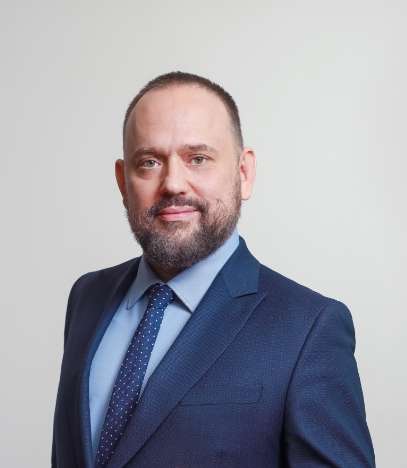
Robert Nogacki is a Polish attorney at law (radca prawny), the founder and managing partner of Kancelaria Prawna Skarbiec (Skarbiec Law Firm), which has operated continuously since 2006.
The law is equal for everyone, but the parties rarely are: on one side stands an organization with time, money, and lawyers, on the other a person with one business, one nest egg, and one life.
Clients rarely come to him with a legal problem. They come with a problem that also has a legal side: an audit that began with a single invoice, money entrusted to someone who has disappeared, a company that has to be passed on before it is too late. Most such matters are decided long before the first letter is written, in decisions made without asking and in deadlines nobody remembered. So he begins by asking how the client got here, not what the client should have done.
He advises entrepreneurs and families from more than a dozen countries, including those whose accounts the tax office has just seized and who do not know what to do tomorrow morning. He defends them in tax audits, customs and fiscal inspections, disputes with the tax authorities, and criminal tax proceedings. He represents victims of investment fraud and Ponzi schemes. He helps families set up family foundations and plan succession, so that a life’s work outlasts a single generation.
Not every case can be won. Every case can be run so that the client knows where they stand. Since 2006 he has represented the victims in the WGI case (Warszawska Grupa Inwestycyjna, the Warsaw Investment Group), one of the longest criminal cases in the history of the Polish financial market, because some things must not be left half finished, even when they take two decades. In the case of the collapsed cryptocurrency exchange Zonda (Zondacrypto, operated by BB Trade Estonia OÜ), he represents several hundred victims in the criminal investigation conducted by Poland’s National Prosecutor’s Office and in the Estonian bankruptcy proceedings.
Kancelaria Prawna Skarbiec is listed in the rankings of Poland’s largest tax advisory firms published by Dziennik Gazeta Prawna and Rzeczpospolita, and it is a four-time recipient (2015 to 2018) of the European Medal awarded by the Business Centre Club and the European Economic and Social Committee. Robert Nogacki publishes regularly, in the press and on the firm’s website, for people who have a problem rather than a law degree, because a legal opinion the client cannot understand protects only the lawyer.
He believes that the best legal advice is the kind that means the client never has to appear in court.