An Office Above a Kitchenware Shop: The New York Times on the Zondacrypto Collapse
Robert Nogacki, attorney at law | August 23, 2026
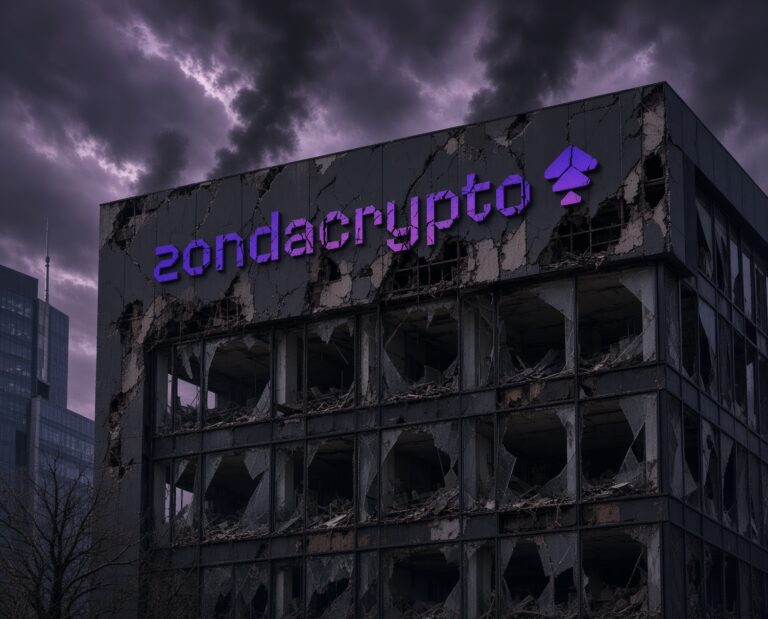
The registered headquarters of a cryptocurrency exchange that claimed 1.3 million clients occupied a modest second floor outside Tallinn, one flight up from a kitchenware shop and next door to a nail salon. The lobby mailbox had been filling, unattended, for months. The salon’s employees could not recall anyone ever entering the office. That image, recorded by reporters for The New York Times, says more about Zondacrypto than any of its financial statements ever did.
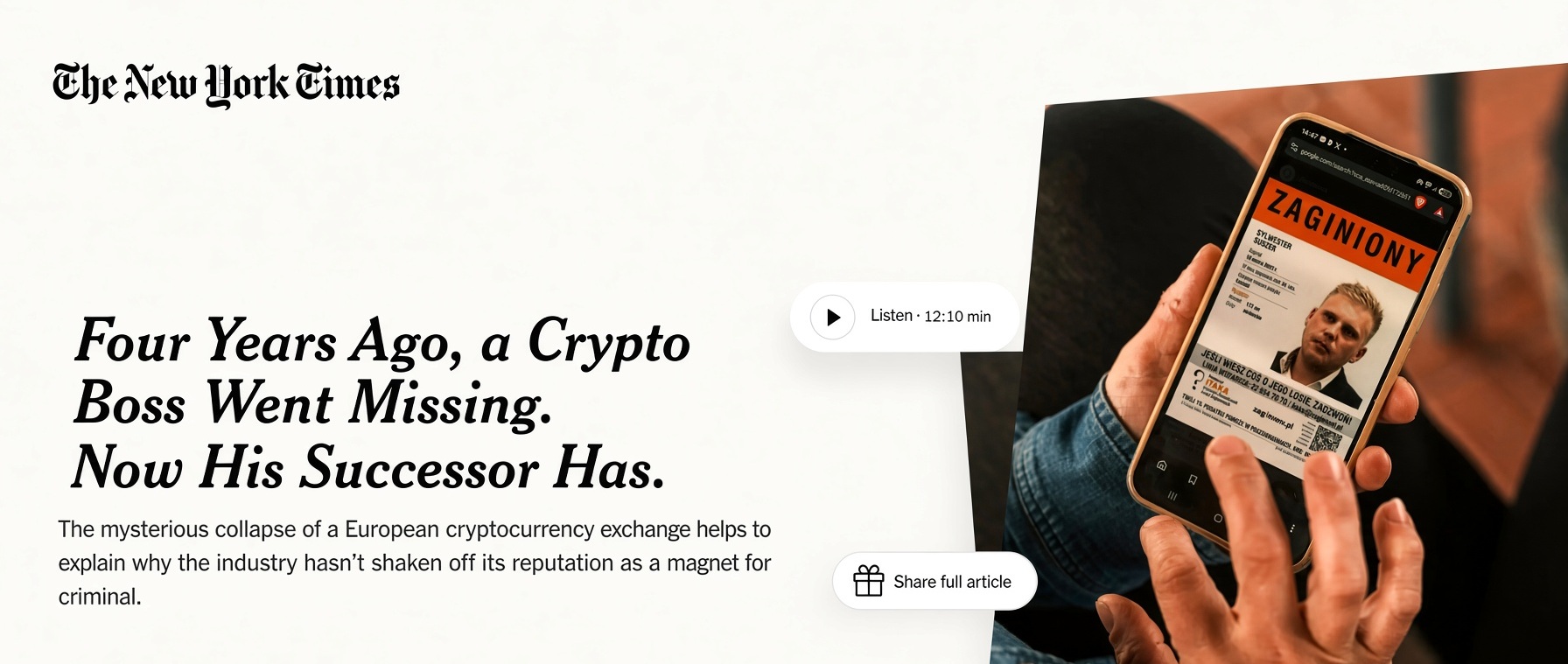
On August 23, 2026, the Times published a long investigative feature under the headline “Four Years Ago, a Crypto Boss Went Missing. Now His Successor Has.” Its author, Andrew Higgins, the paper’s East and Central Europe bureau chief, reported from Katowice, Warsaw, and Tallinn. For the exchange’s clients, the publication matters in a way that is easy to state and hard to overstate: the Zondacrypto affair has ceased to be a regional scandal and entered the global record, with everything that implies for the authorities now handling it.
From Katowice to Tallinn
The Times reconstructs the story from its beginning. Zondacrypto was founded in Katowice in 2014 under the name BitBay and grew, for a time, into the largest cryptocurrency exchange in Central and Eastern Europe. When Polish regulators began asking questions in 2018, its founder, Sylwester Suszek, went looking for a friendlier jurisdiction: first Malta, without success, then Estonia, where in October 2020 the business was registered as BB Trade Estonia, the eventual parent of the exchange by then rebranded as Zondacrypto.
The Estonian chapter is rendered without mercy. Higgins recalls a 2022 report by the country’s Financial Intelligence Unit which found that nearly three quarters of the crypto firms under its supervision had not filed a single suspicious transaction report in 2021. Zondacrypto was among them, while claiming to serve over a million clients, most of them in Poland. The office above the kitchenware shop completes the picture: supervision that existed, for years, chiefly on paper.
Two Vanishings
The account is organized around two disappearances. In March 2022, Suszek drove to a business meeting at a fuel depot in Czeladź, near Katowice, and was never seen again; his family received ransom demands payable in Bitcoin and now assumes the worst. Prosecutors later charged a close business associate of his, the man who ran the depot, with participation in an organized criminal group, VAT fraud, money laundering, and unlawful deprivation of liberty in connection with the disappearance. After the charges were filed, he vanished as well.
Control passed to the exchange’s lawyer, Przemysław Kral, a resident of Monaco. The Times sets two lines of his tenure side by side: on one hand, a lavish marketing program (football sponsorships in Poland, Italy, and Estonia, support for the Polish Olympic Committee, an appearance in Davos this past January), and on the other, Estonian auditors’ growing doubts as to whether the assets shown in the financial statements for 2023 and 2024 existed at all.
In April, the exchange’s website went dark and withdrawals from Zondacrypto were frozen. Kral was last heard from on April 16, in a video assuring clients that they would be made whole from a reserve of 4,500 Bitcoins worth more than 330 million dollars. The difficulty was that the key was said to be known only to Suszek, missing for four years, and analysts noticed at once that the wallet in question had been dormant for nearly a decade. The exchange’s own token, ZND, has lost more than 99.9 percent of its value. In late June, the Estonian authority revoked the parent company’s license, and prosecutors in Katowice opened an investigation into the circumstances of Zondacrypto’s creation and operation. The Times also records public statements by Prime Minister Donald Tusk linking the exchange to Russian intelligence, organized crime, and parts of the political right; in fairness, these remain political assessments, not charges filed in any proceeding.
“A Fraud From the First Day”
I appear in the piece as counsel for the exchange’s clients. I will not pretend indifference: a Warsaw attorney does not often find himself quoted in a New York Times investigation. I told Higgins what I have been telling my own clients for months: the disappearance of one crypto boss is bad enough, but two in four years is, as the paper quotes me, “crazy bad”, and nothing about this company makes any sense. Of all the sentences a lawyer polishes for an interview, the newspaper naturally chose that one. There are moments when precision requires simplicity.
The assessment that matters most is the one the Times chose as the closing sentence of the entire piece, and a closing sentence is the one that stays with the reader. I had argued it in filings, in the firm’s published analyses, and in the Polish press long before it reached a global readership: on one point I have no doubt. It was a fraud from the first day. As for Kral’s whereabouts, my working hypothesis, and it is no more than that, an inference from the available traces, is Southeast Asia; the press has reported unconfirmed sightings in Israel, Botswana, and Dubai.
What Global Attention Actually Changes
Honesty first: no newspaper article, however good, returns anyone’s money. International attention nevertheless has three tangible effects here. First, investigations described in one of the world’s leading newspapers are harder to conduct at a leisurely pace; public scrutiny is a real variable in the tempo of proceedings. Second, the Estonian supervisory apparatus, whose years of inaction the report documents in detail, now operates under observation, which matters for the proceedings pending in Estonia against the exchange’s parent company. Third, journalism of this caliber attracts new witnesses, whistleblowers, and documents. Each of these works to the advantage of the injured clients.
On Shame, and Where It Belongs
The report also settles a question that returns, again and again, in conversations with Zondacrypto’s clients: how could I have fallen for it. Consider the scale of what the Times describes: sponsorship of major football clubs in three countries, the national Olympic Committee, a platform in Davos. Machinery of that kind is built for one purpose, to disarm the vigilance of careful and experienced people. The shame belongs to the architects of the scheme, not to its victims.
The Zondacrypto case has acquired an international dimension, and that is the central news of the Times publication.
The analyses linked above are published in Polish.
The facts above follow the reporting of The New York Times and publicly available information as of August 23, 2026.
Criminal Defence
In Poland the evidence that decides a criminal case is gathered before the trial, not at it. We enter the case at the first summons and stay through interrogations, indictment and cassation.
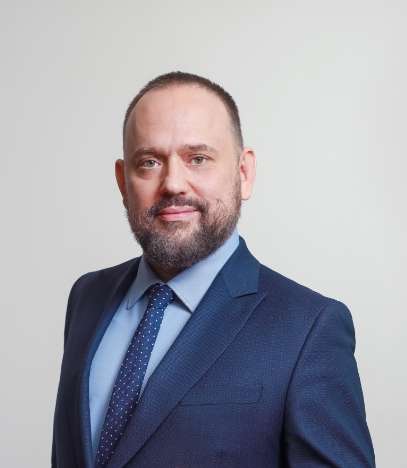
Robert Nogacki is a Polish attorney at law (radca prawny), the founder and managing partner of Kancelaria Prawna Skarbiec (Skarbiec Law Firm), which has operated continuously since 2006.
The law is equal for everyone, but the parties rarely are: on one side stands an organization with time, money, and lawyers, on the other a person with one business, one nest egg, and one life.
Clients rarely come to him with a legal problem. They come with a problem that also has a legal side: an audit that began with a single invoice, money entrusted to someone who has disappeared, a company that has to be passed on before it is too late. Most such matters are decided long before the first letter is written, in decisions made without asking and in deadlines nobody remembered. So he begins by asking how the client got here, not what the client should have done.
He advises entrepreneurs and families from more than a dozen countries, including those whose accounts the tax office has just seized and who do not know what to do tomorrow morning. He defends them in tax audits, customs and fiscal inspections, disputes with the tax authorities, and criminal tax proceedings. He represents victims of investment fraud and Ponzi schemes. He helps families set up family foundations and plan succession, so that a life’s work outlasts a single generation.
Not every case can be won. Every case can be run so that the client knows where they stand. Since 2006 he has represented the victims in the WGI case (Warszawska Grupa Inwestycyjna, the Warsaw Investment Group), one of the longest criminal cases in the history of the Polish financial market, because some things must not be left half finished, even when they take two decades. In the case of the collapsed cryptocurrency exchange Zonda (Zondacrypto, operated by BB Trade Estonia OÜ), he represents several hundred victims in the criminal investigation conducted by Poland’s National Prosecutor’s Office and in the Estonian bankruptcy proceedings.
Kancelaria Prawna Skarbiec is listed in the rankings of Poland’s largest tax advisory firms published by Dziennik Gazeta Prawna and Rzeczpospolita, and it is a four-time recipient (2015 to 2018) of the European Medal awarded by the Business Centre Club and the European Economic and Social Committee. Robert Nogacki publishes regularly, in the press and on the firm’s website, for people who have a problem rather than a law degree, because a legal opinion the client cannot understand protects only the lawyer.
He believes that the best legal advice is the kind that means the client never has to appear in court.