
The Debtor Who Wasn’t on the Books
Rafał Z., Poland’s loudest trader, sits in a Katowice jail, charged with misappropriating 1.7 million zloty belonging to the operator of Zondacrypto. Five years of BitBay’s financial statements suggest that figure is the beginning of the questions, not the end.
Wednesday, September 2, 2026. On Wita Stwosza Street, in Katowice, officers of Poland’s Central Bureau for Combating Cybercrime escort a man through the doors of the Silesian branch of the National Prosecutor’s Office. He is Rafał Z., for a decade the most conspicuous speculator in the country, a trader who built a following by turning his brokerage account into a spectator sport. He manages one sentence for the reporters on the sidewalk: “I am a victim.” Thursday: a prosecutor presents him with a single charge, misappropriation of entrusted property belonging to the operator of Zondacrypto, in the amount of 1.7 million zloty, roughly four hundred and fifty thousand dollars. “He was entrusted with money for a specific purpose, and he spent it on his personal needs,” the spokeswoman for the Prosecutor General explains. The suspect denies the charge but gives a statement. Friday morning, after a hearing that ran through the night, the district court in Katowice orders him held for three months, along with two women detained the same Wednesday: Anna P., a close associate of Marian W., the principal suspect in the disappearance of Sylwester Suszek, and Jaromira W., his former wife. Prosecutors cite a high probability that the acts were committed, the severity of the potential sentence, and the risk of witness tampering and flight. The charge against Rafał Z. carries up to ten years; it has, prosecutors stress, nothing to do with the disappearance of Suszek, the founder of the BitBay exchange, who vanished in 2022.
Detention is not a verdict, and a charge is not a finding. Everything that follows is a reading of public documents and published reporting, not a judgment on anyone’s guilt. The thesis that grows out of that reading is this: in its own books, BitBay looks less like an exchange than like a pocketbook shared by the people around Sylwester Suszek. The task of keeping Poland’s largest crypto market liquid was handed to an Internet personality whose only company with a known financial statement had no sales. And a reliable balance sheet for BitBay probably never existed. What existed were successive versions of a total that had to add up on December 31st. Against that backdrop, the 1.7 million zloty in the charge is a rounding error. It is worth explaining why.
Rewind almost six years, to the last day of 2020. Suszek, then the boss of BitBay, presses record and calls Rafał Z. He does not ask about the markets. He tells him that he owes money on a scale that “cannot be described,” that “with this Dubai thing you went way too far,” and that he has “no debtor like you.” Rafał Z. does not deny it. He says he has a “debt” to Suszek, that he lost “a lot, a great deal of my own,” and that he regrets not having “let it go in 2018.” No figure is mentioned. The recording was published by the daily Rzeczpospolita on April 24, 2026; prosecutors confirmed it was authentic and placed it in the case file.
If, in December of 2020, the president of BitBay had the largest debtor of his life, that debtor ought to appear in the company’s books. So I checked. On my desk is the complete run of financial statements of BitBay sp. z o.o., the Polish limited-liability company registered under number 0000373405, for the years 2016 through 2020: balance sheets, income statements, explanatory notes, management reports for 2016, 2017, 2019, and 2020, and the minutes of a shareholders’ meeting held on December 8, 2017, all downloaded from the Polish court registry’s repository of financial documents. Rafał Z. is not in them. Neither is Krypto Jam, his company. There is no loan to a market maker, no receivable from one, no write-down on a debt that would later become the subject of a lawsuit for thirty-two million zloty. What there is, instead, is a balance sheet that swelled to a hundred and six million zloty in 2018, in which nearly every large line item has no name attached. (A zloty is worth roughly a quarter of a dollar; a hundred and six million zloty is, give or take, twenty-seven million dollars.) I wrote in April about how this company grew and how it was quietly struck from the registry while everyone was looking elsewhere. This week’s charge sends me back to the same documents with one narrower question: where, in all of this, is Krypto Jam?
What Suszek Alleged, and What Survived in Court
Start with what is certain, meaning what is documented or adjudicated.
Krypto Jam S.A. (registry No. 0000717002) was entered in the commercial register on February 6, 2018, a joint-stock company with share capital of a hundred and three thousand zloty, divided into 2,060,000 shares with a nominal value of five grosz apiece, roughly a penny. Its president and sole board member was Rafał Z. On May 18, 2018, he announced on Facebook a contract with BitBay “worth twenty million zloty,” which, as the trade press reported at the time, was to cover the tokenization of shares, the placement of initial coin offerings, and crypto trading for institutional clients. The announcement came days after BitBay said it was moving its operations to Malta. In practice, as Rzeczpospolita, the news portal Wirtualna Polska, and former employees describe it, Krypto Jam became BitBay’s market maker: its job was to generate Bitcoin trading volume on the exchange. It hired ten traders. Each was given three Bitcoin and a hundred and fifty thousand zloty a month to work with. The money, the traders say, came from Suszek. The arrangement lasted less than a year.
On June 18, 2018, a month after the BitBay deal, Krypto Jam announced that it had found a strategic investor. A Dubai company called Atriumbay Investment subscribed for sixty thousand Series B shares at 33.34 zloty each, a shade over two million zloty, and on that basis Krypto Jam valued itself at more than sixty-eight million. Rafał Z. explained the provenance of his new partner in public: “We at Krypto Jam did market making and arbitrage for one of the firms Atriumbay had invested in.” Krypto Jam made a market on exactly one exchange. An investor in that exchange, from Dubai, was now buying into the market maker. I will return to this, because Dubai shows up in BitBay’s books earlier than some of the recent reporting suggests.
In 2023, BB Trade Estonia OÜ, the Estonian company that by then operated the exchange under its new name, Zondacrypto, sued Krypto Jam in the Warsaw Regional Court for more than 6.2 million zloty plus interest and for the return of a hundred and fifty Bitcoin plus interest, a claim worth, at the exchange rate of the day it was filed, more than thirty-two million zloty. The legal basis was a loan. No one had written the loan down. Its terms, the complaint said, were to be reconstructed from e-mails, messenger chats, and the “history of exchange accounts kept first at BitBay and later at Zondacrypto.” The defense argued that the Bitcoin had not been a loan at all but working capital for market making. On April 24, 2026, the court issued a partial judgment dismissing the claim for the hundred and fifty Bitcoin; the case over 6,285,037.10 zloty continues. Several Polish outlets reported that day that the court had “awarded” that sum. The court itself confirmed to Rzeczpospolita only the dismissal of the Bitcoin claim and the continuation of the rest, so I go with the court. On August 27, 2026, a court in Harju County declared BB Trade Estonia bankrupt, and the claim against Krypto Jam became an asset of a bankruptcy estate administered by a trustee named Margus Lentsius. That matters to the exchange’s customers, and I will come back to it.
That is what we know. The rest is in the ledgers.
Five Balance Sheets, One Company
BitBay sp. z o.o. was founded in Katowice, the capital of Poland’s coal country, under articles dated February 7, 2014. In 2016 its vice-president was Marek Knisz, its address was a flat at 2/6 Zacisze Street, and its share capital was raised from five thousand to a hundred thousand zloty. From 2017 the president was Sylwester Suszek and the address was 45 Kępowa Street. The figures for five years, in zloty at year-end, look like this:
| Line item | 2016 | 2017 | 2018 | 2019 | 2020 |
|---|---|---|---|---|---|
| Revenue | 604,608 | 42,603,986 | 23,660,802 | 158,778 | 205 |
| Net result | -280,634 | 551,315 | 9,633,351 | -359,356 | -66,925 |
| Total assets | 4,607,868 | 48,021,754 | 106,073,108 | 105,226,948 | 106,083,063 |
| Cash | 2,714,629 | 40,460,278 | 2,010,807 | 1,979,196 | not disclosed |
| Loans granted to third parties | 200,000* | 3,776,574** | 37,259,819 | 36,299,819 | not disclosed |
| Other short-term receivables | 1,388,442 | 1,452,086 | 65,689,818 | 65,684,012 | 67,104,865*** |
| Loans and credits received | 0 | 26,607,239 | 14,845,545 | 14,245,545 | 14,245,545 |
| Other short-term liabilities | 4,695,149 | 19,250,202 | 80,534,816 | 80,693,536 | not disclosed |
| Equity | -579,784 | -27,377 | 9,395,241 | 9,035,754 | 8,968,829 |
* A loan to a related party. ** Shown in the 2017 balance sheet as “other short-term financial assets”; in the comparative figures of the 2018 statement, the same amount appears under “loans granted.” *** Total short-term receivables, in the abbreviated balance sheet of a micro-entity.
Read it year by year, because each year tells a different part of the same story.
2017: A Profit That Evaporated in Financial Costs
In 2017, the peak of the crypto boom, BitBay’s revenue grew seventyfold, to 42.6 million zloty. Operating costs were 8.9 million. Profit on sales: 33.7 million. Operating profit: 33.5 million. And then a single line in the income statement swallows nearly all of it. Financial costs: 32,744,392.59 zloty, of which interest accounts for 2,607,432.11 and “other” for 29,953,985.17. Pre-tax profit falls to 894,869.17 zloty, income tax is 343,554, and net profit is 551,315.17. The management report for 2017 spends not one word on this. It notes a “dramatic rise in revenue” and a profit “in the amount of 551,315.17 zloty.”
Where does 2.6 million in interest come from, in a company that had no borrowings a year earlier? The balance sheet answers: at the end of 2017, under short-term liabilities to non-related parties, in the line for “loans and credits,” there is 26,607,239.34 zloty. The statement does not say who lent twenty-six million zloty to a company with negative equity, or on what terms. The note on related-party transactions in the following years reads, year after year, “Not applicable.” Where do thirty million zloty in “other” financial costs come from, in a year when Bitcoin rose more than tenfold? The documents do not say. In my April analysis I suggested the most probable explanation: the gap between what customers deposited and what they withdrew after prices had risen. That remains a hypothesis the statements do not allow anyone to confirm.
The balance sheet at the end of 2017 is not yet illegible on its own: 40.5 million in cash, 3.8 million in other financial assets, 47.8 million in short-term liabilities, of which 19.3 million are “other” (presumably customer balances) and 26.6 million are the loans just mentioned. A year later the picture falls apart.
2018: The Cash Disappears and Loans with No Names Appear
Twenty-eighteen is the Krypto Jam year. BitBay’s revenue falls forty-five per cent, to 23.7 million zloty; from May, the operating business shifts to Malta, to a company called Pinewood Holdings Limited, and the revenue goes with it. Outsourced-services costs rise from 5.8 to 9.5 million. Net profit is 9,633,351.29 zloty. Income tax: zero. The accumulated losses that might explain a zero tax bill amounted to just under 340,000 zloty at the start of the year. The discrepancy demands an explanation; the statement offers none.
The balance sheet grows from 48 to 106 million zloty, and its structure changes completely. Cash falls from 40.5 million to 2.0 million. In its place come two items: “loans granted” to non-related parties, 37,259,819.46 zloty, and “other receivables,” 65,689,817.72. On the liabilities side, “other” short-term liabilities rise from 19.3 to 80.5 million. In plain terms: at the end of 2018 the company owed someone, most likely its customers, about eighty million zloty, and that debt was covered by two million in cash, thirty-seven million in loans to unnamed borrowers, and sixty-six million in receivables from unnamed debtors.
Note 22 explains the loans in one sentence: “Loans granted in the course of the Company’s core business.” BitBay’s core business, by its own description, was Internet portals, data processing, and payment intermediation. Lending thirty-seven million zloty was not on the list. Moreover, interest income in the 2018 income statement is zero. Thirty-seven million zloty in loans that earn no interest are either interest-free loans, or loans on which nobody bothered to accrue interest, or something that is a loan in name only. In 2019 the balance falls by exactly 960,000 zloty, to 36,299,819.46, and there it freezes. There is no impairment on the loans in any year.
There are smaller signals, too, of the kind an auditor would call red flags. Assets under construction, 1.38 million zloty at the start of 2018 and increased by 2.21 million during the year, vanish from the balance sheet through a “reclassification” of 3.52 million without landing in any category of fixed assets; in the same year the income statement shows a 1.54-million loss on the disposal of non-financial fixed assets, and of vehicles with a gross value of 740,000 zloty the company disposes of 654,000. Trade payables at the end of 2018 are ninety-six per cent overdue, 346,000 of them by more than a year, in a company reporting a 9.6-million profit. Trade receivables are overdue in their entirety. Note 15 discloses a “correction of fundamental errors” that reduces equity by 210,733 zloty, without saying what the errors were. Accrued liabilities of 288,774.48 zloty do not change by a single grosz from 2016 to 2019. There is no cash-flow statement and no auditor’s report, although the thresholds in Article 64(1) of Poland’s Accounting Act of September 29, 1994, were exceeded; I noted this in April as well.
And then there is the calendar. The 2018 statement reached the registry on March 13, 2020, eight months past the filing deadline, and its notes bear the same date of preparation as the notes for 2019: March 31, 2020. The two statements were written at the same time, with full knowledge of what had happened in 2019. The Accounting Act requires approval within six months of the balance-sheet date (Article 53(1)) and filing within fifteen days of approval (Article 69(1)). This was not a first. The shareholders’ meeting approving the 2016 statement was held on December 8, 2017, more than five months late, and in its minutes Resolution No. 3 is followed by Resolution No. 5. There is no No. 4.
2019 and 2020: A Frozen Balance Sheet and a Company That “Does Not Prepare a Management Report”
From 2019, BitBay sp. z o.o. stops being an exchange. The management report dated May 14, 2020, says so outright: until November, 2019, the company lived on fees for licensing the exchange to Pinewood Holdings Limited, in Malta, and from November, 2019, on fees from BB Trade Estonia OÜ. Revenue: 158,777.61 zloty. Loss: 359,355.66. But the balance sheet does not shrink with the business. It stays at 105 million: 65.7 million in “other receivables,” 36.3 million in loans, 80.7 million in “other liabilities,” 14.2 million in loans received. A company with licensing income of about thirteen thousand zloty a month, roughly the salary of a mid-level Polish manager, carries ninety-six million in liabilities on its books and explains them to no one. The note on related-party transactions: “Not applicable,” although its only counterparties are successive incarnations of the same exchange.
In 2020 the company reclassifies itself as a “micro-entity,” taking advantage of every simplification that Article 3(1a) and Appendix 4 of the Accounting Act allow: a balance sheet of a few lines, no breakdown of receivables, no disclosure of cash, no notes on the loans. Revenue: 205.29 zloty, about fifty dollars. Loss: 66,924.71. In the additional information the board declares that “the entity does not prepare a management report,” while a management report dated September 1, 2021, is nonetheless filed with the registry, in which Sylwester Suszek writes that, owing to the pandemic, activity “was reduced to the absolute minimum” and that “circumstances exist indicating a threat to the continuation of the Company’s business.” Six months later he will disappear. The company will never file another statement, and on February 17, 2026, the district court in Katowice will strike it from the registry without liquidation, finding that it has no assets. A hundred and six million zloty of assets on the last balance sheet will leave no document behind.
Three things in these two years catch a lawyer’s eye. First, share capital. The management reports for 2019 and 2020 give it as 105,000 zloty divided into 2,100 shares; the balance sheets and notes for the same years show 100,000 zloty and 2,000 shares. Second, ownership. In December, 2017, the shareholders were Arial Investment in Commercial Enterprises L.L.C. (38.5 per cent), Skybay Investment in Commercial Enterprises L.L.C. (47 per cent), and two individuals. A year later the individuals are gone, replaced by a third company from the same family, Central Bay Investment in Commercial Enterprises L.L.C. (15 per cent). “Investment in Commercial Enterprises L.L.C.” is the boilerplate suffix of holding companies registered in Dubai. Rzeczpospolita reported in April that Suszek had moved his shares to three Emirati companies “before he disappeared.” The documents show something more: two of those companies were already BitBay’s shareholders in 2017, and the third arrived in 2018. The Dubai structure predates the Krypto Jam deal; it did not follow it. Third, the name of the investor that bought into Krypto Jam in June, 2018: Atriumbay Investment, of Dubai. Skybay, Central Bay, Atriumbay. Rafał Z. himself said that Atriumbay had invested in the firm for which Krypto Jam made a market. Whether Atriumbay belongs to the same group as BitBay’s shareholders cannot be established from Polish documents; it is a hypothesis that only an authority with access to Emirati registries can test. If it were confirmed, the two million zloty from a “strategic investor” would turn out to be one more channel through which money from BitBay’s orbit flowed to Krypto Jam, and “with this Dubai thing you went way too far” would acquire a very specific meaning. If it were not confirmed, a coincidence of names would remain a coincidence of names.
Where in These Books Is Krypto Jam?
Back to the question I started with. The debt that Suszek called the largest of his life, and that the exchange’s operator priced at thirty-two million zloty in its lawsuit, must have arisen in 2018, during the Krypto Jam engagement. It should therefore be visible in BitBay’s balance sheet as of December 31, 2018. I see two possibilities, and neither speaks well of the statements.
The first: the Krypto Jam debt is hidden inside an aggregate. On December 31, 2018, Bitcoin traded at about fourteen thousand zloty, so a hundred and fifty Bitcoin were worth about 2.1 million; with 6.2 million on top, that comes to roughly 8.3 million zloty. The amount fits comfortably inside the 37.3 million in “loans granted to non-related parties.” If that is where it sits, then the company lent tens of millions of zloty without disclosing a single borrower, without accruing interest, and without booking an impairment even when its president, according to Rzeczpospolita, was recording the debtor to have evidence for court. The 2019 statement, signed on March 31, 2020, nine months before that phone call but after former traders quoted by Rzeczpospolita recall Suszek storming into the Krypto Jam office “furious,” contains no write-down on such a receivable. Neither does the 2020 statement, signed in September, 2021, nine months after the call. The prudence principle in Article 7(1) of the Accounting Act requires a company to reflect any diminution in the value of its assets. Here nothing was reflected.
The second possibility, in my view more probable though no better proved, follows from the lawsuit itself. BB Trade Estonia had no loan agreement; it reconstructed the terms from the “history of exchange accounts kept first at BitBay and later at Zondacrypto.” That suggests the money for Krypto Jam never left the company as a loan booked in the general ledger. It was credited to Krypto Jam’s trading account on the exchange as a user balance, and then withdrawn. A user account funded without a deposit is a liability of the exchange to a user with no corresponding asset. When the user withdraws, the liability vanishes, and cash or Bitcoin belonging to other customers leaves the common pool. No receivable arises in the general ledger, because formally no one lent anyone anything. What arises is a hole. That is precisely the title of an internal spreadsheet dated July 7, 2021, which Wirtualna Polska obtained: “Dziura,” the Hole, a currency-by-currency comparison of customer balances against actual holdings, totalling minus 150,587,368.73 euros. Asked whether that figure includes the money passed to Rafał Z., a former exchange employee tells the WP reporters: “Yes. All of it was taken from customer accounts.” That is the word of an anonymous source, and the portal itself notes that the source is a person within the investigation’s orbit; I treat it accordingly, as a lead rather than as evidence. But if it is true, the Krypto Jam debt is absent from BitBay’s balance sheet because BitBay’s balance sheet never saw it. Only the exchange’s database did. The claim “migrated” to BB Trade Estonia along with the user-account database, because the account, not a contract, was what carried it. That would explain why an Estonian operator founded in 2019 sued over money paid out by a Polish company in 2018, and why the Polish company could be struck from the registry in 2026 as having no assets.
There is another side to this same bookkeeping. Krypto Jam’s management report for 2018, as quoted in February, 2020, by the blog Forex Random Walk, reports a loss of 249,101.43 zloty “with no sales.” I have not seen the original document, and before publication it should be checked against the registry copy. If the quotation is faithful, then a company that announced a contract “worth twenty million zloty,” received two million from an investor, and employed ten traders at three Bitcoin and a hundred and fifty thousand zloty a month each, reported not a single zloty of revenue in 2018. A market-making fee, if that is what it was, as the defense in the civil case claims, would have to be Krypto Jam’s revenue. A loan, if that is what it was, as the complaint claims, would have to be Krypto Jam’s liability. Either leaves a trace in a financial statement. A source in the community of aggrieved BigShortBets investors told Rzeczpospolita that Rafał Z. “for years did not file financial statements for his companies.” We would then have two companies between which millions of zloty and hundreds of Bitcoin moved in 2018, and two sets of books in which those movements do not occur. If the exchange employees’ accounts are true, customer money passed from one balance sheet to another without touching either. That sentence is a reconstruction, not a finding; findings belong to the prosecutor and the court.
1.7 Million, 6.3 Million, 32 Million: Three Figures That Never Meet
Now the charge. It is worth reading literally, because its wording says more than it seems to. Rafał Z. is accused of misappropriating entrusted property “belonging to the operator of Zondacrypto,” the company BB Trade Estonia, in the amount of 1.7 million zloty; the money was “entrusted for a specific purpose,” and he “spent it on his personal needs.” That is the language of Article 284, Section 2, of Poland’s Criminal Code of June 6, 1997, read together with Article 294, Section 1, since the property is of “significant value”; hence the ten-year maximum.
Three things in that description stand out. First, the amount. In the civil suit the operator counted 6.2 million zloty and a hundred and fifty Bitcoin, more than thirty-two million in all; after the partial judgment, 6.29 million remains before the court; the prosecutor speaks of 1.7 million. Three proceedings, three figures, and none is a multiple of another. Second, the owner. The prosecutor treats the money as belonging to the exchange’s operator, not to its customers. If the former employees’ claim that everything “was taken from customer accounts” is true, then the owners of the entrusted property were the customers, and the operator was at most its custodian; Article 284, Section 2, requires that the property be entrusted by the person entitled to it, so the charge, in its present form, takes a different road from the accounts given to WP. Third, time. BB Trade Estonia OÜ became the exchange’s operator only in November, 2019. Property “belonging to the operator of Zondacrypto” is therefore, on the plain reading, property from after that date, not from 2018, when Krypto Jam made a market for the Polish company BitBay. The complaint spoke of accounts kept “later at Zondacrypto,” which suggests the flows did not end in 2018. If so, the charge concerns a later episode of the same relationship, and the 2018 strand, the one missing from BitBay’s balance sheets, is for now covered by no charge at all.
I do not know whether the prosecutor will stop at 1.7 million zloty. In practice, a first charge is framed around what can be proved within forty-eight hours of arrest and is broadened as the investigation proceeds; detention exists, among other reasons, to secure evidence and prevent tampering in the meantime. Nor do I know what the suspect said in his statement: the prosecution has disclosed only that he denied the charge and gave one. What I do know is that the word “entrusted” in the charge sounds a great deal like the phrase “working capital for market making” in the civil defense. Both sides agree that money was handed over for some purpose. The dispute is over what became of it and who was in a position to hand it over. The answer to the second question is in the exchange’s rulebook.
The Rulebook That Forbade It Outright
BitBay’s terms of service in force until November 8, 2018, that is, for the entire period of the Krypto Jam engagement, provided in Section 2 that funds deposited by users toward future transactions “remain at the exclusive disposal of the User (BitBay has no ability to dispose of the accumulated funds beyond the instructions given by Users).” The March, 2017, version contained the identical clause. This is not a statute. It is a contractual undertaking by the exchange to every customer. A customer who wired zloty or sent Bitcoin did not hand them to the exchange to own or to trade with. The customer entrusted them.
If, then, the money for Krypto Jam came from customer balances, as former employees claim and as the structure of the lawsuit can be read to imply, we would not be looking at an informal loan between two businessmen, nor at the entrustment of the operator’s own property, but at the disposal of property entrusted to the exchange by its customers, contrary to the agreement with them, in favor of a third party. In the language of the Criminal Code, such fact patterns are examined under the provisions on misappropriation of entrusted property (Article 284, Section 2), abuse of trust in business (Article 296, Section 1), and, on the recipient’s side, the provisions on receiving property derived from a prohibited act (Articles 291 and 292). I do not claim that any of these provisions was violated by anyone beyond what the prosecutor alleges; I have not seen the evidence, and I have not heard the suspect’s account. I point out only that the word “loan” in the Estonian company’s complaint and the word “entrusted” in the prosecutor’s charge both civilize an event that, under the rulebook, was not civilized. The exchange could not lend its customers’ money, because the money was not the exchange’s. Whoever holds the key to the pocketbook does not need a loan agreement, and that is exactly why there is none. An exchange that lends other people’s money is not a creditor. It is a debtor pretending to be a creditor. And if Rafał Z., as Suszek suggests on the tape, obtained funds by saying “in Dubai that he needed them and would send them back,” and then did not, that would be, from Suszek’s point of view, a swindle, and from the customers’ point of view Suszek and his debtor would stand on the same side: both disposing of something that belonged to neither. “I am a victim,” said on Wednesday outside the prosecutor’s office, and “I have a debt to you,” said on New Year’s Eve, 2020, may both be true. A victim of Suszek’s. A debtor, in this hypothesis, to thirty thousand people whose money they were both moving around. I repeat: a hypothesis, not a finding.
Rafał Z.’s Results, or What the Market Never Said
On the tape, Suszek says something about his interlocutor that is both brutal and checkable: a man who said he “made millions” had in truth “lost millions.” What does that arithmetic look like in documents rather than in live streams?
The legend of Rafał Z. begins in 2015 with a live broadcast in which he claimed to turn thirty-five thousand zloty into a million. On that show he built a community called Trading Jam Session, some twenty-three thousand members strong by 2018, and a reputation as the biggest speculator in the country. The results that can be verified on paper look different. Krypto Jam, his only company with a publicly quoted financial statement, had no sales in its most active year and closed it at a loss. The Trading Jam Foundation had revenue of just under twenty-nine thousand zloty in 2016. And this is the most unsettling detail in the entire story: the liquidity of Poland’s largest cryptocurrency exchange was provided by a man whose best-documented result is a live stream. In June and July of 2018, as Krypto Jam’s president negotiating a partnership with Merlin Group, a listed e-commerce company, he bought Merlin shares before the partnership was announced; on June 30, 2025, the Warsaw Regional Court convicted him of insider trading and fined him two hundred and fifty thousand zloty, and in April, 2026, the appellate court upheld the verdict, calling his defense “not credible.” The judgment is final; he has said he will seek cassation before the Supreme Court. It is the only final criminal ruling in this account, and the only thing here that may properly be called a finding.
Then come the projects, whose common denominator is raising money from a community on the promise that this time will be different. BigShortBets, a “decentralized platform” with a token called BigSB: investors filed a criminal complaint over the disappearance of some fourteen to fifteen million zloty, alleging that funds were sent to the Kraken exchange and gambled away there; prosecutors declined to open an investigation, which means the allegation remains the investors’. The “Epic Flip” at Złota 44, the tallest residential tower in Warsaw: an apartment of four hundred and eighty-five square metres, bought in 2022 for twenty-three million zloty, was to be divided into twenty thousand digital shares worth ninety-five to a hundred million in total; in January, 2024, a court, at the request of the building’s owners’ association, barred the sale, the building’s management notified the Financial Supervision Authority, in July, 2024, Rafał Z. “ended the experiment” and promised refunds with a forty-four-per-cent annual bonus, and in October, 2024, he sold the apartment to Fedlan Kilicaslan, a Turkish financier wanted in Turkey for illegal gambling and money laundering and arrested in Spain in April, 2026. In August, 2026, the mixed-martial-arts promotion Fame MMA filed a complaint over roughly a million zloty advanced for promoting the token; that, too, is so far only a complaint.
On the New Year’s Eve tape, Rafał Z. tells Suszek about his plans: he needs to “scale up,” to “do exactly the kind of scale you did with BitBay”; he is thinking about how “to raise a fund, put the money together, then give someone the management,” someone who “likes being the face of a fund.” BigShortBets launched in 2021. Złota 44 came in 2022. BigSB investors reading the transcript today see in it what they describe, in the reporting cited above, as “rolling debts over with new projects.” I see a resemblance to a pattern I know from pyramid cases: new projects finance old obligations, and each round of fund-raising is larger than the last. A resemblance is not proof; it is a reason for someone with subpoena power to look. In April, 2026, Rafał Z. wrote on X that the recording amounted to “revelations torn out of context,” that he had seen the people around the exchange “behind the scenes” and had “withdrawn,” because they were “very, really very dangerous people,” and that he did not plan to leave the country for more than two weeks at a time. On August 10th he boasted that BigShortBets was up more than seven hundred and thirty per cent since the start of the year. Three weeks later, the cybercrime bureau was walking him through a door; two days after that, a court found the risk of flight real enough to hold him.
Caution requires separating facts from judgments. The facts are a final insider-trading fine, a quoted Krypto Jam loss with no sales, a recorded acknowledgment of debt, a thirty-two-million-zloty lawsuit, a charge over 1.7 million zloty, complaints by BigSB investors and Fame MMA, and a court injunction at Złota 44. The judgment is the pattern that, in my view, emerges from them. It is also true that in none of these matters has Rafał Z. been convicted of fraud or misappropriation, that in the BigShortBets matter prosecutors declined to proceed, and that Thursday’s charge has yet to be tested in court.
The Hours After the Arrest: A Token That Began to Vanish
There is one more strand from this week, and it must be handled with the same care as the anonymous employees’ accounts. The collective 44Crew_PL, a group describing itself as white-hat hackers, which has been tracing the money flows of BigShortBets since 2024, posted on X on Wednesday afternoon an on-chain analysis: during the hours of the arrest, wallets the group has long attributed to Rafał Z. began dumping BigSB tokens and pulling liquidity from the pool. The group says the attribution is beyond doubt, because those wallets were the ones that previously added and removed liquidity; as an example, it cites a single address that had already drained about ninety thousand USDC from the pool. The conclusion 44Crew draws is that a contingency plan for an arrest was prepared in advance, and that a trusted person is now executing it. The post was viewed nearly three hundred thousand times.
The effect is visible on the chart. According to CoinGecko, at around 6 P.M. Warsaw time on Wednesday BigSB traded at 0.1738 dollars, down 66.5 per cent in twenty-four hours; the day’s range ran from 0.5194 to 0.17, the market capitalization was 1.035 million dollars, the daily volume 78,959. The price had sat flat at about fifty cents for most of the day and then, over a few hours, fell in steps to seventeen. On Thursday it recovered to around twenty cents, with a market capitalization a little above 1.2 million dollars, still less than half of where it stood before the arrest. Three weeks earlier, on August 10th, Rafał Z. had been bragging on X about the token’s seven-hundred-and-thirty-per-cent gain.
What follows from this, and what does not. That the transactions occurred on the blockchain is verifiable; their hashes are public. Who controlled a wallet at the moment of a transaction is not verifiable from the outside: a man detained in the morning does not sign transactions in the afternoon, so if the wallets are indeed his, someone else must have had access to them; the token may simply have been sold by panicked holders reacting to the news from Katowice; and 44Crew’s attribution of the addresses, as the trade portal CrypS points out, has never been independently confirmed. The portal bitcoin.pl notes, on the other hand, that the link between the addresses and the project itself is documented: CoinGecko labels one of them as BigShortBets’ Liquidity Treasury, and the project’s own website presents the token as tied to Rafał Z. and his community. The history of the dispute matters, too. Since 2024, 44Crew has claimed that about 3.5 million USDC was drained from the BigShortBets liquidity pool, and later, on the basis of published transaction hashes, about 3.84 million dollars in USDC and USDT, sent to Kraken in defiance of a community vote in June, 2022; one investor, with the group’s help, filed a criminal complaint alleging fraud under Article 286 of the Criminal Code. Prosecutors declined to open a case, pointing to the investment character of the token and the absence of evidence of intent from the outset. Rafał Z.’s reply was that BigSB was his “personal token.” Wednesday’s transfers give 44Crew a new argument, but they do not turn an allegation into a finding; that is a job for a forensic accountant with access to the exchanges where the funds ended up, and for a prosecutor who can ask them, and who, since Friday, has three undisturbed months in which to do so.
One sentence about this strand is not a hypothesis but an observation. A token that loses two-thirds of its value in the hours of its creator’s arrest says more about trust in that creator than any press release could. Whoever sold BigSB on Wednesday sold it because they concluded that without Rafał Z. the token has nothing holding it up. It is the harshest review the market could give the project, and it delivered it in a single afternoon.
What the Books Cannot Tell Us, and Who Should Find Out
In my assessment, BitBay’s financial statements for 2016 through 2020 fall short of the standard of a true and fair presentation of the company’s financial position required by Article 4(1) of the Accounting Act. That is the assessment of a lawyer reading documents, not the finding of any authority. The problem is not isolated errors. It is that from 2018 onward more than ninety per cent of the balance sheet consists of items the statements do not explain: loans to unnamed parties, receivables from unnamed debtors, liabilities to unnamed creditors, and loans from unnamed lenders. Whether anyone is answerable for that under Article 77(2) of the same act, which criminalizes the presentation of unreliable data in a financial statement, is for others to decide.
The scale of what needs explaining became visible this week from the other end as well. Court records in Estonia, obtained by WP and TVN24, show that the liabilities of BB Trade Estonia OÜ established in the bankruptcy proceedings amount to at least 431.9 million euros, against identified assets of 167 thousand euros; the trustee, Lentsius, allows that the total of claims lodged may exceed 700 million. The interim administrator’s report dates the loss of access to a cold wallet holding some 4,500 Bitcoin to the end of 2022. In other words, the exchange may have been permanently insolvent for more than three years, during which it trained police officers, prosecutors, and tax inspectors in cryptocurrency, bought television airtime, and signed an 18.5-million-zloty sponsorship deal with the Polish Olympic Committee. The Hole of July, 2021, at 150 million euros, and the hole of August, 2026, at 432 million, are the same hole, five years older.
From BitBay’s books flows a list of questions that only an authority with the power to search and to seize can answer.
Who owes the 37.3 million zloty lent out in 2018, whether Krypto Jam is among the borrowers, and why those loans earned no interest. Who owes the 65.7 million in “other receivables,” and whether the debtor is Pinewood Holdings Limited, in Malta, or BB Trade Estonia OÜ, to which the business, and perhaps the customer balances, were transferred in 2018 and 2019; if so, the note “related-party transactions: not applicable” would call for an explanation. Who lent the company 26.6 million zloty in 2017 and collected 2.6 million a year in interest for it. Who owns Arial, Skybay, Central Bay, and Atriumbay, and whether they are one group. What the exchange’s user database contained, for the account of Krypto Jam S.A. and for accounts of people in Rafał Z.’s circle, between 2018 and 2021, because it is there, not in the general ledger, that the true history of this debt may be written, including the 1.7 million in the charge. And, finally, what exactly “Dubai” means in a conversation on December 31, 2020, when every ownership trail from BitBay leads to the same city.
For Zondacrypto’s aggrieved customers, this strand is practical, not merely intellectual. The 6.3-million-zloty claim against Krypto Jam S.A. is today an asset of the BB Trade Estonia bankruptcy estate. It is the trustee, not the exchange’s chief executive, Przemysław Kral, who decides whether the Warsaw lawsuit proceeds, and it is the trustee who should be asked about it at the first creditors’ meeting on September 17, 2026. In parallel, the prosecutor holds an instrument the trustee lacks: the power to freeze the assets of anyone he has charged. Since Thursday, Rafał Z. is one of those people. If his assets are frozen in the course of the investigation, they will go first to the victims who have joined the case, and only within the bounds of the act ultimately attributed to him. Whoever has not filed a complaint and a motion to be recognized as a victim has no access to that pool. Whoever does not lodge a claim with the trustee within two months of the bankruptcy notice has no access to the estate. The two tracks are independent, and neither replaces the other; I have written about this at greater length in pieces on the bankruptcy declaration, on the Estonian proceedings, and on calculating the loss.
A closing caveat, and a closing observation. The caveat: Rafał Z. is a suspect, not a convict; pre-trial detention is a precaution, not a punishment; his account is known only to the extent the prosecution has disclosed it; and the charge will have to be proved in court, where he enjoys the presumption of innocence like anyone else. The observation: for eight years, no one troubled to open the five statements sitting in the National Court Register and ask to whom the company had lent thirty-seven million zloty and from whom it had borrowed twenty-six. Not the Financial Supervision Authority, not any tax office, not the prosecutors who in 2024 closed an inquiry into the exchange. A balance sheet does not lie, in the sense that one cannot read a falsehood off it. It fails in a different way: one can read nothing off it at all. From 2018, this company looked like a shell with a hundred million zloty of other people’s money frozen inside it; in February, 2026, it was struck off as having no assets; and no one along the way asked whose money. A pocketbook that everyone drew from and no one counted is always empty at the end. What is new this week is that someone has started asking who held the key, and that the first answers have been written into charging documents.
Legal and factual status as of September 4, 2026, 2 P.M. Warsaw time. Rafał Z., Anna P., and Jaromira W. are suspects; they deny the charges. This text makes no criminal-law judgment about any person beyond reporting the content of the prosecutors’ charges; it identifies questions that arise from public documents. The findings of 44Crew_PL regarding wallet addresses and transfers are reported as that group’s claims and have not been independently verified.
The Zondacrypto Case
The Zondacrypto case is being examined by authorities in several countries, and no one today can predict the fate of the entrusted funds. We represent the victims and protect their position in the ongoing proceedings.
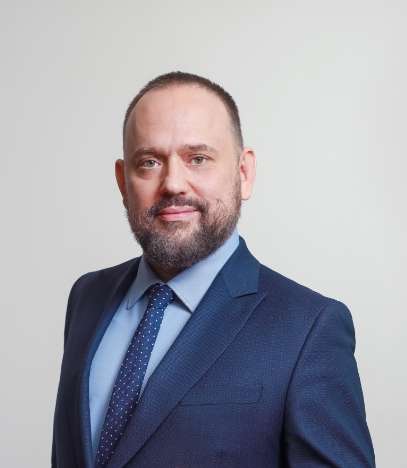
Robert Nogacki is a Polish attorney at law (radca prawny), the founder and managing partner of Kancelaria Prawna Skarbiec (Skarbiec Law Firm), which has operated continuously since 2006.
The law is equal for everyone, but the parties rarely are: on one side stands an organization with time, money, and lawyers, on the other a person with one business, one nest egg, and one life.
Clients rarely come to him with a legal problem. They come with a problem that also has a legal side: an audit that began with a single invoice, money entrusted to someone who has disappeared, a company that has to be passed on before it is too late. Most such matters are decided long before the first letter is written, in decisions made without asking and in deadlines nobody remembered. So he begins by asking how the client got here, not what the client should have done.
He advises entrepreneurs and families from more than a dozen countries, including those whose accounts the tax office has just seized and who do not know what to do tomorrow morning. He defends them in tax audits, customs and fiscal inspections, disputes with the tax authorities, and criminal tax proceedings. He represents victims of investment fraud and Ponzi schemes. He helps families set up family foundations and plan succession, so that a life’s work outlasts a single generation.
Not every case can be won. Every case can be run so that the client knows where they stand. Since 2006 he has represented the victims in the WGI case (Warszawska Grupa Inwestycyjna, the Warsaw Investment Group), one of the longest criminal cases in the history of the Polish financial market, because some things must not be left half finished, even when they take two decades. In the case of the collapsed cryptocurrency exchange Zonda (Zondacrypto, operated by BB Trade Estonia OÜ), he represents several hundred victims in the criminal investigation conducted by Poland’s National Prosecutor’s Office and in the Estonian bankruptcy proceedings.
Kancelaria Prawna Skarbiec is listed in the rankings of Poland’s largest tax advisory firms published by Dziennik Gazeta Prawna and Rzeczpospolita, and it is a four-time recipient (2015 to 2018) of the European Medal awarded by the Business Centre Club and the European Economic and Social Committee. Robert Nogacki publishes regularly, in the press and on the firm’s website, for people who have a problem rather than a law degree, because a legal opinion the client cannot understand protects only the lawyer.
He believes that the best legal advice is the kind that means the client never has to appear in court.