
Roundup Won in Court, but Not Because It Is Safe
On October 29th, a jury in St. Louis County returned a unanimous verdict for Monsanto in the case of three women who said that the weed killer Roundup had given them non-Hodgkin lymphoma. It was the first Roundup trial since June 25, 2026, when the Supreme Court of the United States ruled, by a vote of seven to two, in Monsanto v. Durnell that federal law forecloses the claim on which nearly every one of these lawsuits had been built: that the label should have warned of a cancer risk. Bayer, which owns Monsanto, reached settlements worth roughly $10 billion in 2020; it still faces some 65,000 more, and a $7.25 billion class settlement awaits a judge’s approval in Missouri. The headlines call it a victory for Roundup. It is one. But the courts answered a different question from the one that occurs to anyone holding the bottle.
St. Louis, Where Monsanto Began with Saccharin
The case of Theresa Aretino, Cynthia Fernandez, and Betty Larkin (one of the three did not live to see the trial) reached a St. Louis County jury with the three claims the June ruling had left them: design defect, negligence, and fraud. The fourth, failure to warn, had been the spine of this litigation for eight years, and the Supreme Court had removed it four months earlier. The women’s lawyer argued that Monsanto had never tested Roundup the way it should have. The jurors found, unanimously, that none of the three claims had been proved. Monsanto said in a statement that the verdict confirmed what it had believed all along: that there was no evidence of a defective design, of fraud, or of negligence. The three women had declined to join the class settlement, so their fate was decided in a courtroom rather than on a payout grid. In a different state court, in the city of St. Louis, another judge is weighing whether to approve the $7.25 billion deal. One courtroom announces that Roundup wins; the other is calculating what Bayer will pay so that it need not win 65,000 times.
The setting is not incidental. Monsanto was founded in St. Louis in 1901, and its first product was saccharin. From 1977 to 2000, American law required saccharin packaging to carry a warning that the sweetener might cause cancer; the warning was withdrawn when further studies failed to confirm a risk in humans. A hundred and twenty-five years after the company’s founding, its successor stood in the same city defending itself against the charge that a warning was missing. The symmetry proves nothing about glyphosate. It proves only that labels and science travel separate roads and meet less often than one might suppose.
How Roundup Came Before a Jury
In March of 2015, the International Agency for Research on Cancer, the World Health Organization’s cancer arm, headquartered in Lyon, placed glyphosate, Roundup’s active ingredient, in Group 2A: “probably carcinogenic to humans.” Within months, the first lawsuits appeared in American courts, filed by people with non-Hodgkin lymphoma, a cancer of the lymphatic system that epidemiological studies had most often linked to the chemical. In June of 2018, Bayer closed its $63 billion acquisition of Monsanto. Two months later, a San Francisco jury awarded $289 million to Dewayne Johnson, a school groundskeeper from California. The trial judge cut the sum to $78 million, and an appeals court to $20.5 million, but Bayer had learned that it had bought, along with Monsanto, something that never appeared on a balance sheet: thousands of lawsuits, and juries that read documents.
The year 2019 brought $80 million for Edwin Hardeman in federal court (later about $25 million) and $2 billion for Alva and Alberta Pilliod, a married couple (later about $87 million). The jurors were not adjudicating the scientific dispute between IARC and the regulators. They were looking at Monsanto’s internal documents, surfaced through American discovery, including e-mails suggesting that company employees had drafted parts of a scientific review, published in 2000, that appeared under the names of independent scientists (the publisher retracted it in 2025). The punitive damages, which made up most of what the juries awarded, were a response to what the jurors had read in the company’s mail, not to the chemistry. In June of 2020, Bayer announced settlements of roughly $10 billion, without admitting liability, and the matter appeared to be closed.
It was not. Beginning in 2021, Bayer won a run of trials, then lost several spectacularly: a jury in Jefferson City, Missouri, awarded $1.56 billion (the judge removed nearly a billion of it); a jury in Philadelphia awarded $2.25 billion; a jury in Georgia, in March of 2025, awarded $2.1 billion. Nearly thirty trials have run their course, Monsanto winning slightly more than half of those decided, and the largest awards have generally been cut several times over by judges. Almost every complaint shared one allegation: you knew it might cause harm, and you did not warn us. That is the allegation the Supreme Court has now ruled out of bounds.
What the Supreme Court Actually Decided in Monsanto v. Durnell
John Durnell, of Missouri, used Roundup for years and developed non-Hodgkin lymphoma. In 2023, a jury awarded him $1.25 million; the state’s court of appeals affirmed; and on January 16, 2026, the Supreme Court agreed to hear the case, because the federal circuits had split. The Ninth Circuit, in Hardeman’s case, had held in 2021 that federal law did not bar such claims; the Third Circuit, in a 2024 case called Schaffner, had held that it did.
The statute at issue is the Federal Insecticide, Fungicide, and Rodenticide Act, known as FIFRA, enacted in 1947 and overhauled in 1972. No pesticide may be sold in the United States without registration by the Environmental Protection Agency, and registration includes approval of the label. The statute’s preemption clause provides that a state may not impose labeling requirements “in addition to or different from” the federal ones. In 2005, in Bates v. Dow AgroSciences, the Court held that state tort claims may nonetheless survive if the state duty merely parallels the federal prohibition on misleading labels. For twenty years, plaintiffs walked through that gap: we are not asking for a label different from the federal one, they said; we are asking for what federal law itself requires, a label that does not mislead.
Justice Brett Kavanaugh, writing for seven Justices, closed the gap. The federal “requirement,” he reasoned, is the specific label that the E.P.A. approved for the specific product, not an abstract ban on misleading the public. Roundup’s label carries no cancer warning because the agency regards glyphosate as “not likely to be carcinogenic to humans,” and in 2019 it expressly refused to approve labels bearing the warning that California demanded under its Proposition 65, calling such a warning false and misleading. A claim that could succeed only by adding the warning is therefore a demand for a label “different from” the approved one, and it is barred. Justice Ketanji Brown Jackson, joined by Justice Neil Gorsuch, wrote in dissent that the majority had misread the statute and had left Durnell with no remedy for a grave injury.
Two things about the ruling are certain. First, the Supreme Court did not decide whether glyphosate causes cancer, because that question was not before it. Second, the ruling does not depend on whether the E.P.A. is right; it depends on what the E.P.A. approved. What was settled was a jurisdictional quarrel between Washington and the states over who gets to write the label. The answer is a federal agency, not a Missouri jury.
It is worth noting who stood where. In 2022, when the Court asked the federal government for its view in Hardeman, the Solicitor General answered that FIFRA did not preempt such claims, and the Court declined to take Monsanto’s appeal. In Durnell, the Solicitor General, John Sauer, sided with Monsanto. Same statute, same office, opposite position, four years apart. To a lawyer, that is not a scandal but a datum: the government’s position on federal preemption is not a law of nature; it changes with administrations, and the Court, which decides the law, this time agreed with it.
The Pillar Under the Ruling Has a Crack
The whole structure rests on the E.P.A.’s assessment. On June 17, 2022, however, the Ninth Circuit, in a case brought by the Natural Resources Defense Council, vacated the human-health portion of the agency’s 2020 interim decision on glyphosate, finding that the conclusion that the chemical was “not likely” to cause cancer was inconsistent with the agency’s own findings and had to be reconsidered. In September of 2022, the E.P.A. withdrew the interim decision in its entirety, and it has been preparing a new human-health risk assessment ever since; in September of 2026 the agency said it expects to finish in early 2027, now in partnership with the Department of Health and Human Services. Glyphosate’s registration and its approved label remain in force, so the Durnell test still works. But it works formally: the Supreme Court has given preemptive force to a label whose scientific justification the agency is, at this moment, rewriting.
Europe’s approval is more recent, but it is not unanimous, either. The European Chemicals Agency concluded in 2022 that there was no basis for classifying glyphosate as a carcinogen; the European Food Safety Authority found, in July of 2023, no “critical areas of concern”; and on November 28, 2023, the European Commission, by Implementing Regulation (EU) 2023/2660, renewed glyphosate’s approval for ten years, until December 15, 2033, with conditions and the possibility of an earlier review. The Commission acted alone, because the member states, voting twice, first in the standing committee and then in the appeal committee, failed to muster a qualified majority either for the renewal or against it. Glyphosate is thus lawful in the European Union for a decade by virtue of a decision that was reached because no decision could be.
Hazard and Risk: Why IARC and the E.P.A. Can Both Be Right
The scientific dispute looks like a contradiction only if one does not read the question each institution is answering. IARC identifies hazards: it asks whether a substance can cause cancer under any conditions at all. Group 2A, where glyphosate sits, also contains red meat, beverages drunk hotter than 65 degrees Celsius (about 149 degrees Fahrenheit), and night-shift work. Nobody has banned steak or tea on that basis. The regulators, among them the E.P.A., the European Food Safety Authority, Health Canada, Australia’s pesticides authority, and the pesticide-residue committee run jointly by the Food and Agriculture Organization and the World Health Organization, ask about risk: whether, at the doses to which people are actually exposed, the hazard materializes. Their answer is probably not, and they draw on a broader body of data, including unpublished industry studies, which IARC, considering only publicly available material, leaves out. Some see this as the virtue of IARC’s method and others as its flaw. But the difference in questions does not explain everything: the European Chemicals Agency, in Helsinki, assesses hazard, as IARC does, and in 2022 it nonetheless reached the opposite conclusion from the agency in Lyon. Two bodies asked the same question and answered it differently, because they selected and weighed the evidence differently.
Epidemiology does not settle the dispute; it sustains it. The Agricultural Health Study, which follows more than 50,000 licensed pesticide applicators in the United States, reported in its 2018 update no association between glyphosate and non-Hodgkin lymphoma, including among the most heavily exposed. A 2019 meta-analysis that combined the same cohort with five studies comparing patients with healthy controls found a 41 percent increase in the risk of the disease among the most exposed groups, though its authors themselves cautioned that other pesticides, used alongside glyphosate, might account for some of it. Science has wounds on both sides: the 2000 review co-written by Monsanto’s people was retracted in 2025, while a celebrated 2012 study by the French biologist Gilles-Éric Séralini, which reported tumors in rats fed Roundup-tolerant corn and given Roundup to drink, was retracted by its publisher a year later.
Non-Hodgkin lymphoma is a collective name for dozens of cancers, none of which leaves in its cells the signature of a particular cause. A jury therefore never receives proof that it was glyphosate; it receives an estimate of probability, and the American civil standard requires only that the probability exceed fifty percent. IARC asks whether it can. The regulators ask whether, at these doses, it does. The jurors ask whether it did, to this person. The Supreme Court has added a fourth question: who is entitled to ask. The answer to the fourth does not change the answers to the first three.
The Winner’s Paradoxes
In July of 2021, Bayer announced that beginning in 2023 it would remove glyphosate from the Roundup it sells to American consumers for their lawns and gardens, and it did; the agricultural products kept it. The company explained that the move was about managing litigation risk, not safety, since most of the lawsuits had come from residential users. That is probably a candid answer. It means that a new bottle of Roundup on the shelf of an American hardware store no longer contains the substance that is on trial, while the substance on trial is delivered to farms by the tanker.
Bayer reached settlements worth roughly $10 billion in 2020 and now offers $7.25 billion in a class settlement meant to cover present and future claims, with payments spread over twenty-one years. Class counsel have asked for $675 million in fees, and more than a hundred plaintiffs have filed objections; a federal judge, to whom the objectors had tried to move the case, sent it back to the state court, though the question of whether a Missouri court can bind people outside Missouri, including people who have not yet fallen ill, remains open. Bayer will say, correctly, that a settlement is not an admission of guilt but the price of unpredictable juries. The source of that unpredictability is not hard to locate: the juries that awarded the largest sums did so after reading the company’s internal documents, and the punitive portions of those awards punished conduct, not chemistry.
The third paradox is legislative. In 2025, North Dakota and Georgia became the first states to enact laws under which a label approved by the E.P.A. satisfies any duty to warn, with statutory exceptions; similar bills, promoted by the Modern Ag Alliance, a coalition Bayer founded, have been introduced in a dozen other states. The company’s argument is a serious one: a single label for the whole country is a condition of a functioning market, and fifty versions of a warning, each drafted by a jury, would be chaos. It is serious also because a majority of the Supreme Court accepted it. But the argument for a uniform label is an argument about who decides. It says nothing about what the label ought to say.
Why This Fight Could Not Happen in Warsaw
Glyphosate is the most widely used herbicide in the world, and in Polish agriculture as well. In the European Union it is approved until December 15, 2033, and specific products, Roundup among them, are authorized for sale in Poland by the Minister of Agriculture under Regulation (EC) No 1107/2009 and the Polish Act of March 8, 2013, on Plant Protection Products. The American dispute does not travel to Polish courts, for three reasons, none of which is “because glyphosate is safe.”
First, Polish law has no federal preemption; what it has instead is weaker and more honest. Liability for a dangerous product (Article 449¹ and the following articles of the Polish Civil Code) turns in part on the information given to the consumer, so a missing warning is an ordinary basis for a claim. A manufacturer escapes that liability by showing that the dangerous properties could not have been foreseen given the state of scientific and technical knowledge when the product was put on the market, or that those properties resulted from compliance with the law (Article 449³, paragraph 2). A regulator’s authorization is not a provision of law, and an approved label does not, by itself, close the courthouse door. The shield is weaker than in the United States.
Second, the sword is duller. Polish law has no punitive damages, which in California and Missouri accounted for most of what was awarded; there is no jury; and causation (Article 361, paragraph 1 of the Civil Code) must be proved by the plaintiff (Article 6) in a disease that leaves no fingerprint of its cause. Polish courts in personal-injury cases accept a high degree of probability rather than certainty, but that is still a different measure from the American preponderance of the evidence.
Third, and this is the difference least often considered: there is no discovery. Monsanto’s internal documents reached the jury because American procedure lets plaintiffs’ lawyers search a defendant’s archives. Article 248 of the Polish Code of Civil Procedure lets a court order the production of a specific, identified document, not a search of a company’s entire mailbox. A Roundup trial in Poland would rest on the published literature and on court-appointed experts; a manufacturer’s internal correspondence would enter the record only if the plaintiff could identify it, which one usually can do only after having read it. And in the literature, as we have seen, each side finds what it is looking for.
For those three reasons, nobody should expect a Polish Johnson verdict. For the same reasons, nobody should read the American verdicts as a certificate. Roundup’s label in Poland is written in Brussels and Warsaw, under an approval that runs to 2033, with another scientific review due before then.
A Verdict Closes a Case. It Does Not Close a Question.
The Supreme Court has decided who writes the label: the E.P.A., not a jury. A St. Louis County jury has decided that, in one case, three plaintiffs did not prove a design defect, fraud, or negligence. A judge in the city of St. Louis will decide whether $7.25 billion is enough to settle most of the rest. None of those decisions is a ruling on what glyphosate does inside a human body; a verdict about the evidence in one case is not a verdict about the substance. That question remains where it was in 2015: between the agencies in Lyon and Helsinki, which assess hazard and disagree with each other, the agencies in Washington and Parma, which assess risk, and the epidemiological cohorts that count cases across decades.
A drum of Roundup bound for a farm carries, today, a label approved by the E.P.A. and the protection of the Supreme Court. Whether what is inside is safe, neither court has ruled, and neither meant to.
The law and the facts are stated as of October 31, 2026.
Civil and Commercial Litigation
Court disputes in Poland are won over the long haul, pleading by pleading, not in a single hearing. We take over cases mid-course, including after an unfavourable first-instance judgment.
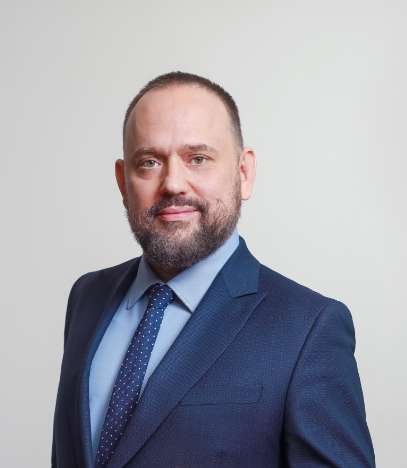
Robert Nogacki is a Polish attorney at law (radca prawny), the founder and managing partner of Kancelaria Prawna Skarbiec (Skarbiec Law Firm), which has operated continuously since 2006.
The law is equal for everyone, but the parties rarely are: on one side stands an organization with time, money, and lawyers, on the other a person with one business, one nest egg, and one life.
Clients rarely come to him with a legal problem. They come with a problem that also has a legal side: an audit that began with a single invoice, money entrusted to someone who has disappeared, a company that has to be passed on before it is too late. Most such matters are decided long before the first letter is written, in decisions made without asking and in deadlines nobody remembered. So he begins by asking how the client got here, not what the client should have done.
He advises entrepreneurs and families from more than a dozen countries, including those whose accounts the tax office has just seized and who do not know what to do tomorrow morning. He defends them in tax audits, customs and fiscal inspections, disputes with the tax authorities, and criminal tax proceedings. He represents victims of investment fraud and Ponzi schemes. He helps families set up family foundations and plan succession, so that a life’s work outlasts a single generation.
Not every case can be won. Every case can be run so that the client knows where they stand. Since 2006 he has represented the victims in the WGI case (Warszawska Grupa Inwestycyjna, the Warsaw Investment Group), one of the longest criminal cases in the history of the Polish financial market, because some things must not be left half finished, even when they take two decades. In the case of the collapsed cryptocurrency exchange Zonda (Zondacrypto, operated by BB Trade Estonia OÜ), he represents several hundred victims in the criminal investigation conducted by Poland’s National Prosecutor’s Office and in the Estonian bankruptcy proceedings.
Kancelaria Prawna Skarbiec is listed in the rankings of Poland’s largest tax advisory firms published by Dziennik Gazeta Prawna and Rzeczpospolita, and it is a four-time recipient (2015 to 2018) of the European Medal awarded by the Business Centre Club and the European Economic and Social Committee. Robert Nogacki publishes regularly, in the press and on the firm’s website, for people who have a problem rather than a law degree, because a legal opinion the client cannot understand protects only the lawyer.
He believes that the best legal advice is the kind that means the client never has to appear in court.