U.S. Sues $1.17 Billion in USDC Frozen After the Binance Heist. Circle Agrees to Mint It Again
The United States wants to take title to $1.17 billion in USDC, a dollar stablecoin, that was frozen after the largest cryptocurrency theft on record. On Monday, November 23, 2026, federal prosecutors in Washington filed a complaint asking a court to forfeit the tokens. They are part of the loot from Binance, the world’s largest crypto exchange, from which hackers took more than $6 billion on October 29th. The Justice Department attributes the theft to North Korea, and presents the suit as part of an effort to help Binance recover what it lost.
What the USDC Forfeiture Case Is About
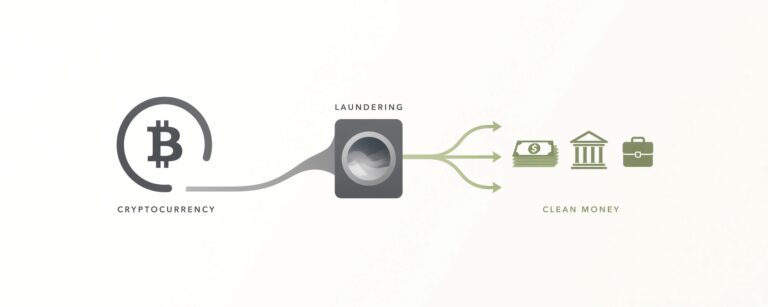
USDC is a stablecoin, a token whose issuer keeps its price at one dollar. The issuer is Circle, an American company, and only Circle can block the token at a given address. As billions were draining out of Binance on October 29th, and in the hours that followed, Circle blocked $1.17 billion in USDC, some of it at addresses controlled by the thieves and some in wallets of the exchange that the thieves had hijacked. A blocked token stays where it is. Its holder cannot spend it, and Circle says that it cannot take it away. I described the theft itself, and the laundering trail, in an earlier piece.
The government is now asking a court to declare those tokens forfeited to the United States. The suit runs against the property, not against people. No one has to be charged or convicted, and the thieves, whom investigators tie to North Korea, will never appear. The case is captioned United States of America v. All USDC Associated with 36 Virtual Currency Addresses on 18 Different Blockchains. Twenty-five days passed between the break-in and the complaint.
The difficulty is that blocked tokens cannot be handed to anyone, not even to the government. Circle has therefore agreed to mint the same number of new ones if the court orders forfeiture. Whether those reach Binance will be decided not by the court but by the government. For anyone who holds stablecoins, and for anyone who has had them stolen, the case shows who decides the fate of frozen tokens, and on what terms they can come back to their owner.
The court papers say a good deal more than the press release. Of the sum being sued, $342 million sits not at the thieves’ addresses but in the exchange’s own wallets. The papers also contain mistakes that anyone can check against the public ledger: a liquidity pool on Uniswap listed as a wallet of the exchange, a transfer placed two hours early, a token taken for a network. Two other things happened outside that courtroom. A second court, in Abu Dhabi, has issued orders that appear to cover the same tokens. And November 23rd was also the day on which the European Union’s deadline ran out for a directive that is supposed to teach member states to confiscate without a conviction. Poland, where I practice, can already take property from an offender who cannot be tried. Its criminal courts have no procedure for dividing that property among victims when there are thousands of them and the money has been pooled. I put the outline of such a procedure before the Minister of Justice in a petition dated November 25th.
The Case Against the Money
American lawyers have a fondness for the captions of civil forfeiture, a genre in which the government has sued approximately 64,695 pounds of shark fins and one Lucite ball containing lunar material. The action runs against the thing. The government must show, by a preponderance of the evidence, that the property is the proceeds of a crime or was involved in laundering (18 U.S.C. § 983). Anyone who claims an interest in the property must file a claim by the deadline stated in the government’s notice, which may not be less than thirty-five days after the notice is sent, or, where no notice has been sent, within sixty days of the first day of publication on the government’s forfeiture Web site (Supplemental Rule G). An owner who knew nothing of the crime is protected by statute. If no one appears, or no one prevails, the court’s judgment is good against the world. For defendants who will never set foot in an American courtroom, there is no other way. I have written about the history of the device in connection with the collapse of Zonda, a Polish crypto exchange.
The complaint was signed by the U.S. Attorney’s Office for the District of Columbia and by two sections of the Justice Department, one for computer crime and one for national-security cyber cases, and it was verified under penalty of perjury by a Secret Service agent whose name is redacted in the copy that the Justice Department published. It rests on two provisions of the civil-forfeiture statute (18 U.S.C. § 981). One reaches the proceeds of computer fraud and wire fraud. The other reaches property involved in money laundering.
The calendar is short. On or about October 29th, the day of the theft, Circle blocked the thieves’ addresses and the hijacked addresses of the exchange, voluntarily and, by its own account, in coordination with law enforcement. It agreed to do so only for a brief period. On November 6th, it told the government that, if prosecutors applied for a court order, it would keep the block in place until the forfeiture proceeding ended or a court ordered otherwise, and prosecutors applied that day. On November 12th, the court issued a temporary restraining order, which was served on Circle the same day. On November 23rd came the complaint and a motion for a restraining order to last as long as the case does. Binance and Circle consented to both orders and, for now, waived their right to be heard.
On November 24th, Judge Reggie B. Walton granted the motion, in an order that he described as “functionally an extension” of the earlier one. He directed Circle to maintain its block on the addresses named in the complaint until January 29, 2027, or until the court orders otherwise, and set a status conference for that day. The order rests on a finding of probable cause. It preserves the tokens and decides nothing about forfeiture. It also gives the government until November 30th to ask that the earlier matter, which is sealed, be opened.
The complaint also gives a sworn public account of the break-in. The F.B.I. attributed the theft on October 31st to North Korean hackers whose activity it calls TraderTraitor, and Pyongyang denied it three days later. In the complaint, three agencies (the Secret Service, the F.B.I., and the criminal-investigation arm of the Internal Revenue Service) “assess” that the thieves were members of the military hacking groups known as Lazarus and APT38. They base the assessment on technical traces of the intrusion and on the way the loot was laundered, including its commingling with funds stolen in September from another exchange, Bitget. That is an assessment by investigators, not a finding by a court, and the complaint introduces it as one. It repeats, too, the account that Binance gave on November 3rd: an employee was approached by someone posing as a job recruiter and, in the course of an interview, was told to download software that concealed malicious code.
One comparison gives the scale. The complaint lists nine earlier thefts attributed to the same group, from 2021 through July of 2026, which together come to a little more than $3.1 billion. Binance lost about twice that in an evening.
A Node in Washington
More interesting is the hook by which the prosecutors tie the case to a courthouse in Washington. The exchange operates outside the United States, the thieves are in Asia, and the tokens exist as entries in ledgers distributed around the world. Beyond the general provisions on forfeiture jurisdiction and venue, the complaint offers an answer of its own: the unauthorized transactions damaged protected computers, namely the nodes of the Ethereum network, by causing the data that they store to reflect the transfers, and multiple Ethereum nodes were running in Washington, D.C., at the time. As recently as 2020, the same office explained its venue in a North Korean theft case differently: by the presence of financial regulators in the capital and by the location of the property abroad.
The theory has a short history, and it began with a judge’s question. In a forfeiture case over tokens that the same group had stolen from Rain, an exchange in Bahrain, a judge of the same court ordered the government, in October of 2025, to explain what tied the property to the United States. The government answered in January with an amended complaint: the Solana blockchain runs on computers around the world, including in Washington, and those are the protected computers. On March 11, 2026, Judge Jia M. Cobb accepted the answer, in a default judgment that no one opposed. By recording the illicit transactions, she reasoned, the hackers had changed the data on American computers, and that change was the damage. She added that the statute would reach the conduct even if every node involved had been abroad. The Binance complaint repeats the paragraph, with Ethereum in the place of Solana. The Rain case, incidentally, began as the Binance one did: with a recruiter, a job offer, and a coding test.
The theory remains open to argument. The network did what it was built to do: it recorded a transaction that carried a valid signature. If every such entry is damage to data, then the theft of any token anywhere violates the American computer-fraud statute wherever a single node happens to run, and, on Judge Cobb’s reading, even where none does. So far as I have found, no court has had to decide the point over an objection. In this case, in which no claimant has so far appeared, none may.
American jurisdiction needs less and less to go on. In the Huawei trial, a dollar payment cleared through a bank in New York was enough to give the case an address. Here the prosecutors say that it is enough that a computer keeps a copy of the ledger, and one judge has already agreed.
The Token’s Two Bodies: Substitute USDC
The most unusual paragraph of the complaint concerns what, exactly, is to be forfeited. The government admits that it cannot reach the defendant property, because the frozen addresses remain under the control of the thieves. Circle has advised that it has no technical ability to move tokens out of blocked addresses. It has agreed instead, “voluntarily,” to issue new USDC in the same amount and to transfer it to the United States upon receiving an order of forfeiture. The complaint calls the new tokens Substitute USDC.
Tudor lawyers held that the king has two bodies: a body natural, which sickens and dies, and a body politic, which does not, and which passes at the moment of death to his successor. Ernst Kantorowicz made the doctrine famous, in 1957, in “The King’s Two Bodies.” The complaint applies it, without saying so, to a digital dollar. The body natural, the tokens named as defendants, stays where it lies, at addresses that, the complaint says, the thieves still control, visible to anyone and useful to no one. The body politic, which is the dollar value that the issuer stands behind, passes to a successor.
Something follows from this that the complaint does not spell out. What is being forfeited, in substance, is not the tokens but the value that the issuer stands behind: the same reserves will back the substitutes. About what becomes of the reserves the complaint says nothing. Until the case ends they stay with Circle, which, as New York prosecutors pointed out in January in a letter to senators, goes on collecting interest on the reserves behind frozen tokens. A stablecoin of this kind turns out to behave like an entry in its issuer’s register, which the issuer can immobilize and replace with another.
The law has performed this operation before, on paper. Under the Uniform Commercial Code, the owner of a security certificate that has been lost, destroyed, or wrongfully taken may require the issuer to issue a new one, provided that he asks before the issuer learns that the old one has been acquired by a protected purchaser, and that he posts a sufficient indemnity bond (§ 8-405). Polish law has its own version in a decree of 1946 on the cancellation of lost documents (dekret o umarzaniu utraconych dokumentów). A court summons, by public notice, everyone who claims rights to the document, and, once the document has been cancelled, the issuer must issue a new one or perform the obligation. The analogy is one of function, not of form: a forfeiture judgment is not a bond. But in Washington the forfeiture action does the work that the notice and the bond do on paper. Before the issuer creates a second set of tokens against the same reserves, a court settles, against the world, that no one else has a right to them. For the same reason, the original addresses will have to stay blocked for good. The complaint does not say so. In the Wisconsin case described below, Circle said that under its arrangement with federal prosecutors tokens could be frozen permanently.
The word “voluntarily” matters. In August of 2025, a court in Walworth County, Wisconsin, ordered Circle to freeze roughly $381,000 in USDC that had been swindled from a county resident, and Circle complied. In December, a judge ordered it to invalidate those tokens and to issue the same amount to a wallet held by the sheriff. That order Circle did not carry out. It said that it held no keys to someone else’s wallet and had no ability to invalidate the tokens and reissue them. In April of 2026, the county prosecutor filed a criminal complaint against the company for disobeying a court order. In June, Circle moved to dismiss it, arguing, among other things, that a Wisconsin court had no jurisdiction to issue the order.
A footnote to that motion, as ICIJ reported, disclosed that Circle had reached a general agreement with federal prosecutors on a mechanism for compensating victims, under which certain tokens would be frozen permanently and new ones issued. Circle did not say whether the mechanism could be used in Wisconsin. The Binance complaint shows it at work, on a scale of $1.17 billion. What Circle said that it could not do for a county sheriff it has agreed to do, in effect, for the United States. Nor is the technical limit a law of nature: USDC runs on a contract that its issuer can upgrade, and an investigator quoted by ICIJ said that Circle could change it to allow tokens in a third party’s wallet to be burned and reissued. What differs, on the evidence so far, is whose order the issuer recognizes, and the protection that the order gives it. How much a voluntary promise is worth is itself in dispute. The New York prosecutors’ letter says that in a Manhattan case Circle agreed to return the dollar value of frozen USDC once it had been forfeited, and that, after a federal judge signed the judgment of forfeiture, it did not. That is the prosecutors’ allegation, not a court’s finding.
Circle explained on November 5th that it does not decide who owns assets or whether a crime has occurred, because those questions belong to law enforcement and the courts, and it asked for a legal safe harbor for firms that freeze funds. Its published policy made no provision for freezing at the urgent request of law enforcement, ahead of a court order, until May of 2026, when the company added the exception, a month after a theft from the Drift protocol. A spokesperson told Bloomberg that the change reflected longstanding practice. In the Binance matter, Circle froze without an order, in coordination with law enforcement, and eight days later made the continued freeze conditional on the government’s going to court. The issuer wants to act quickly, but not at its own risk.
On January 18, 2027, the argument moves to different ground. That is the day on which the federal stablecoin statute, the GENIUS Act, takes effect. It allows payment stablecoins to be issued only by firms that have the technological capability to comply, and that will comply, with a lawful order to seize, freeze, burn, or block them. Burning is on that list, and it is what Circle told the Wisconsin court that it could not do. The definition, however, covers orders issued by courts and agencies under federal law. An order of a state court that rests on state law is not among them. Nor does anything in the Act, as the same prosecutors point out, require an issuer to return anything to a victim.
The Victim’s Own Wallets
The caption speaks of thirty-six addresses. There are eight distinct ones, two of which recur on seventeen and thirteen networks. The complaint attributes four to the thieves. They hold $824.7 million in USDC, $823 million of it at a single Ethereum address, where it arrived in two transfers eighteen minutes apart. Circle blocked that address five minutes after the second.
The remaining thirty-two entries are, according to the complaint, smart-contract and hot-wallet addresses on Binance’s platform. The thieves took them over by the same method that they used elsewhere, and drained part of what was in them before Circle shut them off. What remains is $342.3 million in USDC, or about twenty-nine per cent of the sum being sued. Of that, $258.9 million sits on Arc, Circle’s own blockchain, which opened to the public in September, and $60 million on Base. Fourteen entries show a balance of zero.
The government is thus asking to forfeit property that is still sitting in the victim’s wallets. Its explanation takes one sentence: the addresses are on Binance’s platform, but “it appears” that the exchange no longer controlled them. By the exchange’s own account, that state of affairs lasted a matter of hours: it says that it cleared the malicious authorization from its main hot wallet, known as Binance 14, the following day. Binance 14 accounts for seventeen of the entries but only about $53,000 of the money. Nearly all of the rest sits at a second address, a smart-contract wallet whose only owner, according to a published analysis of the ledger, was Binance 14 itself. To the objection that money a thief did not manage to take is not the proceeds of his theft, the complaint has an answer ready: its second count reaches property involved in laundering, including attempted transactions. Even so, the statute requires a substantial connection between the property and the offense, and opposing counsel would ask what establishes it, and what proves a lasting loss of control, for each of thirty-two entries. For now, no one is asking. The victim has consented to the restraint, and, so far as the public record shows, no other claimant has appeared.
Nor are the empty addresses in the complaint by accident. The motion does not ask for any money to be handed over. It asks the court to direct Circle to maintain its blocklist until further order. Naming all the USDC associated with an address thus serves as a basis for keeping that address closed to one token on each of the listed networks, including those on which it holds nothing. That is a reading of the function, not a quotation.
Where the Filings Go Wrong
A complaint that is verified under penalty of perjury and that no one contests is seldom checked against anything. This one can be checked, because its subject is a public ledger. In six places, the filings and the record disagree.
A Uniswap Pool Listed as a Binance Wallet
The complaint describes all thirty-two of the exchange’s entries as smart-contract and hot-wallet addresses on Binance’s platform, taken over by the thieves. One of them, Subject Address V, with $914,132 in USDC, is nothing of the kind. The ledger identifies it as the Uniswap pool for RAD and USDC, a public contract, created in 2021, in which third parties deposit tokens for others to trade against. A pool is a contract with no private key for a thief to misuse, so the complaint’s explanation of the takeover cannot be true of it, and the USDC inside belongs, economically, to whoever supplied the pool’s liquidity. The prosecutors write that they are unaware of anyone else with a claim to the defendant property. The pool’s depositors are, at the least, people who might have one.
An Ethereum Mechanism on Solana
The same paragraph says that the thieves compromised all thirty-two entries by means of EIP-7702, a feature of Ethereum and of the chains built like it. One of the thirty-two, holding nearly $2 million, is an address on Solana, where that mechanism does not exist.
A Transfer Two Hours Early
The complaint says that 9.7 million USDe, a stablecoin issued by the Ethena protocol, reached the thieves’ third address at 20:56 U.T.C. and was exchanged there for 33,005 USDC. The ledger records that transfer at 22:56, two hours later, and Circle’s block on the address at 01:06 the next morning. The figure of 33,005 USDC is the balance frozen there, which suggests that the complaint describes what was left when the block landed, not what 9.7 million USDe fetched.
A Token Taken for a Network
According to the complaint, at 22:39 U.T.C. the thieves moved 1,141,407.06 USDC to their second address “on the MASK network.” There is no such network among the complaint’s eighteen. MASK is a token, which Binance has listed since 2021. What the ledger records at 22:39:35 is a sweep from the exchange’s hot wallet to that address: 128 ETH and, by the count of analysts who reconstructed it, 122 small tokens, worth about half a million dollars together. That does not fit a transfer of $1.14 million in USDC, and the complaint’s own table shows 123,175 USDC at the address. The likeliest explanation, which I offer as a guess, is that MASK tokens were in the sweep and that a token became a network on its way into the pleading.
Fourteen Days That Lasted Eleven
The motion shows signs of haste. It reports that the order of November 12th was issued for fourteen days and, in the same sentence, until November 23rd, although fourteen days from that date is November 26th. The prosecutors conceded that they could not tell with certainty when, or whether, the order expired, which is why they asked the court to act urgently. The complaint also covers less than that order did, because, a footnote explains, the victim would be able to secure the release of one address when the order lapsed.
A Subsection That Does Not Exist
The earlier, sealed matter bears a title, reproduced in the judge’s order, that invokes 18 U.S.C. § 984(j). Section 984 ends at subsection (d). Temporary restraining orders are governed by § 983(j), which the order itself cites.
With no opponent, none of this costs the government anything. In a contested case, each point would be material for the cross-examination of the agent who signed.
Who Gets the Money
The complaint ends by asking that the property be forfeited to the United States and that the Marshals Service dispose of it as the law provides. About returning anything to Binance it is silent. The press release speaks of helping the exchange recover what was stolen, and says that, since the theft, the government has helped to freeze, seize, or return more than $2.9 billion. The motion notes that the true owners of the stolen property are not foreclosed from seeking to be heard later.
Washington: Forfeiture, Then the Government’s Decision
The road from forfeiture to a victim runs through executive discretion. The statute authorizes the Attorney General to transfer forfeited property to the victims of the underlying crime, and the regulations set the conditions: a documented loss, no part in the offense, no other source of compensation reasonably available. A victim has no enforceable claim to such a transfer. An executive order of March, 2025, meanwhile, restricts agencies from selling or otherwise disposing of forfeited crypto-assets and creates a federal stockpile for them. Among its exceptions are court orders and the return of assets to identifiable victims, when the Attorney General determines that this can and should be done.
Binance could take another road and appear in the case as an owner who knew nothing of the crime. Nothing in the law forbids it. But, to the extent that it prevailed, there would be no order of forfeiture, and Circle has promised substitute tokens only to the government, and only upon such an order. The construction thus gives the victim every practical reason not to defend its ownership in the forfeiture court and to rely on the Department’s later decision. The judge’s order points the same way: by November 30th, the government is to file notice of its agreement with Circle and Binance on their assent to the case going forward without their involvement. Rain, the exchange in the Solana case, took the same road. It filed no claim and petitioned the Department for remission. Binance can afford to be patient. It says that it has restored its customers’ assets from its own funds, and the prosecutors cite its public undertaking to self-insure, and its apparent ability to do so, as a reason that the restraint harms no one. It is also a shareholder in Circle.
Abu Dhabi: The Owner’s Claim
A second road runs through the court of the Abu Dhabi Global Market, a financial free zone that applies English common law. On November 18th, Binance announced that the court had granted it a worldwide freezing order, up to $6.5 billion, against the unknown perpetrators, together with proprietary injunctions and delivery-up orders against categories of persons unknown. The exchange’s lawyers add that the market is to be kept notified of a constantly updated list of some twenty-six thousand wallet addresses identified as holding stolen assets. Separate interim orders direct eighteen named firms that had frozen part of the loot, and that are accused of nothing, to keep their freezes in place. A hearing on December 1st is to consider whether the proprietary injunction should continue. Circle is one of the eighteen.
Two proceedings are therefore under way over what appear to be the same USDC. In Washington, the state says that the property is the proceeds of a crime and should be forfeited. In Abu Dhabi, the victim says that the property is its own. For the moment, both courts are saying the same thing: do not move it. The difference will show when someone has to decide to whom it is handed. The Washington order came first, and Circle is an American company.
Tether: Reissuance on the Issuer’s Terms
A third road runs through no court at all. Tether, which froze the largest share of the stablecoins taken in this theft, has said that, in consultation with the relevant authorities, it will arrange the reissuance of the tokens directly with Binance. Its contract allows it to destroy a frozen balance and to issue the same amount anew, to an address of its own, from which it can be sent on. The terms are the issuer’s.
According to reporting by Bloomberg, a lawyer for Tether told the firm that had acquired Bittok, an exchange hacked in 2020, that a reissuance fee of twenty per cent would apply to whatever was returned, and people involved in several other recoveries described returns in installments with the same kind of fee. Bittok, by Bloomberg’s account, has had nothing back in more than five years. Tether says that the fees help to pay for reissuance and for legal costs. Its chief executive says that in civil cases it returns funds in stages, because other claimants may appear and no law tells it what to do. No such fee has been reported in the Binance matter. I have written before about Tether as the shadow dollar.
North Korea’s Creditors, Who Have Not Yet Appeared
There is, finally, a fourth possible participant. American creditors of North Korea, who hold final judgments against it for acts of terrorism, tried in the spring to attach Ether that had been frozen after a different theft. Their argument was that loot taken by hackers working for a state is the property of that state. A court in New York allowed the funds to be moved but left undecided who has the better claim to them. The same families have gone after Circle directly: in December of 2025, they asked that court to order Circle to turn over other frozen USDC that they trace to North Korea. A creditor who wanted to contest the forfeiture in Washington would have to file a claim there and show an interest in these particular tokens, which a judgment against the debtor does not, by itself, supply. A complaint in which a federal agent attributes the theft to the North Korean military gives such a creditor one premise, though not proof that the loot belongs to the debtor state. The prosecutors write that they are unaware of anyone else with a claim to these funds. As of November 25th, I have found no public record of one.
What Europe Does Not Have
The European Union is moving toward the American model, but cautiously. Directive 2024/1260, on asset recovery and confiscation, writes crypto-assets into the definition of property. It requires member states to allow confiscation without a conviction where criminal proceedings have begun and cannot continue because the suspect is ill, has absconded, or has died, or because the limitation period has run (Article 15). That is still confiscation tied to a person, not a suit against a thing. More important for victims is Article 18, which requires that property to which a victim is entitled be returned, and that confiscation be carried out without prejudice to victims’ right to compensation. The deadline for transposition was November 23, 2026, the day the complaint was filed in Washington. As of November 25th, the Union’s register of national transposition measures showed notifications from three member states: Czechia, Portugal, and Romania. Poland was not among them.
Polish criminal law tries people, and property waits for their verdict. There has been an exception since 2017. A court may order forfeiture without a conviction if the offender has died, has not been identified, or cannot be tried because he is in hiding or gravely ill, provided that the evidence shows that forfeiture would have been ordered on conviction (Article 45a § 2 of the Criminal Code, Kodeks karny). A theft by unidentified hackers on the far side of the world could fit, once the investigation was discontinued for failure to identify them, and on this point the Polish provision is broader than the European minimum. The resemblance to Washington ends there.
Forfeited property goes to the State Treasury. Without a conviction, a victim gets back only a thing or a benefit that can be attributed to him in particular (Articles 44 § 5 and 45 § 1 of the Criminal Code, and Article 230 § 2 of the Code of Criminal Procedure, Kodeks postępowania karnego). In a case with a single victim, such as Binance, that might suffice. In the largest Polish fraud cases, the victims number in the thousands and the money has been pooled, and then the criminal court has no procedure for dividing it. It can order compensation only against an offender whom it has tried, on conviction or on conditional discontinuance of the proceedings (Articles 46 and 67 § 3 of the Criminal Code), and anyone claiming rights to forfeited property is sent to the civil courts.
The scale appears in a report of the National Prosecutor’s Office that was disclosed by the news site OKO.press. Between 2019 and 2025, there were 16,027 proceedings involving cryptocurrency, 57,515 victims, and losses of 2.3 billion zlotys. I have described elsewhere how far the Polish presumptions reach under extended confiscation.
Outside the narrow case of lost documents, Polish procedure knows no action against the property itself, with public notice to everyone who might claim it, of the kind on which an issuer could rely in minting substitute tokens. In civil procedure, there is no action against persons unknown: a statement of claim must name the defendant, and an interim order must name the party that it binds. The Abu Dhabi construction, an injunction against unknown persons that can be served through the blockchain itself, does not exist in Polish procedure.
A Proposal in Warsaw
The Washington file contains, in one place, three decisions that in Poland are scattered across different proceedings or do not exist: whether property can be taken without convicting anyone, who else has rights to it, and to whom it goes afterward. Polish law answers the first question. It leaves the second to the civil courts. To the third, it answers: the Treasury.
I represent several hundred customers of Zonda, a Polish crypto exchange whose Estonian operator was declared bankrupt in August. On their behalf, I proposed to the Minister of Justice on October 22nd that the gap be closed when the directive is transposed. In a petition dated November 25th, I submitted an outline of the bill.
The outline makes five decisions. In cases with victims, forfeited property goes into a separate account for the case and serves to repair the damage, and the Treasury receives only the surplus. Victims are paid in a single proceeding before the court that ordered the forfeiture, under a distribution plan, in proportion to documented loss, without a lawsuit and without court fees. A suspect may, before any verdict and with the court’s approval, assign secured property to the case account, with the consequences that the law attaches to voluntary reparation. The grounds for forfeiture without a conviction are clarified within the limits of Article 15 of the directive. And the whole procedure stays within criminal proceedings, so that Polish orders continue to benefit from mutual recognition in other member states under Regulation 2018/1805.
The outline does not copy the American model, and the Binance case shows why. In the United States, whether a victim recovers anything from forfeited property, and how much, is decided by an executive agency in its discretion. In this case, the construction also gives the victim every practical reason not to contest the government’s claim. Under the outline, a court decides the distribution, and the victims’ priority over the budget follows from statute, not from the good will of an office. Nor does the outline create any new ground for taking property beyond what the directive requires, with one exception, which works in the victims’ favor: property owed to victims, which a court today can neither return to each of them nor forfeit, could be forfeited solely in order to be divided among them. The rest concerns who receives the property, not when it may be taken.
For Victims, and for Companies That Hold Stablecoins
Four things follow in practice. The first is that a stablecoin is the part of stolen crypto that can be stopped, but the window is measured in minutes. Under its published policy, Circle freezes on a legal order or on an urgent request from law enforcement; a victim’s request is not, by itself, a ground. A criminal complaint should therefore contain, from the first hour, the addresses, the transaction identifiers, and a request that the authorities go to the issuer at once.
The second is that a freeze is not a return. For tokens to come back, there must be an order that the issuer will recognize, or the issuer’s consent on the issuer’s terms. An American issuer obeyed a state court’s order to freeze, refused its order to reissue, and has promised to reissue for the federal government once a federal court orders forfeiture. A victim in Poland, or anywhere else, should ask from the outset who will decide on the release of the funds, and on what authority, and not merely whether they have been frozen.
The third is that anyone who claims an interest in the particular assets named in an American forfeiture complaint must file a claim in that proceeding by the deadline in the notice. A victim who has a documented loss but no interest in those particular assets should look to remission, a separate petition to the Justice Department, to be filed as the notice instructs. A petition does not take the place of a claim, and it does not preserve the deadline for one. That applies as well to victims of investment fraud in Europe whose money has ended up in a pool seized in the United States. A judgment or an interim order obtained in another country will not, as a rule, take the place of either step.
The fourth is for companies. A firm that holds stablecoins should assume that, after a breach, the issuer may block the firm’s own addresses, too, on many networks at once and for a period that is hard to predict. A business-continuity plan should treat that possibility as it treats the loss of keys.
In Sum
The complaint of November 23rd does not settle that Binance will get back $1.17 billion. Nor does it settle who committed the theft: the attribution to North Korean hackers remains an assessment by investigators, which, so far, no one in the case has contested. It does show four things that reach beyond one case. A stablecoin of this kind is an entry in its issuer’s register, which can be immobilized and issued anew if there is a court whose order the issuer will recognize. A state that can sue a thing can travel, in twenty-five days, from a theft to a billion-dollar complaint without charging anyone. A sworn complaint that no one contests is only as accurate as its authors: this one lists a public liquidity pool as an exchange wallet, puts a transfer two hours early, and takes a token for a network. And taking property returns nothing by itself: in the United States the return is decided by the government, at an issuer by its own terms, and in Poland, where the victims are many and the money has been pooled, by no one, because the criminal court has no procedure for it.
The facts are as stated in court filings and public statements available on November 25, 2026.
CASP Authorisation and MiCA
MiCA compliance is decided in the documentation: governance, AML, safeguarding of client funds and the assessment of the people in charge. We prepare CASP authorisation applications and handle the case before the regulator.

Robert Nogacki is a Polish attorney at law (radca prawny), the founder and managing partner of Kancelaria Prawna Skarbiec (Skarbiec Law Firm), which has operated continuously since 2006.
The law is equal for everyone, but the parties rarely are: on one side stands an organization with time, money, and lawyers, on the other a person with one business, one nest egg, and one life.
Clients rarely come to him with a legal problem. They come with a problem that also has a legal side: an audit that began with a single invoice, money entrusted to someone who has disappeared, a company that has to be passed on before it is too late. Most such matters are decided long before the first letter is written, in decisions made without asking and in deadlines nobody remembered. So he begins by asking how the client got here, not what the client should have done.
He advises entrepreneurs and families from more than a dozen countries, including those whose accounts the tax office has just seized and who do not know what to do tomorrow morning. He defends them in tax audits, customs and fiscal inspections, disputes with the tax authorities, and criminal tax proceedings. He represents victims of investment fraud and Ponzi schemes. He helps families set up family foundations and plan succession, so that a life’s work outlasts a single generation.
Not every case can be won. Every case can be run so that the client knows where they stand. Since 2006 he has represented the victims in the WGI case (Warszawska Grupa Inwestycyjna, the Warsaw Investment Group), one of the longest criminal cases in the history of the Polish financial market, because some things must not be left half finished, even when they take two decades. In the case of the collapsed cryptocurrency exchange Zonda (Zondacrypto, operated by BB Trade Estonia OÜ), he represents several hundred victims in the criminal investigation conducted by Poland’s National Prosecutor’s Office and in the Estonian bankruptcy proceedings.
Kancelaria Prawna Skarbiec is listed in the rankings of Poland’s largest tax advisory firms published by Dziennik Gazeta Prawna and Rzeczpospolita, and it is a four-time recipient (2015 to 2018) of the European Medal awarded by the Business Centre Club and the European Economic and Social Committee. Robert Nogacki publishes regularly, in the press and on the firm’s website, for people who have a problem rather than a law degree, because a legal opinion the client cannot understand protects only the lawyer.
He believes that the best legal advice is the kind that means the client never has to appear in court.