Will Zondacrypto’s Przemysław Kral turn crown witness?
Since the middle of April, Przemysław Kral has managed to be in Monaco, where he dated his farewell statement; in Israel, where press reports dispatched him; in South Africa, which the location tag on his X account displayed for a while; in Botswana, where he was supposedly detained; and finally on the Persian Gulf, where, according to the Polish daily Rzeczpospolita, he is negotiating with a prosecutor. Five addresses in three months. For a man nobody has publicly seen since April, he travels impressively. A man cannot be in five places at once. Information can.
And that is the real subject of this post: not where Kral is, but who manufactures the knowledge of where he is, and to what end. In this case one can already see a game with at least two authors.
What unites the first layer of signals is that they pay off for him. Setting a profile location costs two clicks and can send the pursuit to another continent. The Botswana rumor, whatever one makes of it, geographically closes that loop: southern Africa corroborating southern Africa.
We checked it at the time in two languages, English and Setswana, and found… silence.
I am not claiming he planted it; I am claiming it fits perfectly a pattern that information analysts call poisoning the well. The point is not to make anyone believe one false address. The point is that after the third false one, people stop believing any address at all, including the true one.
In May I explained why I consider the Israeli passport a narrative prop, and why I would look for the real direction along the Mekong. Since then, nothing has happened to weaken that hypothesis. Plenty has happened to feed it.
The second layer has a different author. Sunday’s leak to Rzeczpospolita, complete with a prosecutor’s name and the absence of a denial, which I wrote about here on Sunday, is information of a different class than a whisper about Botswana. Which is precisely why it needs to be read more carefully. Apply ordinary operational logic to that account and a jarring note appears, one you do not hear at first.
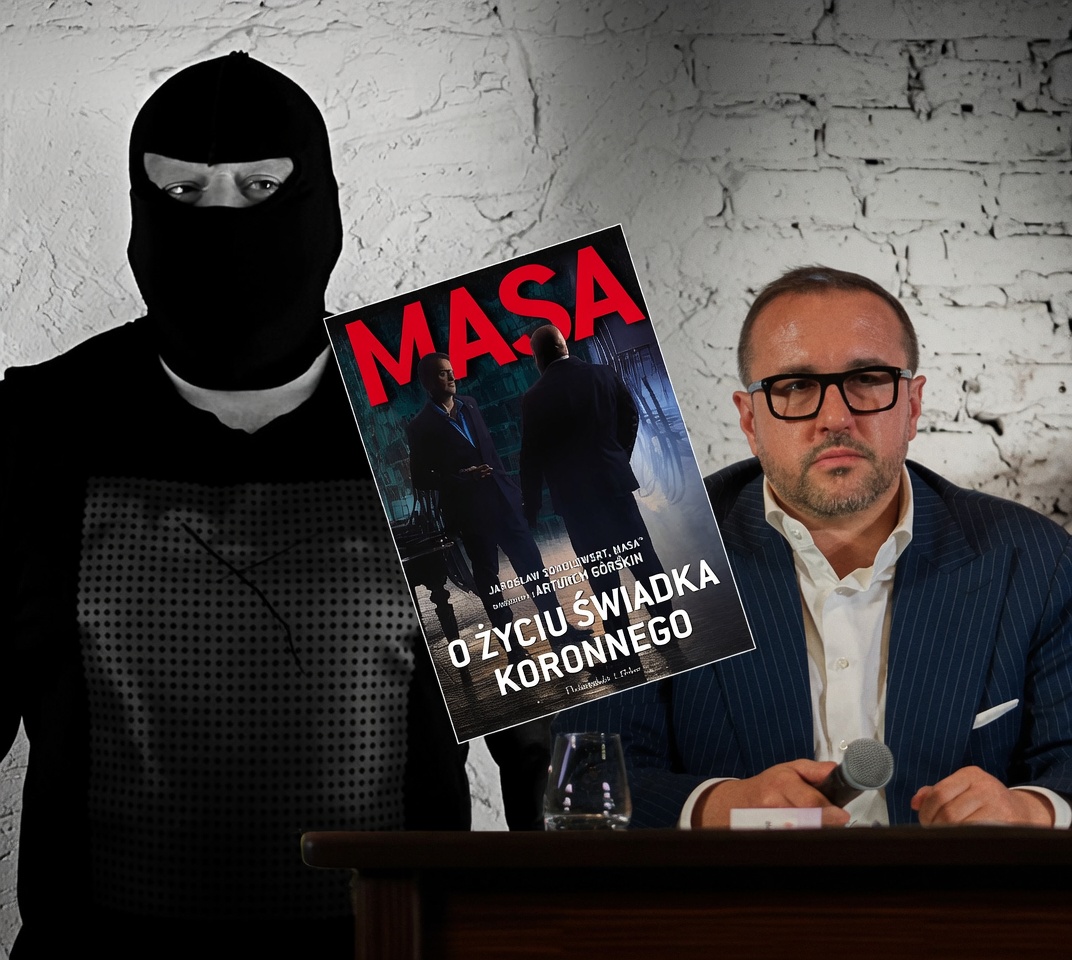
The entire institution of the crown witness (świadek koronny), the Polish version of the fully immunized cooperator, rests on a single premise written directly into the statute: testifying against an organized structure is mortally dangerous, which is why the law provides for personal protection, relocation and, in extreme cases, a new identity. Negotiations of that kind are not conducted over coffee in a hotel lobby. And certainly not in that particular corner of the world. The Gulf, with Dubai at its head, is safe for criminals and, for exactly the same reason, lethal for witnesses. The Kinahans ran their cartel from there despite American sanctions and a reward of five million dollars for information; Russian, Balkan and Italian fugitives treat the emirate as a waiting room with no clock. The same opacity that shields a fugitive from extradition shields the man who takes the contract from detection. Sanctuary works like a club: you are untouchable for as long as you are one of them.
The label of crown witness cancels the membership with immediate effect. Dubai protects silence, not people.
How loud cooperation against a structure ends was demonstrated by the Netherlands, a state with a protection program and a competent police force. In the Marengo trial, Nabil B. became a crown witness. In 2018, his brother was shot dead. In 2019, his lawyer, Derk Wiersum. In 2021, Peter R. de Vries, the journalist who served as his confidant. Three killings around one witness, in Amsterdam, not in Dubai.
Now transfer that logic to a city where the witness’s protection detail would be the hotel’s front desk. If Kral really were sitting on the Gulf and discussing crown witness status, making that public would amount, to put it bluntly, to pronouncing a death sentence with a deferred date of execution. He knows this. His advisers know this. The prosecution knows it too.
Which is why Sunday’s leak says more about its authors than about Kral’s address. There are three possibilities. First: the Gulf detail is false, written in to protect a source or as disinformation, in which case the question is who wrote it in and for whose eyes. Second: the talks are not what they appear to be, as I wrote on Sunday; a play for time, knowledge and narrative requires no real address. Third: someone on one of the sides made a mistake, and in this milieu mistakes of that caliber tend to be irreversible. It is also worth noting whom the leak serves regardless of intent: the structure against which the testimony would be given. The cheapest way to kill a deal with a witness is to publish it. Negotiations conducted out loud stop being negotiations.
Why am I writing about this. Because in this case the information layer is part of the battlefield, and the victims are its primary audience and, from time to time, its ammunition. The practical conclusions are three, and all of them are boring. We make no decisions based on reports of anyone’s whereabouts. Restitution does not depend on where he is, but on what gets disclosed and secured; I wrote about this on Sunday and it has not changed. And third: where Kral is, we do not know, and we say honestly that we do not know. What we do know is that every next location will be somebody’s move. We will read them. We do not need to repeat them.
Further reading
The Zondacrypto Case
The Zondacrypto case is being examined by authorities in several countries, and no one today can predict the fate of the entrusted funds. We represent the victims and protect their position in the ongoing proceedings.
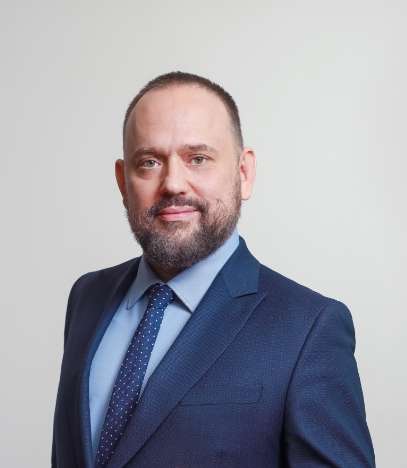
Robert Nogacki is a Polish attorney at law (radca prawny), the founder and managing partner of Kancelaria Prawna Skarbiec (Skarbiec Law Firm), which has operated continuously since 2006.
The law is equal for everyone, but the parties rarely are: on one side stands an organization with time, money, and lawyers, on the other a person with one business, one nest egg, and one life.
Clients rarely come to him with a legal problem. They come with a problem that also has a legal side: an audit that began with a single invoice, money entrusted to someone who has disappeared, a company that has to be passed on before it is too late. Most such matters are decided long before the first letter is written, in decisions made without asking and in deadlines nobody remembered. So he begins by asking how the client got here, not what the client should have done.
He advises entrepreneurs and families from more than a dozen countries, including those whose accounts the tax office has just seized and who do not know what to do tomorrow morning. He defends them in tax audits, customs and fiscal inspections, disputes with the tax authorities, and criminal tax proceedings. He represents victims of investment fraud and Ponzi schemes. He helps families set up family foundations and plan succession, so that a life’s work outlasts a single generation.
Not every case can be won. Every case can be run so that the client knows where they stand. Since 2006 he has represented the victims in the WGI case (Warszawska Grupa Inwestycyjna, the Warsaw Investment Group), one of the longest criminal cases in the history of the Polish financial market, because some things must not be left half finished, even when they take two decades. In the case of the collapsed cryptocurrency exchange Zonda (Zondacrypto, operated by BB Trade Estonia OÜ), he represents several hundred victims in the criminal investigation conducted by Poland’s National Prosecutor’s Office and in the Estonian bankruptcy proceedings.
Kancelaria Prawna Skarbiec is listed in the rankings of Poland’s largest tax advisory firms published by Dziennik Gazeta Prawna and Rzeczpospolita, and it is a four-time recipient (2015 to 2018) of the European Medal awarded by the Business Centre Club and the European Economic and Social Committee. Robert Nogacki publishes regularly, in the press and on the firm’s website, for people who have a problem rather than a law degree, because a legal opinion the client cannot understand protects only the lawyer.
He believes that the best legal advice is the kind that means the client never has to appear in court.