Linguistic Anomalies: A Close Reading of the Bitcoin Whitepaper
Chapter 7
The Bitcoin whitepaper contains several distinctive linguistic patterns that offer valuable clues about its author’s background. These patterns range from unusual phrase constructions to surprising metaphorical choices, each providing insight into Satoshi’s linguistic origins.
7.1. Passive Voice and Formal Constructions
The document’s handling of passive voice presents particularly telling patterns. Consider the sentence “New transactions are broadcast to all nodes.” While grammatically correct, this passive construction feels awkward in English; a native speaker would likely write “The system broadcasts new transactions to all nodes.” This preference for passive voice suggests Germanic language influence, where such constructions are more common.
Similarly, the phrase “The necessity to announce all transactions publicly precludes this method” demonstrates unusually formal construction. A native English speaker would typically opt for simpler phrasing like “The need to make all transactions public prevents this.” This formality points toward academic English learned in non-native contexts.
7.2. Striking Register Shifts
One of the most interesting features is the document’s unexpected shifts between formal and informal language. The phrase “hassling them for more information” stands out dramatically in an otherwise formal academic paper. This casual term amid technical discussion suggests someone who acquired English through mixed channels—formal academic study combined with real-world exposure.
The metaphor “a lucky lunge forward” presents another surprising register shift. This physical combat terminology appears unexpectedly in a technical context, suggesting possible familiarity with martial arts or combat sports vocabulary—an intriguing personal detail that slipped through the author’s usually careful writing.
7.3. Topic-Comment Structures
The document contains several sentences that follow Japanese/Germanic topic-comment structure. “What is needed is an electronic payment system” exemplifies this pattern. A native English speaker would more naturally write “We need an electronic payment system.” This construction suggests thought patterns from languages that prioritize topic-comment structure.
7.4. Creative Metaphorical Usage
Satoshi’s use of metaphor reveals interesting patterns. The phrase “Once the latest transaction in a coin is buried under enough blocks” employs “buried” in an unusual way. While effective, this mixing of physical and technical concepts suggests creative non-native usage—someone thinking across multiple linguistic frameworks to explain new concepts.
7.5. Technical and Legal Language Mixing
The author demonstrates interesting patterns in combining different English registers. The phrase “nodes can leave and rejoin the network at will” unexpectedly employs formal legal terminology (“at will”) in a technical context. This suggests exposure to various English registers, possibly through international academic or professional experience.
7.6. Grammatical Tells
A few rare grammatical errors provide important clues. The phrase “The steady addition of a constant of amount of new coins” contains a clear grammatical mistake (“of amount of”). This type of error, rare in the document, suggests high but not native proficiency.




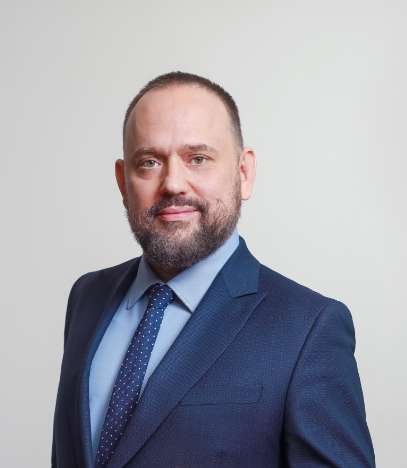
Robert Nogacki is a Polish attorney at law (radca prawny), the founder and managing partner of Kancelaria Prawna Skarbiec (Skarbiec Law Firm), which has operated continuously since 2006.
The law is equal for everyone, but the parties rarely are: on one side stands an organization with time, money, and lawyers, on the other a person with one business, one nest egg, and one life.
Clients rarely come to him with a legal problem. They come with a problem that also has a legal side: an audit that began with a single invoice, money entrusted to someone who has disappeared, a company that has to be passed on before it is too late. Most such matters are decided long before the first letter is written, in decisions made without asking and in deadlines nobody remembered. So he begins by asking how the client got here, not what the client should have done.
He advises entrepreneurs and families from more than a dozen countries, including those whose accounts the tax office has just seized and who do not know what to do tomorrow morning. He defends them in tax audits, customs and fiscal inspections, disputes with the tax authorities, and criminal tax proceedings. He represents victims of investment fraud and Ponzi schemes. He helps families set up family foundations and plan succession, so that a life’s work outlasts a single generation.
Not every case can be won. Every case can be run so that the client knows where they stand. Since 2006 he has represented the victims in the WGI case (Warszawska Grupa Inwestycyjna, the Warsaw Investment Group), one of the longest criminal cases in the history of the Polish financial market, because some things must not be left half finished, even when they take two decades. In the case of the collapsed cryptocurrency exchange Zonda (Zondacrypto, operated by BB Trade Estonia OÜ), he represents several hundred victims in the criminal investigation conducted by Poland’s National Prosecutor’s Office and in the Estonian bankruptcy proceedings.
Kancelaria Prawna Skarbiec is listed in the rankings of Poland’s largest tax advisory firms published by Dziennik Gazeta Prawna and Rzeczpospolita, and it is a four-time recipient (2015 to 2018) of the European Medal awarded by the Business Centre Club and the European Economic and Social Committee. Robert Nogacki publishes regularly, in the press and on the firm’s website, for people who have a problem rather than a law degree, because a legal opinion the client cannot understand protects only the lawyer.
He believes that the best legal advice is the kind that means the client never has to appear in court.