

How Zondacrypto’s Victims Became Suspects
On the people who decided not to be victims, and on the one office that never doubted them. Robert Nogacki, 11 August 2026
Investigators have pulled the exchange’s entire database out of the cloud: every zondacrypto client, every transaction, back to 2017. And the database has yielded a curious result. There are nearly twice as many victims as there are complaints on file. Over three and a half thousand people have come forward; roughly the same number decided not to be victims. A tax official explained this to journalists politely and anonymously (anonymity being the only institution in this affair with an unblemished record): these people are afraid of being asked where they got the money for their crypto.
And here the state deserves some credit. No police force in the world has ever cut crime in half with a single question. Ours has managed it. Nobody had to be caught; it was enough to let it be known that the one who might get caught is the one who shows up. A victim who does not report does not figure in the records. Statistically, he is a happy man.
Let us examine this happiness up close. Citizen N. belongs to the silent half. He kept his savings on the exchange; in April the exchange stopped paying out; the balance stayed on the screen, correct to the penny, precise to eight decimal places. Eight decimal places look like the truth. N. gazes at it every morning, the way one gazes at a photograph of someone who has gone away.
N. filed no complaint. He considered it, but first he went to see his neighbor, who had. The neighbor was sitting over a ring binder. They took everything, he said, and then they asked where the money had come from. So now he documents: the sale of grandmother’s plot of land in 2011, his daughter’s wedding (the envelopes, the guest list), a bonus from a company that no longer exists, which means tracking down its former payroll clerk. Grandmother is still outstanding; he will have to establish where grandmother got the plot. A man once traced his nobility: coats of arms, ancestors at Grunwald. Today he traces his cash, and the book of heraldry has given way to the bank statement. N. inspected the binder, said thank you, and went home a statistically happy man. His money was already lost. His life story he preferred to keep.
There is just one snag in this happiness. N. did not report to the state, but the state has N. in the cloud. In the database the investigators pulled, N. figures in his entirety: every transfer, every trade, nine years of financial life. N. keeps silent, but the cloud testifies on his behalf. The cloud testifies for everyone: no summons, no caution, no right to remain silent. N. was afraid of the question “where from”, while the database answers the question “how much”, and does so with the same eight decimal places of precision that N. was so fond of, back when they worked for him.
And the question “how much” is awaited by the second office, the one that never doubted N. The prosecutor wonders whether N.’s money really existed and whether it was respectable. The tax office has no such misgivings: it knows the money existed, knows how much, and takes the view that, at bottom, it still does. The proof is on the screen; the balance glows. N. sold his bitcoins for zlotys inside the exchange panel, the zlotys were credited on the screen, and whatever is credited on the screen counts, under settled administrative practice, as income. That nobody ever paid the zlotys out to N., and nobody now will: a detail. The tax office taxes events, not disappointments.
I have written about this elsewhere, coolly and with footnotes. For thirty-five years the statute has known the cash-basis method: income is what has been received or placed at the taxpayer’s disposal, and a number in the app of an exchange that does not pay out is neither the one nor the other. Three administrative courts, in Kraków, Warsaw and Poznań, said the same thing in three judgments. A single general ruling from the Minister of Finance would suffice. The Minister keeps silent. Silence, for tax purposes, is neutral anyway: it has been neither received nor placed at anyone’s disposal.
Such is the state of two faiths. One institution distrusts the money that truly existed; the other believes fervently in the money that does not exist at all. The same zloty is either suspect or taxable, depending on the counter window. Between the windows stands N.: a man suspected of his own misfortune.
The method, incidentally, has a future, and it is a wonder nobody has patented it. All it takes is to ask every victim a question. Your flat was burgled? And where did you get so many possessions. Your car was stolen? Kindly produce six years of fuel receipts. The statistics will fall wherever the victim has anything to explain, and the victim always has something to explain, because he has lived. Perpetrators, for now, remain outside the method: a perpetrator does not come forward, so there is nothing to ask him.
In the evening N. sits down over his return. In this country a man who has been robbed has two declarations at his disposal: one at the prosecutor’s office, voluntary, after which one may become a suspect, and one at the tax office, mandatory, after which one certainly becomes a taxpayer. N. files only the second; he has learned by now that, around here, exercising one’s rights can be riskier than performing one’s duties. He enters in the box an income he will never see, on assets that may never have existed, and out comes a tax: the only entirely real thing in this story.
And the moral? There will be no moral. A moral would first have to show where it came from.
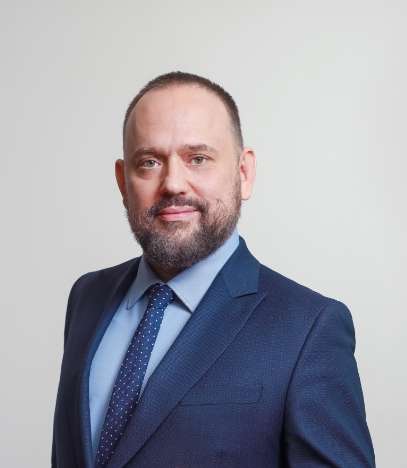
Robert Nogacki is a Polish attorney at law (radca prawny), the founder and managing partner of Kancelaria Prawna Skarbiec (Skarbiec Law Firm), which has operated continuously since 2006.
The law is equal for everyone, but the parties rarely are: on one side stands an organization with time, money, and lawyers, on the other a person with one business, one nest egg, and one life.
Clients rarely come to him with a legal problem. They come with a problem that also has a legal side: an audit that began with a single invoice, money entrusted to someone who has disappeared, a company that has to be passed on before it is too late. Most such matters are decided long before the first letter is written, in decisions made without asking and in deadlines nobody remembered. So he begins by asking how the client got here, not what the client should have done.
He advises entrepreneurs and families from more than a dozen countries, including those whose accounts the tax office has just seized and who do not know what to do tomorrow morning. He defends them in tax audits, customs and fiscal inspections, disputes with the tax authorities, and criminal tax proceedings. He represents victims of investment fraud and Ponzi schemes. He helps families set up family foundations and plan succession, so that a life’s work outlasts a single generation.
Not every case can be won. Every case can be run so that the client knows where they stand. Since 2006 he has represented the victims in the WGI case (Warszawska Grupa Inwestycyjna, the Warsaw Investment Group), one of the longest criminal cases in the history of the Polish financial market, because some things must not be left half finished, even when they take two decades. In the case of the collapsed cryptocurrency exchange Zonda (Zondacrypto, operated by BB Trade Estonia OÜ), he represents several hundred victims in the criminal investigation conducted by Poland’s National Prosecutor’s Office and in the Estonian bankruptcy proceedings.
Kancelaria Prawna Skarbiec is listed in the rankings of Poland’s largest tax advisory firms published by Dziennik Gazeta Prawna and Rzeczpospolita, and it is a four-time recipient (2015 to 2018) of the European Medal awarded by the Business Centre Club and the European Economic and Social Committee. Robert Nogacki publishes regularly, in the press and on the firm’s website, for people who have a problem rather than a law degree, because a legal opinion the client cannot understand protects only the lawyer.
He believes that the best legal advice is the kind that means the client never has to appear in court.